Lónyai Castle: A Historic Fortress in Medieșu Aurit, Romania


Visitor Information
Google Rating: 4.3
Popularity: Low
Country: Romania
Civilization: Early Modern
Site type: Domestic
Remains: Palace
History
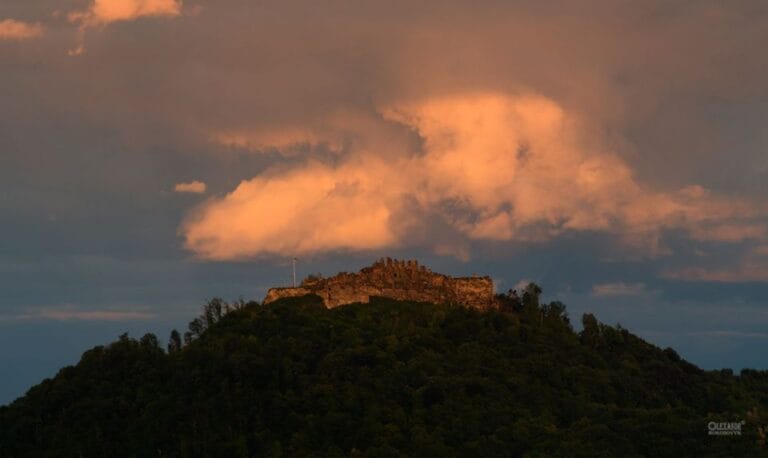
The Ruins of Lónyai Castle are located in the village of Medieșu Aurit, in present-day Romania. Originally established in the 13th century, the fortress was built by local Transylvanian nobility and played a significant role in the region’s medieval history.
The first recorded mention of the settlement associated with the castle dates back to 1271, identified as villa Megyes in a royal privilege granted by King Stephen V. By 1278, the property belonged to András, son of Jacob of the Kaplon clan. After András attacked King Ladislaus IV, he lost his ownership, and the fortress was transferred to Nicholas of the Pok clan, who served as voivode (governor) of Transylvania. His family maintained control of the castle for several generations.
In the early 15th century, the castle became the seat of Simon Meggyesi and his brother János, who governed from 1429. By 1442, ownership had shifted to Móricz Móriczhidai. Following the extinction of the Móriczhidai family line in 1493, siblings András and István Báthory seized the castle by force, resulting in prolonged legal disputes that continued until 1520. During this period, the castle saw a decline due to limited residence by the Báthory family but remained under their domain until 1626.
In 1630, the castle was granted to Segismund Lónyai, whose mother, Kata Báthory of Somlya, linked him to the prominent Báthory family. Segismund undertook substantial renovations, reinforcing the fortress with defensive walls, bastions, and drawbridges. He rebuilt the castle in the Renaissance style to serve as his main dwelling. Above the entrance, a Latin inscription records this transformation, crediting Segismund as Count of Kraszna.
After Segismund Lónyai passed away in 1643, his daughter Anna inherited the estate. She was married to John Kemény, a notable Transylvanian prince. In 1669, Anna encouraged local nobles to assault the German mercenary garrison stationed at Satu Mare Castle. This act led to charges of treason against her, the confiscation of her lands, and the deliberate demolition of the castle’s bastions by explosion.
The castle suffered further damage during the 1707 conflict known as Rákóczi’s War of Independence, when it was burned. Subsequently, the surrounding estate was absorbed into the royal treasury, incorporated into the administrative sector controlled by Satu Mare Castle.
In 1732, Baron Ferenc Wesselényi inherited the property and initiated the construction of a new castle on the same site, reusing stones and materials from the ruins of the earlier fortress. This 18th-century building retained Renaissance stylistic elements and incorporated influences from northern European architecture, visible in the design of gates, windows, and interior finishes.
Ownership later passed to prominent figures including Countess Zsuzsanna Bethlen and Count Sámuel Teleki (1739–1822). Their descendants managed the estate until the early 20th century, after which it became part of the possessions of Queen Maria of Romania.
During World War II, German forces in retreat repurposed the castle as an ammunition depot. An explosion occurred during this period, resulting in the destruction of the roof and leaving the structure in ruins.
Remains
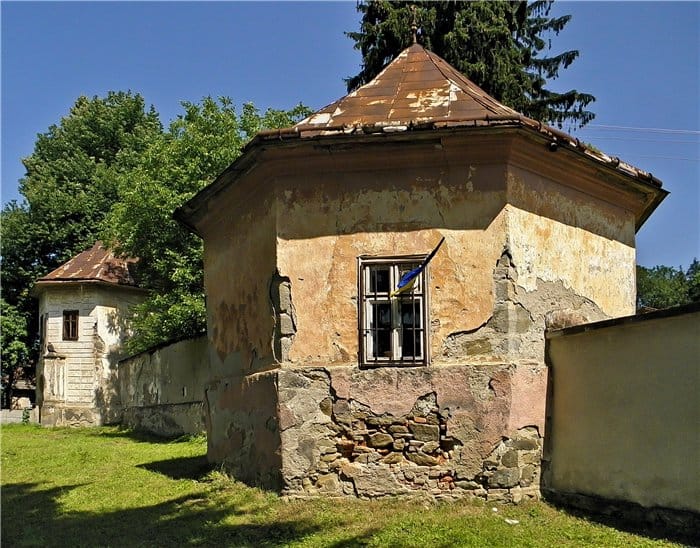
The surviving remains of Lónyai Castle consist primarily of structures from the 18th century, built atop the foundations of the earlier fortress. This later construction recycled stone and building materials from the medieval castle, blending Renaissance architectural concepts with northern European stylistic details, especially evident around gates and window frames as well as interior ornamental features.
The castle was originally fortified in the 17th century by Segismund Lónyai, who added defensive walls, bastions, and drawbridges to the older 13th-century layout. These fortifications were prominently featured until their demolition by explosion following accusations against Anna Lónyai in the late 17th century. Today, the remnants reveal the footprint of these once-formidable defenses.
One particularly notable element is the Latin inscription placed above the castle’s entrance. This text commemorates the Renaissance-style reconstruction carried out by Segismund Lónyai, identifying him as Count of Kraszna and marking his role in the castle’s transformation during the 1600s.
Presently, the castle stands without a roof, a result of the wartime explosion during World War II that destroyed much of the upper structure. Because of its historical importance and distinctive Renaissance style, the ruins are recognized as a national historic monument in Romania, catalogued under the identifier LMI SM-II-a-A-05332 and registered with the RAN code 138093.04.
The visible remains offer insight into a layered history, showing both the military and residential functions of the site through centuries, with particular emphasis on Renaissance fortifications and architectural details preserved in the 18th-century rebuilding phase. The ruins serve as a testament to the castle’s evolving role in Transylvanian history and its connection to significant local noble families.