Ruine Lichtenfels: A Medieval Hilltop Castle in Austria
Site at a Glance
- Rating
- 4.5
- Popularity
- Low
- Country
- Austria
- Primary era
- Medieval
- Eras represented
- Medieval
- Civilizations
- Holy Roman Empire
- Site type
- Military
- Remains
- Castle
On this page6 sections
History
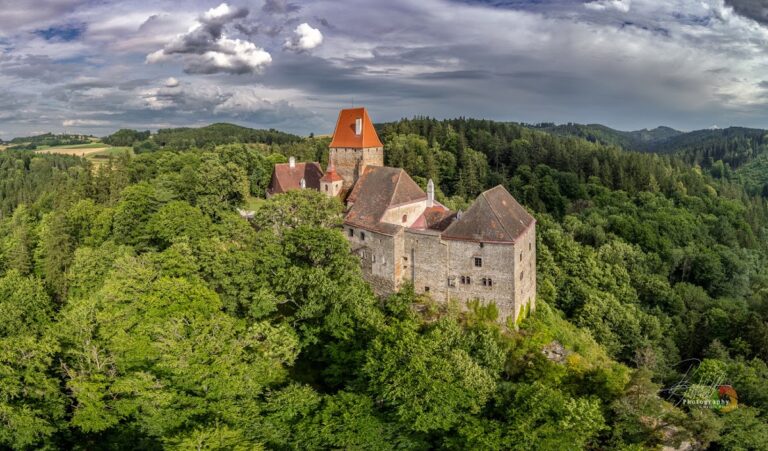
Ruine Lichtenfels is the ruin of a hilltop castle in Austria, near Peygarten-Ottenstein in the Waldviertel of Lower Austria and within the municipality of Zwettl. Established around 1150, it belonged to the smaller holdings along the borders of the Kuenringer lands, the extensive possessions of a powerful noble family in the Waldviertel. The castle developed on territory once held by the German kings, during the period when such lands were granted to minor noble families to make the Kamp region cultivable. The area became part of the Duchy of Austria in 1156.
The Rauheneck Foundation
Hartung von Rauheneck and his sons Albero, Otto, and Ortlof were active in the area by 1136. Hartung received the territory as a fief from Henry II Jasomirgott, the twelfth-century Duke of Austria from the Babenberg dynasty, and built Lichtenfels in the middle of the twelfth century. The Rauhenecks were a widely established noble family in Lower Austria, and Lichtenfels was associated with the ministerial class, a group of medieval office-holding nobles who served rulers or major lords in military and administrative roles.
The Rauhenecks retained the fief until 1335, when it reverted to the duke. Hugo der Turs von Rauheneck, the best-known member of the family, appears in the first Austrian document written in German, dated 1248.
Changing Lords and Hussite Warfare
Later feudal holders included the Lords of Kapell, Georg von Dachsberg, and Jörg von Rappach, who held Lichtenfels until 1437. During their tenure, the castle sheltered the valuables and library of Zwettl Abbey, a Cistercian monastery in Lower Austria, during the Hussite attacks of 1427 and 1428. The Hussites were followers of the Bohemian religious reformer Jan Hus, whose movement had become a religious and political force in the early fifteenth century.
The castle’s feudal lords changed frequently during the next two centuries. In 1623, Hans Unterholzer von Kranichberg purchased Lichtenfels Castle and its lordship from the emperor as freehold property, meaning that the land was held as his own possession rather than as a feudal fief. In 1628, he united the holdings with his lordship of Rastenberg.
Decay and Later Ownership
The von Bartenstein family took control of the combined holdings in 1774, after which the castle began to decay. In 1790, Zwettl Abbey bought part of the roof because of the roof tax. The last resident left in 1804, and the ruin then deteriorated increasingly. The former Lichtenfels lordship has been owned by the comital Thurn-Valsassina family since 1872.
Remains
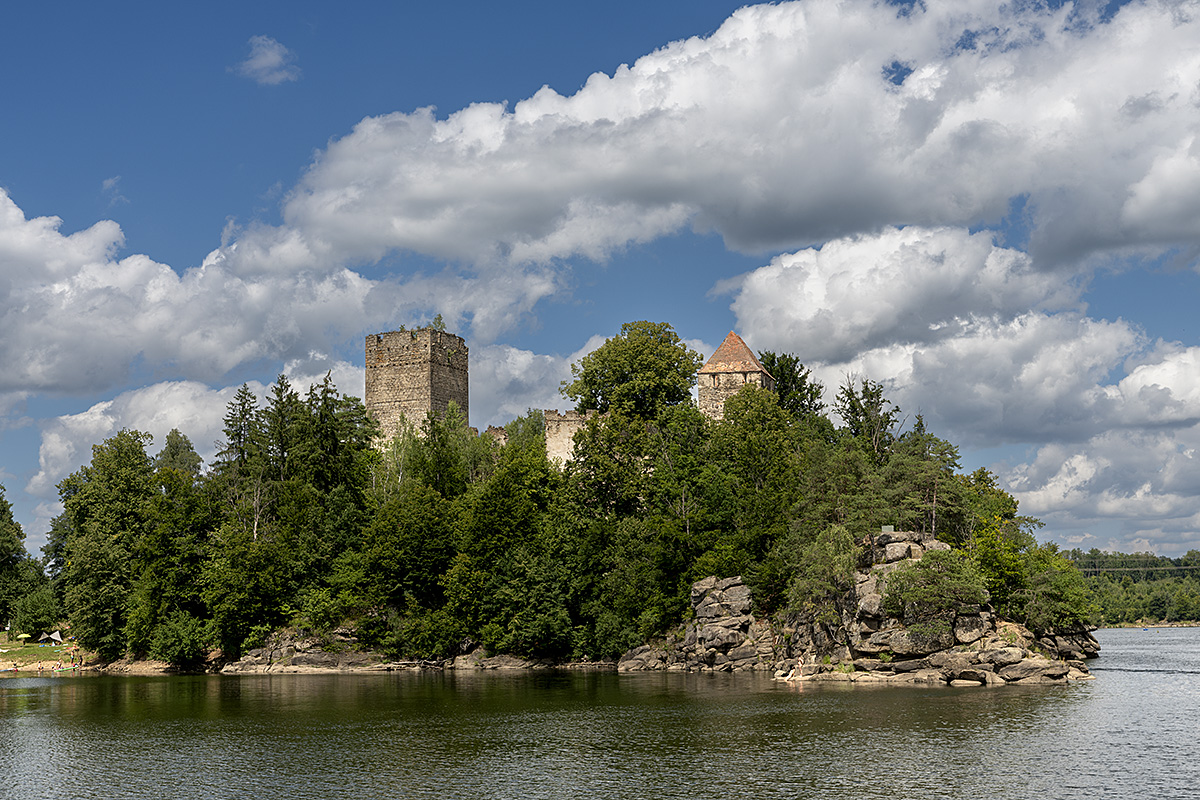
Ruine Lichtenfels was built on a wooded, rocky promontory on a mountain slope. The site now occupies a peninsula in the Ottenstein Reservoir. The castle survives as a ruin, with the former castle chapel as its preserved architectural feature.
Castle Chapel
The chapel is housed within the keep and survives in rudimentary condition. Dedicated to Saint Paul, it remained a popular pilgrimage destination until the twentieth century.