Burg Rastenberg: A Romanesque Castle in Austria
Site at a Glance
- Rating
- 4.3
- Popularity
- Very Low
- Country
- Austria
- Primary era
- Medieval
- Eras represented
- Medieval
- Civilizations
- Duchy of Austria, Habsburg, Holy Roman Empire
- Site type
- Military
- Remains
- Castle
On this page7 sections
History
Burg Rastenberg is a fortified castle in Rastenfeld, Austria, built in the late twelfth or early thirteenth century in the Romanesque style. Dendrochronology, a dating method based on tree rings in surviving timber, places its construction between 1193 and 1205. The castle formed part of a defensive system along the Kamp River with Ottenstein and Lichtenfels, whose positions allowed visual communication between the three strongholds. It is regarded as one of Lower Austria’s important Romanesque monuments.
The Rastenberg Family and Habsburg Rule
The Rastenberg family belonged to a branch of the Rauheneck lineage, whose ancestral castle stood at Rauheneck west of Baden bei Vienna. Otto, the last documented member of the Rastenberg family, died in 1292 or 1293. In 1363, the Lordship of Rastenberg passed to Rudolf IV, Duke of Austria and a Habsburg ruler whose administration helped consolidate Habsburg authority in the duchy. The lordship was later administered by bailiffs or transferred as pledged property, meaning it was held as security for a debt or obligation.
War, Reformation, and Changing Ownership
Burg Rastenberg suffered severe damage during the Hussite Wars, fifteenth-century religious and political conflicts involving the followers of Jan Hus and their opponents. From 1432, the castle was held as a fief by the Neideck family. A fief was a lordship granted by a superior ruler in return for service or loyalty. The lords of Oberranna, from the Neideck family, strengthened the castle’s fortifications.
After the Neideck family became extinct, the Protestant Michael Zeller acquired the pledged lordship and offered refuge there to Protestant nobles and their supporters. Imperial troops commanded by General Bucquoy plundered the castle in 1620 during the Thirty Years’ War, the European conflict fought from 1618 to 1648 through overlapping religious, dynastic, and political struggles. Swedish troops plundered it again in 1645.
Ownership passed to the Lamberg family in 1663, to the Bartenstein family in 1754, and to the counts of Thurn-Valsassina in 1879. The Thurn-Valsassina family still owned Burg Rastenberg in the early twenty-first century, when the castle was used as a residence. It is protected as a listed historic monument.
Literary and Musical Associations
In modern times, the castle became associated with the French writer Christiane Singer, who lived there from 1973 after marrying Count Georg von Thurn-Valsassina. The residence inspired her 1996 work Rastenberg. The composer Gottfried von Einem also wrote his cantata Das Stundenlied at the castle.
Remains
Complex and Setting
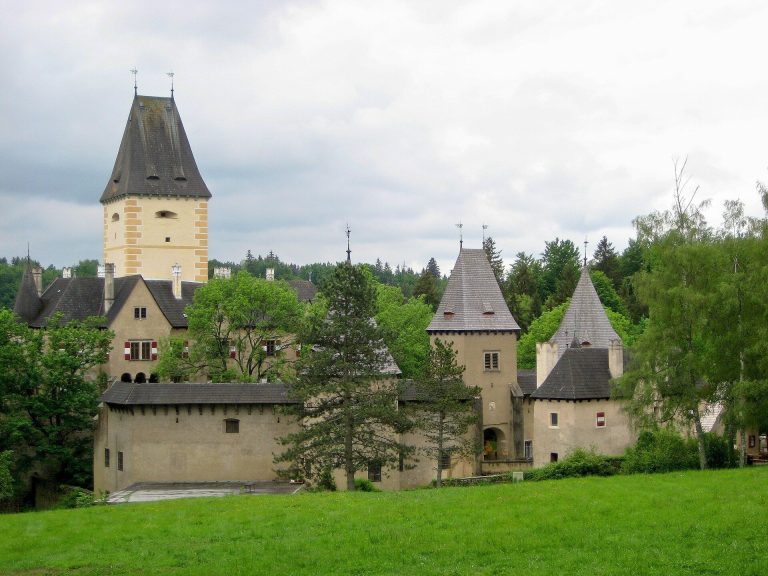
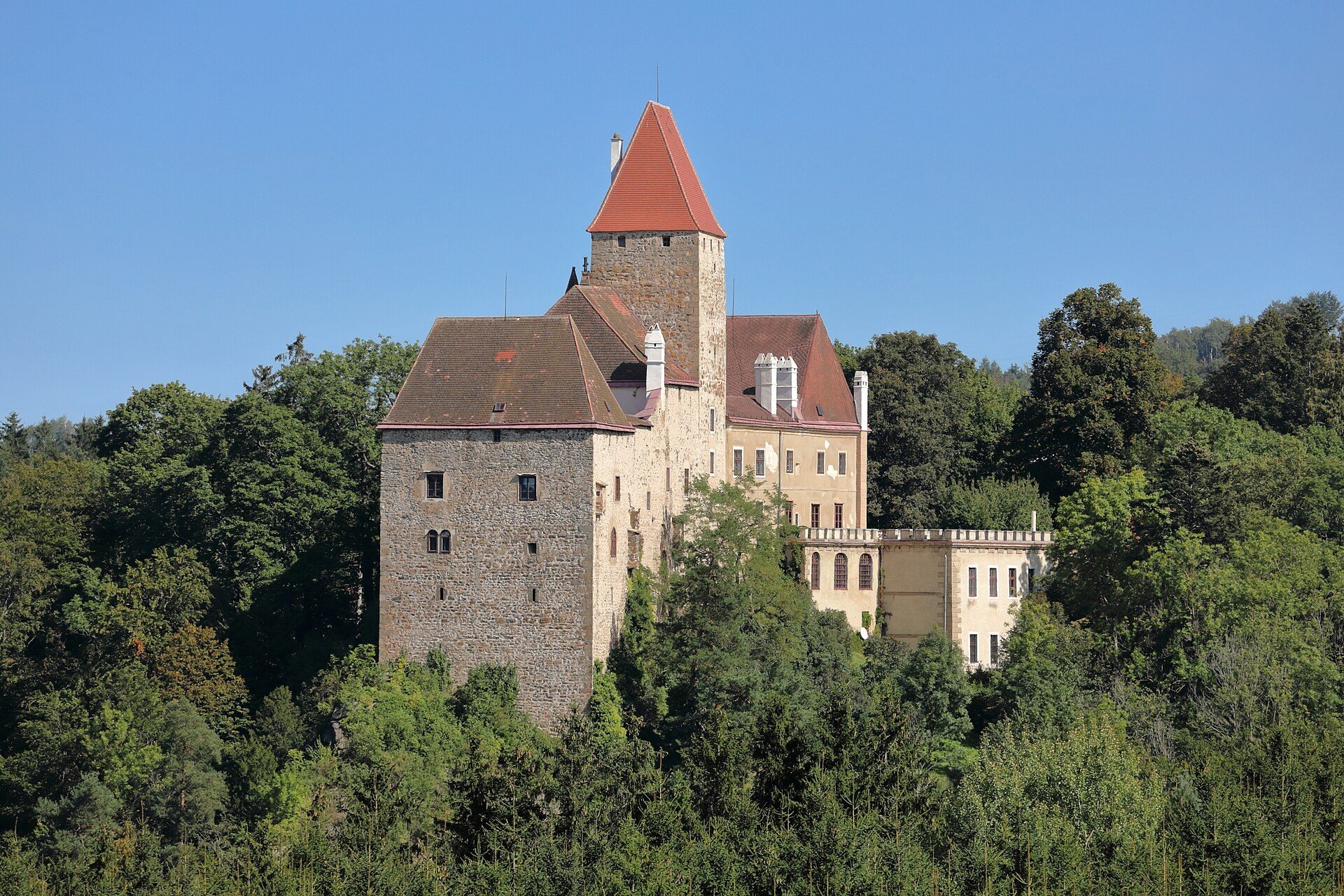
Burg Rastenberg occupies the outer end of an east-west-oriented rocky spur on the eastern side of the Purzelkamp valley. The complex stands on a granite rock and forms a narrow, elongated plan measuring approximately 19 by 54 metres. A forecourt and two small inner courtyards organize the castle’s surviving spaces. Although the buildings have undergone several alterations, the complex as a whole was never destroyed and has retained its medieval appearance.
Pentagonal Keep
The castle’s appearance is dominated by a 27-metre-high pentagonal keep. This principal medieval tower, used for defense and refuge rather than as the main residence, was never destroyed. Despite repeated alterations, it retains its medieval character and remains the defining architectural feature of Burg Rastenberg.