Castello di Montegibbio: A Historic Hilltop Castle in Italy


Site at a Glance
- Rating
- 4.4
- Popularity
- Low
- Country
- Italy
- Primary era
- Early Modern
- External website
- Open
- Eras represented
- Medieval, Early Modern, Modern
- Civilizations
- Holy Roman Empire
- Site type
- Military
- Remains
- Castle
On this page6 sections
History
Origins and Medieval Destruction
Castello di Montegibbio is a hilltop castle in Montegibbio, Sassuolo, Italy. Its construction dates to around 920, when the canons of Parma Cathedral used it as a defensive site against Magyar attacks. The castle later entered the possessions of Boniface of Canossa, an eleventh-century nobleman who ruled extensive territories in northern and central Italy, and then those of his daughter Matilda, a powerful medieval ruler and supporter of the papacy.
The castle subsequently passed to the Della Rosa lords of Sassuolo. In 1325, the Ghibelline Francesco Bonaccolsi of Mantua destroyed it. The Ghibellines generally supported the imperial side in medieval Italy, while their rivals, the Guelphs, generally supported the papacy. After the Della Rosa family recovered the fief, a territory granted in return for service or allegiance, with help from the Guelph Versuzio Lando, the castle was rebuilt in 1326.
Later Lords and Rebuilding
Castello di Montegibbio passed to the Este family in 1375 and to the Pio di Savoia family in 1499. The Este were an influential ruling dynasty associated especially with Ferrara and Modena, while the Pio di Savoia were a noble house connected with Carpi. In 1501, an earthquake associated with the Salsa di Montegibbio, a local geological phenomenon involving mud and gas emissions, destroyed the castle. It then remained abandoned for more than a century.
After the Montegibbio fief was transferred to the noble Boschetti family of Modena, the castle was rebuilt in 1636. Ownership later passed to the Veronese marquis Ottavio Spolverini in 1696, to the Ferrara nobleman Luigi Canonici in 1767, and to the Nanni family in the early nineteenth century. In 1851, it passed to the Borsari family of Finale Emilia, who remodeled the complex. The Municipality of Sassuolo has owned Castello di Montegibbio since 1971, and the castle is designated Italian national heritage.
Remains
Castle Buildings and Courtyard
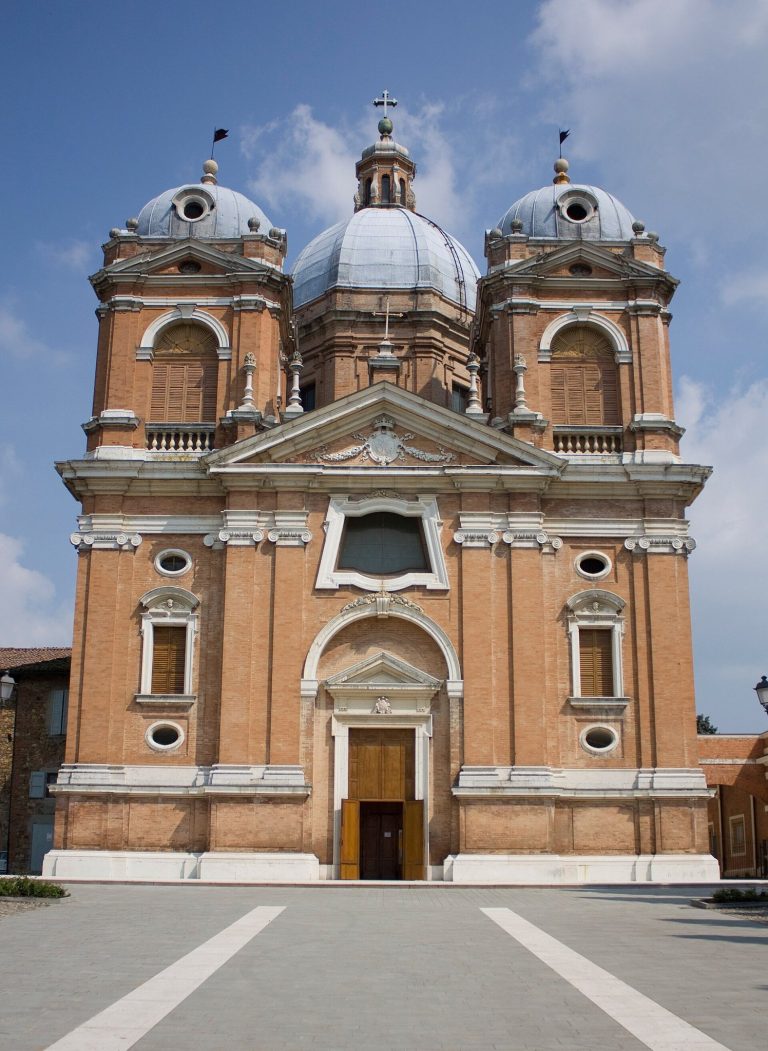
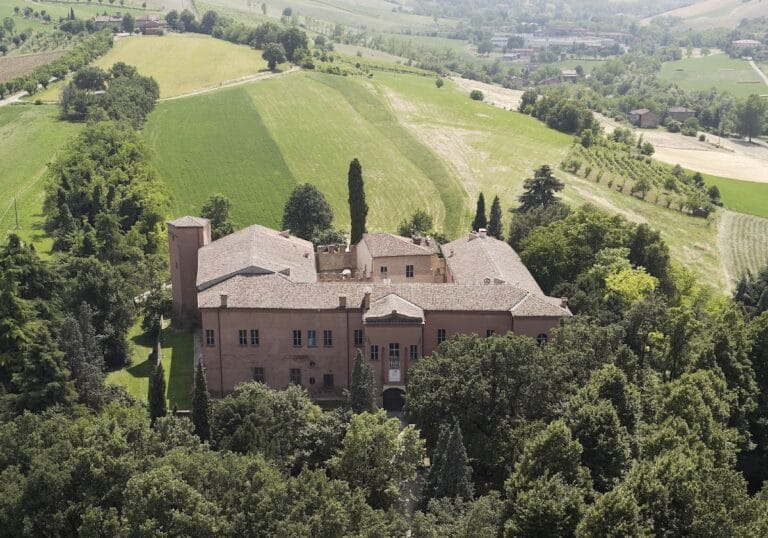
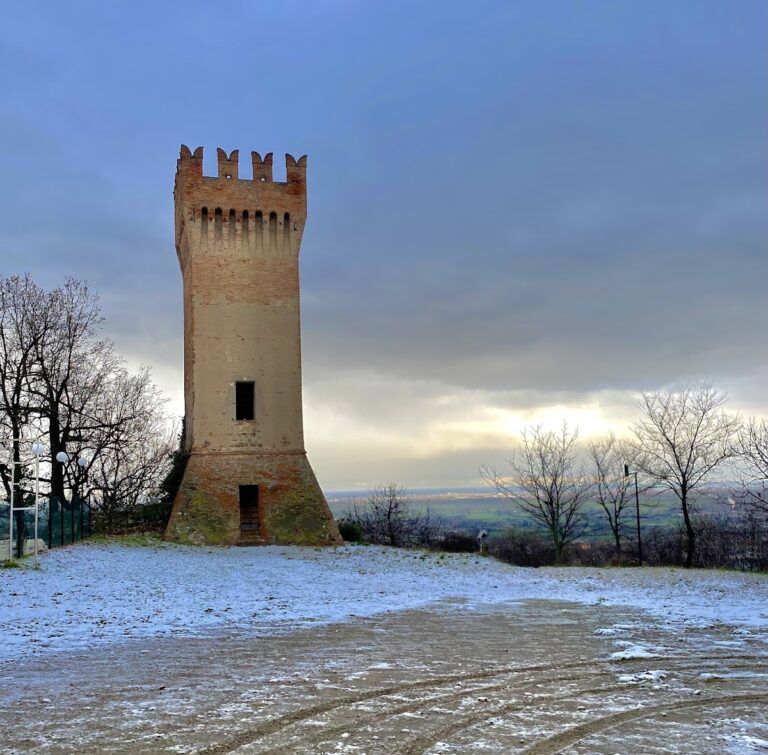
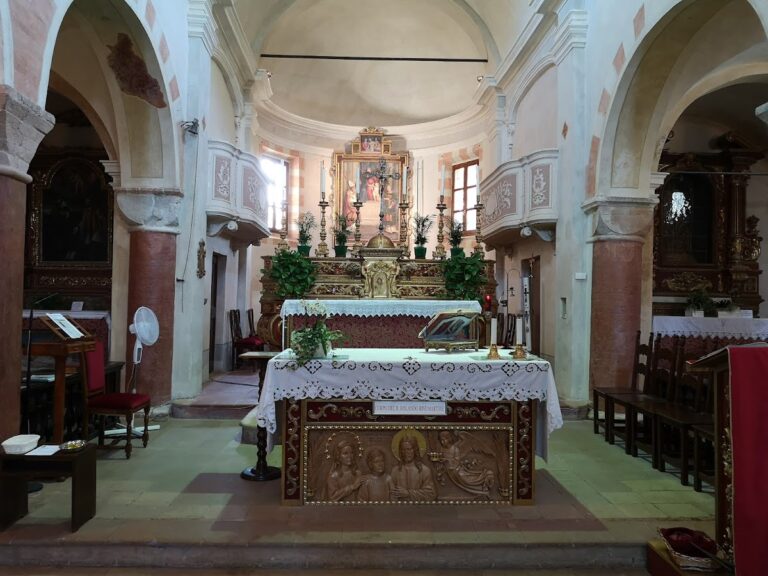
The restored castle stands at approximately 394 metres above sea level and is built of rubble stone. Its main courtyard has an irregular elliptical plan. Buildings arranged around it include the parish house with its bell tower, the Church of San Pietro Martire, the marquis’s palace, and the castle tower. Together, these structures preserve the complex’s combination of religious, residential, and defensive functions.
Service Buildings and Garden
The complex also contains a dovecote and a service building formerly used as a hay barn and storage area. A garden occupies the rear of the castle. At the entrance, another building currently houses the municipal vinegar works, giving the historic complex a continuing civic and productive use.