Roman Villa of Orpheus: A Late Roman Villa in Spain



Site at a Glance
- Rating
- 4.6
- Popularity
- Low
- Country
- Spain
- Primary era
- Classical
- External website
- Open
- Eras represented
- Classical, Modern
- Civilizations
- Roman
- Site type
- Domestic
- Remains
- Villa
On this page9 sections
History
The Roman Villa of Orpheus is a Late Roman villa archaeological site in Camarzana de Tera, Spain, built during a period broadly dated from the second to the fourth century AD. Its mosaics, including mythological scenes and animal imagery, provide the clearest surviving evidence of the villa’s decoration and cultural setting.
Discovery and early study
Knowledge of the villa reaches back to the nineteenth century. In 1861, Tomás de Areitio described the discovery of coins, metal remains, and especially mosaics during roadworks on the Benavente to Mombuey road. Manuel Gómez-Moreno later included the site in his Monumental Catalogue of Spain: Province of Zamora, completed in 1904 and published in 1927.
Excavation and preservation
Excavations began in 2007 and continued for ten years, uncovering the villa, recovering archaeological remains, and preparing the site for museum presentation. The work established that the remains should be preserved in situ, meaning in their original archaeological position. Some recovered mosaics were deposited in the Zamora Museum.
The villa is owned by the Junta de Castilla y León, the regional government of Castilla y León, and became an Asset of Cultural Interest as an Archaeological Zone in 2010. A museum opened at the site in 2018, incorporating the remains into a permanent archaeological display.
Remains
Residential rooms and mosaic floors
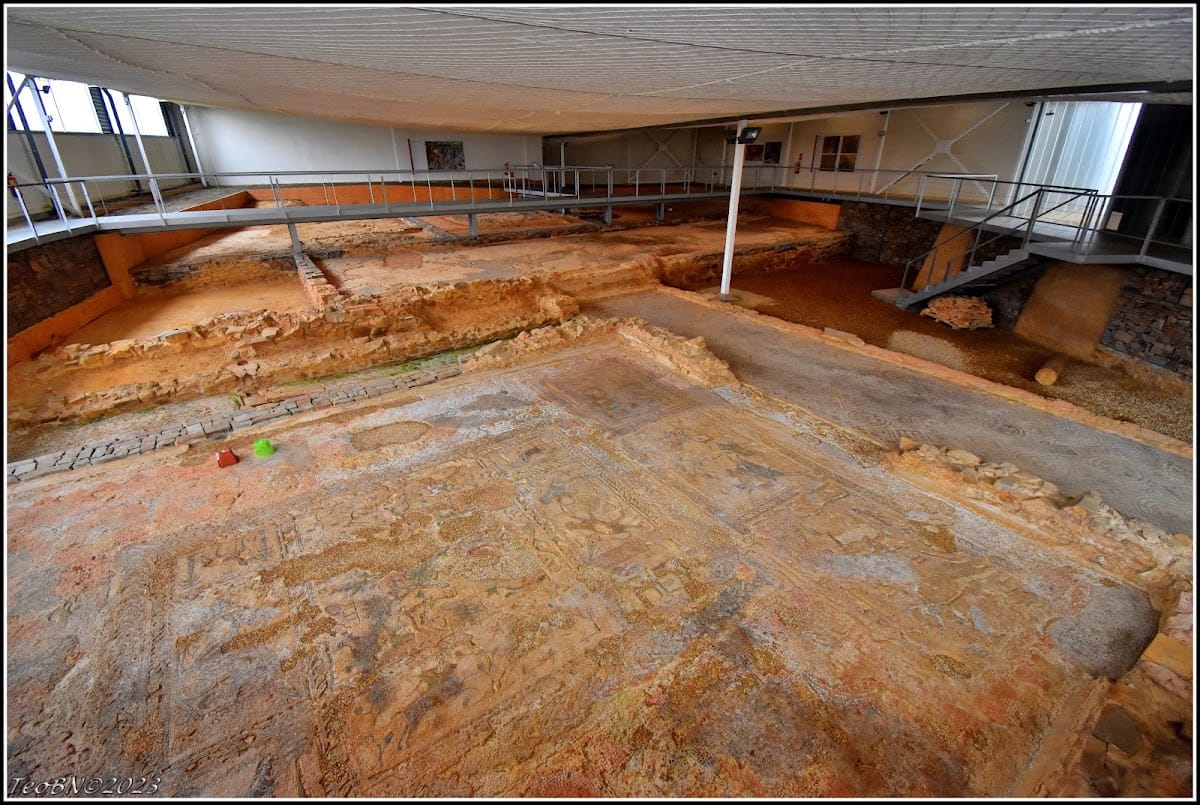
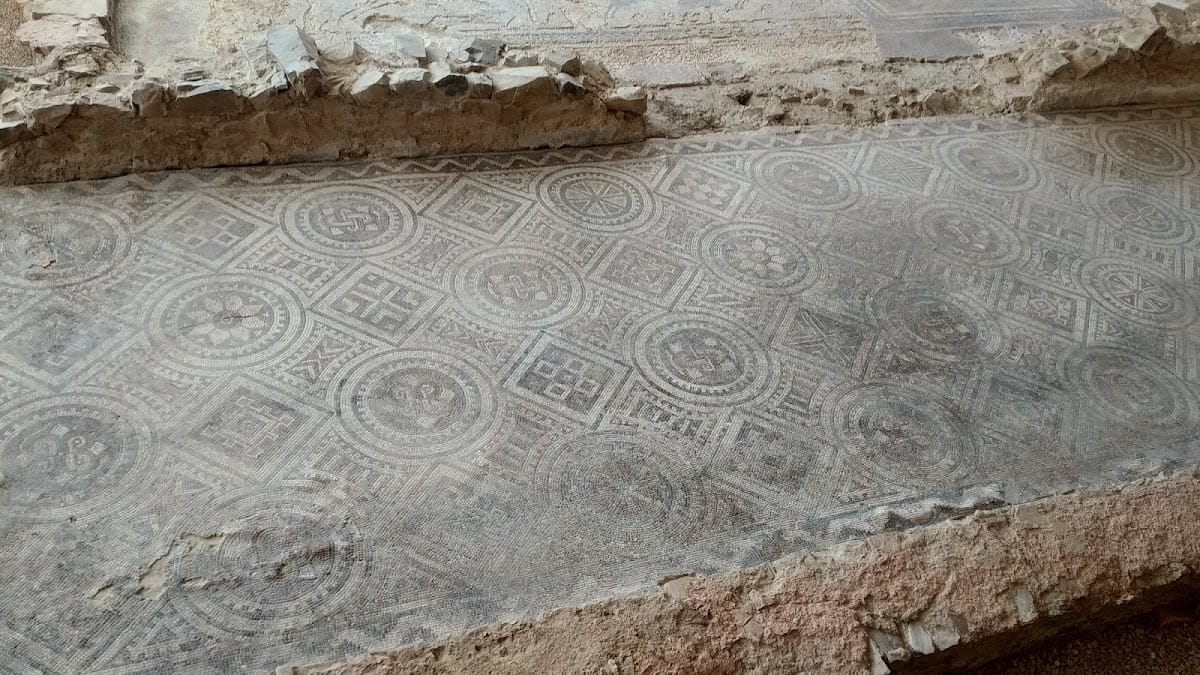
The villa contains fifteen rooms arranged around a peristyle, a courtyard surrounded by a colonnade. Their floors preserve a varied mosaic program that combines mythological subjects, hunting imagery, animal figures, and geometric designs. Excavated materials include mosaics, several types of tesserae, kitchen pottery such as pots and casseroles, coins from the second to the fourth century AD, and architectural pieces including capitals, column shafts, and bases.
Orpheus mosaic
A prominent room, possibly a triclinium or formal dining room, contains the mosaic that gives the villa its name. Orpheus, the figure from Greek mythology associated with music and the power to charm animals, appears surrounded by animals. Eight cartouches around him contain horse representations, while his name is formed from tesserae. Hunting scenes and other imagery connected with customs and mythological legends complete the decoration.
Rape of Europa mosaic
Another room contains a mosaic depicting the Rape of Europa, bordered by marine figures. Its scale and position identify the room as an oecus, a principal reception room for guests. The subject and surrounding imagery form a distinct decorative setting within the villa’s broader mosaic scheme.
Geometric mosaics
The other rooms contain mosaics with geometric themes. Together with the figured pavements, these floors show how different rooms received distinct decorative treatments within the residential complex.
Protective museum structure
A protective museum building covers the villa. It consists of two adjoining steel-framed halls set perpendicular to the street frontage. Walkways allow the remains and mosaics to be viewed from above, while explanatory panels and a scale model reproduce the characteristics of the original villa and clarify its arrangement.