Rolley Castle: A Fortified Estate in Belgium


Site at a Glance
- Rating
- 4.8
- Popularity
- Very Low
- Country
- Belgium
- Primary era
- Early Modern
- External website
- Open
- Eras represented
- Medieval, Early Modern
- Civilizations
- Duchy of Luxembourg, Habsburg, Holy Roman Empire
- Site type
- Military
- Remains
- Castle
On this page8 sections
History
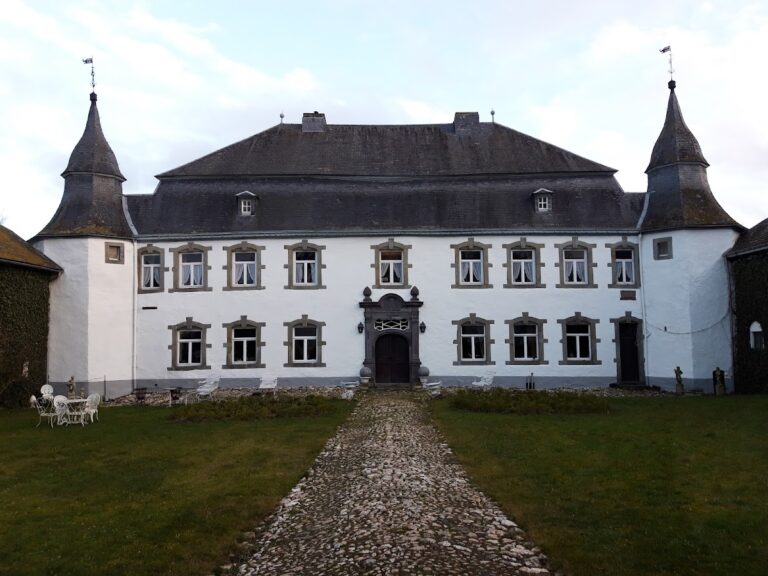
Rolley Castle is a fortified castle in Belgium, near Champs in the municipality of Bastogne, whose present form is largely associated with 1733, although its construction has been uncertainly dated to 1291. It was a fief of the County of La Roche, a medieval feudal territory in the Ardennes, and the lordship of Rollé extended across about ten surrounding villages.
Medieval lords of Rolley
Guillaume de Bolland appears in the records in 1291 and is traditionally regarded as the ancestor of the Bolland family, whose name also took the forms Boullant and Boulland. This line held the seigneurial lordship, meaning the territory and authority controlled by a local lord, until 1578. Through marriage, the Schônenbourg family then succeeded to the lordship and retained it until 1752.
The castle’s earliest construction date remains uncertain. Its origins are associated with 1291, while the south tower’s Saint John Chapel is documented from 1485. These references place Rolley within a long medieval history of local lordship before the major rebuilding associated with the eighteenth century.
Rebuilding and later ownership
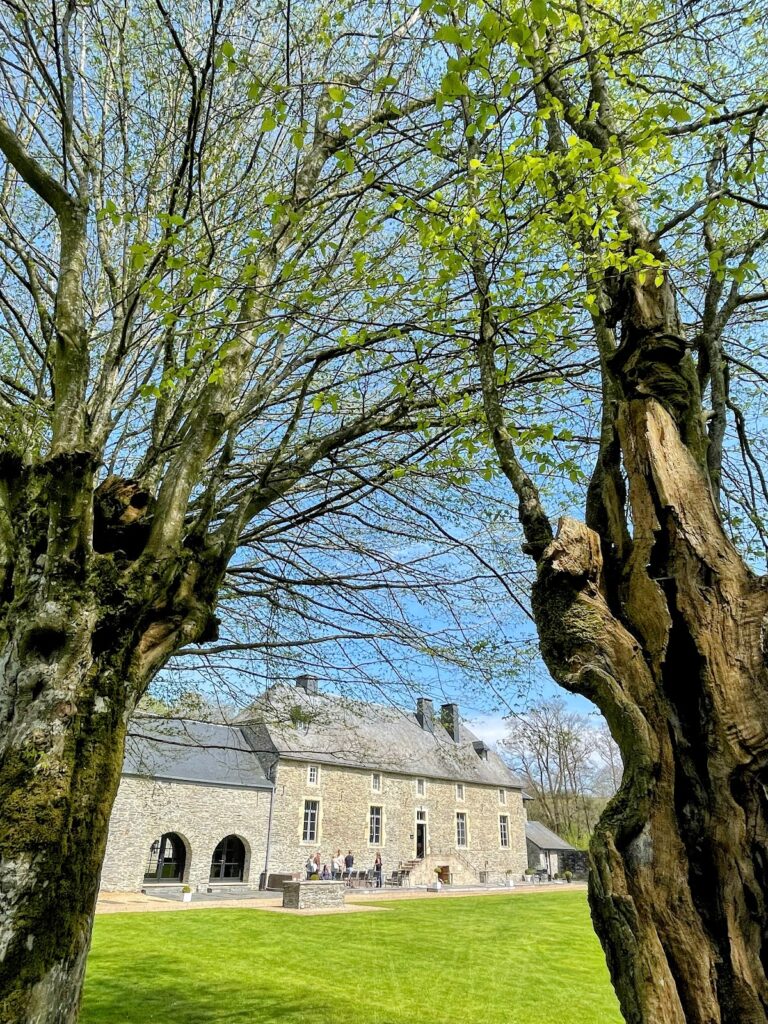
Most of the castle dates from 1733. Since the beginning of the twentieth century, the estate has belonged to the Maus family. The castle and its farm buildings were later reused for accommodation, including guest lodgings, and this continuing use contributed to the gradual maintenance of the buildings.
Rolley during the Battle of the Ardennes
In January 1945, during the Battle of the Ardennes, General George Patton decorated General Anthony McAuliffe at Rolley Castle. The battle, commonly called the Battle of the Bulge, was the major German offensive on the Western Front in December 1944 and January 1945. McAuliffe commanded the United States 101st Airborne Division and had refused to surrender to the German General Heinrich von Lüttwitz, answering with the word “Nuts.”
Rolley Castle, its ruins, and the surrounding grounds have been protected as classified heritage in Bastogne since 3 April 1979.
Remains
Setting and defensive enclosure
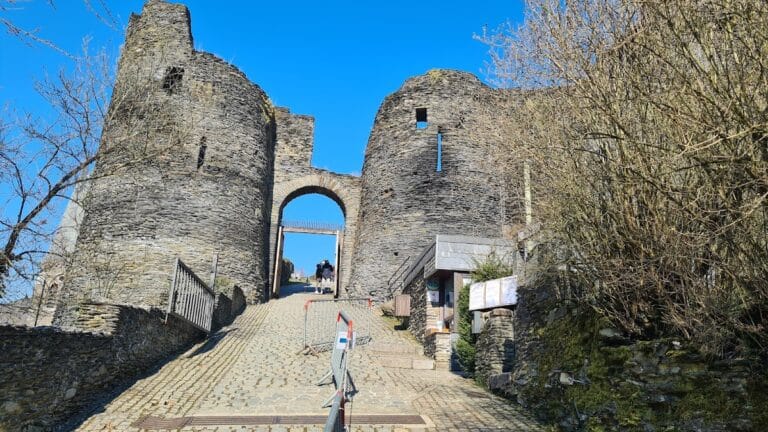
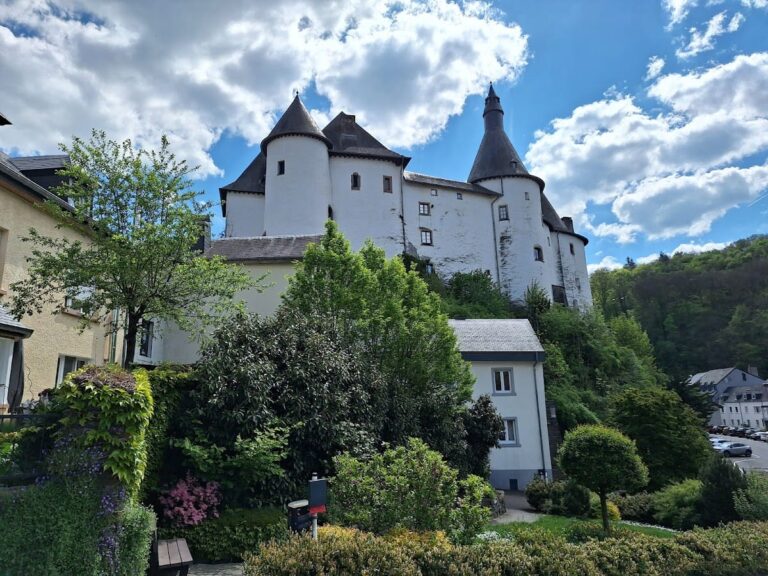
Rolley Castle stands in a wooded setting on a rocky promontory that rises 25 metres above two narrow valleys with steep sides. The hamlet also contains an old farm and about ten ponds supplied by the Rouette stream. The castle follows a north-south axis. A thick curtain wall, a continuous defensive wall joining fortified towers, reinforces the western side, while a rampart, or raised defensive embankment or wall, runs along the east.
Four massive round towers punctuate the defensive enclosure, with three positioned on the western side. The southern tower is the only one that remains almost intact, preserving one of the clearest parts of the fortified complex.
Southern tower and Saint John Chapel
The southern tower contains the Saint John Chapel, which is known from 1485. Its position within the surviving tower connects a documented late medieval religious feature with the defensive enclosure. The tower forms the most substantially preserved element of the castle, while the wider complex survives in a more ruinous condition.
Eighteenth-century masonry and name tradition
Iron architectural anchors embedded in the eastern facade bear the date 1733. These tie elements helped stabilize the masonry or connect structural parts, and their date indicates the period to which most of the castle belongs. They provide a visible link between the surviving fabric and the rebuilding that shaped the present complex.
The forms rolleis, rollais, and fors rolleis have traditionally been explained as references to palisades made from large, sharpened logs that were firmly connected. Under this interpretation, such a palisade crowned the earthen bank serving as a wall-walk around the castle’s enclosed grounds. The explanation of the name remains uncertain.
Nearby sites