Riberhus: A Medieval Royal Castle in Denmark
Visitor Information
Google Rating: 4.3
Popularity: Low
Official Website: www.ribesvikinger.dk
Country: Denmark
Civilization: Medieval European, Modern
Site type: Military
Remains: Castle
History
Riberhus is a historic royal castle located near Ribe municipality in Denmark. Built by the Danish kingdom during the Middle Ages, the site played a strategic role in the control and administration of southwestern Jutland.
The castle’s origins date back to the early 12th century when King Niels established it as a border fortress. This early phase positioned Riberhus as a defensive stronghold protecting the Danish kingdom’s western frontier. Over time, the castle evolved beyond its military role into a royal residence and a center for governing the surrounding region, regularly hosting the Danish monarchs and their appointed officials.
Significant reconstruction occurred in the mid-13th century, likely under King Eric V, also known as Erik Klipping, who undertook efforts to strengthen the castle’s fortifications and expand its structures during the 1260s. The earliest surviving mention of the name “Riberhus” appears in records from around 1320, notably in a royal charter issued by Christopher III. This document ordered the demolition of most castles in Jutland with the notable exceptions of Riberhus, Skanderborg, and Koldinghus, highlighting Riberhus’s importance within the kingdom’s defensive network.
Throughout the 14th century, ownership of the castle shifted amid political turmoil. In 1330, it was pawned to Gerhard III, Count of Holstein, a powerful figure in the region. It returned to Danish royal control in 1383 under King Valdemar Atterdag, reflecting the contested nature of authority over Jutland during this period.
Riberhus underwent further expansions and improvements during the early 15th century under King Erik of Pommern, who enhanced the fortress’s defenses around 1428. Later in the 16th century, King Christian III initiated a major renovation between 1537 and 1543. This rebuild notably incorporated bricks salvaged from the nearby St. John’s Priory, indicating both the reuse of religious building materials and the shifting priorities following the Reformation in Denmark.
By the 17th century, Riberhus’s military importance declined, particularly after the Swedish wars. The castle sustained damage in 1659 and gradually fell into neglect. The last royal governor, Otte Krag, served until 1658, after which the castle ceased functioning as an administrative center. In the 18th century, stones from the deteriorating castle were repurposed for church repairs and road construction in the Ribe area.
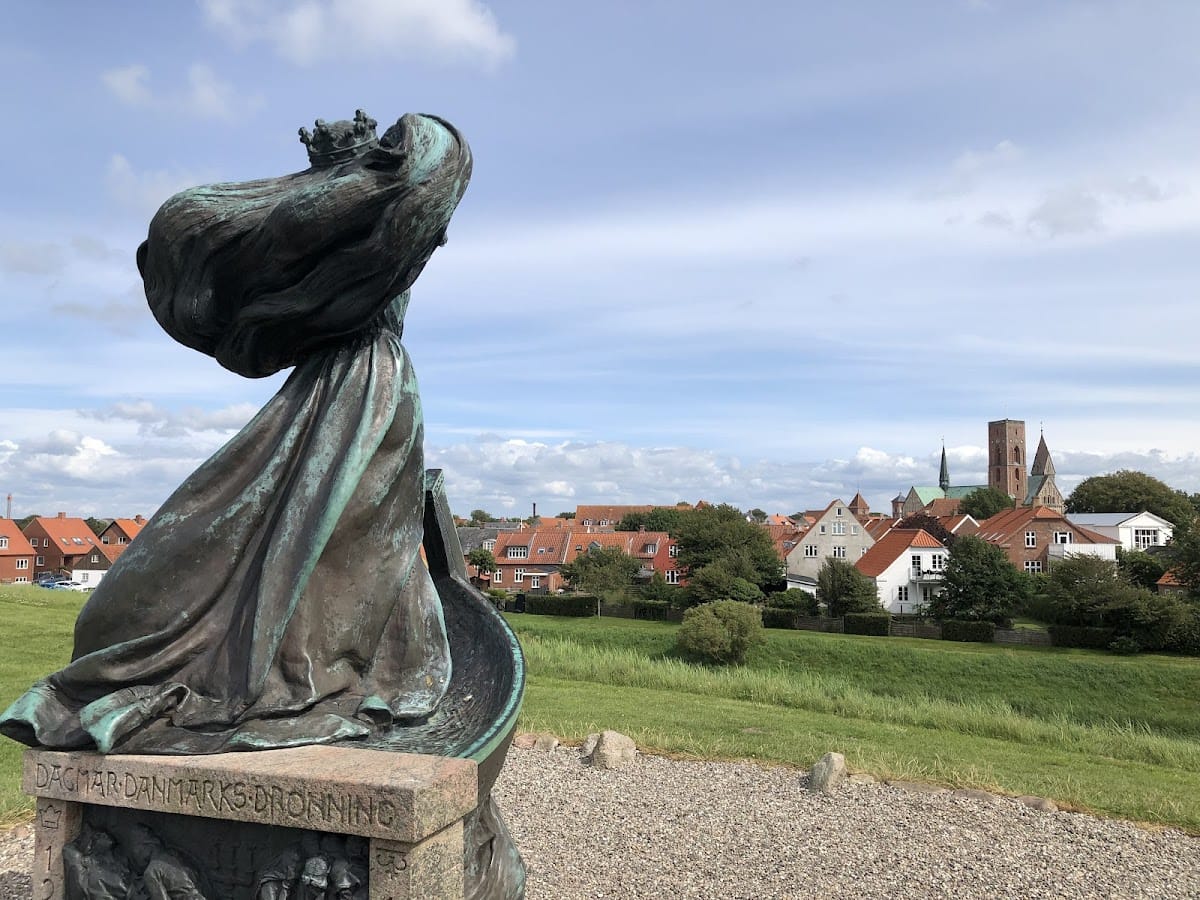
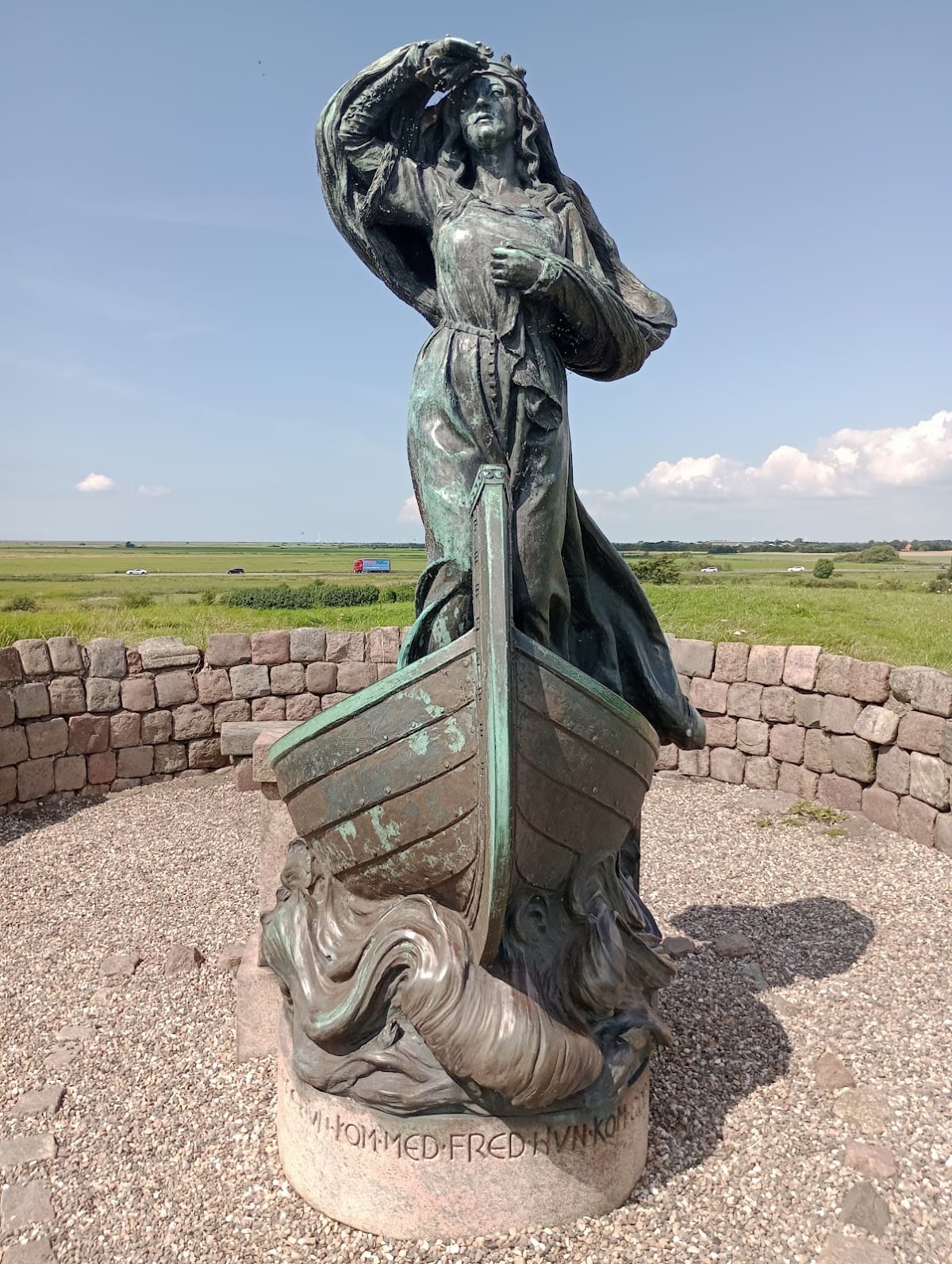
Beyond its political and military history, Riberhus holds cultural significance through its association with Queen Dagmar, who is traditionally said to have died at the site in 1212. This connection is celebrated in Danish folk songs and commemorated by a bronze statue of the queen, created by sculptor Anne Marie Carl-Nielsen and installed in 1913 near the castle’s southern corner.
Remains
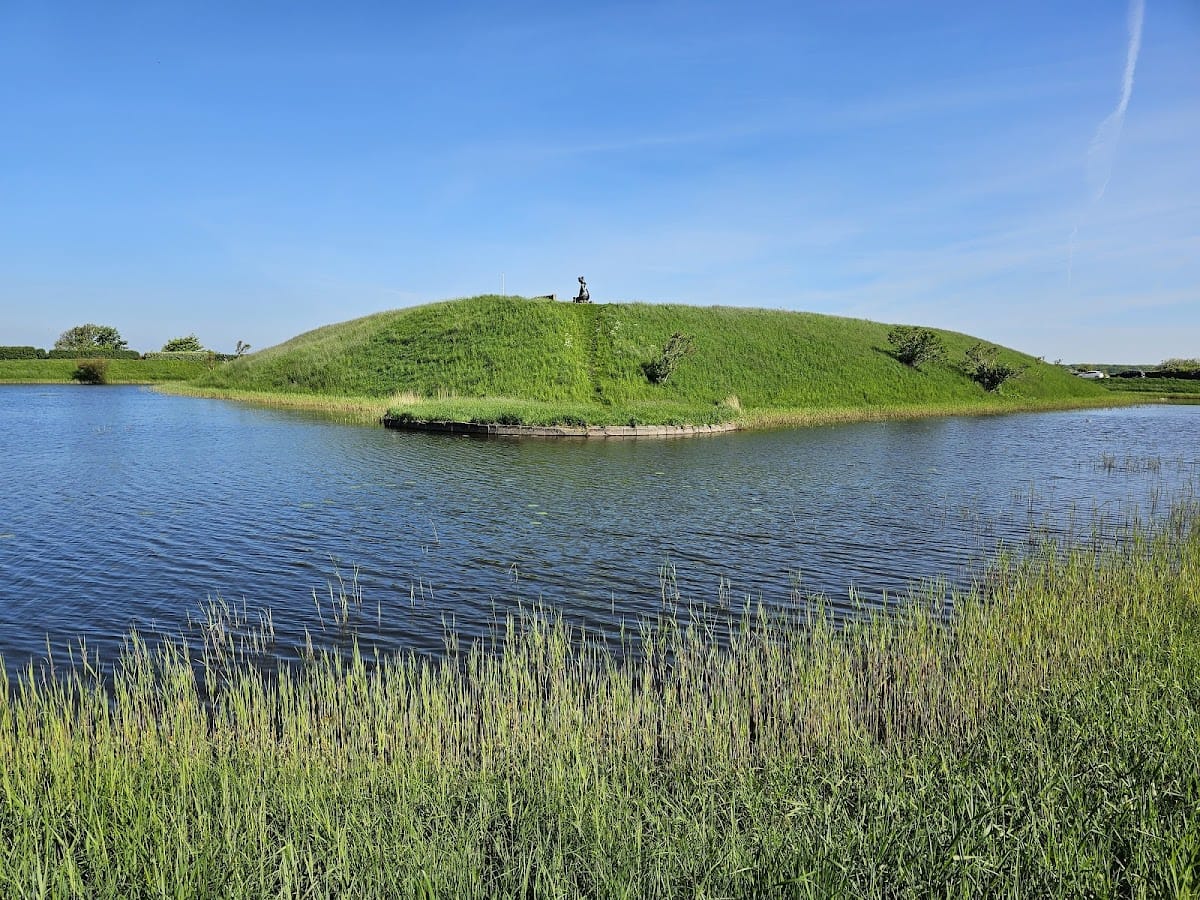
The site of Riberhus occupies a roughly square raised earthwork, or castle bank, measuring about 90 meters on each side and standing approximately 8 meters above the surrounding landscape. This elevated area was encircled by a broad moat roughly 30 meters wide, offering a defensive barrier that defined the castle’s perimeter.
At the southwestern edge of the castle bank stood the main building, formerly the center of royal residence and administration. This structure was dismantled in 1803 to provide materials for a road leading to Ribe Plantage. Facing it on the opposite side was a smaller building, also removed during the same road construction project.
Access to the castle bank was provided by a dam on the northern side. This location corresponds with a later bridge constructed in 1903 by the Ribe Tourist Association, suggesting continuity in the site’s access points over several centuries.
An excavation conducted in 1792 at the eastern corner of the castle uncovered two parallel thick walls, interpreted as the remains of a gate. These substantial walls likely served as a key entrance, controlling movement into the fortified enclosure.
A defensive tower stood at the southern corner, positioned strategically to oversee the channel that connected the moat to a nearby canal. This tower would have formed a crucial part of the castle’s water defenses, guarding against attacks approaching via the waterways.
Remains of the cellar belonging to the Skriverstuehuset, or “Scribe’s House,” survive at the eastern corner of the embankment. Dating from the 14th century, this building likely served administrative or clerical functions within the castle complex.
On the southern corner of the bank stands a bronze statue of Queen Dagmar, sculpted by Anne Marie Carl-Nielsen and unveiled on August 24, 1913. This commemorative piece reflects the enduring cultural memory tied to the castle and its association with the queen.
At the northern corner, a triangulation station, or postament, is present, indicative of later surveying activities on the site.
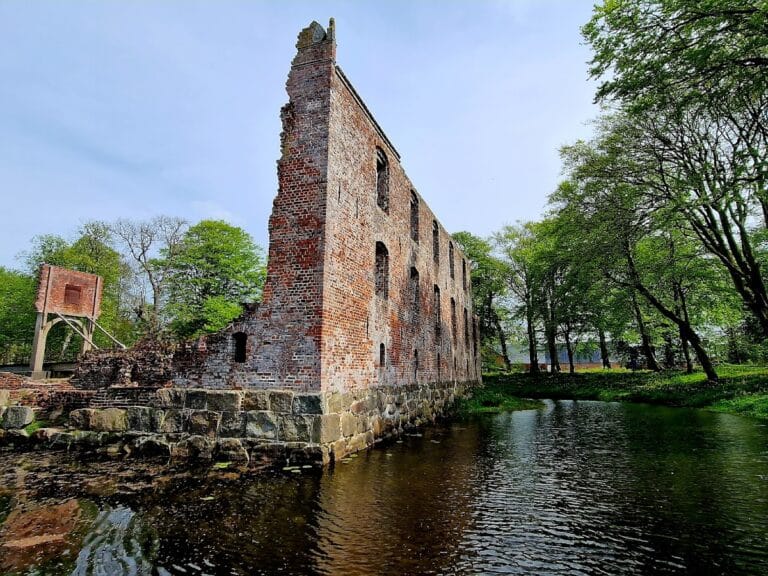
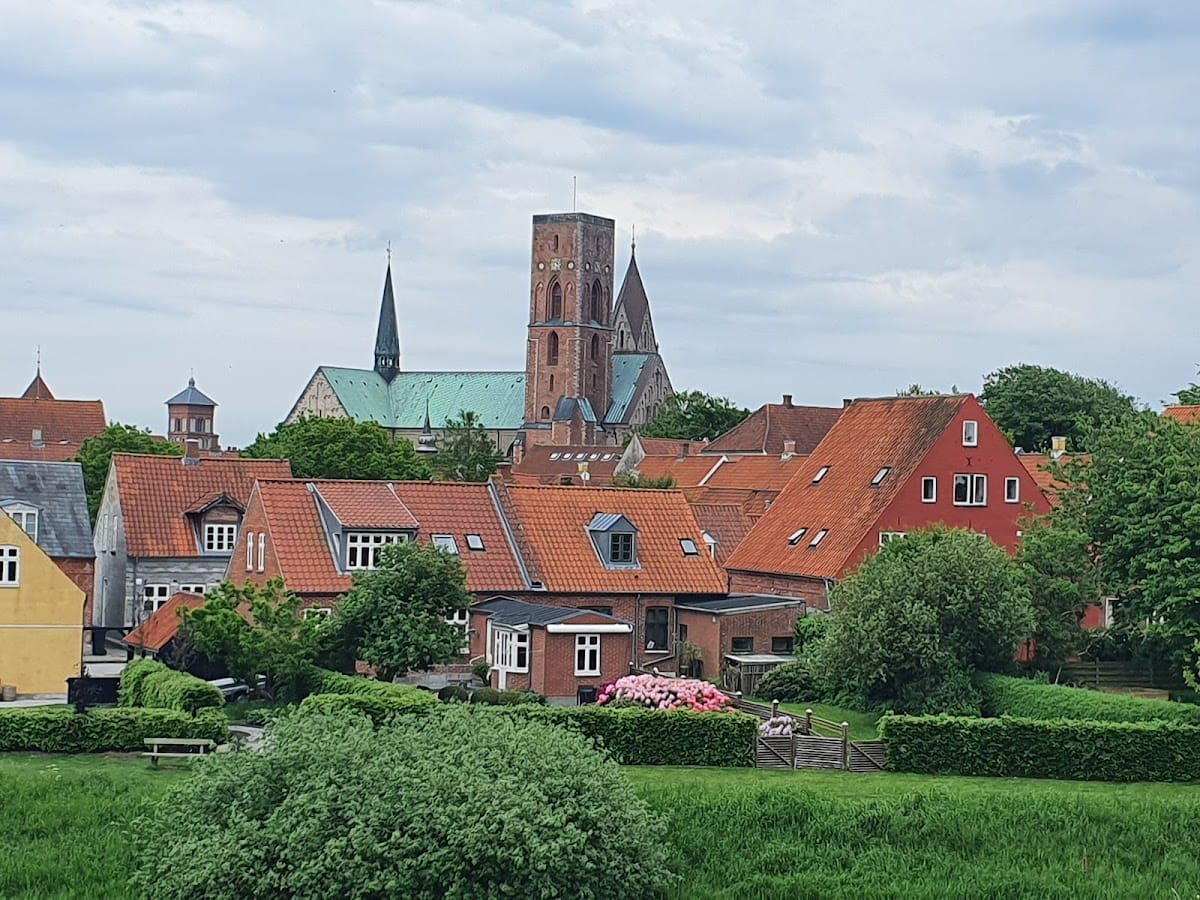
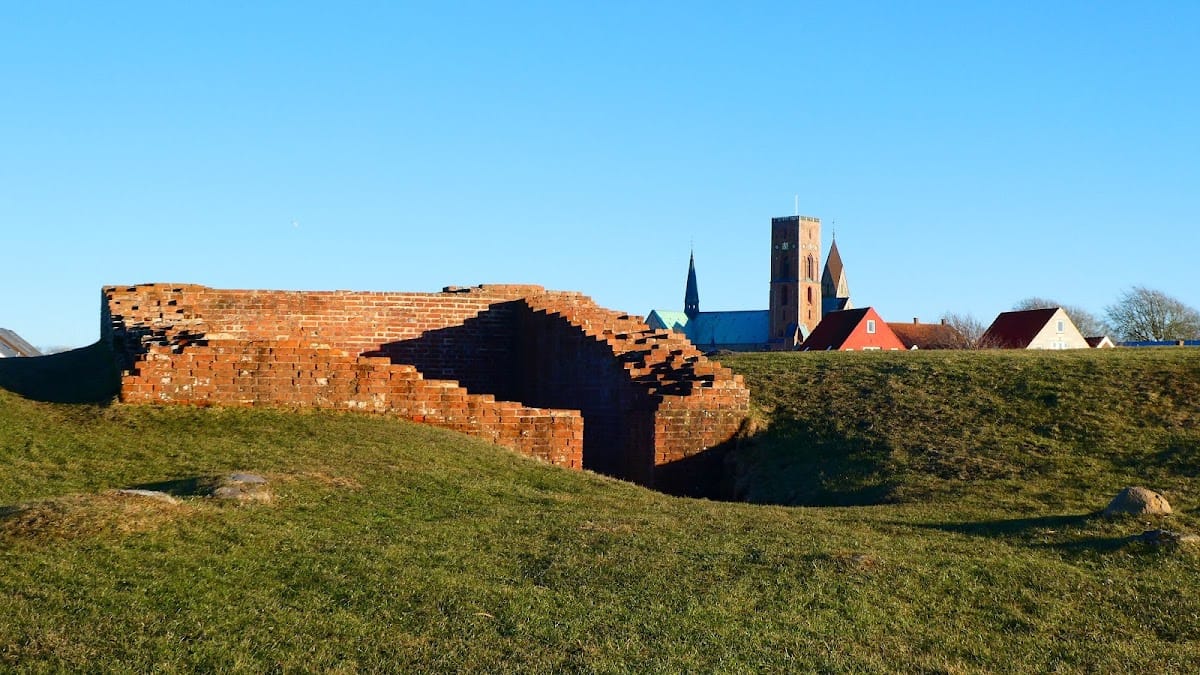
Though only limited fragments of walls remain today, the castle bank and surrounding moats are still clearly visible. The site is commonly referred to as Riberhus Slotsbanke or Toberhus Voldsted, preserving the historical footprint of the castle within the modern landscape.
During the 16th-century renovations, the castle’s construction incorporated bricks obtained by reusing materials from St. John’s Priory, demonstrating a practical approach to building resources. Later, in the 18th century, stones from the dilapidated structure found new life in local churches and road projects, evidencing a continued, if altered, physical connection between Riberhus and the surrounding community.