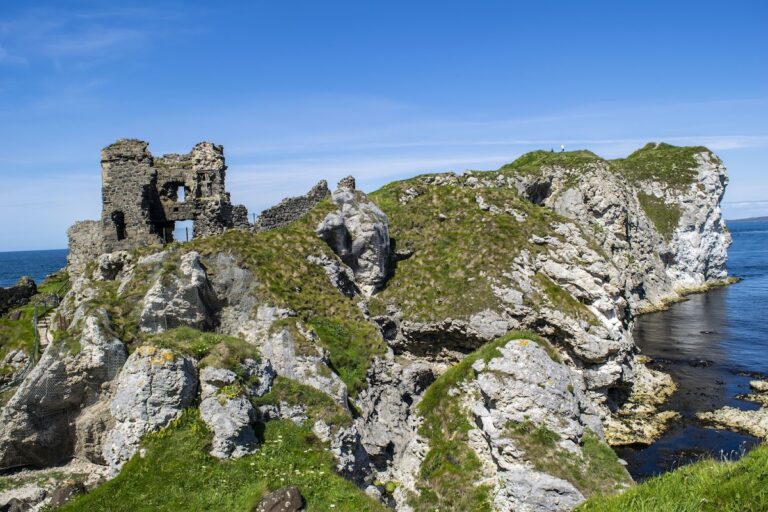
Red Bay Castle: A Medieval Coastal Stronghold in Northern Ireland
Site at a Glance
- Rating
- 4.4
- Popularity
- Low
- Country
- United Kingdom
- Primary era
- Medieval
- Eras represented
- Medieval
- Civilizations
- Irish, Norman
- Site type
- Military
- Remains
- Castle
On this page6 sections
History
Red Bay Castle is a thirteenth-century castle in Northern Ireland, United Kingdom, built by the Bissett family on the site of an earlier outpost of the Gaelic kingdom of Dál Riata. The earlier fortification was a motte-and-bailey, a raised mound paired with an enclosed defensive court. The castle stands in County Antrim and is now a ruin.
The Bissett foundation
The Bissett family came to Ireland after losing its lands in Scotland. Walter de Bisset was accused of murdering Patrick, Earl of Atholl, at Haddington in East Lothian in 1242. He and his family subsequently fled to Ireland, where King Henry III of England granted Walter extensive possessions in the Barony of Glenarm. This grant took place while English control of Ireland was still incomplete. The Bissetts then built Red Bay Castle in the thirteenth century.
MacDonnell ownership and destruction
John Mor MacDonald, the first Lord of Dunnyveg, acquired the castle through his marriage to Margery Bissett of the Glens of Antrim. His descendants, the MacDonnells of Antrim, expanded and rebuilt Red Bay Castle during the sixteenth century.
In 1565, Shane O’Neill, a Gaelic lord and chief of the O’Neill dynasty in Tyrone, burned the castle to the ground. Sorley Boy MacDonnell, a sixteenth-century leader of the MacDonnell family in northeastern Ireland, rebuilt it. The castle later fell into disrepair, but it was restored again in 1604. Oliver Cromwell’s forces destroyed it in 1652 during the campaigns that conquered much of Ireland between 1649 and 1653. The castle is also known by the Irish name Caislen Camus Rhuaidh.
Remains
Headland setting and earlier fortification
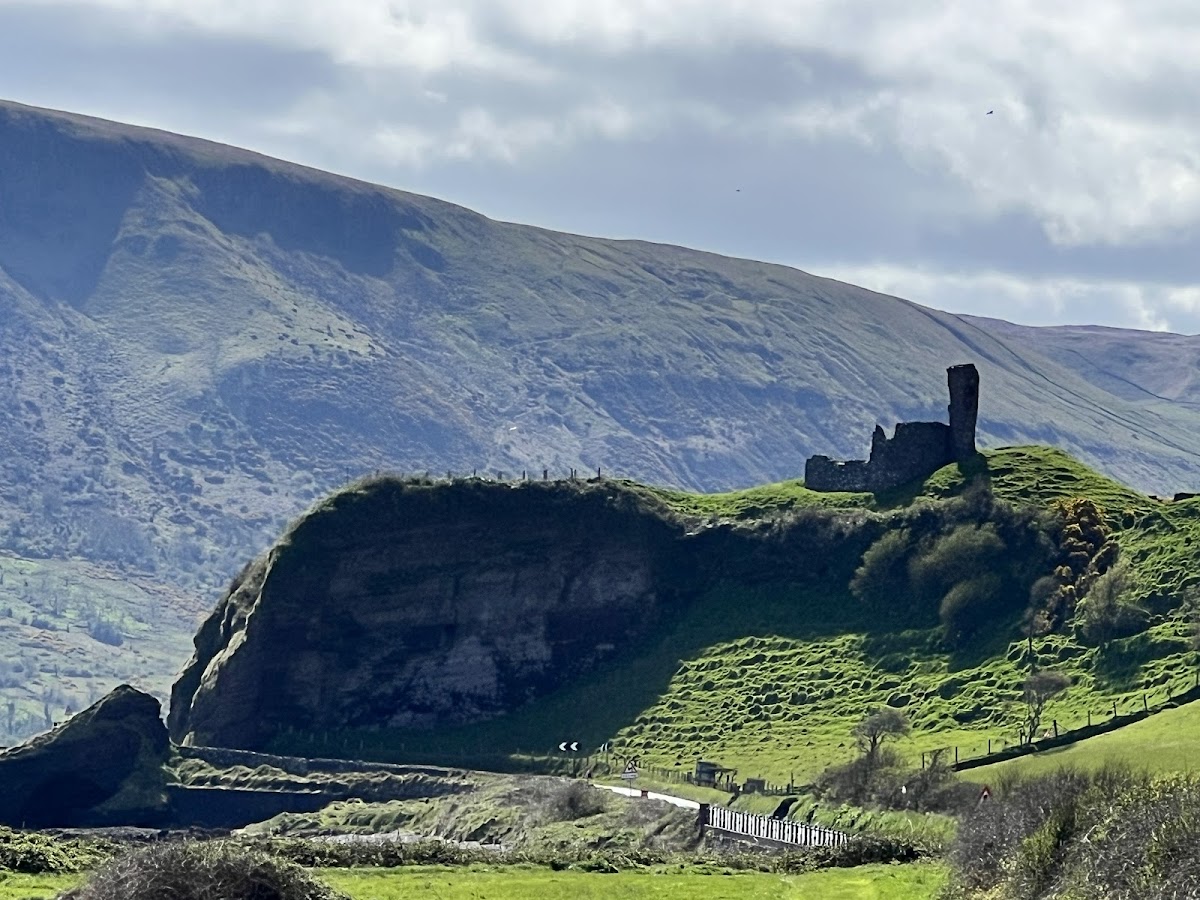
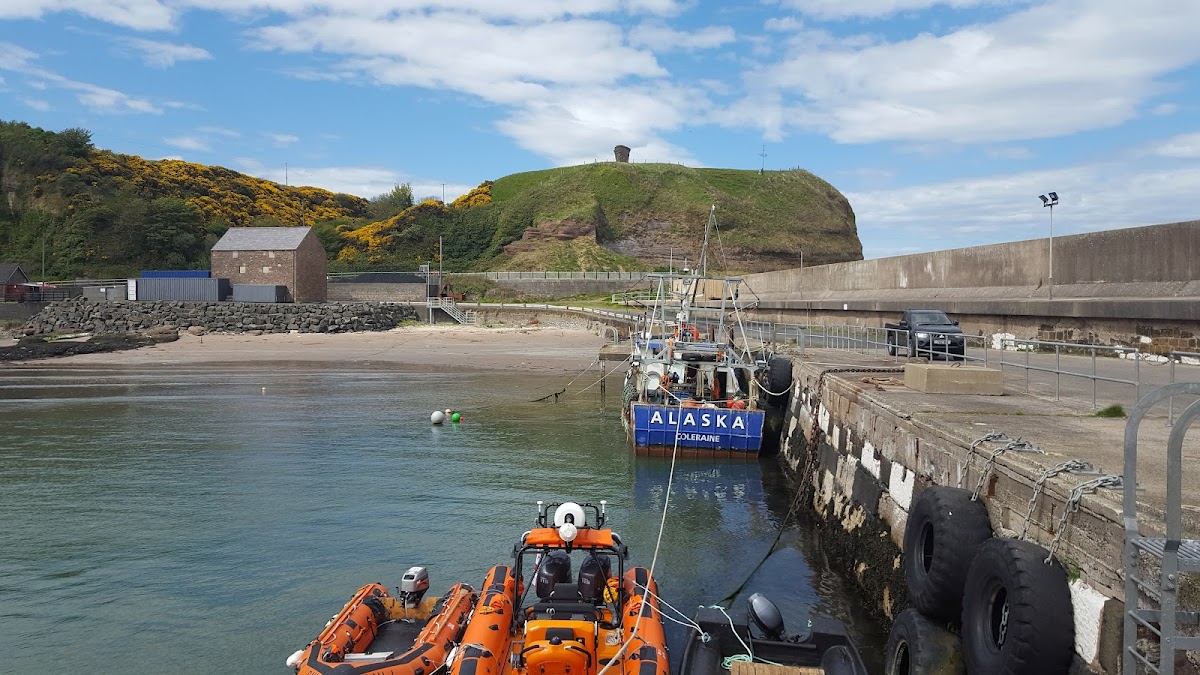
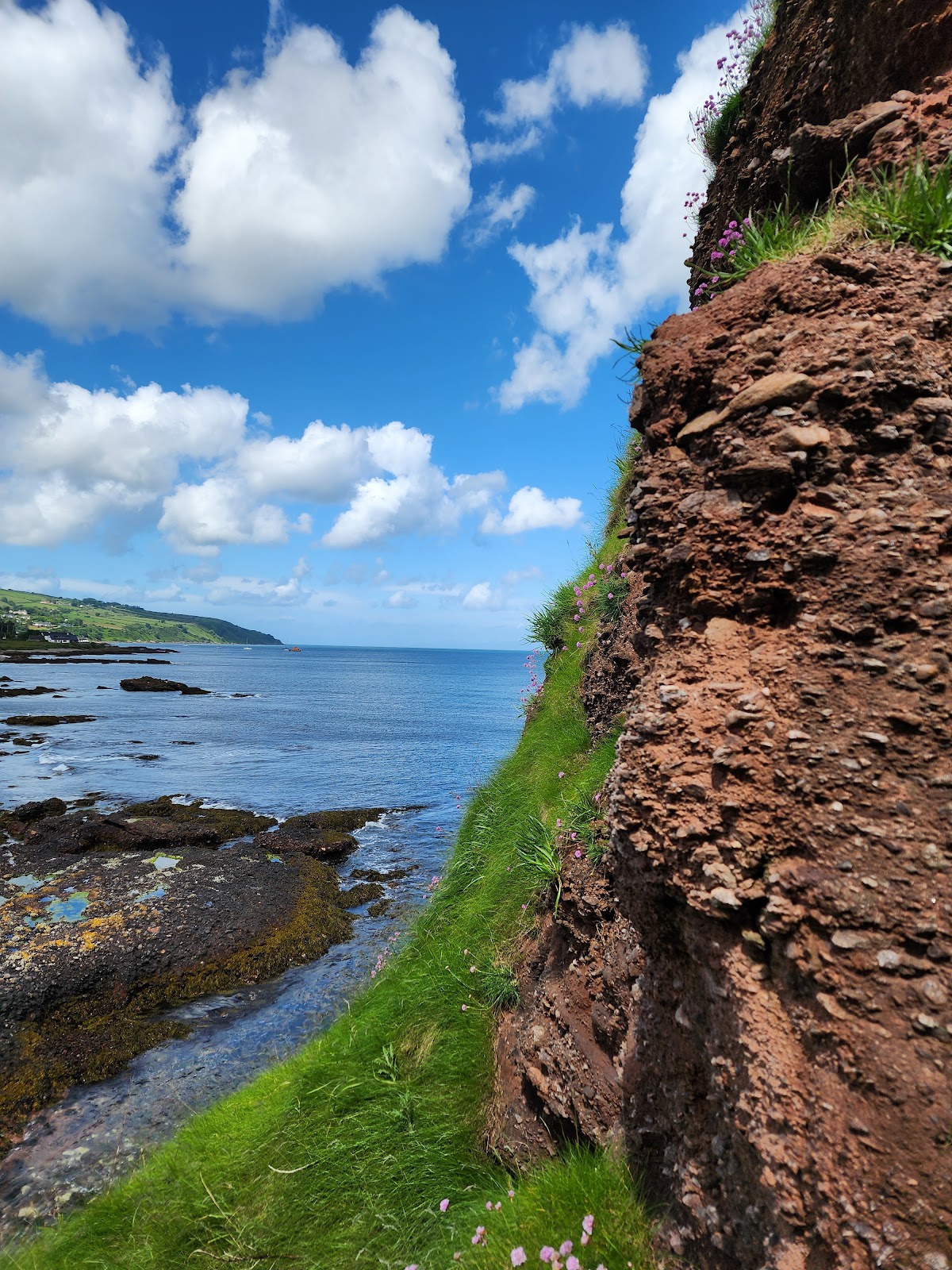
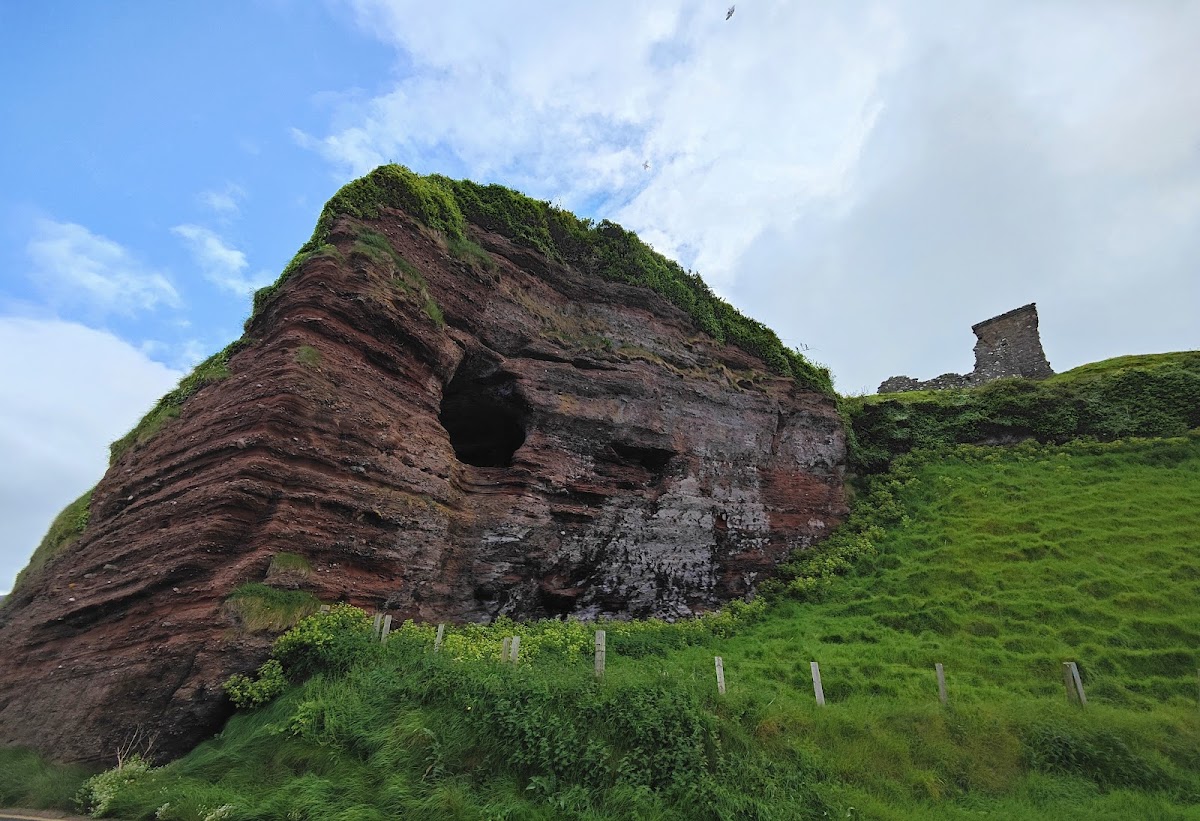
Red Bay Castle occupies a headland projecting into the sea north of Glenariff, on the route toward Cushendall. The position was already used for the earlier motte-and-bailey outpost of Dál Riata. That Gaelic kingdom encompassed parts of northeastern Ireland and western Scotland during the early medieval period. The later castle took its place on this earlier fortified site.
Surviving castle
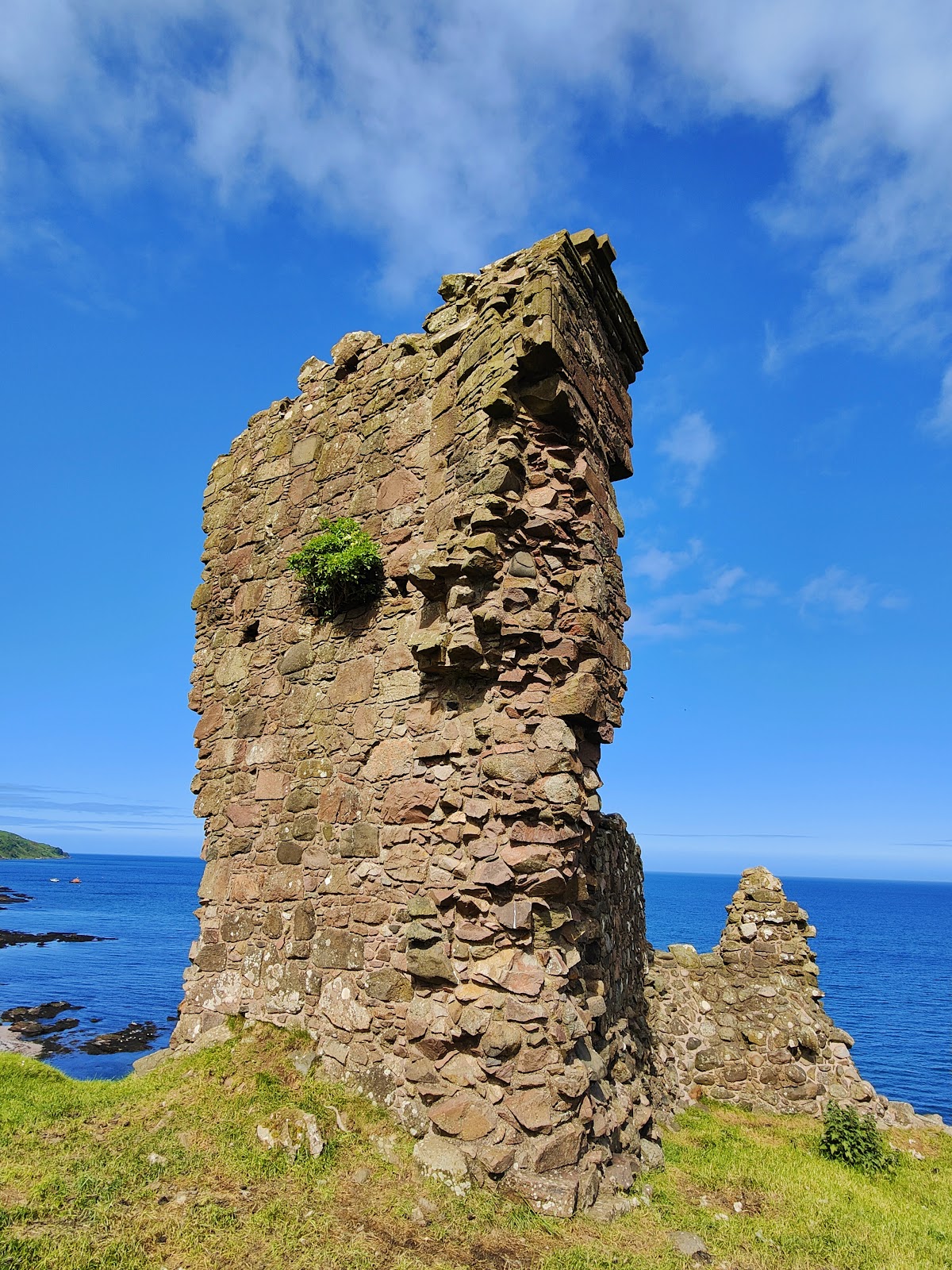
The surviving remains are in ruinous condition. They represent the castle established by the Bissett family and altered by the MacDonnells, followed by its restoration in 1604 and destruction in 1652.