Ratac Abbey: A Medieval Benedictine Monastery in Montenegro
Site at a Glance
- Popularity
- Medium
- Country
- Montenegro
- Primary era
- Medieval
- Eras represented
- Medieval
- Civilizations
- Serbian
- Site type
- Religious
- Remains
- Fortified Monastery
On this page14 sections
History
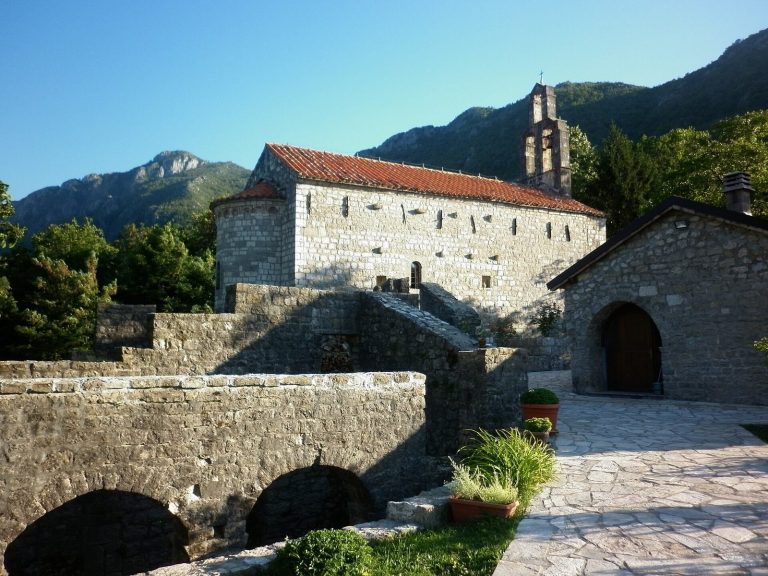
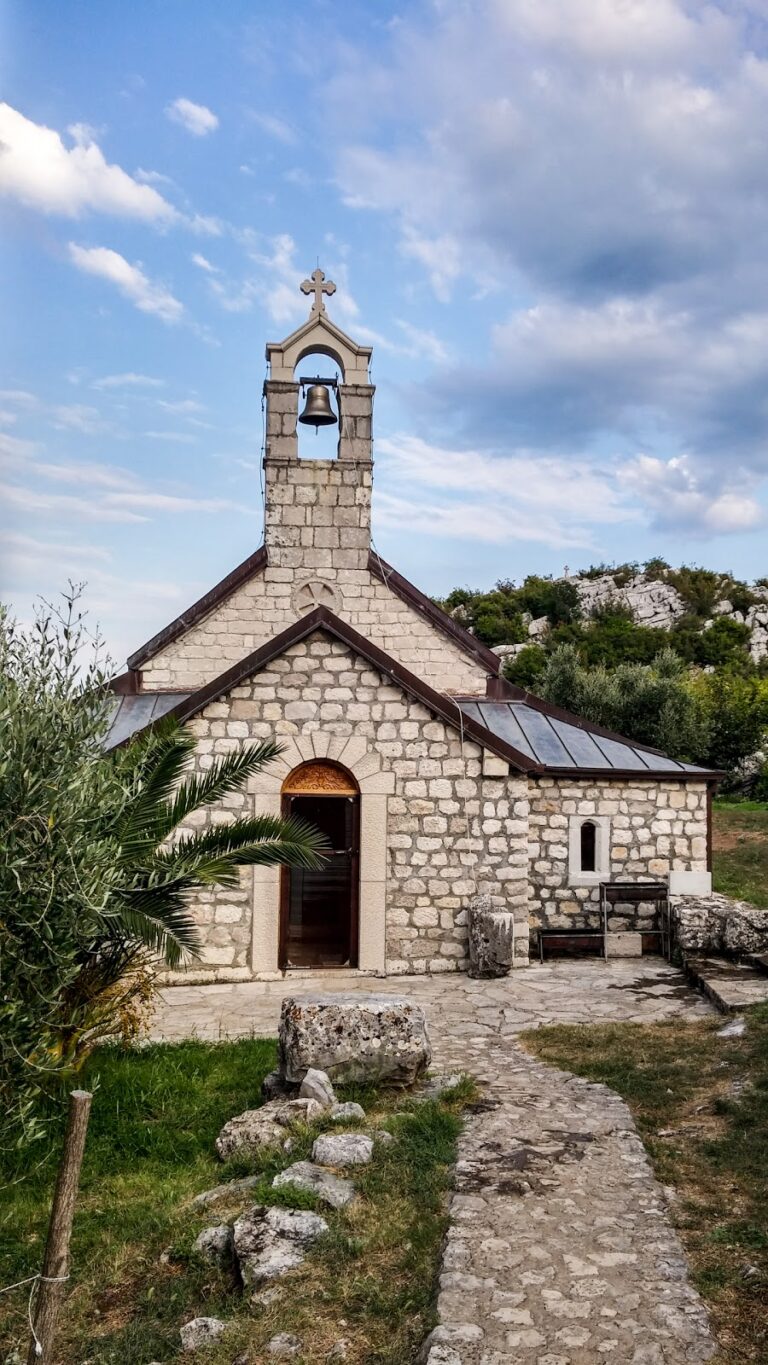
Ratac Abbey, also known as Santa Maria de Rotezo, was a Roman Catholic Benedictine monastery on the coastal headland between Bar and Sutomore in Montenegro. Benedictine communities followed the Rule of St Benedict. The abbey developed from the early medieval period into the sixteenth century, serving at different times as a religious house, hospital, source of loans, and fortified refuge. Its ruins later became a place of pilgrimage shared by Catholics and Orthodox Christians.
Early origins and royal patronage
Ratac is first mentioned in 1247, although it existed earlier. Its name derives from a word meaning “small headland.” The abbey’s early religious identity is described in more than one way. It was associated with devotion to the Archangel Michael, a leading angel in Christian tradition whose cult was linked to Mount Gargano in Italy. The nineteenth-century Russian writer Pavel Rovinski, by contrast, described Ratac as an Orthodox monastery dedicated to the Dormition of the Virgin, an Eastern Christian feast commemorating Mary’s death, which Queen Helen of Anjou later converted into a Catholic institution. A Marian icon became widely venerated, and in the thirteenth century the abbey’s title changed to reflect that devotion.
Serbian kings protected Ratac for a time, and their charters mention its hospital. In the early fourteenth century, Serbian king Stephen Uroš II Milutin confirmed gifts to the abbey from his mother, Queen Jelena. A charter dated 15 March 1306 named his son Stephen as his intended successor. The fourteenth century was also a period of active construction. The abbey’s hospital continued to serve poor people and, by the middle of the fifteenth century, also treated people with leprosy.
Venetian and Serbian rule
Venice seized Ratac at the start of the First Scutari War, a conflict involving Venice and regional powers around Shkodër. Venetian representatives and Balša III, ruler of Zeta, met on Ratac’s territory in 1407 to seek peace. The following year, Venice insisted on keeping the site. Under the 1426 Treaty of Vučitrn, Venice ceded Ratac to the Serbian Despotate, a medieval Serbian state ruled by a despot. Venice regained control in 1443.
A report from 1445 describes two abbots sharing the abbey’s income. Georgius Pelino removed his fellow abbot and administered Ratac alone; Petar Fortis later succeeded him. Pelino served both Venice and Skanderbeg, an Albanian noble and military leader, and worked to prevent Bar from falling to the Ottomans. At the height of its development, Ratac had considerable financial resources. It lent 1,505 perpers to Balša III and 250 ducats to Jelena Balšić, a member of the Balšić ruling family. The abbey also forgave half of a debt owed by Zeta’s ruler.
Venetian forces bombarded Ratac from ships in 1468. During the Ottoman siege of Bar in 1500, people from the surrounding area sought shelter inside the abbey’s fortified complex. Ratac was probably abandoned after an Ottoman raid in 1532, and Ottoman forces destroyed it in 1571.
Destruction and shared pilgrimage
A later account by Archbishop Vicko Zmajević gave a different history, dating the monastery’s construction to 1473 and attributing its destruction to an earthquake. He also wrote that Orthodox worshippers had taken over a chapel and that a bishop’s visitor later returned it to Catholic use. In 1671, Archbishop Andrija Zmajević described surviving chapels where services took place several times a year, especially on the Annunciation and Corpus Christi, with people from nearby communities attending.
By the eighteenth century, Ratac had become a pilgrimage site for both Catholics and Orthodox Christians, including during Corpus Christi processions. The Russian officer and traveller Jegor Kovalevsky later described two old churches among the ruins as drawing Orthodox and Catholic pilgrims from Dalmatia, Montenegro, and Albania, particularly for saints’ feast days in August and September. From the mid-nineteenth century, the two communities established separate places of worship within the complex. Joint Catholic and Orthodox services ended in 1860 after a sermon by Archbishop Karlo Pooten offended Orthodox worshippers. In 1865, Orthodox metropolitan Melentije directed Orthodox residents of Spič to worship separately. A local dispute over procession precedence led Spič Catholics to join Orthodox worshippers and allow them use of a chapel. Orthodox observance of the feast of Constantine and Helena continued.
Ratac was historically under the Roman Catholic Archdiocese of Bar, while its surviving ruins are now assigned to the Diocese of Kotor. Parts of the site have been disputed between the Roman Catholic and Serbian Orthodox churches, partly because a chapel was once made available to Orthodox worshippers. The Željeznica River marks the boundary between the two dioceses at Bar and also served as an earlier political border.
Modern damage
During the Second World War, Italian forces turned part of the complex into a bunker, damaging the abbey’s remains further.
Remains
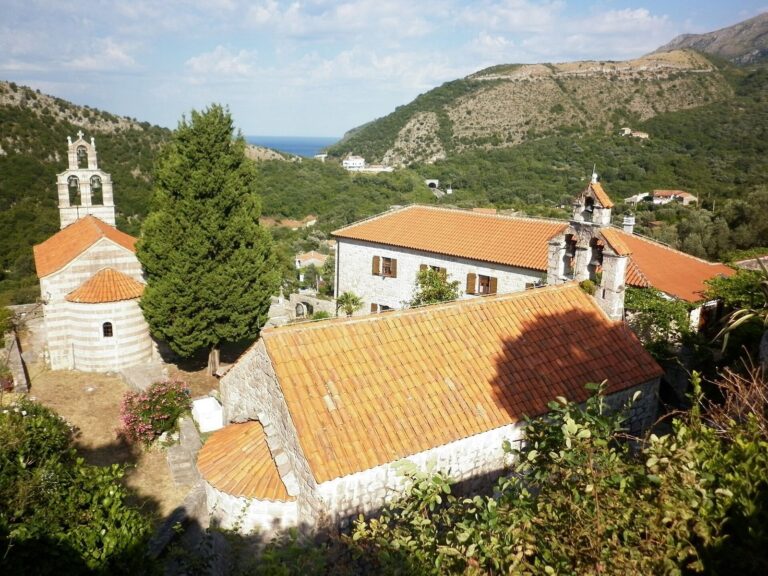
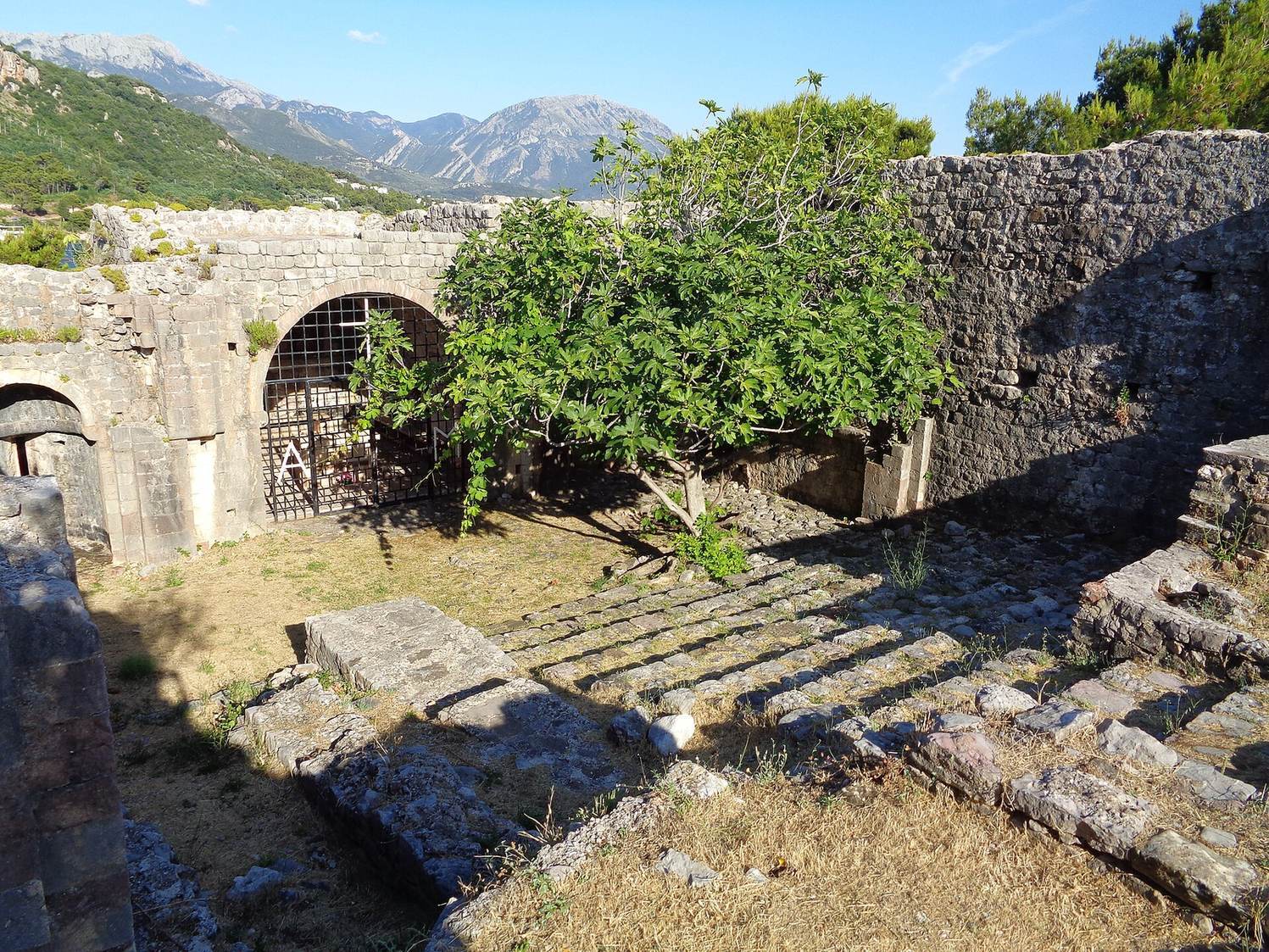
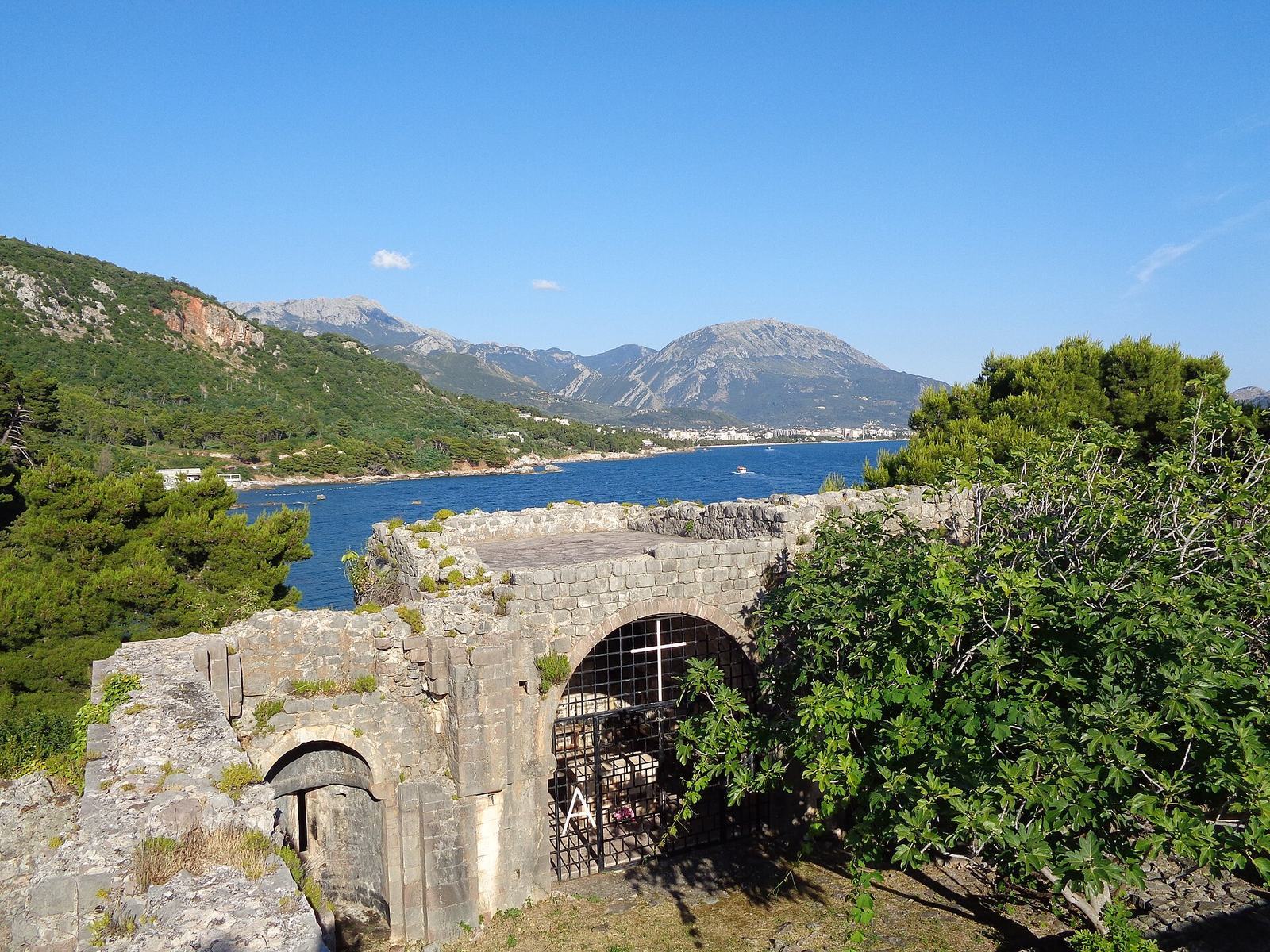
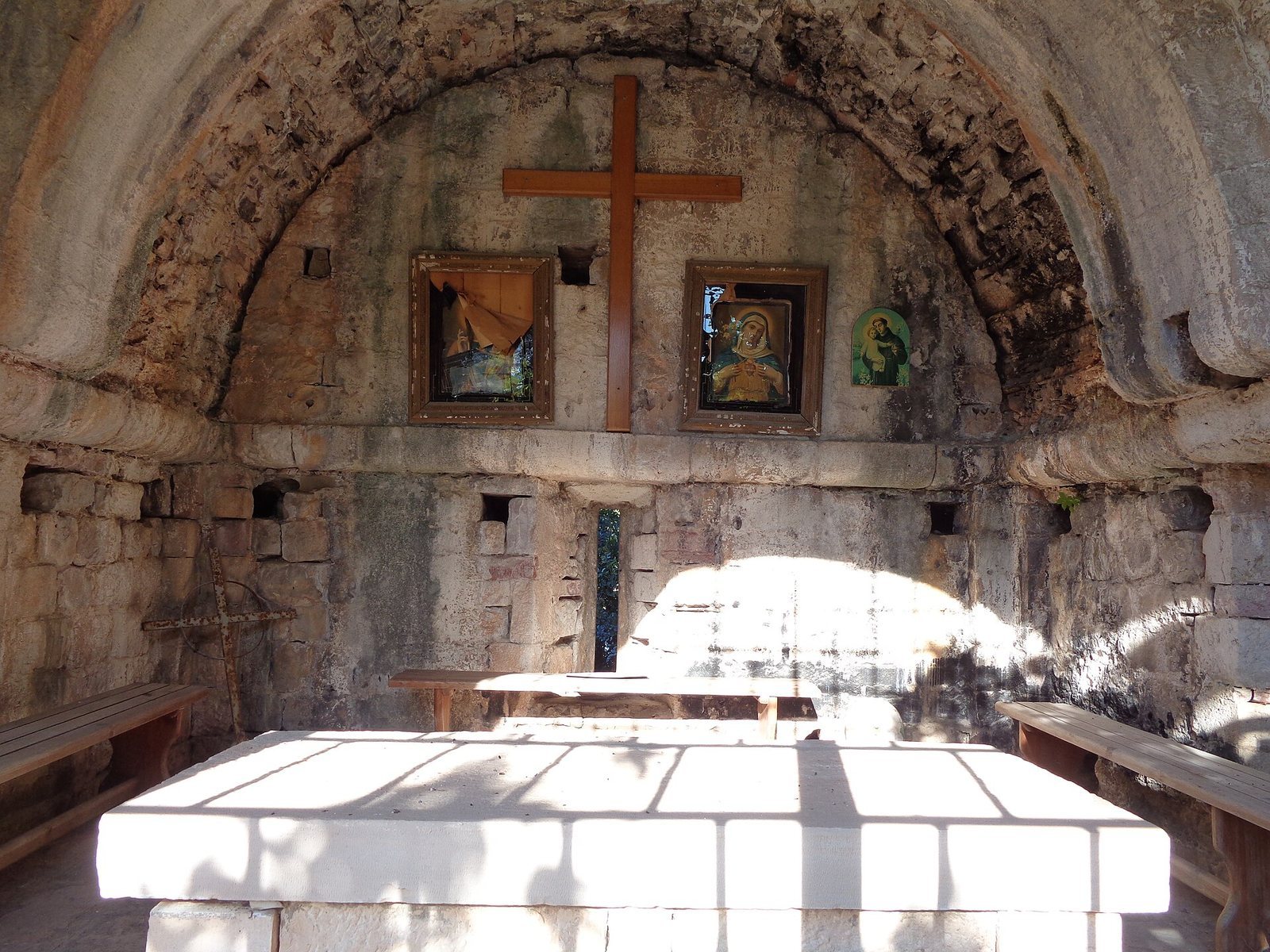
The ruined complex occupies a coastal headland and includes several churches as well as buildings for other purposes. Its remains represent several building periods, from the uncertain early date of its oldest church to the major construction activity of the fourteenth century.
Churches
Church C
Church C is the oldest building in the complex. Its date remains uncertain, with proposed dates in either the early ninth or early eleventh century. It may have served as a model for the Church of St Luke in Kotor.
Chapel A
Chapel A is a Romanesque building, from the medieval architectural tradition, dated either to the second half of the twelfth century or the first half of the thirteenth. Its masonry is noted for its high quality.
Basilica B
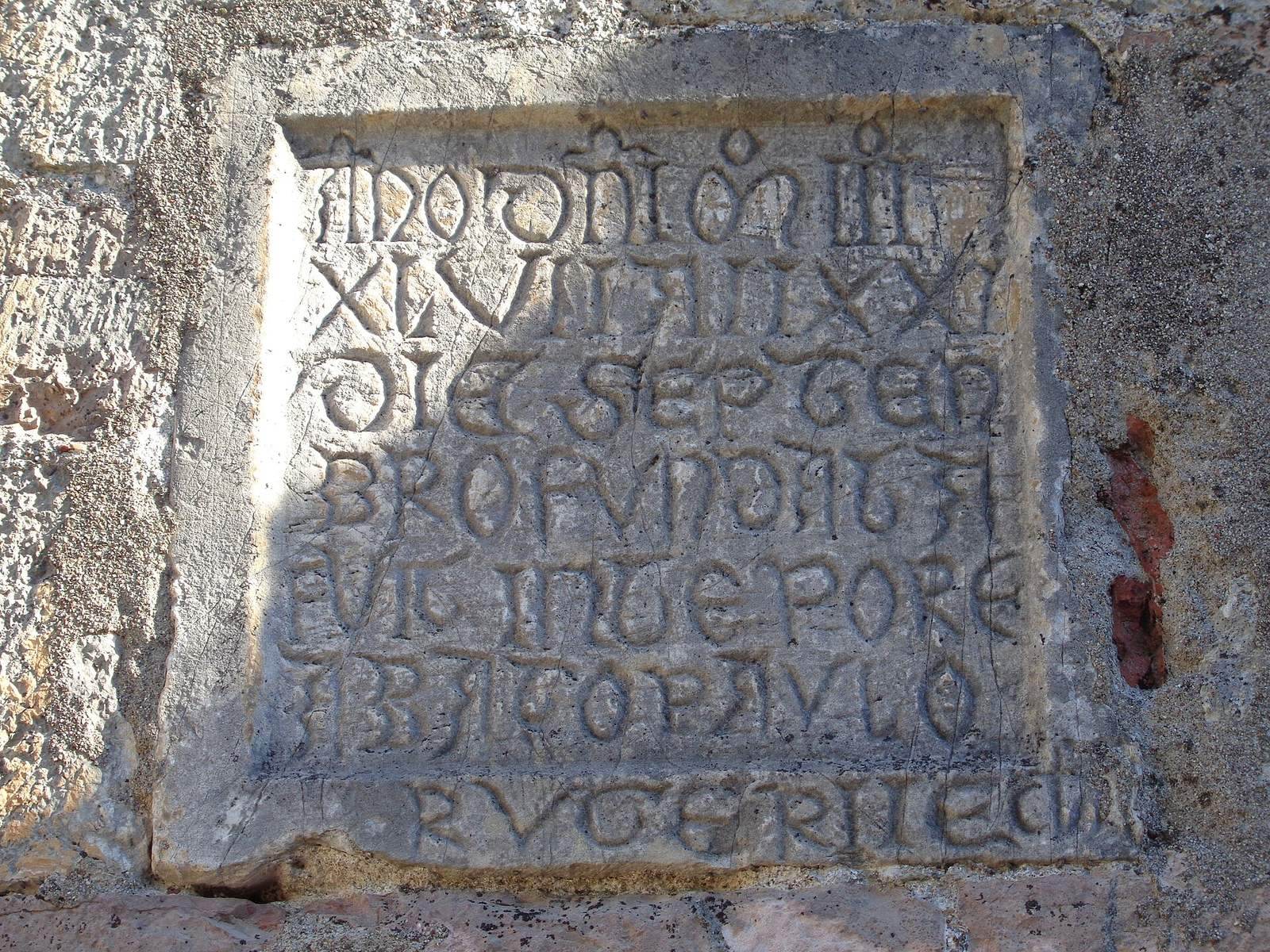
In the southern part of the monastery, the unfinished Basilica B was begun in the mid-fourteenth century. It was planned as the largest church in the complex and the surrounding area, including medieval Bar. Its Romanesque-Gothic design combined two medieval architectural traditions. A surviving Latin inscription dates its foundation to 1347, during the abbacy of Paul Ruđer. The church was first dedicated to the Archangel Michael and later to St Mary. Its stonework includes skilled carving, façades using white and red stone, and walls with pilasters, shallow rectangular projections from a wall. Builders from Visoki Dečani, a medieval Serbian Orthodox monastery, may have contributed to its construction.
A crypt, a chamber beneath a church, forms part of the Basilica of St Mary. During the period when Catholics and Orthodox Christians used separate worship areas, Catholics celebrated Mass there on Corpus Christi and the Assumption, the feast commemorating Mary’s being taken into heaven.
Monastic and defensive structures
Cloister and Tower G
A cloister, a covered passage usually enclosing an open court, stood beside a church and was built in the twelfth or thirteenth century. Tower G was constructed alongside it and played an important defensive role.
Other defences
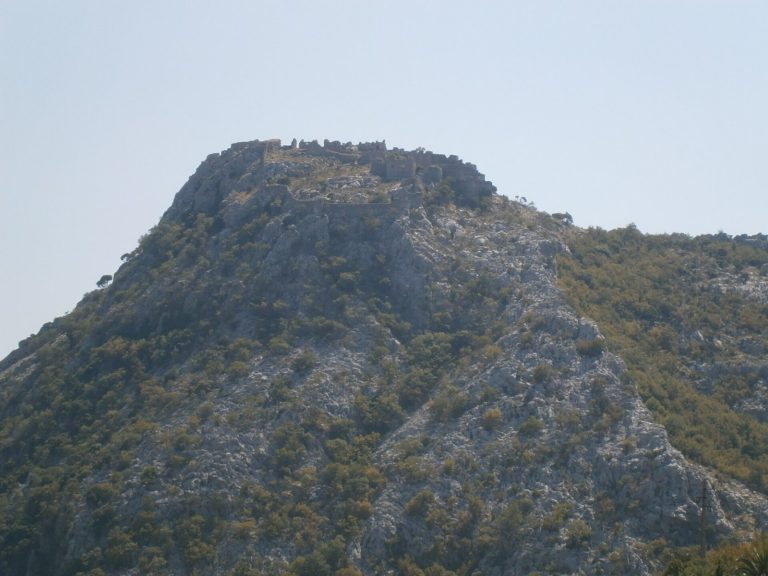
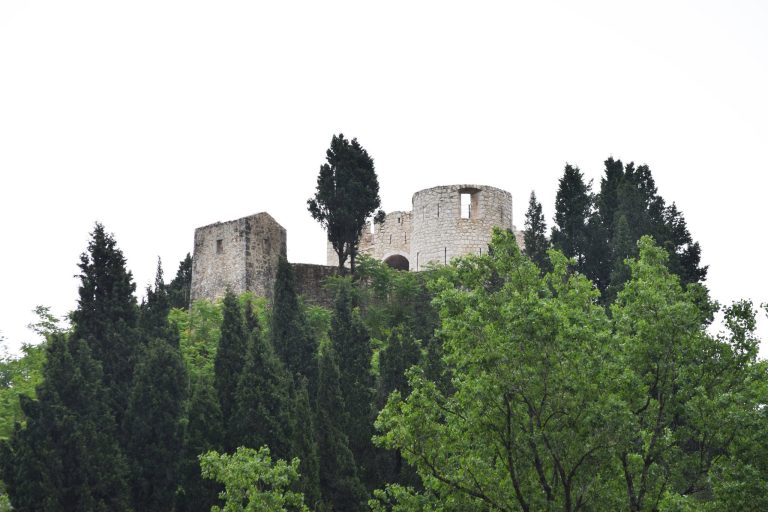
The complex also included the smaller Tower I, part of Wall K, Defensive Terrace L, and Wall M. The site may have been fortified earlier, but most surviving defensive walls are thought to postdate the area known as Complex D. Some wall sections may have collapsed into the sea. In the late 1950s, the Yugoslav People’s Army demolished a defensive tower, causing further damage.
Water supply
A source of fresh water lay along the route from the monastery toward Bar. A cistern may also have served the cloister.