Mníšek pod Brdy Castle: From Royal Stronghold to Aristocratic Residence
Site at a Glance
- Popularity
- Medium
- Country
- Czechia
- Primary era
- Early Modern
- Eras represented
- Medieval, Early Modern
- Civilizations
- Habsburg, Habsburg Austria, Holy Roman Empire, Kingdom of Bohemia
- Site type
- Domestic
- Remains
- Castle
On this page8 sections
History
Mníšek pod Brdy Castle is a medieval castle in Czechia, established as a small royal stronghold before 1348. Archaeological finds indicate that it was already standing by the late 13th or early 14th century. Its first recorded mention came in 1355, in the unpublished Majestas Carolina, a proposed legal code associated with Charles IV, King of Bohemia and Holy Roman Emperor. The code was never promulgated.
Royal castle and aristocratic residence
The castle’s ownership included the House of Luxembourg, a medieval dynasty whose members held the Bohemian and imperial crowns. The Vratislav family of Mitrovice acquired it in 1487 and owned and administered it throughout the 16th century. Swedish forces led by General Banér plundered the castle in 1639 during the Thirty Years’ War, a major European conflict of the 17th century. It then fell into disrepair.
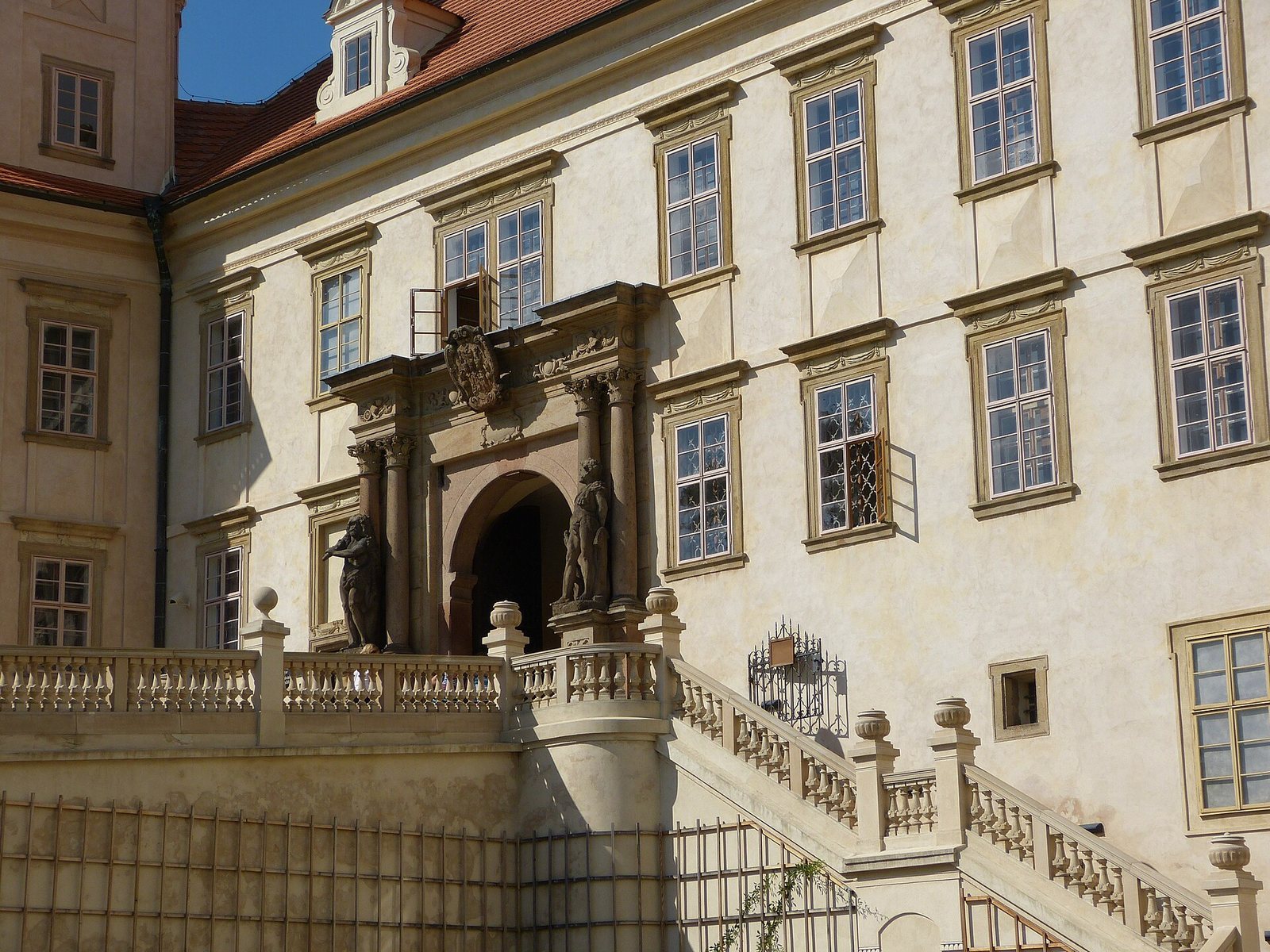
Servác Engel of Engelsfluss bought the castle from the Vratislav family in 1655. Between 1656 and 1672, he rebuilt it, changing a Baroque fortified manor, a defensible residence for a noble family, into an aristocratic residence. The Unwerth family made minor alterations in the second half of the 18th century.
Ownership and damage in the 18th and 19th centuries
After Ignác Umwerth’s death, the castle passed to the Pacht family of Rájov. Family disputes led officials responsible for the Land Tables, Bohemian records of landholdings and property rights, to administer it until 1838. The castle burned in 1848.
Modern ownership and restoration
Baron Karel Schirndinger of Schirnding owned the estate around the turn of the 20th century. Theodorich Kast of Ebelsberg inherited it in 1909 and renovated the castle in 1910–1911. After the First World War, the Ministry of Agriculture placed Kast’s estate under compulsory administration and appointed Antonín Komperec as administrator.
The castle was plundered in 1945 and confiscated. From 1946, the Ministry of the Interior administered it and used it to store important, politically sensitive archival collections. The oldest known depiction of the castle dates to 1622. After the archives were removed in 2000, the National Heritage Institute, the Czech state body responsible for heritage preservation, took over the site and began a gradual restoration. Extensive reconstruction continued until 2006. The castle is state-owned, administered by the Institute, and protected as a cultural monument.
Remains
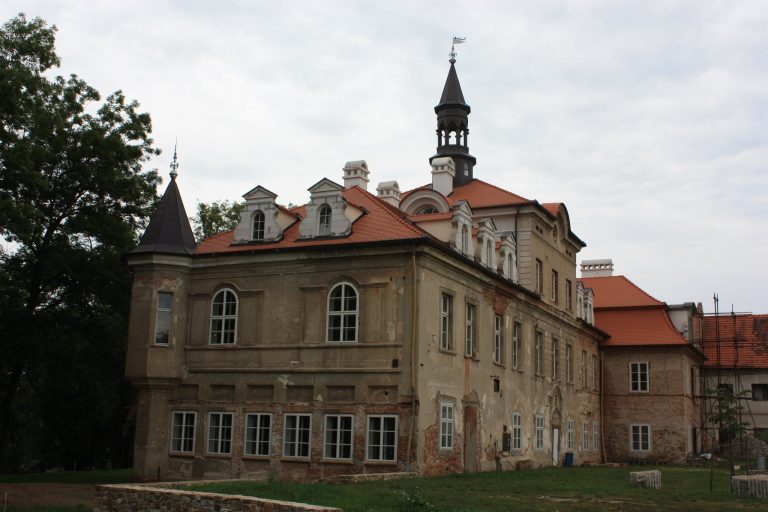
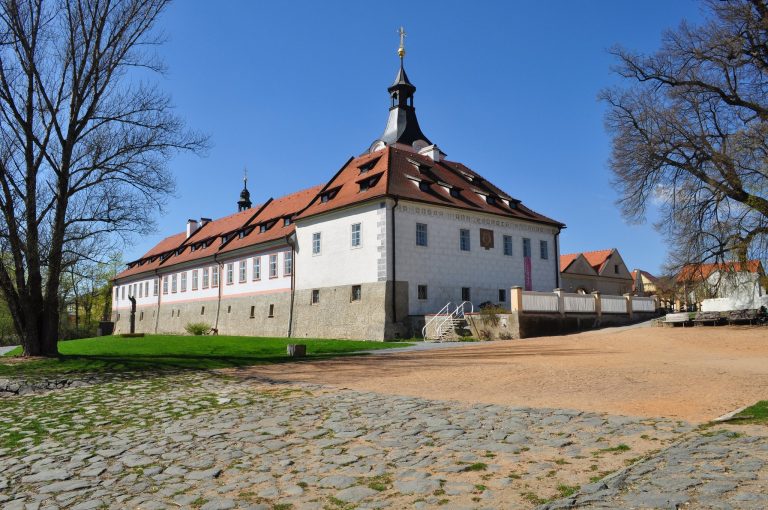
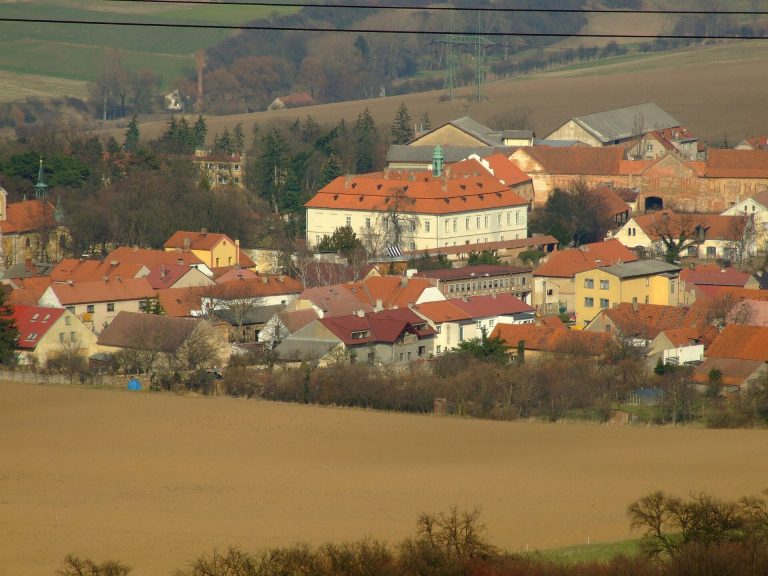
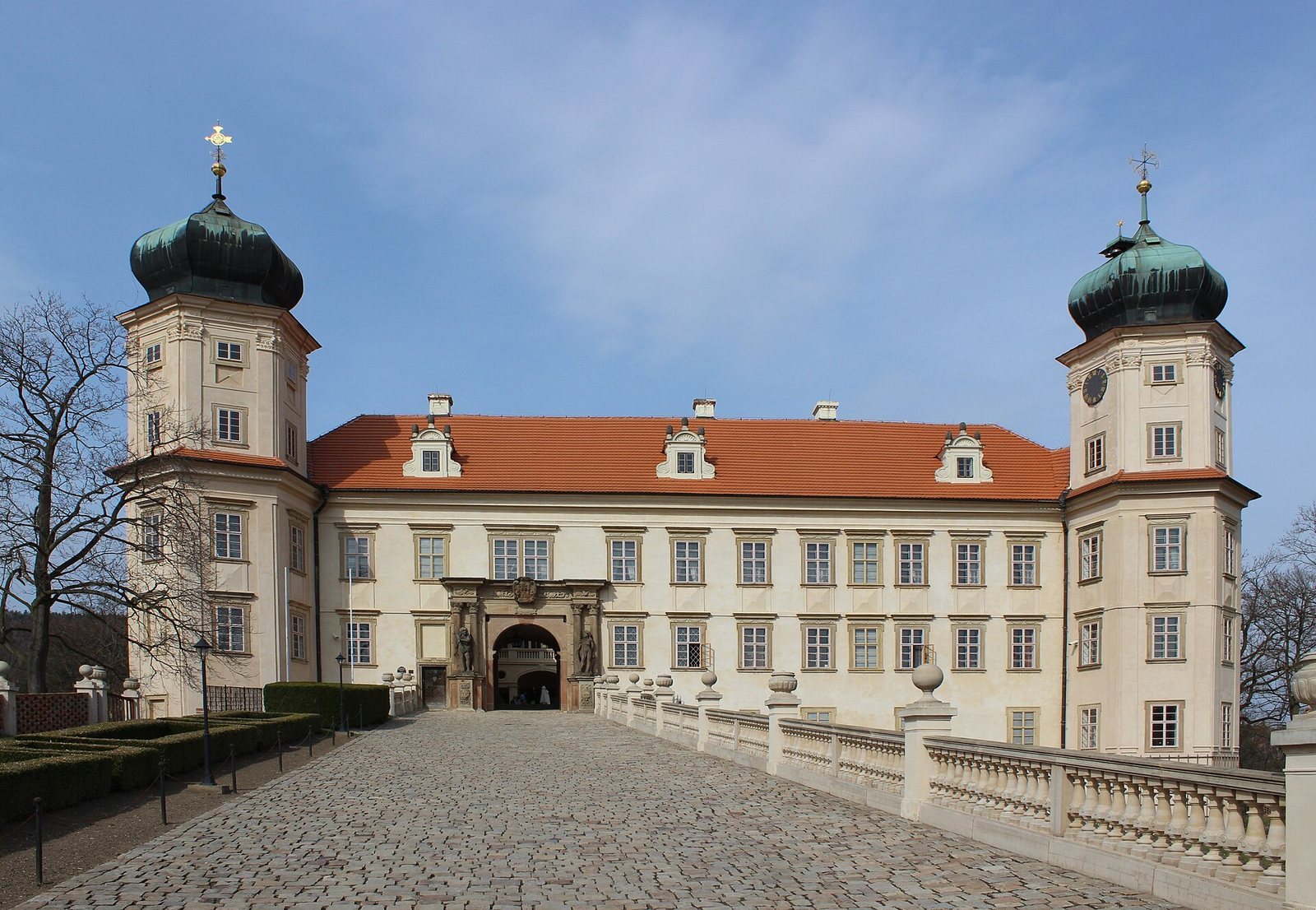
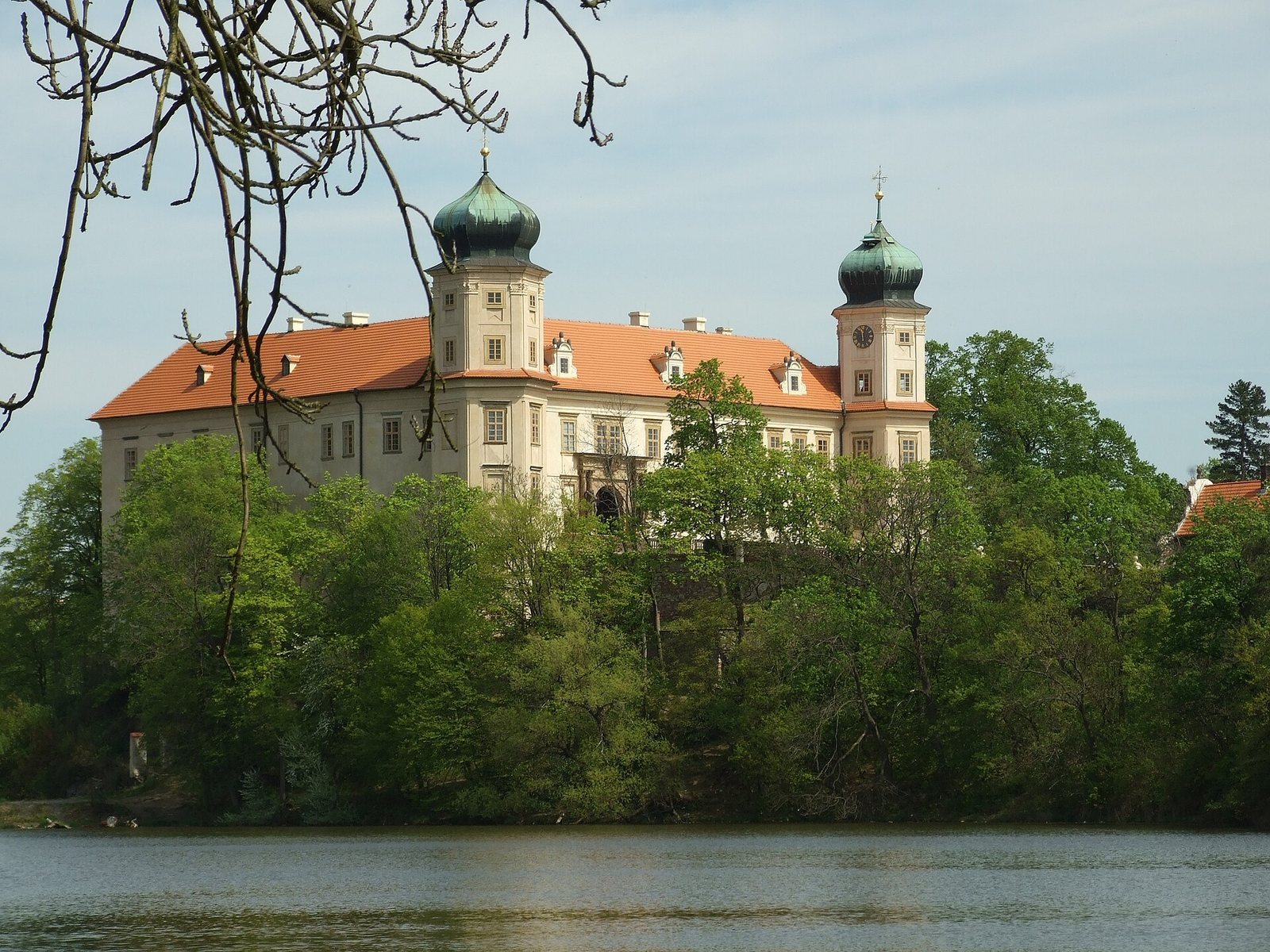
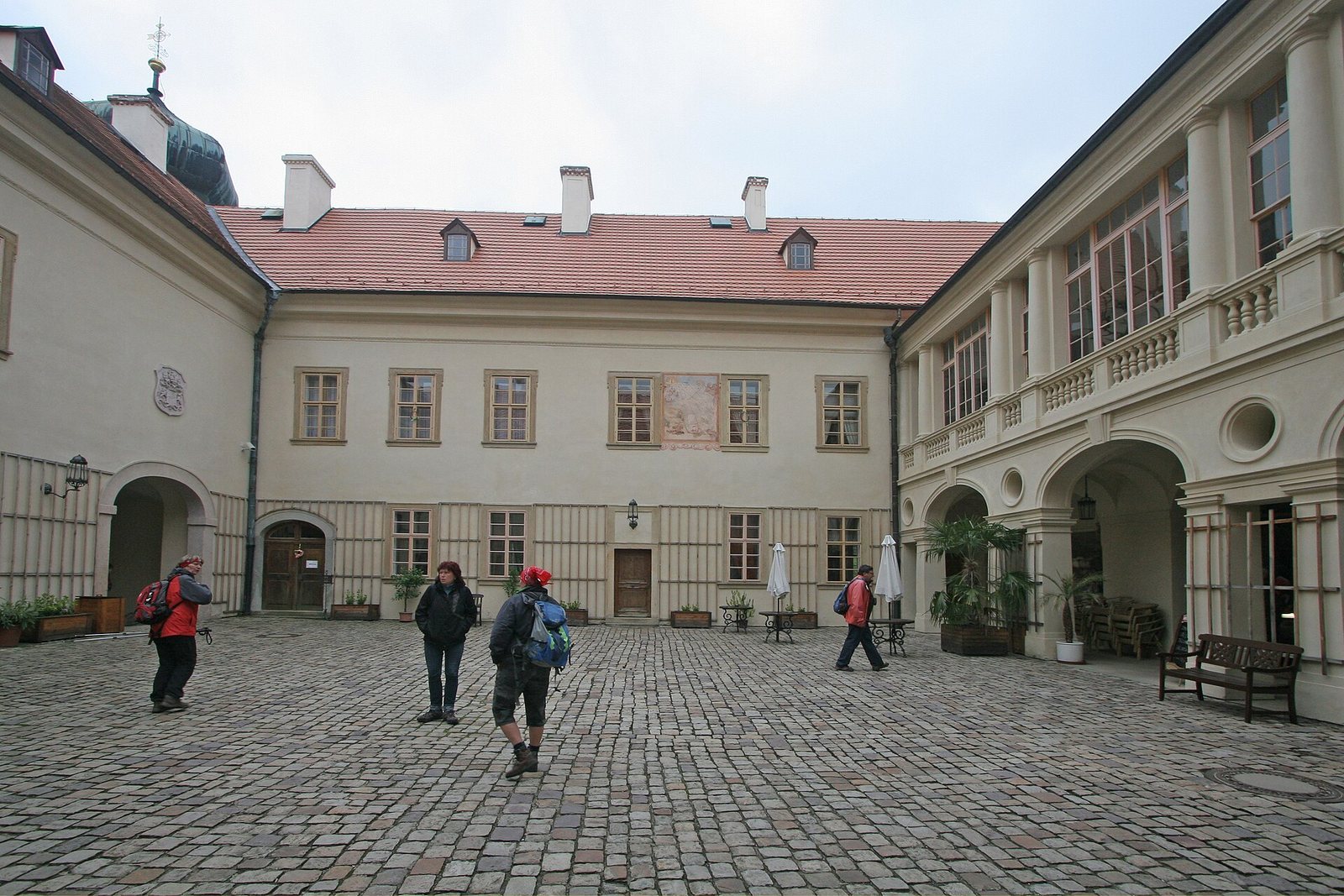
The surviving château has a larger footprint than the medieval fortified area and is classified as Classicist in style, drawing on ancient Greek and Roman forms and often emphasizing symmetry and proportion. It includes a clock tower, with part of the clock mechanism housed in the attic.
Medieval castle
Enclosure and footprint
The medieval castle was enclosed by a perimeter wall around an approximately droplet-shaped area. Its pointed end lay at the southwest corner of the present château, and the fortified enclosure was substantially smaller than the château’s surviving footprint.
Tower and archaeological traces
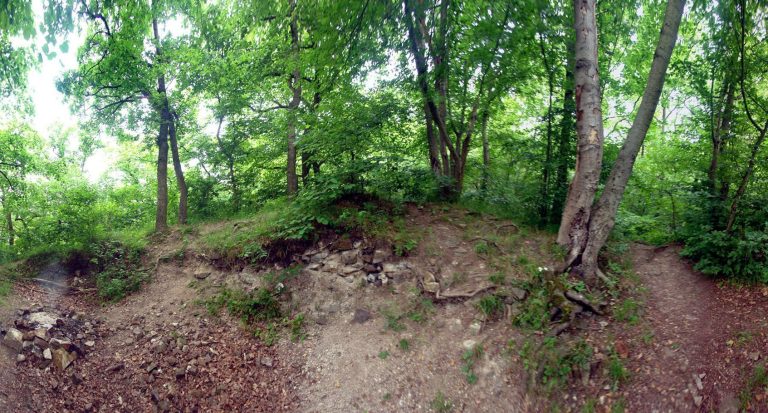
Written records describe at least one tower belonging to the medieval castle; it was demolished in 1425. A small archaeological investigation identified a feature cut into the rock in the southeastern corner of the château’s interior. Projections on the north wing’s façade may also date from the medieval period.