Qatrana Castle: A Pilgrims’ Khan on Jordan’s Syrian Route
Site at a Glance
- Country
- Jordan
- Primary era
- Early Modern
- Eras represented
- Medieval, Early Modern
- Civilizations
- Mamluk, Ottoman
- Site type
- Military
- Remains
- Castle
On this page11 sections
History
Qatrana Castle, also known as Khan Qatraneh, is a fortified roadside lodging complex in Jordan, generally assigned to the Ottoman period and often associated with 1531, though an earlier Mamluk origin has also been proposed. A khan was a lodging complex for travelers and caravans. Qatrana was one of at least ten such establishments along the Syrian pilgrimage route, which carried pilgrims from the Levant toward the Hejaz in western Arabia. It offered shelter, protection, and water for people undertaking the Hajj, the Muslim pilgrimage to Mecca, while helping maintain travel and communications between the two regions.
Origins and the pilgrimage route
The date of Qatrana’s first construction remains disputed. The site is commonly regarded as Ottoman, with its construction often linked to Sultan Suleiman I in 1531. Another interpretation holds that the original lodging complex was built under the Mamluk Sultanate, which ruled Egypt and Syria before Ottoman expansion, and was later repaired or rebuilt by the Ottomans. The earliest cited reference to Qatrana is associated with Ibn Habib al-Halabi, a writer who lived from 1310 to 1377, indicating that the site existed before Ottoman rule.
In 1520, the Aleppine traveler Ibn al-Shamma found the khan partly dilapidated but still largely occupied. He was accompanying a returning pilgrimage caravan, which had stopped at al-Hasa before reaching Qatrana. The visit took place as travel along the Jordanian route resumed after a period of disruption. Following the capture of Tuman Bay, the last Mamluk sultan, in 1517, Ottoman authority was proclaimed in Damascus. Tribal resistance and unrest in eastern Jordan made the route unsafe, and the Syrian caravan was diverted through Egypt and Gaza.
When the Jordanian route reopened in 1520, a large caravan passed through with pilgrims from Aleppo, Hama, and Ottoman lands. The Damascene chronicler Ibn Tulun described it as the largest caravan in seventy years. The Ottomans later repaired the earlier khan and placed troops there to protect pilgrims and support communications. Suleiman I is also credited with financing the cleaning of Qatrana’s pool, although that attribution is uncertain.
Ottoman service and conflict
Qatrana served both as a defensive post and as accommodation. It may also have operated as a trading place and storehouse for pilgrims. During the Hajj season of 1699, Arab tribes took control of the castle and erected barricades at the water source at al-Hasa. The Ottoman Pasha of Ajlun, a high-ranking official, was assigned to meet the caravan and help counter the threat. In 1726, an attack during the pilgrimage season may have killed everyone inside the castle.
Later use and conservation
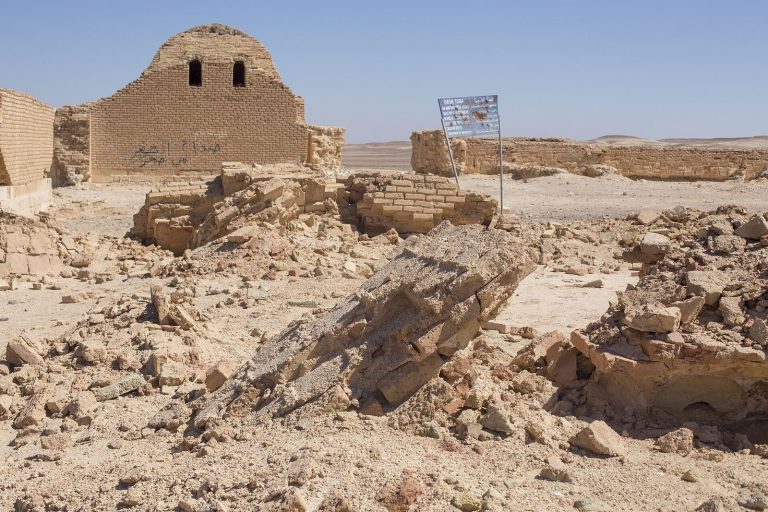
In the nineteenth century, the complex may have served as a basic post office, and a photograph from that period suggests that it may also have been used as a mosque. The travel writer Al-Khiyari described residents selling hay and other supplies to pilgrims, lowering provisions from the upper level while the gate was closed.
The Department of Antiquities carried out restoration work in the 1970s in cooperation with the Turkish government. Later conservation efforts addressed vandalism and unofficial excavation through wall reinforcement, replacement of some missing stones, site recording, and preparation of a conservation plan.
Remains
Castle and courtyard
Overall form and interior
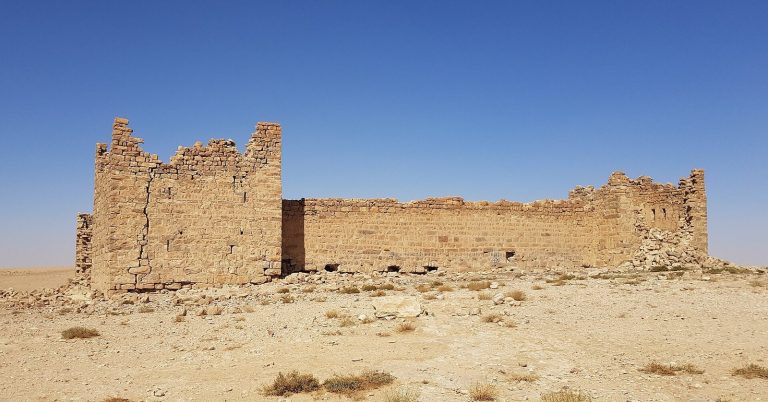
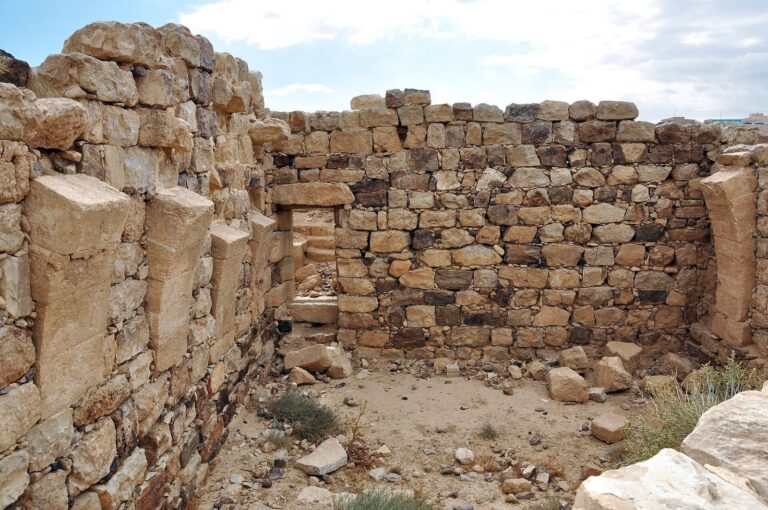
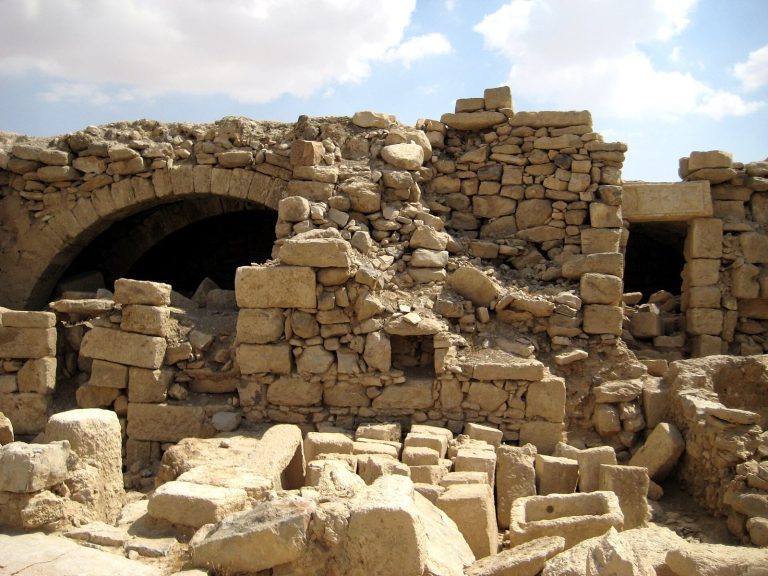
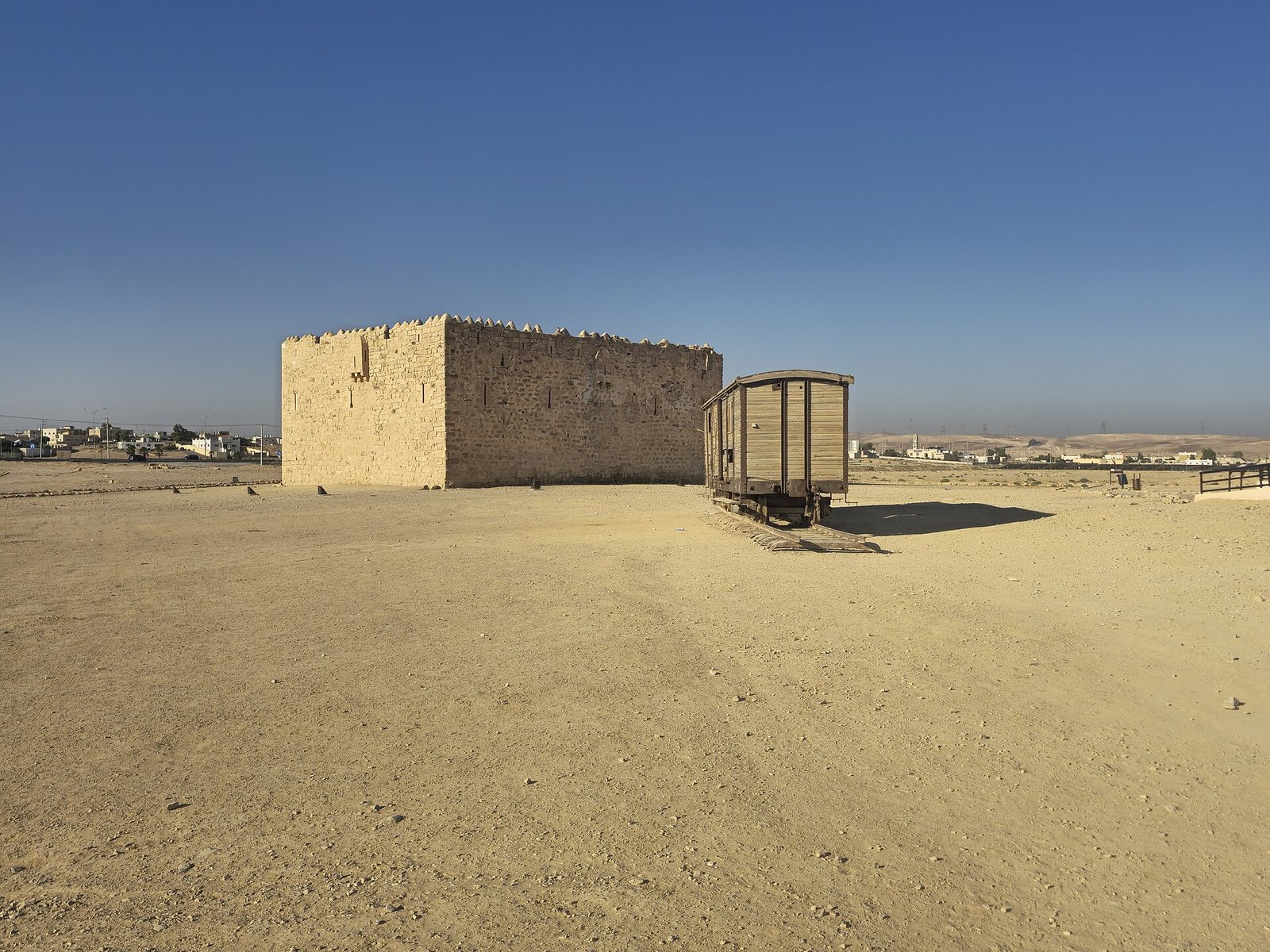
The castle is a rectangular, multi-storey structure about 22.2 m long, 17.35 m wide, and 10–10.5 m high. Its construction uses basalt and limestone, dressed stone, and tiles made from clay and lime. An entrance on the eastern side opens through a small vestibule with intersecting vaulted ceilings into a rectangular courtyard. Rooms, halls, and storage spaces occupy the ground and upper floors around the courtyard. Some have barrel-shaped vaulted ceilings, while others have intersecting vaults. A stairway connects the courtyard to the upper floor, and a well lies at the courtyard’s center. A nineteenth-century photograph suggests that at least one second-storey roof may have had a hemispherical dome.
Entrance and defenses
The entrance is described as about 3 m high, with an opening measuring 185 by 140 cm and a thickness of 35 cm. A semicircular arch crowns it, and three stone projections decorate its face. Above the gate, a projecting balcony rests on three corbels, or projecting stone supports. It overlooked the road and helped guard the entrance and people staying in the castle. A walkway runs along the upper walls behind a parapet, and narrow arrow slits pierce the walls. The castle’s first identified defensive phase included these openings and crenellations, the raised sections and gaps along a parapet. Box machicolations, projecting defenses with openings for attacking below, were added in the eighteenth century.
Water system
Channels and basins
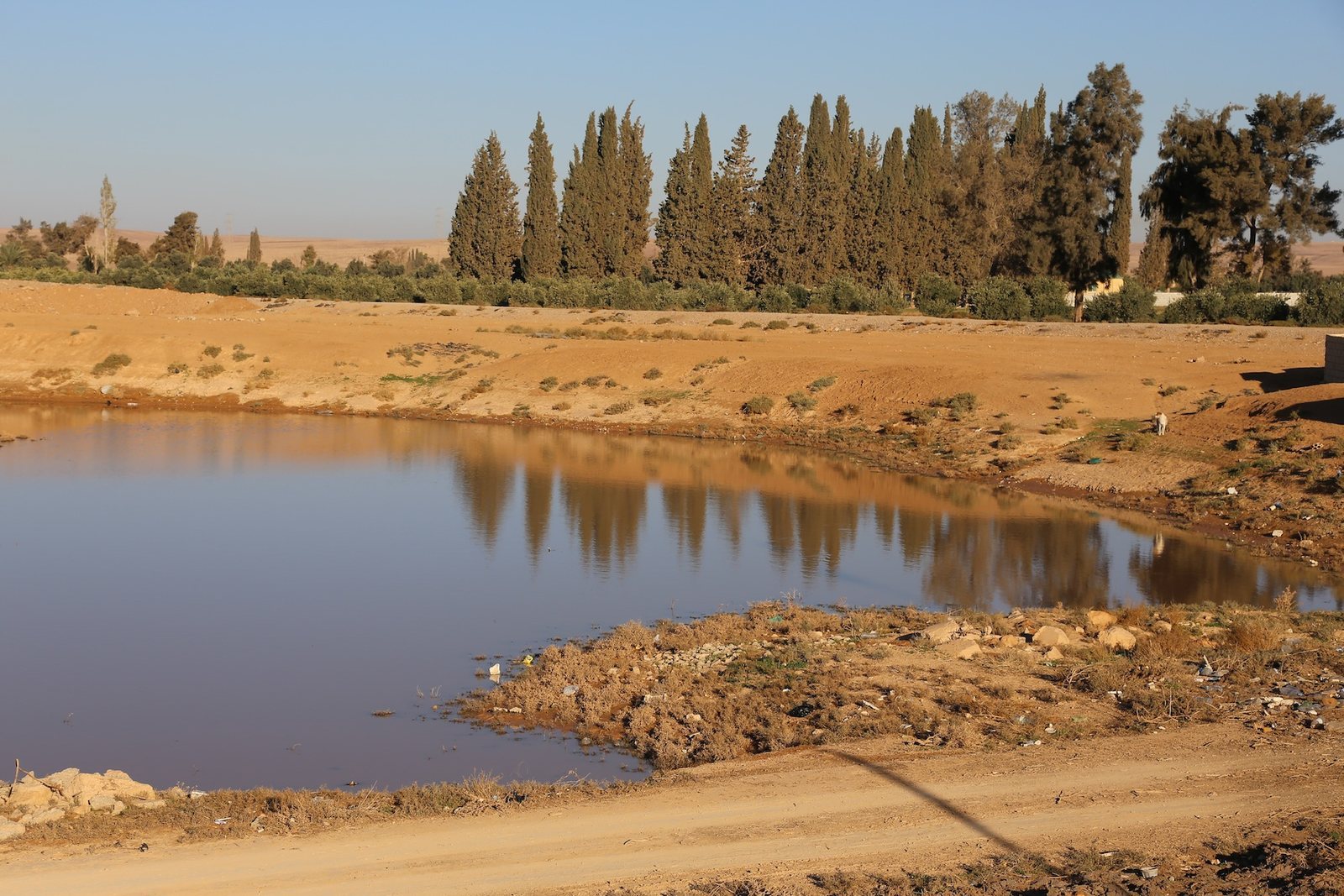
The waterworks drew on Wadi Hanifa, which runs south of the castle from southeast to west, and Wadi Hafira, which joins it. An earthen dam stood about 75 m from the castle, and two channels connected parts of the system. Each channel measured 105 cm in diameter, and they were 90 cm apart. A settling basin, where sediment could settle before water continued onward, measured 38 m long, 6.6 m wide, and 2.4 m deep. A rock-cut channel used to carry water to the pool has also been found. Foundation stones near the valley provide evidence of careful construction.
Pools and well
Two adjacent pools east of the castle collected rainwater. A historical description identifies the smaller pool as a filter through which water passed before entering the larger one. The main collection pool, about 26 m from the castle, measured 70 by 70 m and was 5.2 m deep. Along with the well in the courtyard, the system supplied water for drinking, irrigation, and livestock.