Prüfening Abbey: A Benedictine Monastery and Later Castle in Regensburg
Site at a Glance
- Rating
- 4
- Popularity
- Low
- Country
- Germany
- Primary era
- Medieval
- Eras represented
- Medieval, Early Modern
- Civilizations
- Duchy of Bavaria, Electorate of Bavaria, Holy Roman Empire
- Site type
- Religious
- Remains
- Monastery
On this page9 sections
History
Prüfening Abbey is a former Benedictine abbey in Regensburg, Germany, founded in 1109 by Otto I, Bishop of Bamberg. The monastery was settled by monks from Hirsau, a medieval Benedictine reform tradition that shaped monastic organization and church architecture in the German lands, under Erminold, its first abbot. The abbey church was dedicated jointly by Hartwig, Bishop of Regensburg, and Otto of Bamberg on 12 May 1119, and was completed in 1125.
Foundation and monastic influence
Prüfening developed into an important centre of Benedictine life. It established or supplied communities at Banz and Münchsmünster, while abbots from Prüfening were also recorded at Asbach, Biburg, Göttweig, and Georgenberg. By the twelfth century, the abbey possessed an extensive library. A surviving catalogue lists about 300 works from different intellectual traditions, including liturgical writings and schoolbooks used in the monks’ studies. From the 1130s to the 1160s, Wolfger of Prüfening served as librarian, archivist, and treasurer, and wrote historical and biographical works.
Economic rights and later reforms
Between 1189 and 1803, the abbey held the right to operate a ferry across the Danube. Payments from the boatmen became one of its most important sources of income. The community also underwent several periods of reform and rebuilding. Albrecht Glück introduced the Kastl Reform during his abbacy from 1414 to 1432, and Abbot Georg Garhammer rebuilt the monastic buildings in the fifteenth century. After the upheavals of the Reformation and the Thirty Years’ War, Abbot Romanus I Schneidt renewed the monastery.
War, Baroque renewal, and secularization
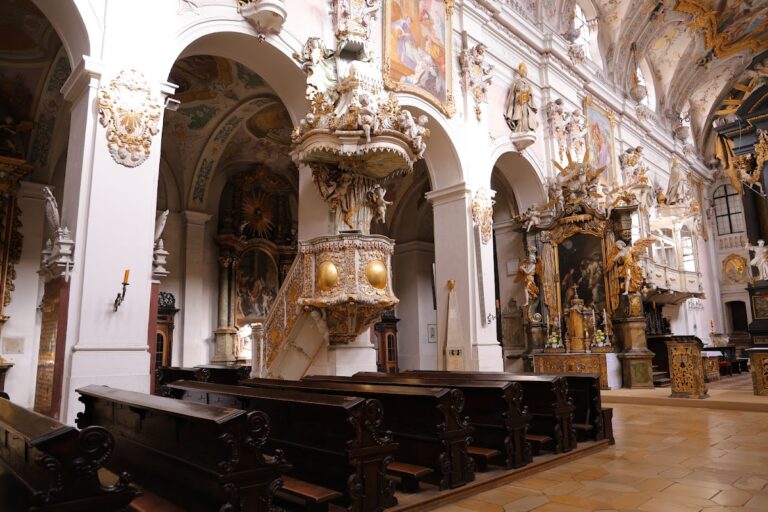
During the fighting around Regensburg from 1632 to 1634, part of the Thirty Years’ War, the Bavarian Elector Maximilian I and his officers used the monastery as quarters. Under Abbot Otto Kraft, the abbey church received a Baroque refurnishing between 1693 and 1729. The community’s interest in astronomy also led to the construction of an astronomical tower around 1700 in the convent garden, on medieval foundations; it was remodeled in the late eighteenth century.
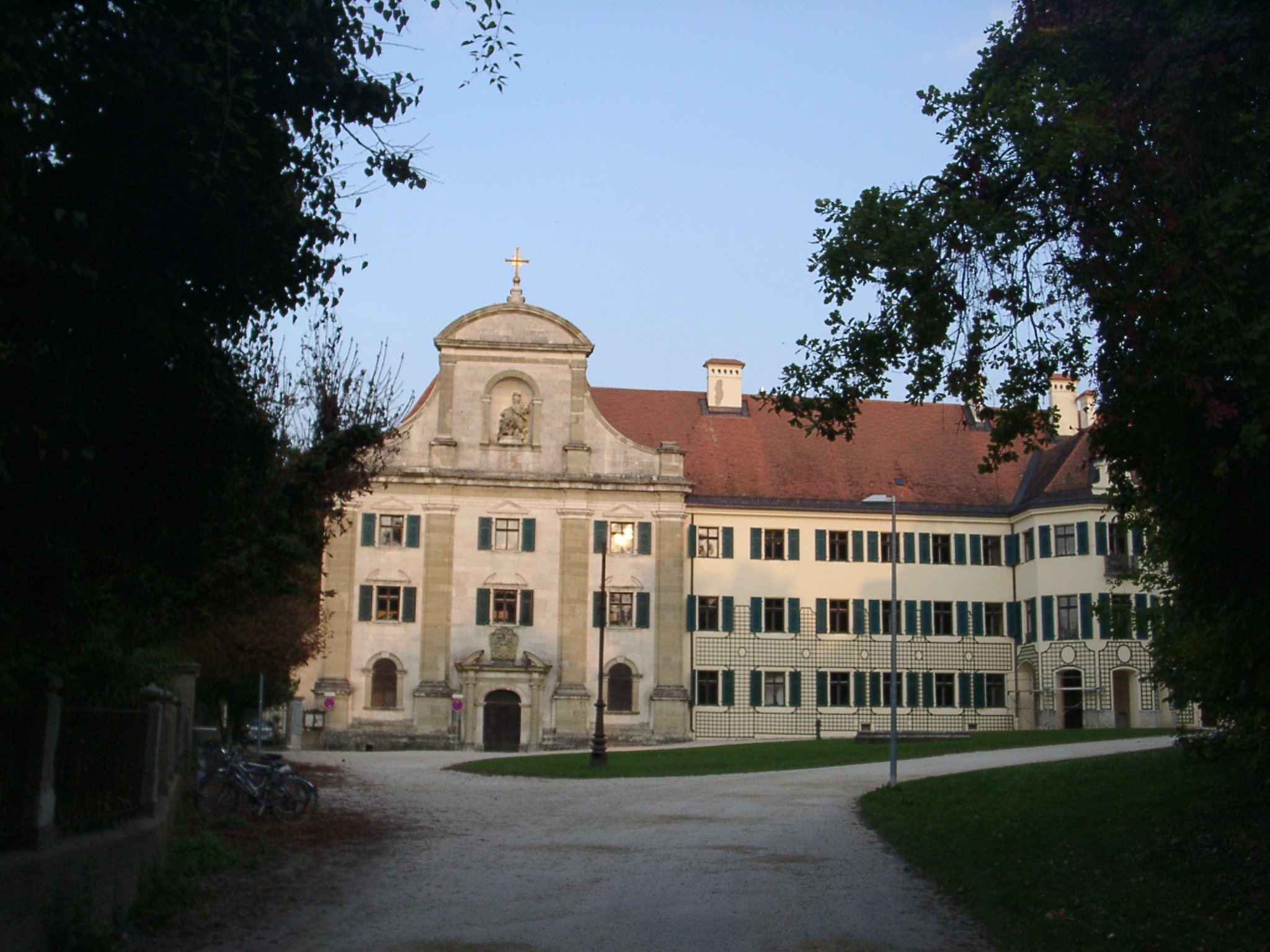
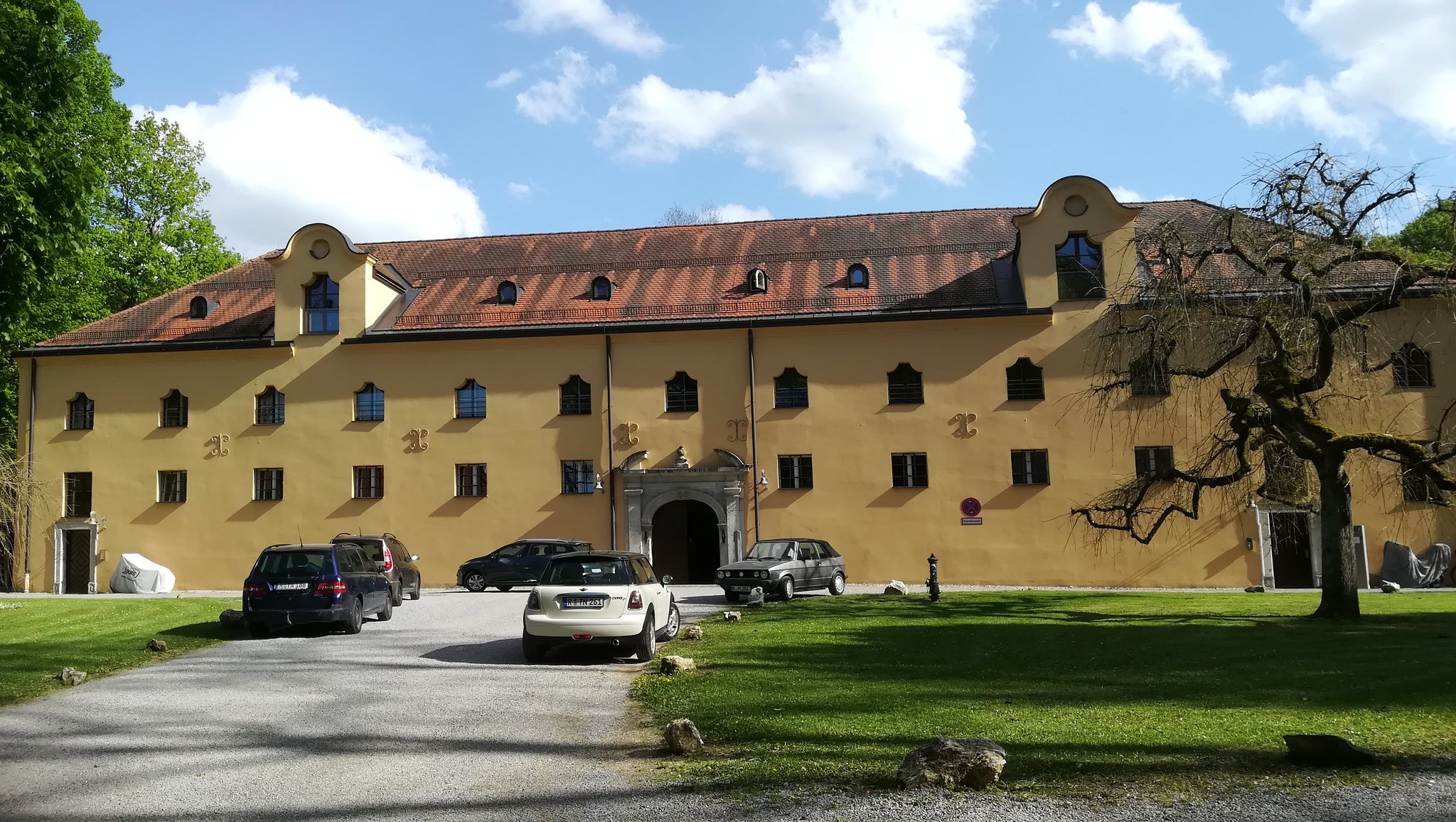
Bavaria’s secularization, the early nineteenth-century dissolution of religious institutions and transfer of their property to secular owners, ended the abbey in 1803. The buildings were first sold to Alexander Freiherr von Vrints-Berberich, general post director of the Thurn und Taxis postal administration, and his wife Henriette. After his death without children, the estate passed in 1843 to his foster son François Ghislaine Freiherr van Zuylen van Nyevelt, who made it a fideicommissum, an inheritable family estate intended to keep property together. When the estate approached insolvency, it came into the possession of the Thurn und Taxis family in 1899, who used the castle as a summer residence. Since secularization, the former abbey has been known as Prüfening Castle.
Twentieth-century uses
From 1952, Prince Max Emanuel von Thurn und Taxis, known as Father Emmeram, lived at Prüfening. His attempt to re-establish a Benedictine monastery and revive monastic life did not succeed. A liturgical studies institute was founded on the premises during the 1950s, and Father Emmeram made rooms available to local youth groups and impoverished people while personally guiding interested visitors through the church. Since 2002, the former monastic buildings have housed a Montessori primary and secondary school. The complex is legally protected as a listed architectural monument, while medieval and early-modern archaeological remains in the former castle and monastery area are also registered as an archaeological monument.
Remains
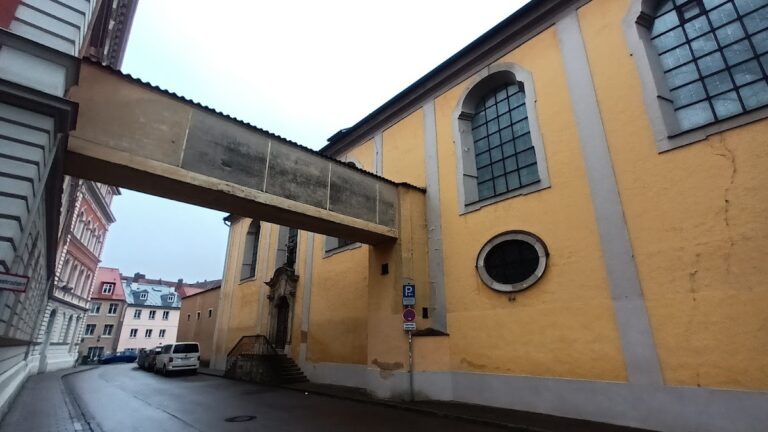
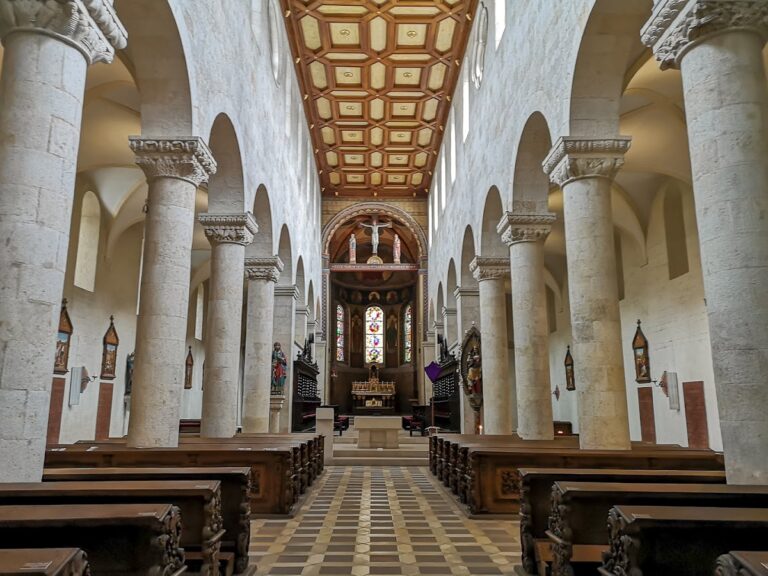
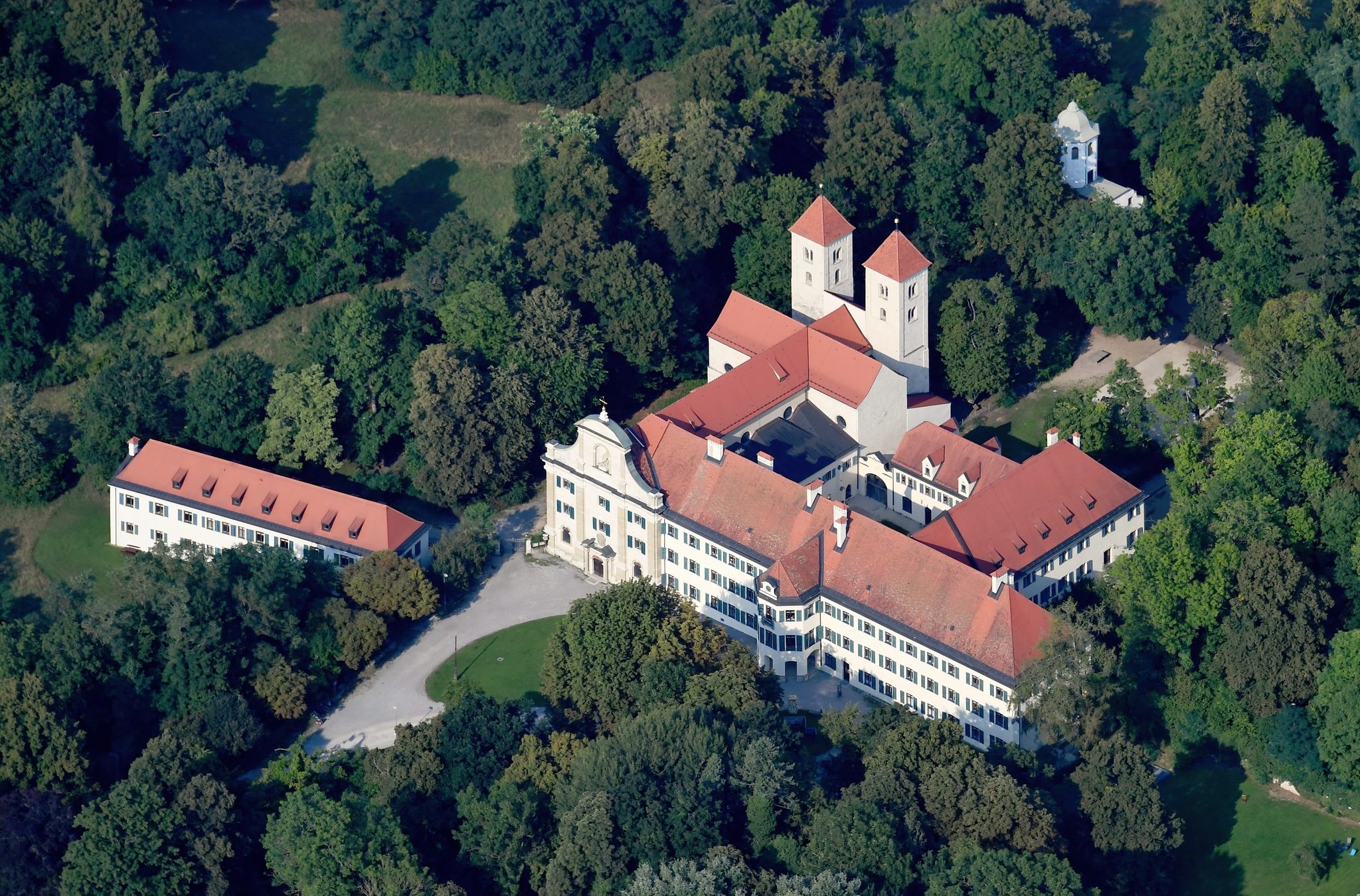
The surviving complex combines Romanesque ecclesiastical buildings with later monastic and residential structures. Its principal church is a three-aisled pillar basilica, meaning that substantial piers separate the central nave from its aisles, with an eastern transept, the cross-branch of the church. Other remains include a second Romanesque church, a spring house connected with the former water supply, the astronomical tower, and the former orangery buildings.
Church of Saint George
The Church of Saint George was completed in 1125 and is a Romanesque building associated with the Hirsau school. It retains well-preserved wall paintings described as surviving in their original condition, including a depiction of Otto of Bamberg. The church also preserves the Prüfening dedication inscription dated to 1119. Produced through a printing process, the inscription is regarded as a unique document of medieval typography. Inside stands the tomb of Erminold, erected in 1283 by Heinrich II, Bishop of Regensburg. Its high tomb was made by an important Regensburg sculptor whose name is unknown and who is identified in art history as the Erminold Master. The same sculptor is associated with the Annunciation group in Regensburg Cathedral. The former abbey church now serves as an auxiliary parish church for the Catholic parish of Saint Boniface and Saint George.
Secondary buildings and waterworks
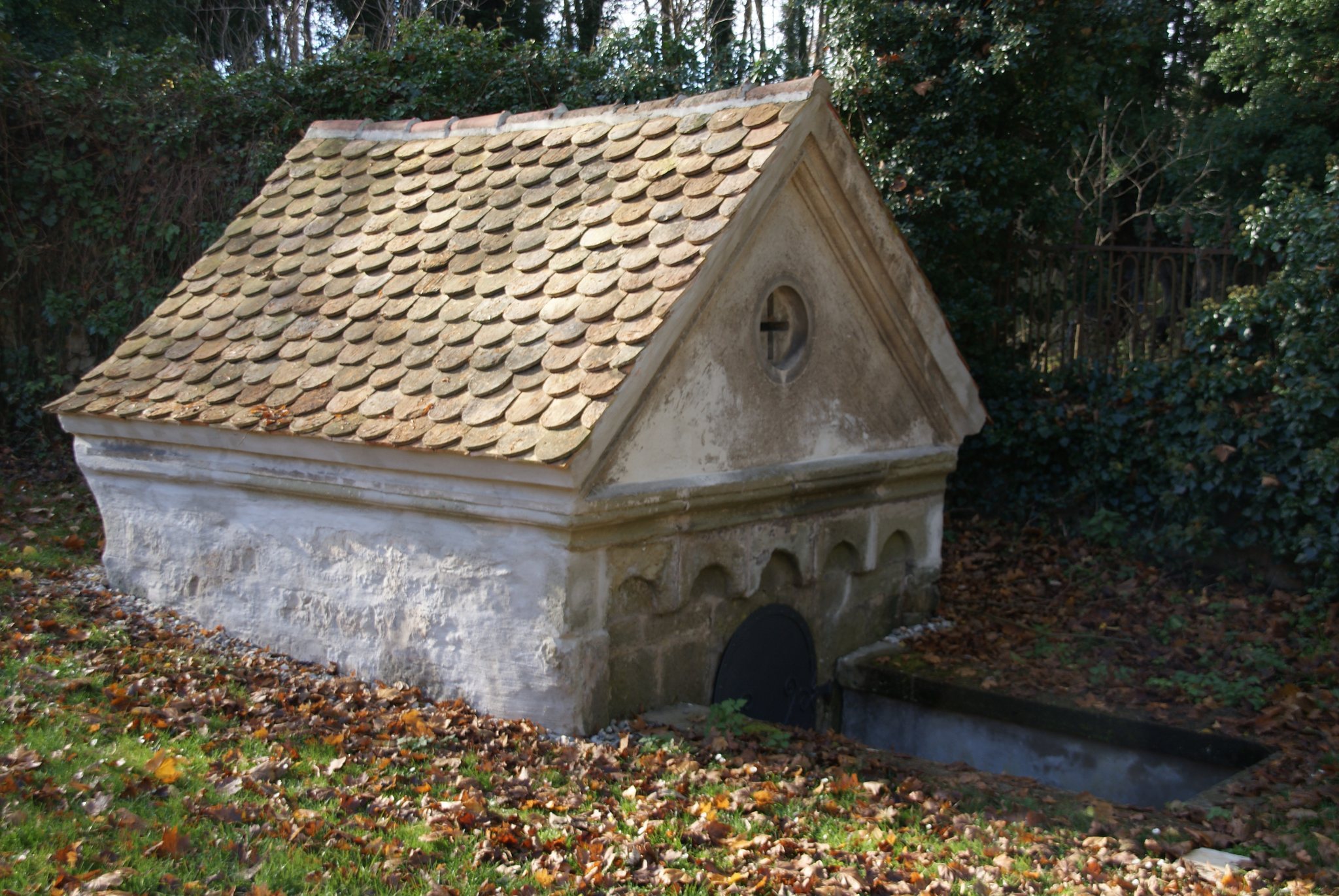
The Romanesque spring house formed part of the monastery’s water-supply system, and its enclosed spring continues to provide water. West of the main monastic building stands the Church of Saint Andrew, a Romanesque single-nave structure with a chancel tower, meaning a tower built over or immediately beside the area around the main altar. Consecrated in 1125, it served the monastery’s servants and poor people housed in the almshouse before being deconsecrated in 1803. The former convent garden contained an astronomical tower built around 1700 on medieval foundations and remodeled in the late eighteenth century. The former orangery buildings were adapted in 2011 for use as a nursery and kindergarten. Their original date remains uncertain, since they may have been built after 1800 or may replace an earlier Baroque structure.
City palace
A city palace built for the abbey in 1701 at Bismarckplatz in Regensburg reflected its eighteenth-century wealth and influence. During the nineteenth century, the Thurn und Taxis princes used the building as the Erbprinzenpalais.