Capuchin Monastery in Sokolov: An Early Baroque Religious Complex
Site at a Glance
- Rating
- 4.5
- Popularity
- Low
- Country
- Czechia
- Primary era
- Early Modern
- External website
- Open
- Eras represented
- Early Modern, Modern
- Civilizations
- Habsburg, Holy Roman Empire
- Site type
- Religious
- Remains
- Monastery
On this page9 sections
History
Capuchin Monastery in Sokolov, Czechia, is a religious complex founded by the Capuchins, a Franciscan branch known for austere communal life and pastoral work. Established in 1663 and built mainly between 1665 and 1667, it includes the Early Baroque Church of Saint Anthony of Padua and remains an important part of Sokolov’s historic centre.
Foundation and construction
Plans for a Capuchin convent were discussed at the provincial chapter in Linz in 1662 and again in August 1663. Jan Hartvík of Nostitz, then owner of the Sokolov estate, promoted the foundation and offered money for construction. The project proceeded after Leopold I, the Habsburg Holy Roman Emperor, gave his favourable approval.
The first Capuchins arrived in Sokolov in 1663. Land containing hop fields, gardens, and farm buildings was acquired the following year. Construction began mainly in 1665, continued over the next two years, and was completed in 1667. Maxmilián Rudolf von Schleinitz, Bishop of Litoměřice, solemnly consecrated the church on 20 October 1667.
Changes in the eighteenth century
Only basic maintenance appears to have been undertaken before the end of the seventeenth century. In 1704, the former carpentry workshop was converted into an infirmary and a processional house. A library was installed on the upper floor in 1717, along with further repairs and alterations. The Italian-born builder Octavio Broggio worked at the monastery from 1717 to 1719, probably providing professional building consultations.
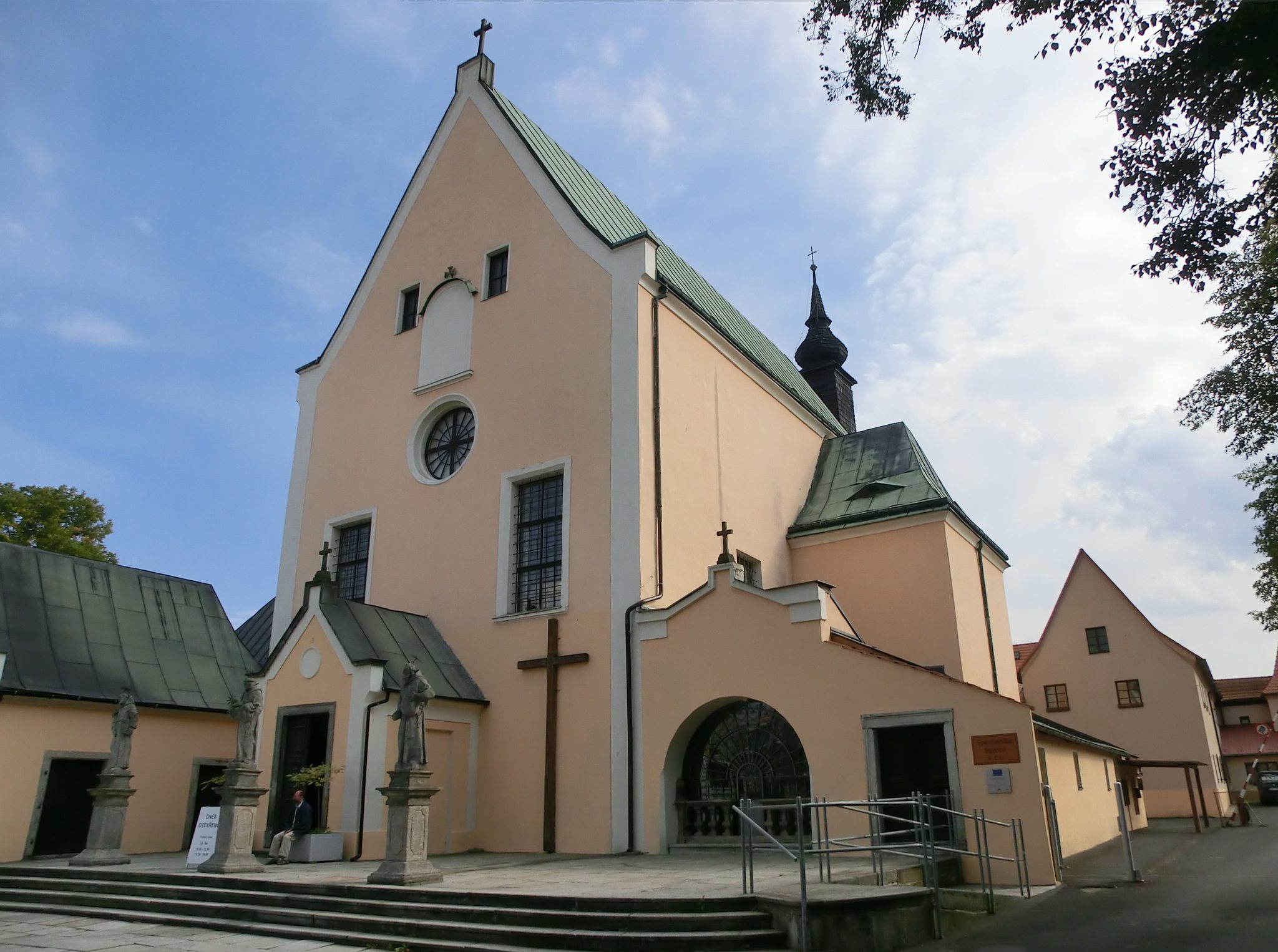
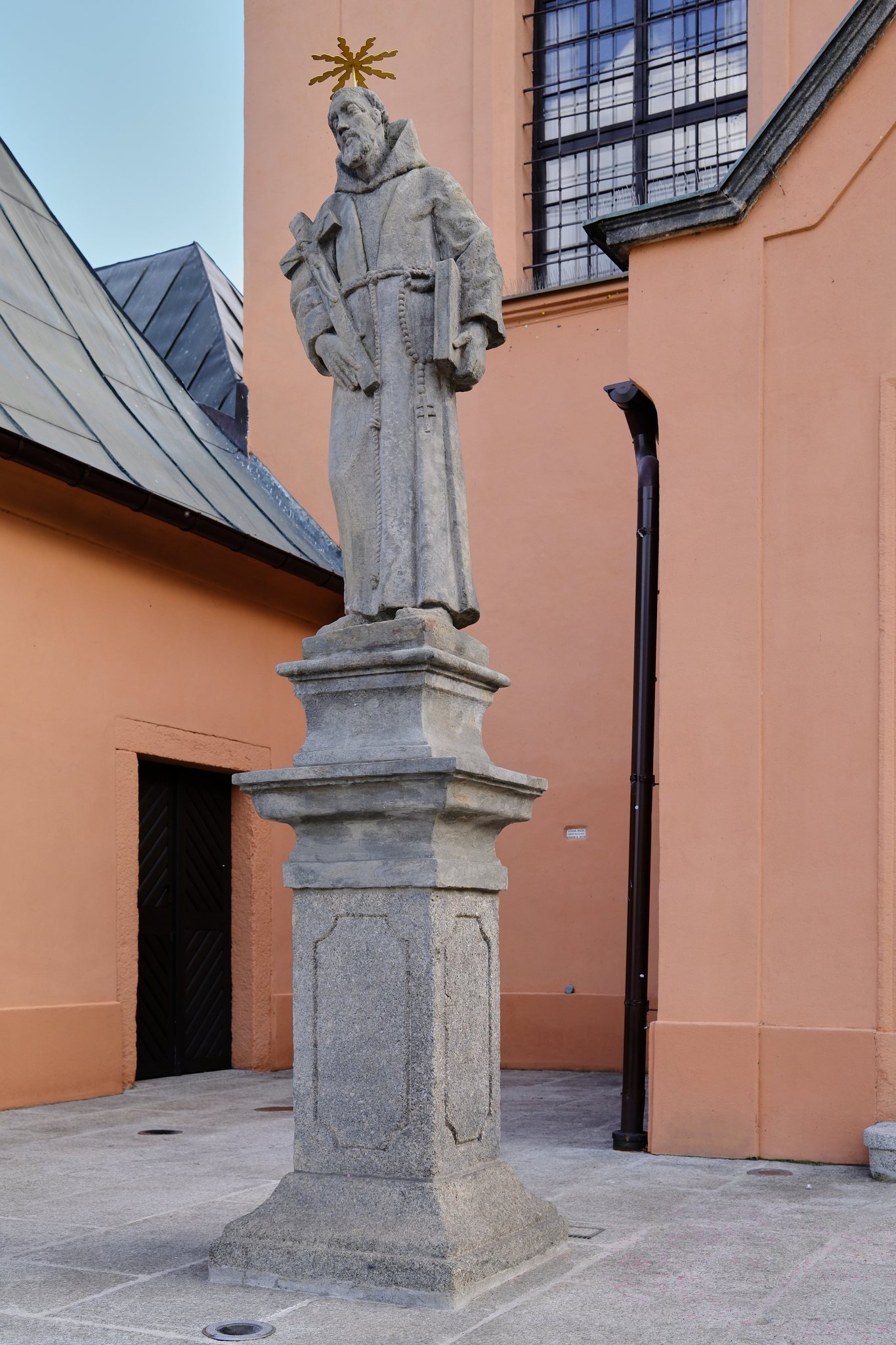
The complex survived the Sokolov town fires of 1744 and 1753 without major damage. Statues of Saint Francis of Assisi and Saint Anthony of Padua were placed in front of the church in 1751 at the expense of local townspeople, and a statue of Saint Felix of Cantalice followed in 1752. A new bell was installed in 1868.
Relations between the Capuchins and the Sokolov archdeaconry became strained, especially after the Capuchins added a choir gallery and drew more worshippers to the church. The archdeaconry responded by having the Chapel of the Holy Trinity built directly beside the monastery between 1771 and 1773.
From the late eighteenth century to the Second World War
The monastery remained active during the reign of Joseph II, the Habsburg ruler associated with reforms that sought to suppress or dissolve religious institutions considered non-essential. During the First Czechoslovak Republic, only two monks lived in the complex, which also temporarily housed a Czech minority school.
During the Second World War, the monastery was used as a military infirmary. Ordinary monastic life resumed after the war, and the complex remained church property for several years. Monks of German nationality faced hostile attacks and were mostly expelled.
Suppression, industrial use, and municipal care
In 1950, the communist government suppressed male monasteries. Sokolov’s district action committee proposed closing the monastery and converting it into a tractor station. The complex was cleared and handed over to the army on 4 May 1950. In 1956 it passed to the state enterprise Zemstav, which used it chiefly for storage.
Industrial expansion also altered the site. In 1956, part of the enclosing wall and the monastery garden had to make way for the advancing Antonín coal mine, which operated until 1965. Sokolov Municipality has owned the monastery since 1961. Repairs took place gradually from the 1990s onward, and since 2008 the municipal company Sokolovská bytová has administered the complex and arranged exhibitions and concerts in the church. A brewery has operated in the southern part since 2011, producing Permon beer.
The monastery and church are protected as a cultural monument of the Czech Republic. Although the interiors suffered damage after the Second World War, the complex survived and was subsequently repaired.
Remains
Monastery layout and associated buildings
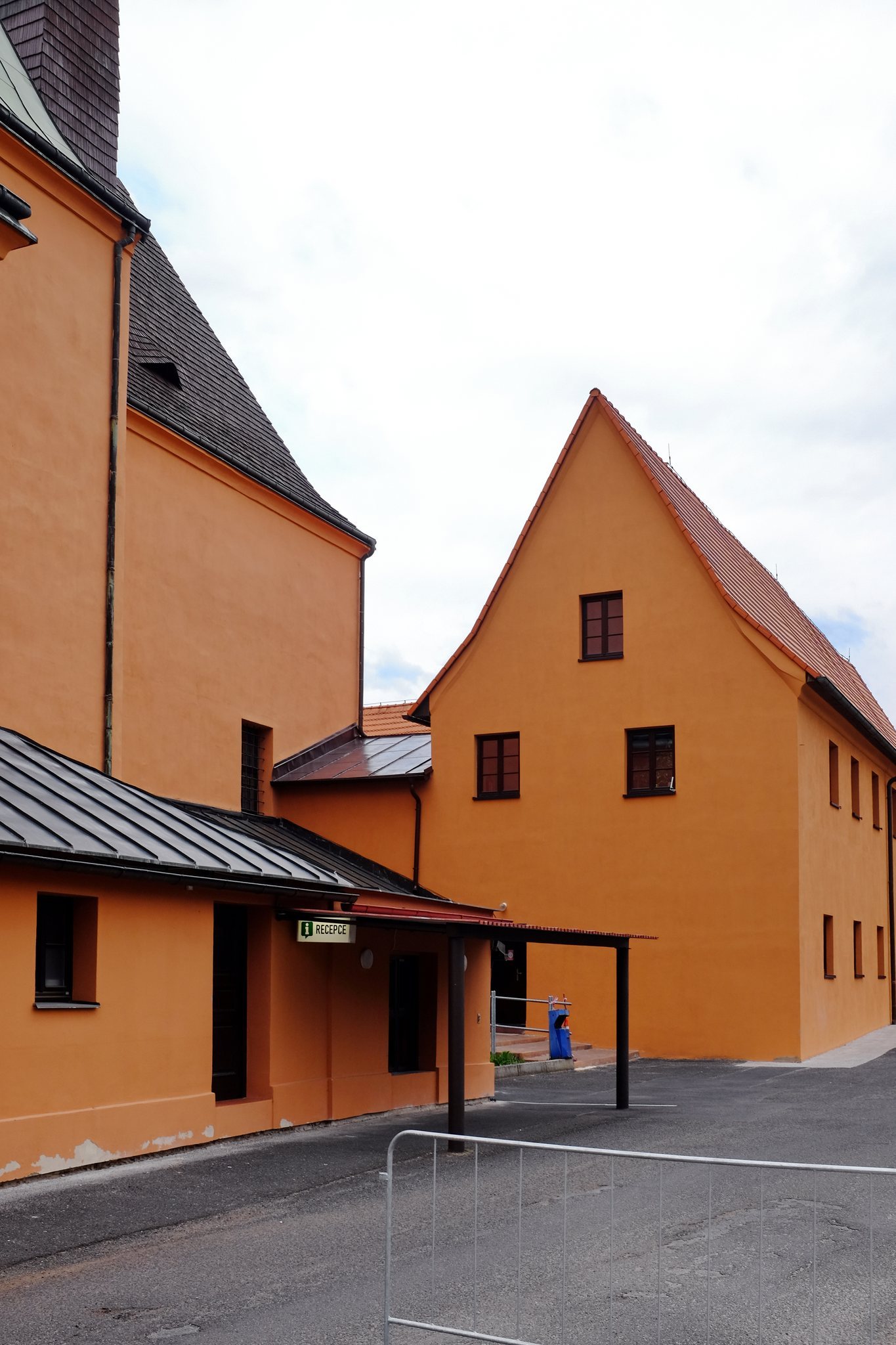
The complex stands near the right bank of the Ohře River, at the edge of Sokolov outside the former town walls. The church’s northern facade closes the edge of Staré náměstí. The former convent forms a roughly square group of plain buildings, each side measuring about 33 metres. Rectangular windows articulate the wings, which enclose a square cloister court containing an original circular stone well.
A two-storey, tower-like building with a hipped roof occupies the southwestern corner. Its upper floor connects with the convent through a covered passage. At the foundation of the monastery, the building contained a lavatorium, a designated washing area. An octagonal stone basin stands between the tower’s southern facade and the monastery’s western wall. The complex also had an enclosing wall and a garden, portions of which were later lost to the Antonín coal mine.
Church of Saint Anthony of Padua
The Church of Saint Anthony of Padua is an Early Baroque, single-nave rectangular building with a high triangular gable and two symmetrically placed side chapels. Its form follows the characteristic arrangement of a Capuchin church. The statues of Saint Francis of Assisi, Saint Anthony of Padua, and Saint Felix of Cantalice stand before the church. They were installed in 1751 and 1752 as part of the arrangement of the space in front of the building.
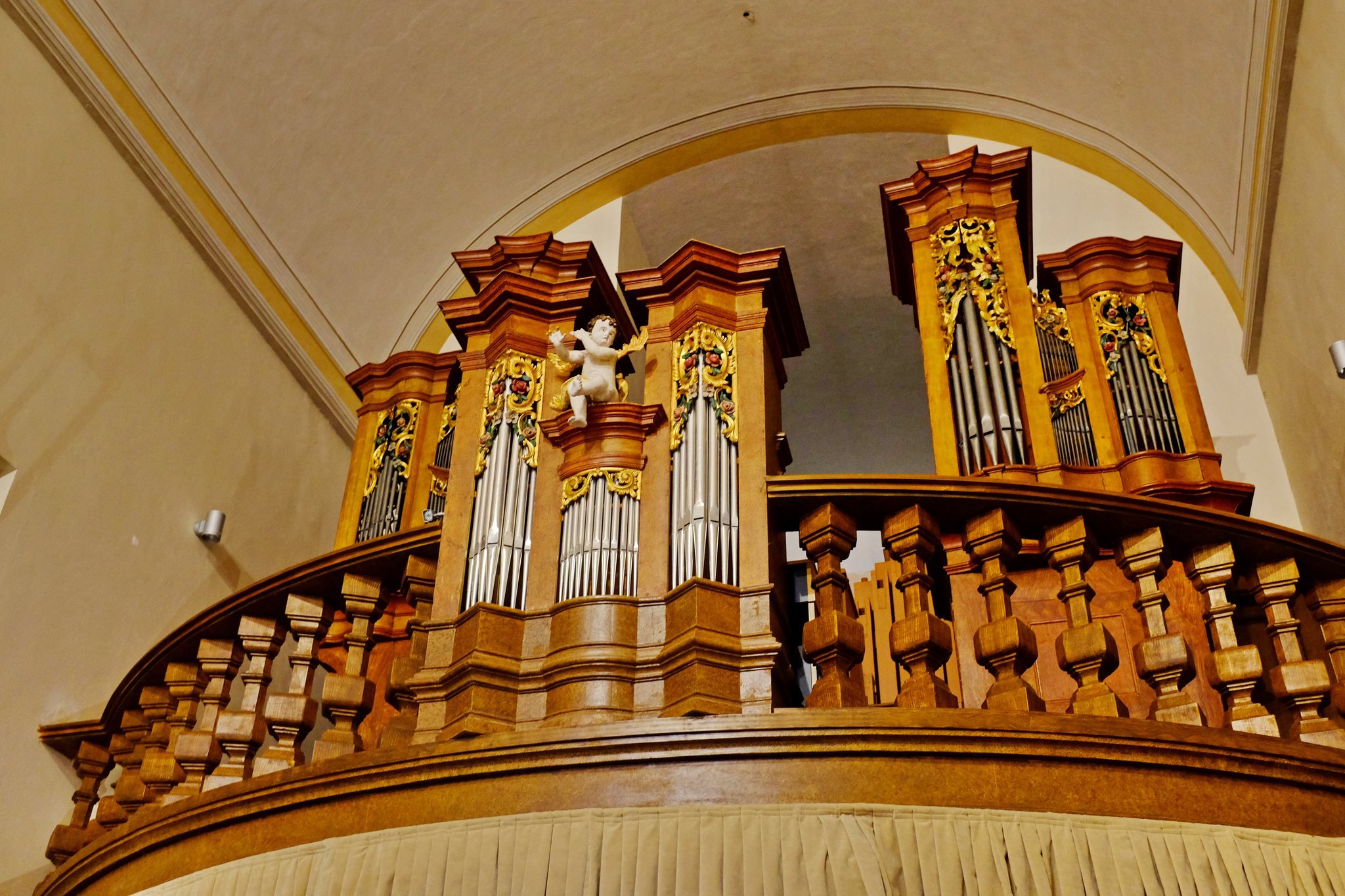
A choir gallery, an elevated interior space for singers and musicians, was inserted near the entrance around 1761. The present organ came from the monastery at Mariánská, which was demolished in 1965.
Crypt and burial areas
An entrance in the eastern side wall beside the choir gallery leads to the underground monastic crypt. Jan Hartvík of Nostitz selected the crypt as a family tomb, and his second wife, Eleonora Marie, became the first person buried there on 17 September 1681. Burials in the Capuchin section ended in 1787.
The Capuchin and Nostitz sections were joined and the entrance altered in 1852 and 1853. The crypt was repaired in 1999, when the remains were exhumed for expert study. On 20 December 1999, Auxiliary Bishop Jiří Paďour ceremonially sprinkled the tomb with holy water.