Pierre Turquaise: A Neolithic Covered Passage Tomb in France
Site at a Glance
- Popularity
- Medium
- Country
- France
- Primary era
- Stone Age
- Eras represented
- Stone Age, Modern
- Civilizations
- French
- Site type
- Burial
- Remains
- Tomb
On this page10 sections
History
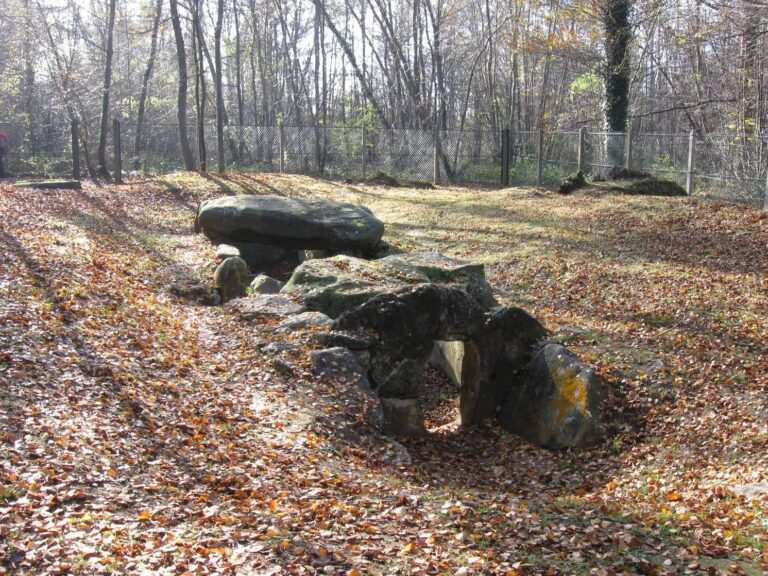
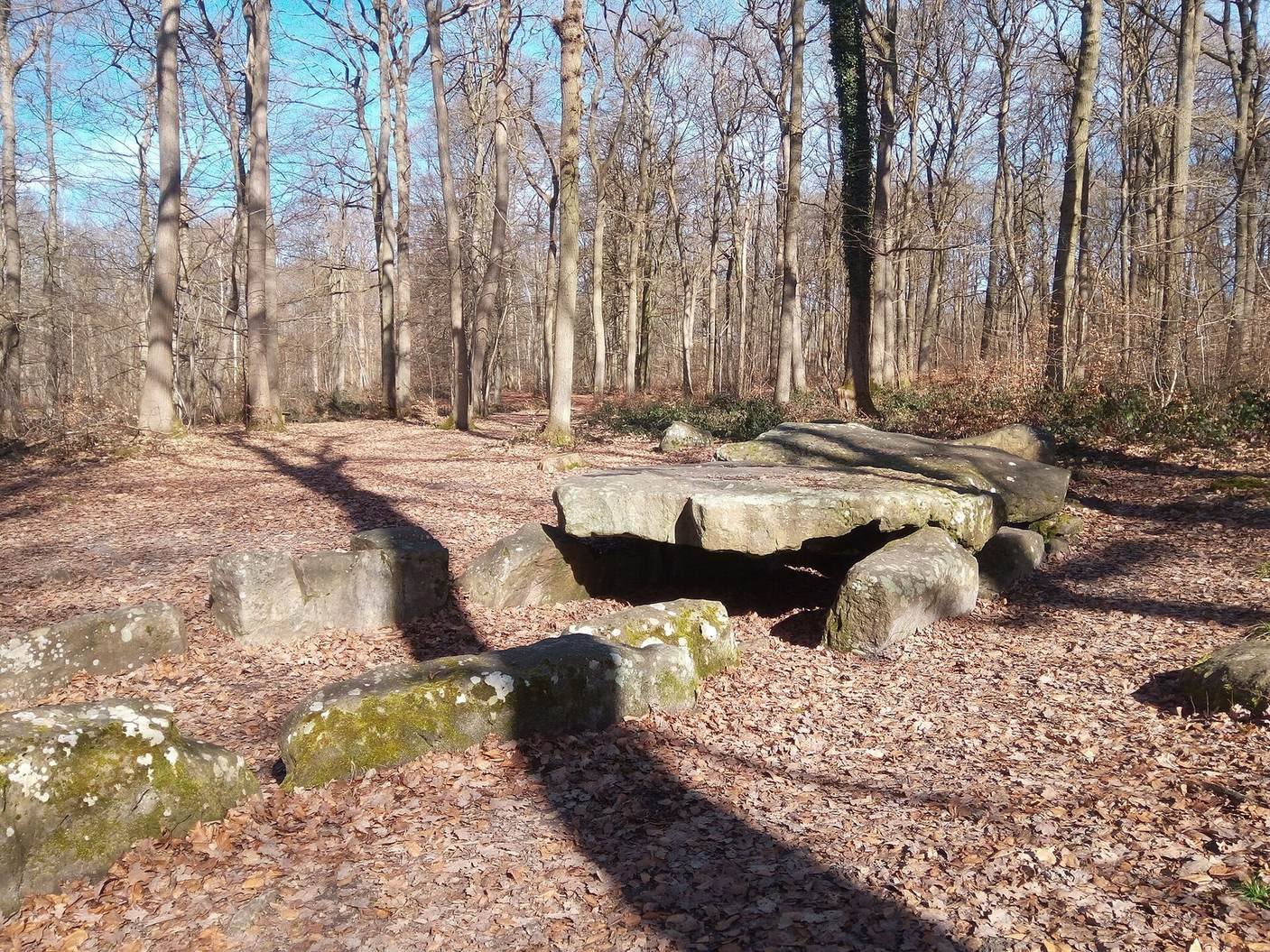
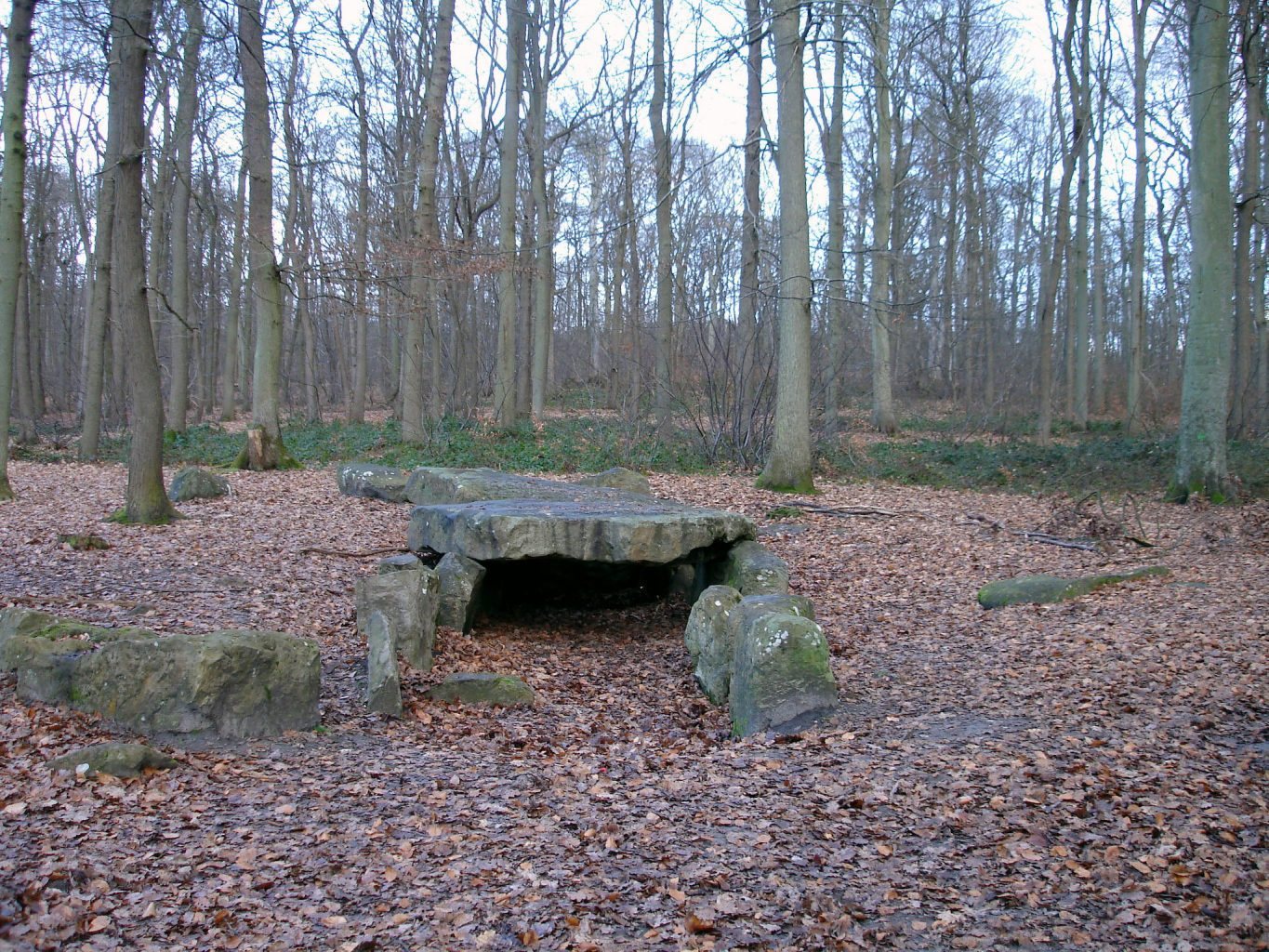
Pierre Turquaise is a Neolithic covered passage tomb at Saint-Martin-du-Tertre in France, dating to about 2000 BCE and associated with the Seine-Oise-Marne culture, an archaeological grouping of Neolithic communities in the Paris Basin that dates from 3100 to 2000 BCE. It is the largest and best-known covered passage tomb in the Paris region and an archetypal burial of this culture.
Medieval reference and early modern reuse
The tomb appears in a record of a 1274 legal dispute between the Abbey of Saint-Denis and landowners in Presles. Its name, Pierre Turquaise, was first recorded in 1727; Pierre Turquoise is another form. The name’s origin is uncertain. One proposed explanation connects it to an older association between Turks and pagans, and to the idea that pagans had built the monument.
Around 1755, Prince Louis-François de Bourbon-Conti reportedly had the tomb emptied and converted into a kennel for his hunting dogs. The interior was probably dug out during this work. The structure later provided shelter for woodcutters.
Protection and study
In 1842, the tomb faced dismantling so its stones could be used to pave Paris streets. Prehistorian Alexandre Hahn intervened to save it. He described the monument in 1854, including a plan by Mangeant. That plan was inaccurate, was republished by Paul de Mortillet in 1911, and was later corrected by archaeologist Adrien de Mortillet. Jean-Baptiste Grimot published a notice about the tomb in 1878, and anthropologist Gustave Millescamps de Chaumontel also investigated and described it.
Protection as a historic monument began in 1874, was confirmed in 1887, and was reaffirmed in 1900. Grimot helped secure the 1887 confirmation, by which time about two-thirds of the monuments in the forest had already been destroyed.
Collapse and restoration
Part of the roof and the entrance lintel collapsed late in 1922. E. Giraud led a restoration in 1930, but it did not provide lasting stability and another collapse followed. A second restoration, in 1969, revealed carvings on the entrance supports.
During the night of 14–15 December 1985, an unclaimed bombing severely damaged the tomb. A restoration campaign under the historic-monument authorities followed. It reinforced the foundations to limit further sinking and filled the interior for safety.
Remains
Layout and stonework
The tomb stands in a small clearing in parcel 63 of the Carnelle Forest, about 110 metres above sea level on a slope above the Presles stream. The covered passage is approximately 12 metres long, averages 2.5 metres wide, and is about 2.2 metres high. Its stones are all Fontainebleau sandstone, with natural outcrops visible on the slope. A standing stone is about 200 metres away; the covered passage at Blanc Val lies about 2 kilometres to the southwest, and the Pierre Plate dolmen, a tomb made of upright stones supporting a capstone, is about 4 kilometres to the west.
Main chamber
The main chamber measures 10.6 metres long, 2.45 metres wide, and 1.9 metres high. An end slab and four upright stones along each side define its space. Four large stones form the roof, one now split into three pieces; the surviving roof stones weigh between 8 and 18 tonnes.
Antechamber and entrance
The antechamber is 2.42 metres long and between 2.13 and 2.65 metres wide, making it the largest in the Paris region. One slab bounds its north side and two bound its south. In 1842, it still had a transverse cover stone, about 1.5 to 2 metres long and 4 metres wide, weighing roughly 9.5 tonnes. That stone had split into three unequal pieces and later collapsed.
The entrance is formed by a trilithon, two upright pillars supporting a lintel. Each pillar is 1.05 metres wide and 0.80 metres high; the lintel is 1.05 metres wide. Together they leave an opening 0.62 metres wide and 0.80 metres high.
Carved entrance stones
The north, or left, pillar bears a well-preserved carving 13 centimetres below its upper edge. A double-line U shape, 130 millimetres high and 180 millimetres wide, sits above two horizontally aligned rounded forms, each 55 millimetres across. The carving is generally interpreted as a double-row necklace above a pair of breasts, representing a schematic goddess of the dead. The carving on the right pillar is badly damaged. Two similarly sized breast shapes can be made out 350 millimetres below its upper edge, but the figure’s identity is uncertain. The 1985 blast did not damage either carving.
Funerary finds and replica
The known funerary objects were recovered outside the tomb. They include four intact polished axes and a fifth broken at both ends, a sandstone sharpening stone, scrapers, a tool for piercing, an arrowhead, a flint core, and two flint blades. Personal ornaments include a slate pendant, a pierced horse tooth, and a red copper bead. A plaster replica of the monument is held at the museum in Saint-Germain-en-Laye.