Pierre Plate Covered Gallery Tomb: A Neolithic Burial Monument in France
Site at a Glance
- Popularity
- Low
- Country
- France
- Primary era
- Stone Age
- Eras represented
- Stone Age
- Civilizations
- Unclassified
- Site type
- Burial
- Remains
- Tomb
On this page12 sections
History
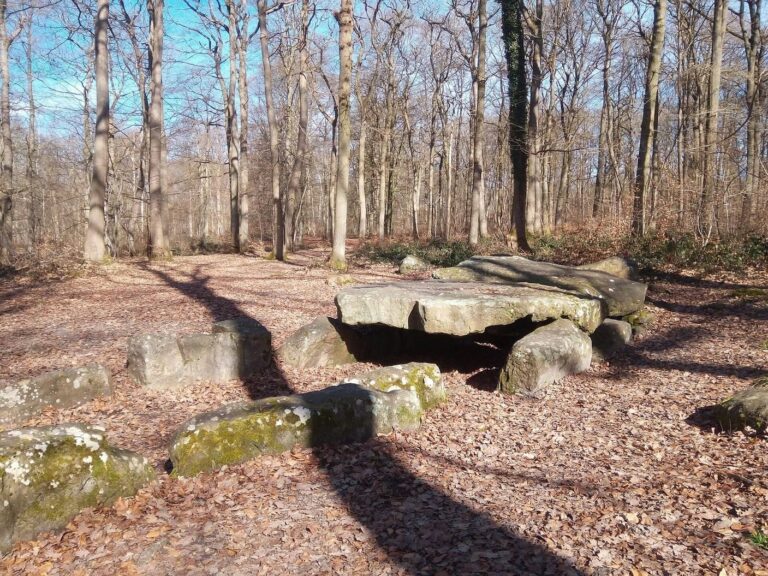
The Pierre Plate covered gallery tomb near Presles, France, is a Neolithic burial monument built with large stones during the prehistoric period when farming and settled communities developed. Its repeated use for funerary deposits makes it a record of burial activity involving more than 100 people.
Neolithic burial use
The tomb received successive funerary deposits over time. Bernard Bottet later interpreted earth fill in the antechamber as Neolithic and believed that only one arrowhead with a transverse edge had been deliberately placed in the chamber. In his view, other such arrowheads entered with earth used as backfill during the Neolithic.
Recognition and excavation
The monument was known in the Middle Ages, when the surrounding land was cultivated rather than wooded. The area is now part of the Forest of L’Isle-Adam. An initial excavation took place in 1912–1913. Paul de Mortillet, Fouju, and Bossavy subsequently took an interest in the tomb, while Bottet carried out a full excavation in 1926.
The tomb was classified as a historic monument on 19 October 1932 and underwent restoration during the 1970s.
Remains
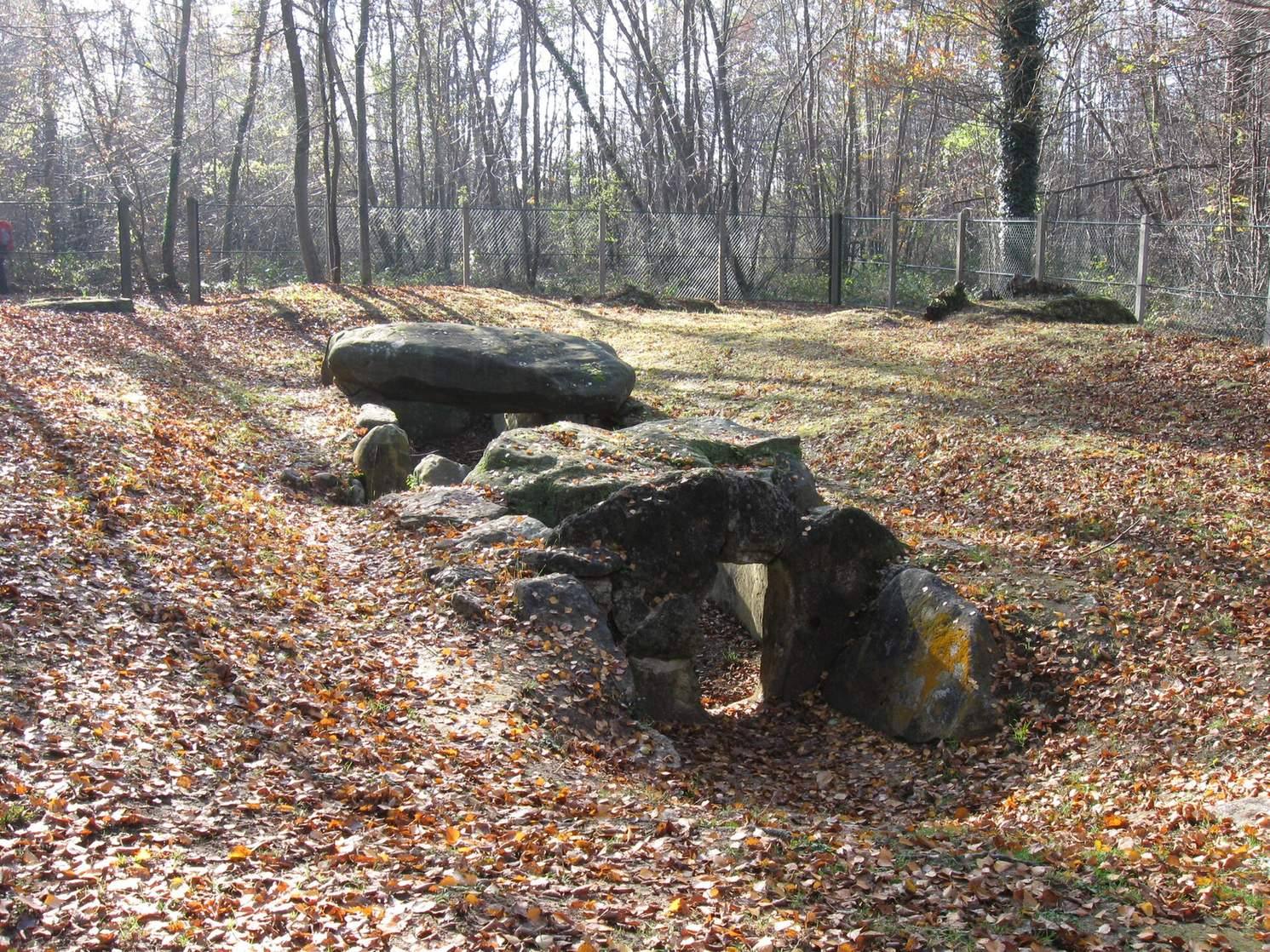
The tomb is a sunken gallery, set into the ground so that its roof slabs originally sat level with the surrounding surface. It stands on a plateau at an altitude of 85 m, about 2 km southwest of Presles. Its chamber and antechamber follow a southwest–northeast axis, with the entrance at the northeastern end.
Plan and stonework
Chamber
The chamber measures 10.90 m long and averages 1.75 m in height. It is 2.50 m wide at the entrance and middle, narrowing to 1.80 m at the rear, where a single flat slab forms the end wall. This slab is 2 m high and 2.30 m wide. The chamber sides are made from eight irregular upright stones on the east and seven on the west. Some stand on bases built without mortar, while smaller stones set in earth fill gaps between them. The floor is carefully paved, apart from a 0.50 m-wide strip crossing the chamber 2.40 m from the rear.
Five large slabs originally covered the chamber, with three smaller slabs joined near the back. Three of the large cover slabs survive. The slab near the entrance has a tool-polishing area on its inner face. Other surviving roof stones include a broken slab, one still in place, and one that has slumped with its supports. Small stones set in earth also filled gaps between the cover slabs. The tomb’s stones are made of local limestone or sandstone.
Antechamber
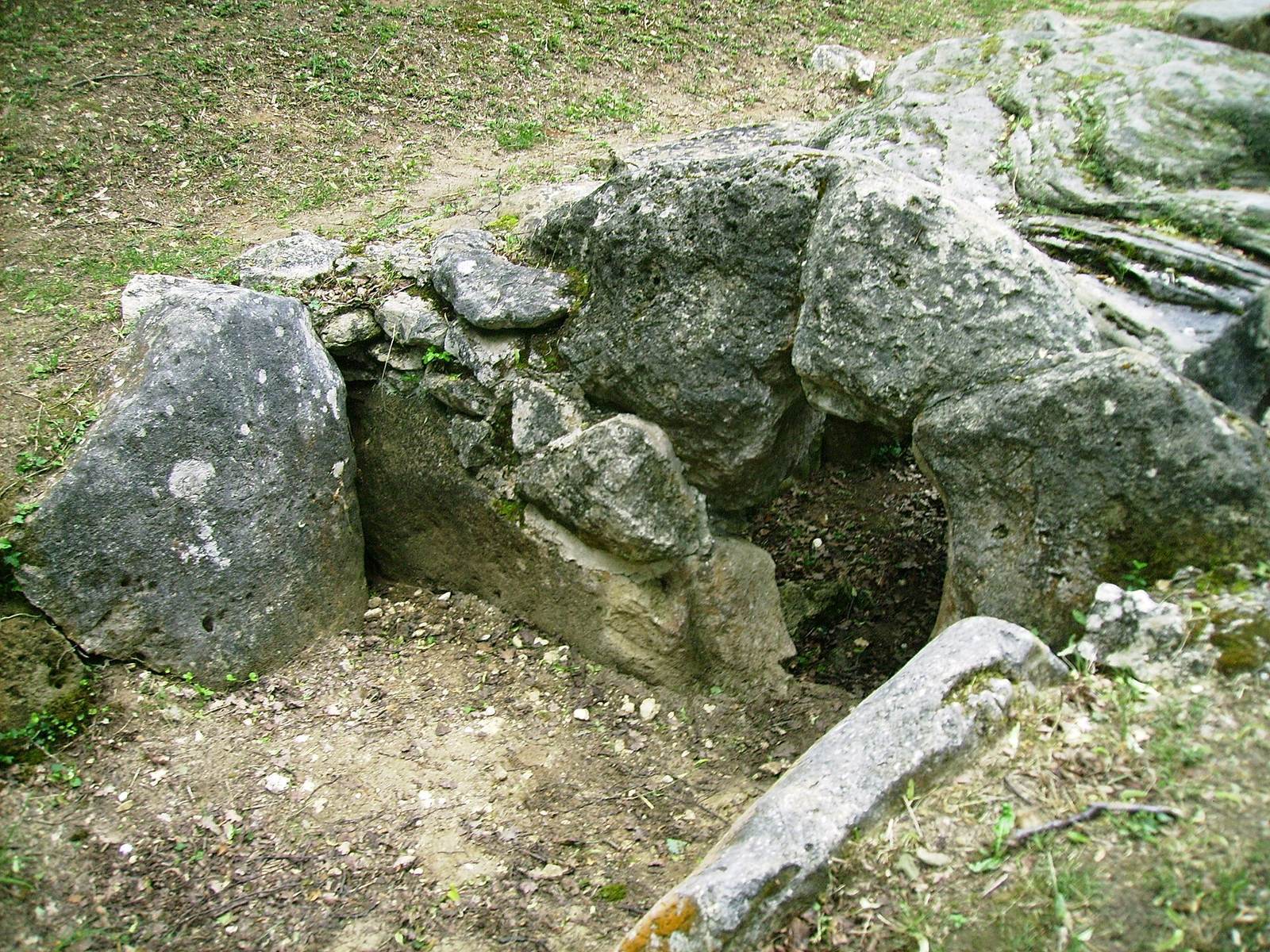
The antechamber measures 2.40 m by 2 m. Two upright slabs line each side, and the floor rises gradually toward the outside.
Entrance
A massive slab at the entrance measures 3.30 m wide, 1.70 m high, and 0.35 m thick. Its rectangular opening, with rounded corners, is 0.63 m wide and 0.82 m high. The aligned opening into the antechamber is badly damaged. Small holes beside the entrance opening may have held sticks to secure a closure. Bottet interpreted a natural hollow at the slab’s inner base as a place for a lamp.
Burial evidence and finds
Deposits and human remains
Excavation revealed a chamber deposit averaging 0.30 m thick, made up of bones and sand and covered by flat stones laid without a regular arrangement. Two ash deposits were also found. One lay directly on the paved floor, measured 1 m by 0.50 m, and contained unidentified unburned bones. The other was in the chamber’s middle, on stones covering the archaeological layer, and contained no bones.
Long bones had been placed in bundles along the chamber edges, while 78 skulls were arranged in small groups. Some skulls show trepanation, the deliberate creation of an opening in the skull, or scraping that thinned the bone; healing followed these procedures. Some shinbones and one thighbone also show fractures or other injuries that healed.
Tools, ornaments, and pottery
Finds from the chamber layer, the antechamber floor, and the area around the antechamber included a small axe and an axe butt; three retouchers, used to shape or resharpen stone tools; a scraper and two borers, pointed tools for making holes; five knives and a dagger; several types of arrowheads; a hammerstone; a small blade; and numerous flakes. Other finds included four polished axes, another axe butt, two retouchers, arrowheads with transverse edges, and further flakes. In total, the excavations recovered nearly 285 flint flakes.
Personal and other objects included two curved schist pendants and another pendant, a perforated pebble, small mother-of-pearl beads, a large bone bead, a bone amulet, cockle and oyster shells, four awls, and a deer-antler axe sleeve, a fitting between an axe head and its handle. Pottery included parts of a vessel with an angled shoulder, a fine-paste vessel, a large vessel, and two vessels decorated with punctures. The finds also included a complete flowerpot-shaped vessel and other pottery fragments.
Animal remains and excavated objects
Bones from badger, deer, sheep, cattle, beaver, and wild boar were found at the level of the antechamber floor. The excavated objects are held in the Bottet collection at the Departmental Museum of Prehistory of Île-de-France.