Pickering Castle: A Norman Motte-and-Bailey Fortress in England


Site at a Glance
- Rating
- 4.4
- Popularity
- Medium
- Country
- United Kingdom
- Primary era
- Medieval
- External website
- Open
- Eras represented
- Medieval
- Civilizations
- English, Norman
- Site type
- Military
- Remains
- Castle
On this page14 sections
History
Pickering Castle is a Norman motte-and-bailey fortress in the United Kingdom, established by William the Conqueror’s forces in 1069–1070 after the Harrying of the North, his campaign of repression and devastation in northern England. Its initial purpose was to maintain Norman control over the surrounding area.
Norman foundation and stone rebuilding
The first castle was built from timber and earth. It combined a large raised mound, or motte, with an enclosed courtyard, or bailey, and included palisades, internal buildings, a keep on the mound, and defensive ditches. This arrangement was characteristic of early Norman fortifications, which often used earth and timber before later stone construction.
During the late twelfth and early thirteenth centuries, the castle was transformed into a stone motte-and-bailey stronghold. The present inner ward, occupying the area of the original bailey, was constructed between 1180 and 1187. The stone shell keep, a fortified enclosure built around the top of a motte, and a chapel were developed between 1216 and 1236.
Royal defence and political crisis
In 1322, Edward II ordered Pickering Castle’s defences to be refortified after he narrowly escaped capture by the Scots during battles that year. Fear of a Scottish invasion also prompted the strengthening of the garrison. Further defensive work followed between 1323 and 1326, when the outer ward, curtain wall, and three towers were constructed.
Pickering Castle also became involved in the crisis of 1399, when Richard II was deposed. The former king was held temporarily at the castle before being taken to Pontefract.
Civil War damage and later stewardship
The castle was largely unaffected by the fifteenth-century Wars of the Roses, a series of civil conflicts between rival branches of the English royal house. It also survived most of the seventeenth-century English Civil War, the conflict between supporters of Charles I and Parliament, although its western side was breached and partly dismantled. The castle was held for the king before Parliamentary troops occupied it.
After the occupation, Sir Hugh Cholmeley removed lead, timber, and iron from the towers to strengthen the defences of Scarborough Castle. The Ministry of Works, the predecessor of English Heritage, took possession of Pickering Castle in 1926. It is a Scheduled Monument, meaning that it has legal protection as an archaeological or historic monument in England. The Duchy of Lancaster owns the site, which is managed by English Heritage.
Remains
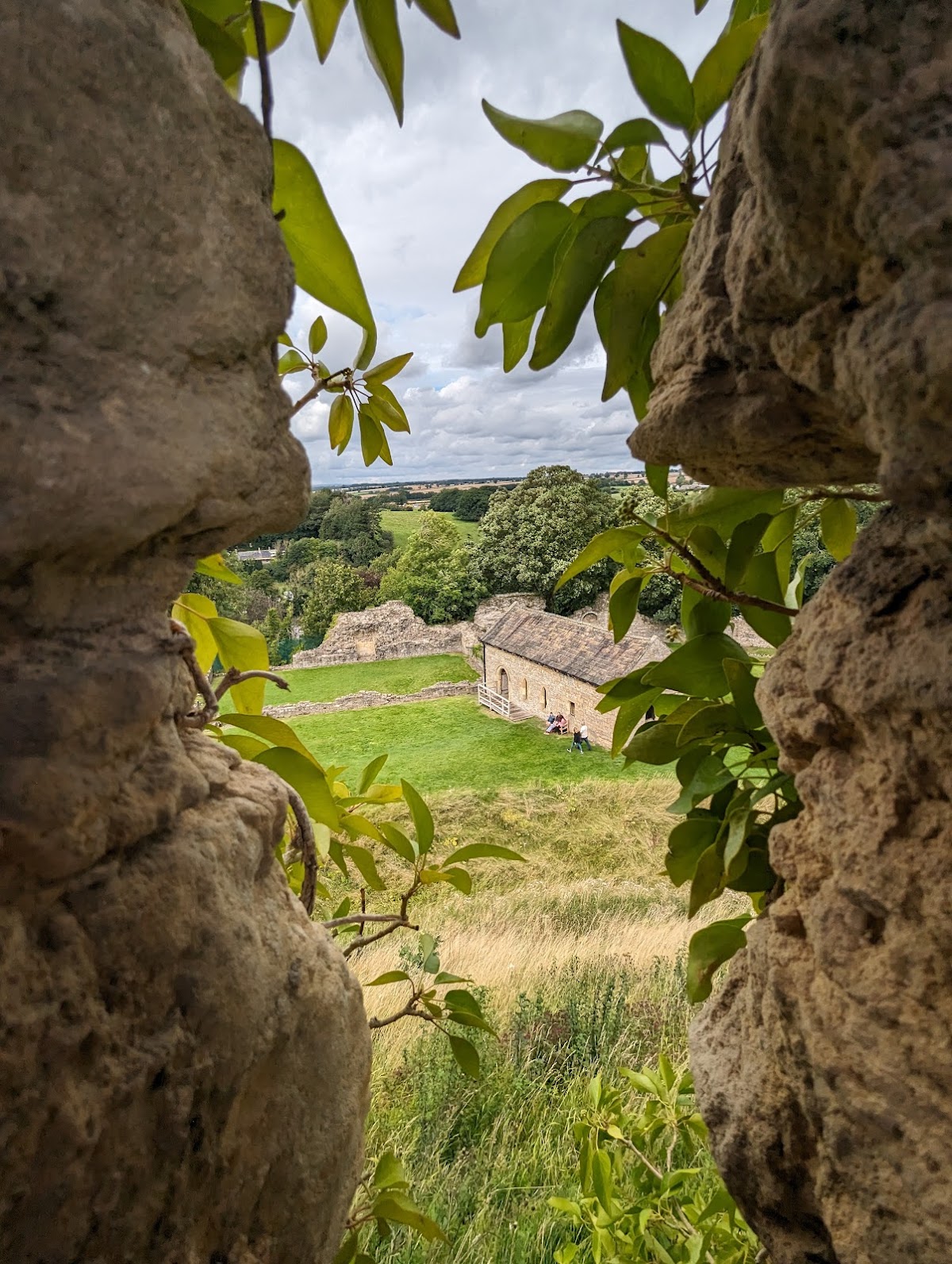
Pickering Castle occupies a motte-and-bailey site in the Vale of Pickering. A steep cliff along its western side formed an important natural defence. The surviving layout retains the central motte, the inner and outer wards, defensive walls, towers, ditches, and later domestic and service buildings.
Early earthworks and inner defences
The motte and early bailey
The earliest fortification consisted of a large central motte with a keep, palisades enclosing the bailey, internal buildings, and ditches intended to make an assault more difficult. The later stone castle preserved this basic arrangement, while the original bailey became the present inner ward.
The inner ward and shell keep
The inner ward was built in stone between 1180 and 1187. Above it, the stone shell keep was developed between 1216 and 1236 as a fortified enclosure around the summit of the motte rather than as a solid, fully enclosed tower. A chapel formed part of the same period of development, and a reconstruction of the chapel remains at the site.
Outer defences and buildings
Outer ward and curtain wall
Between 1323 and 1326, an outer ward, a curtain wall, and three towers were added to the castle. Two ditches formed part of this defensive arrangement, with one outside the curtain wall and another within the outer ward.
Gatehouse and service buildings
Later additions included a gatehouse, ovens, a hall, and storehouses. These structures expanded the castle beyond its earlier defensive core and supported its garrison and household.
Western breach and artillery mounds
Breached western side
The western side was breached and largely dismantled during the English Civil War. The damage altered the surviving form of the castle and reflects the conflict’s direct effect on its defences.
Western mounds
Three mounds west of the castle are traditionally identified as the positions from which Cromwell’s Parliamentary forces placed cannon during their attack on the western wall.