Palazzo Tosio: A Neoclassical Palace and Cultural Institution in Brescia
Site at a Glance
- Rating
- 4.8
- Popularity
- Very Low
- Country
- Italy
- Primary era
- Modern
- External website
- Open
- Eras represented
- Early Modern, Modern
- Civilizations
- Habsburg, Venetian
- Site type
- Domestic
- Remains
- Elite Residence
On this page8 sections
History
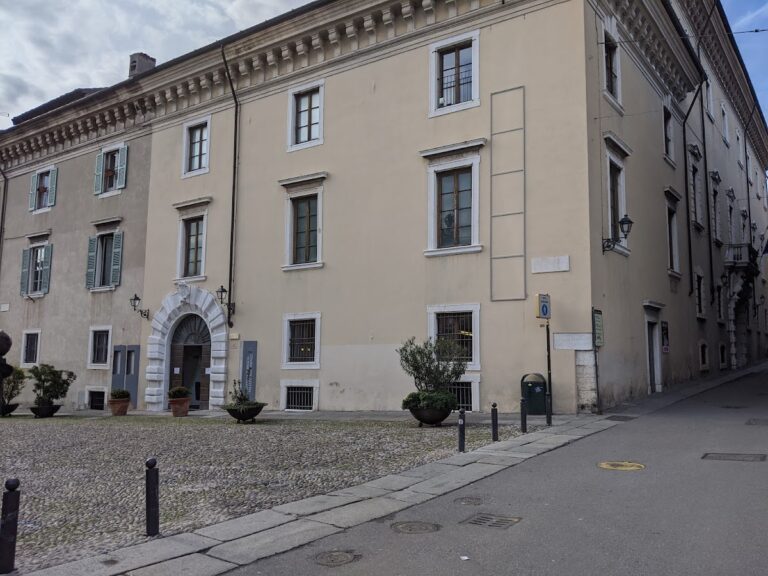
Palazzo Tosio is a historic palace in Brescia, Italy, belonging originally to the Tosio family and rebuilt in the first half of the nineteenth century in the Neoclassical tradition, which revived the forms and proportions of ancient Greek and Roman art. The building incorporated an earlier sixteenth-century structure and served first as a private residence before becoming a museum and the historic seat of the Ateneo of Brescia, a local scholarly and cultural institution.
Nineteenth-Century Reconstruction
The rebuilding took place in at least three phases. Antonio and Luigi Basiletti carried out the first phase between 1810 and 1814. Architect Rodolfo Vantini then directed major transformations from 1824 to 1829 and again from 1834 to 1840. These interventions gave the palace its Neoclassical character while retaining parts of the earlier building.
The Tosio Collection
Palazzo Tosio later housed a private picture gallery and library. The collection included works by Raphael and other Italian and foreign artists, together with objects removed from churches and buildings that had been destroyed. In 1884, Count Leopardo donated Palazzo Martinengo da Barco to the municipality of Brescia. The Tosio collection was transferred there in 1908, creating the Tosio Martinengo Picture Gallery.
The Ateneo of Brescia
After the palace was selected as the seat of the Ateneo of Brescia, its meeting hall continued to display paintings by Gabriele Rottini and Luigi Basiletti. This institutional use preserved Palazzo Tosio as a setting for Brescia’s scholarly and cultural life.
Remains
Facade and Courtyard
The facade is faced with white Botticino stone, a pale limestone quarried in the Brescia area and widely used in local architecture. Vantini employed the same material in the renovation of the internal courtyard and several interior rooms. The courtyard contains a fountain depicting a Naiad, a female water spirit associated in classical mythology with springs and other fresh-water sources. The arched portico retains its original sixteenth-century style, and its decoration includes a medallion of Raphael.
Interior Rooms
The interior on the sixth floor and some ground-floor rooms also preserve their original sixteenth-century character. The entrance contains a bust of Rodolfo Vantini together with Masonic symbols. A hall with Doric columns has lunettes dedicated to the painter Giovanni Renica. Another small courtyard room contains a seventeenth-century trompe-l’oeil fresco, an illusionistic painting intended to make a surface or object appear three-dimensional.
Paintings and Busts
Gabriele Rottini frescoed another hall with grisaille images, a monochrome technique using shades of gray to imitate sculpture or relief. The subjects are Dante, Ariosto, Tasso, Homer, and Virgil. The palace’s bust collection includes Beatrice Portinari by Giovanni Franceschetti, the engineer Carlo Donegani, Alessandro Manzoni by Gaetano Matteo Monti, the jurist Giuseppe Beccalossi by Pompeo Marchesi, Napoleon by Democrito Gandolfi, and Paolo Tosio by Gaetano Matteo Monti.
Nearby sites