Palazzo Tommaso Spinola: A Mannerist Rolli Palace in Genoa
Site at a Glance
- Rating
- 4.7
- Popularity
- Very Low
- Country
- Italy
- Primary era
- Early Modern
- Eras represented
- Early Modern
- Civilizations
- Genoese
- Site type
- Domestic
- Remains
- Elite Residence
On this page6 sections
History
Palazzo Tommaso Spinola is a Mannerist palace in Genoa, Italy, built between 1558 and 1561 for banker Tommaso Spinola. Mannerism was a sixteenth-century style marked by elaborate, complex forms. The architect and artist Giovan Battista Castello, known as Il Bergamasco, designed the building.
Construction and Rolli service
Tommaso Spinola sold the palace to Luca Negrone in 1574. In 1664, it appeared in the third class of the Rolli register. The Palazzi dei Rolli were palaces enrolled in a system of official hospitality, with classes assigning them to receive state visitors on behalf of the Republic of Genoa, the maritime city-state centered on Genoa.
Later ownership and protection
After further changes of ownership, the palace belonged to the Pessagno family by the eighteenth century and remained theirs at the end of the nineteenth century. The family made structural alterations while leaving the original frescoes untouched. Protected as a heritage site in 1947, the palace became part of the UNESCO World Heritage listing “Genoa: Le Strade Nuove and the system of the Palazzi dei Rolli” in 2006, a property encompassing 42 palaces. It is now a private residence.
Remains
Exterior
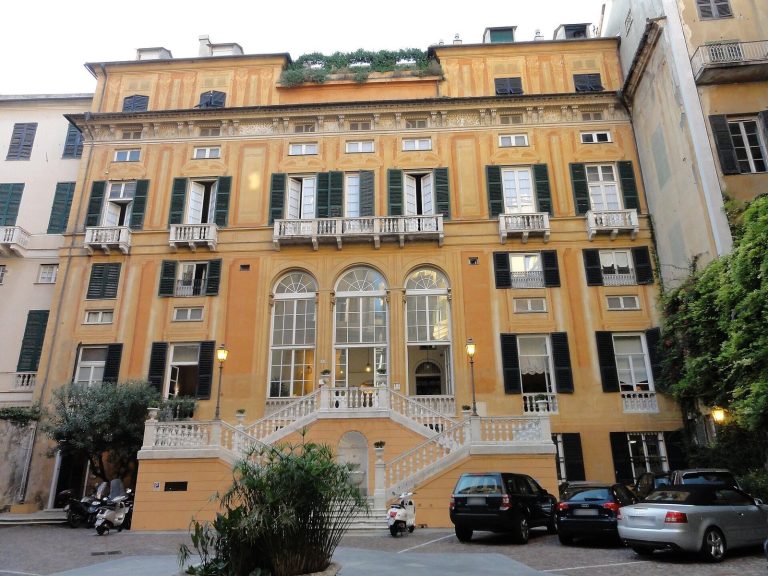
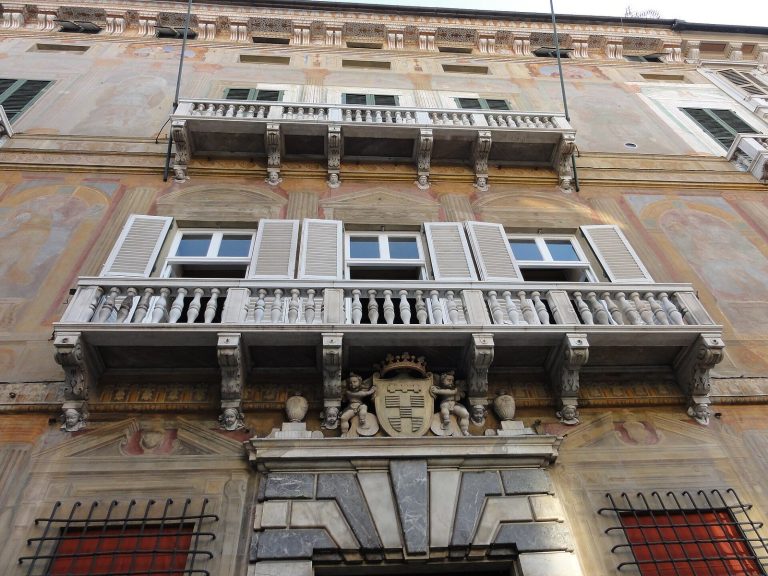
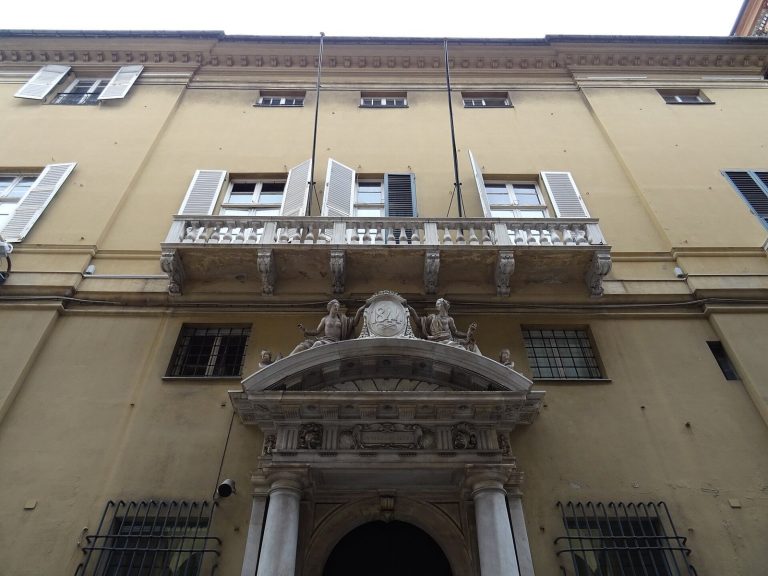
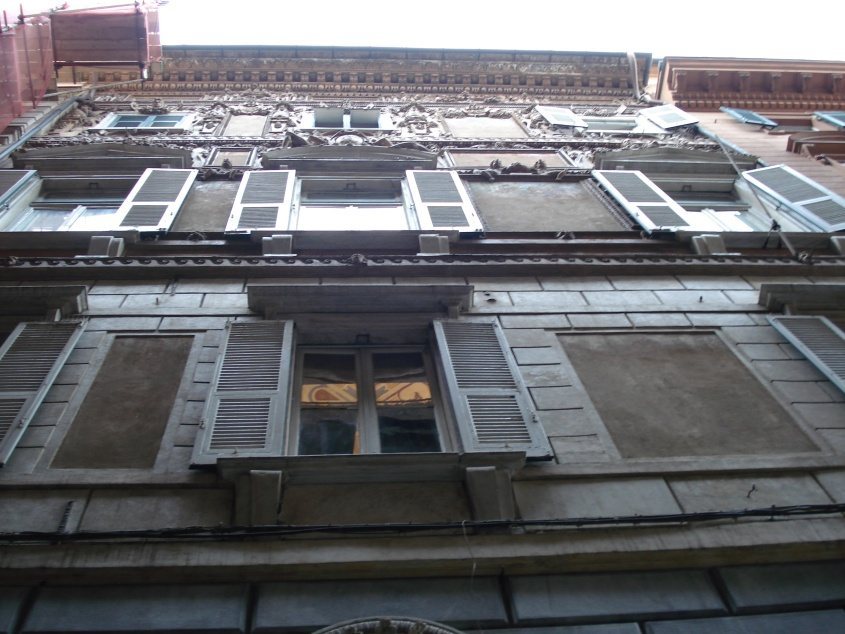
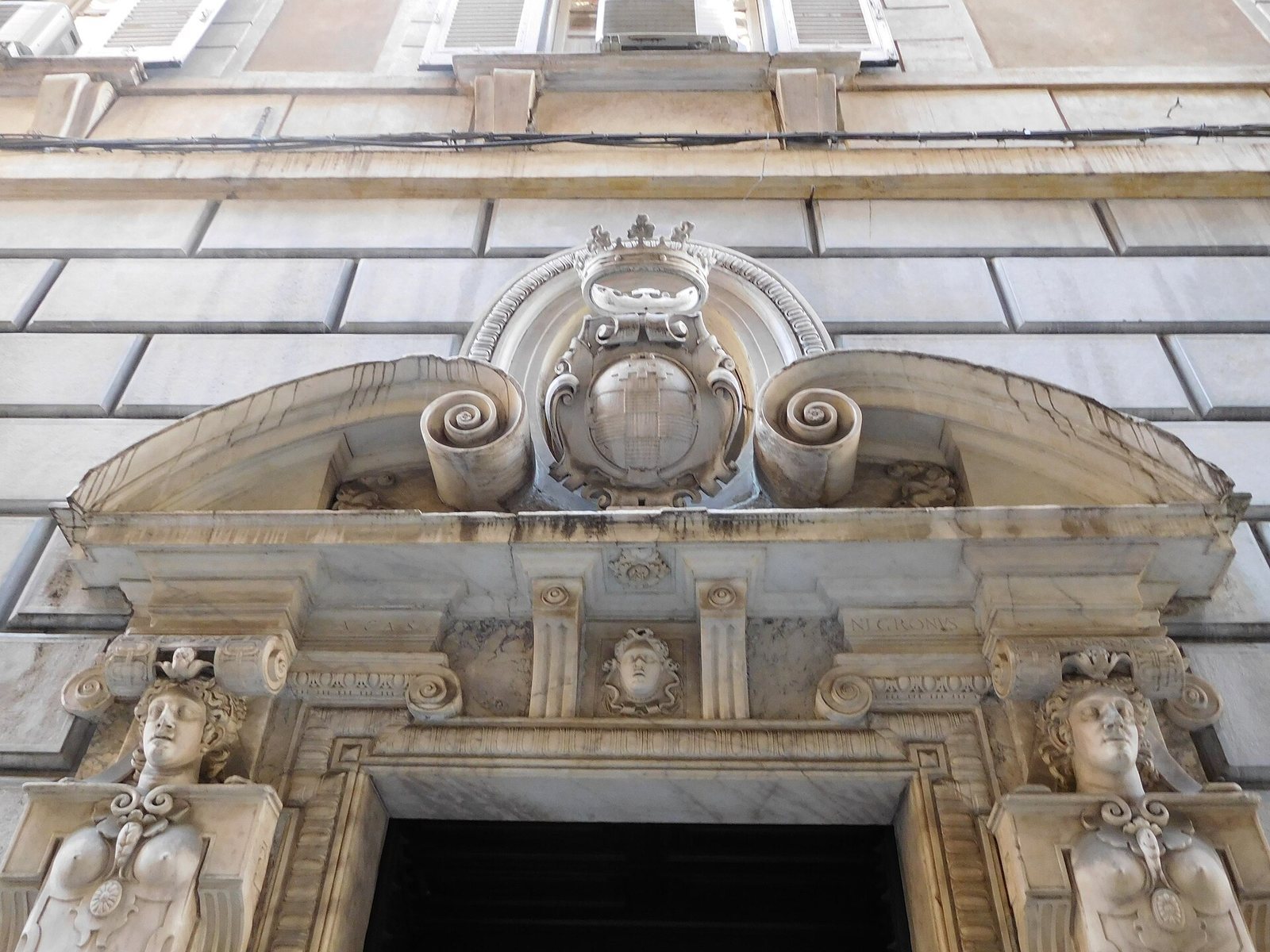
The narrow building stands between the former Piazza degli Spinola di Luccoli and Piazza della Rovere. Its façade is arranged along four vertical axes, with windows on three. A white-marble portal, made in 1560 by sculptors Giacomo Ponzello and Pompeo Bianchi, combines architectural motifs with female herms, sculpted human figures serving as supports. The figures hold up a broken pediment, a gable interrupted at its center, decorated with spiral scrolls. Reliefs and elaborate fresco-and-stucco framing cover the façade. This decoration has parallels at Palazzo Gio. Vincenzo Imperiale in Campetto, built between 1555 and 1560, and Palazzo Nicolosio Lomellini in Strada Nuova, dated to 1558. The upper-floor imagery is exceptionally elaborate and difficult to see clearly. It includes fantastical creatures, monstrous masks, armed figures used as supports, planetary deities, and figures combining clawed legs, fish tails, bird wings, and female faces. The imagery draws on magical and alchemical ideas associated with Renaissance Hermeticism, an esoteric philosophical tradition.
Interior and frescoes
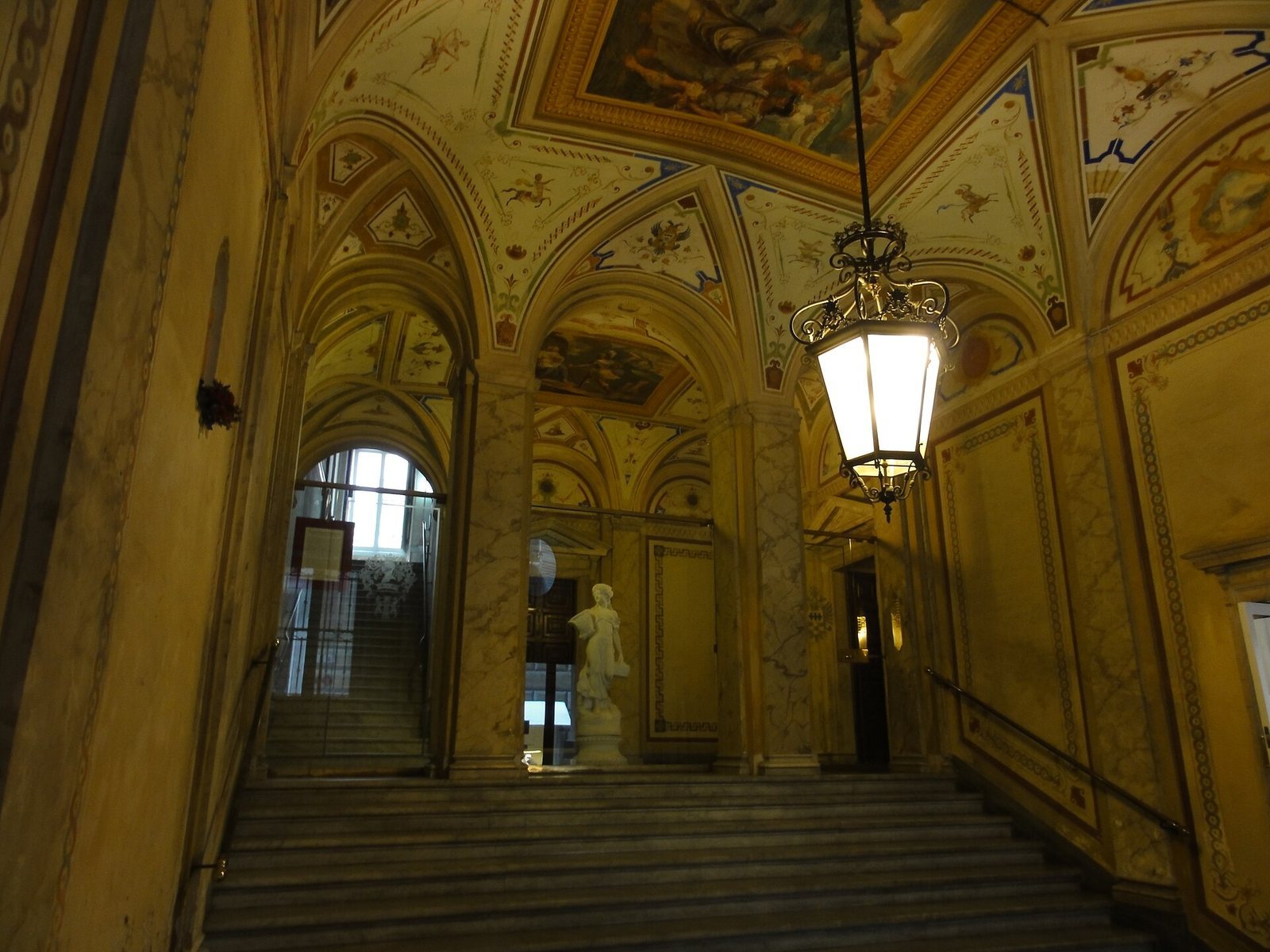
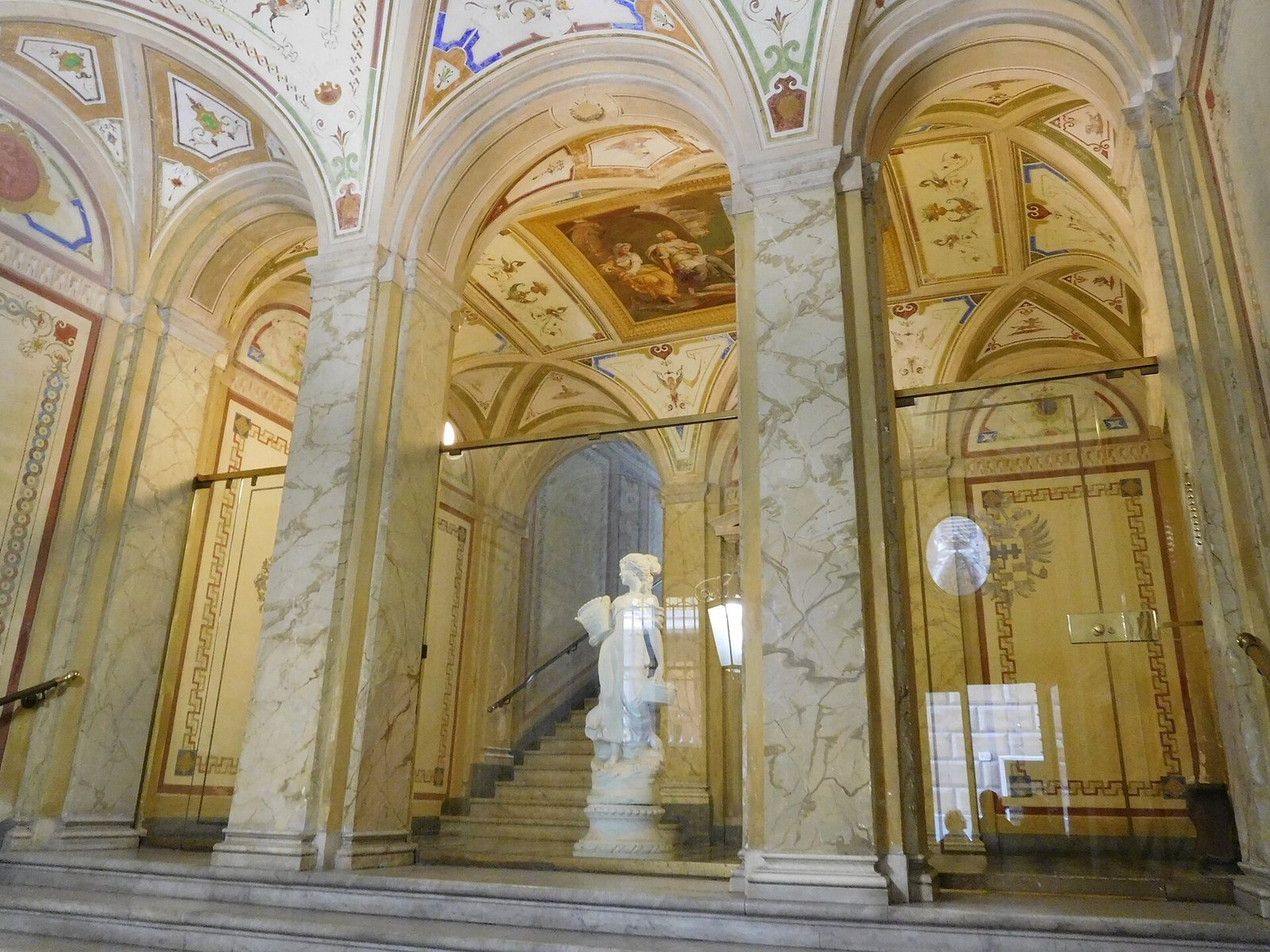
Frescoes extend from the entrance hall to the reception rooms on the second floor. In the entrance hall, Andromeda is shown exposed to a monster; a fresco above the staircase entrance depicts her welcoming Perseus as her liberator. In Greek myth, Perseus rescued Andromeda, a princess, from a sea monster. The reception-room paintings include Hero in Parnassus by Luca Cambiaso and a similar subject whose attribution to Andrea Semino remains uncertain. The staircase rises from the entrance hall toward the second-floor rooms, while a glass-enclosed gallery affords a view of only part of it. The entrance hall also served as a model for the one at Palazzo Tobia Pallavicino, built about fifteen years later.