Palazzo Ottavio Imperiale: A Rolli Palace in Genoa


Site at a Glance
- Rating
- 4.6
- Popularity
- Very Low
- Country
- Italy
- Primary era
- Early Modern
- Eras represented
- Early Modern
- Civilizations
- Genoese
- Site type
- Domestic
- Remains
- Palace
On this page8 sections
History
Palazzo Ottavio Imperiale, also known as Palazzo del Melograno and De Mari-Casareto, is a historic palace in Genoa, Italy, built for the aristocrat Ottavio Imperiale between 1586 and 1589 during the Republic of Genoa. Its construction formed part of the city’s late sixteenth-century aristocratic development, and the building later became one of the Palazzi dei Rolli, residences entered in official registers for accommodating distinguished state visitors on behalf of the Genoese government.
Construction and entry into the Rolli
Construction began in 1586 under the direction of Jacopo De Aggio, a master builder, and cost 50,000 gold scudi. Giulio Pallavicini, a Genoese historical chronicler, recalled the start of the work among the notable events of that year. He mentioned it alongside the demolition of the urban “island” that had separated Soziglia from Campetto, linking the palace’s creation to a wider change in the surrounding cityscape.
The palace was completed and inaugurated in 1589. Before completion, in 1588, it entered the Rolli registers in the second bussolo, a category within the system used to organize the residences assigned to receive state guests. It later passed permanently into the first bussolo, reflecting its continuing place within Genoa’s system of aristocratic reception.
The Sauli, De Mari, and Casareto families
In the early seventeenth century, Ottavio Sauli acquired the palace and moved into it with his brother Gio Antonio. The brothers left the Sauli family’s earlier residence in Piazza Sauli, which had also been included in the Rolli. Pietro Paolo Rubens, the Flemish Baroque painter, later depicted the building in three plates in Palazzi di Genova, identifying it as the palace of Ottavio Sauli. The Sauli name remained attached to the building at the end of the seventeenth century.
The property subsequently passed by inheritance to the De Mari family and, during the nineteenth century, to the Casareto family, which retained it into the twentieth century. Its formal inherited name became De Mari-Casareto, more fully Imperiali-Sauli-De Mari-Casareto. From the eighteenth century, it was also known as Palazzo del Melograno.
Protection and continuing use
The palace received legal protection from the heritage authorities in 1942. Its interiors had been enriched with works by Domenico Piola, Filippo Parodi, Domenico Guidobono, and J. Boni, together with a substantial picture collection. These contents were still listed in an 1818 guide by an anonymous author. The building remains in use for residences and offices and also contains a department store and apartments.
Remains
Courtyard entrance and staircase
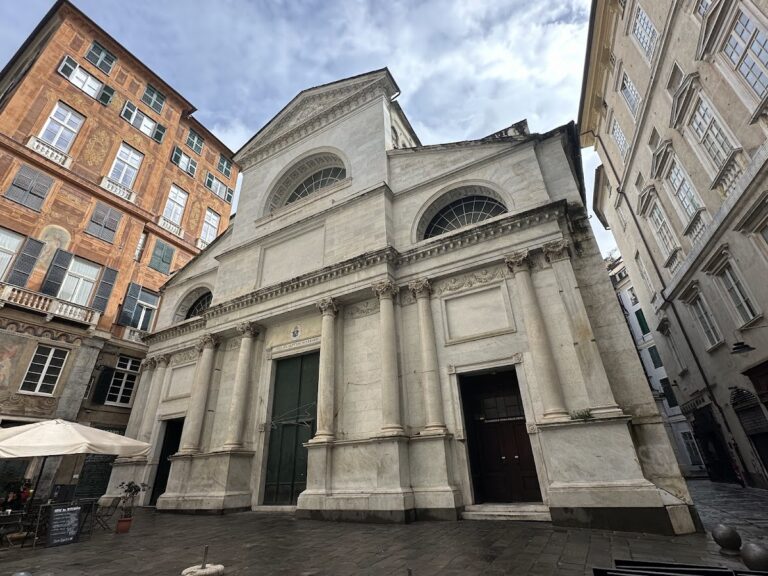
Palazzo Ottavio Imperiale stands at Piazza Campetto 2 in Genoa’s historic centre. A vaulted space connects the entrance atrium with the courtyard. Equal in size to a double row of loggias, it leads on the right to a broad staircase. The staircase has no external outlook and rises to the second principal floor, or piano nobile, the prestigious residential level traditionally associated with the principal reception and living spaces of an aristocratic palace.
Shops facing Soziglia
On the opposite side of the courtyard, nine shops faced the busy Piazza di Soziglia. Their position connected the palace’s internal courtyard arrangement with one of the active public spaces around Campetto and Soziglia.
Interior decoration and collection
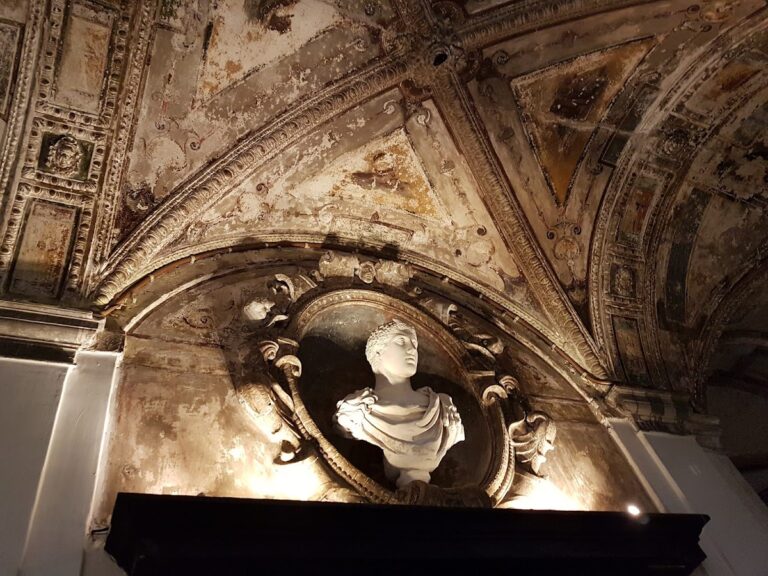
The palace’s interior decoration included Domenico Piola’s Cesare Bacco e Amore con la Galleria dei Pianeti e le Arti, Filippo Parodi’s Ercole, and Domenico Guidobono’s Il Tempo che rapisce la Bellezza, as well as works by J. Boni. These works formed part of the building’s decorated interiors and were associated with the picture collection listed in the 1818 guide.