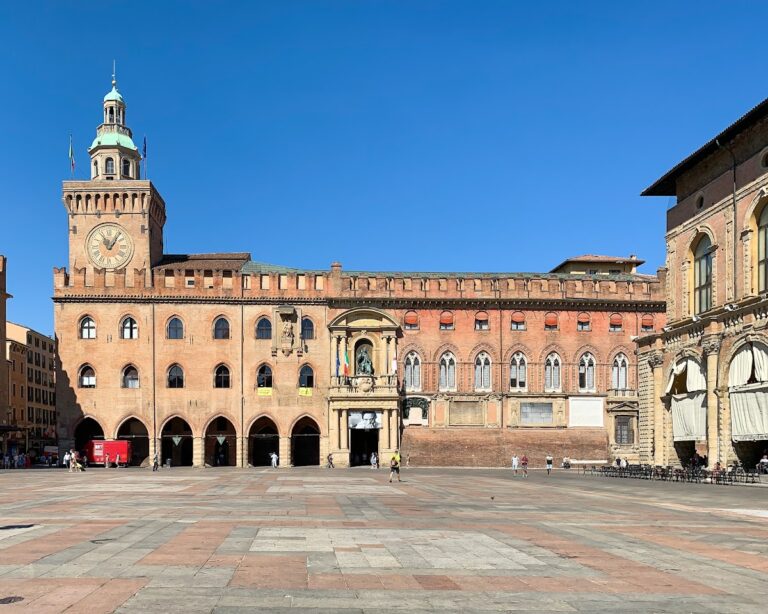
Palazzo Fava: A Renaissance Palace and Exhibition Venue in Bologna


Site at a Glance
- Rating
- 4.6
- Popularity
- Medium
- Country
- Italy
- Primary era
- Early Modern
- External website
- Open
- Eras represented
- Classical, Early Modern
- Civilizations
- Papal States, Roman
- Site type
- Domestic
- Remains
- Palace
On this page7 sections
History
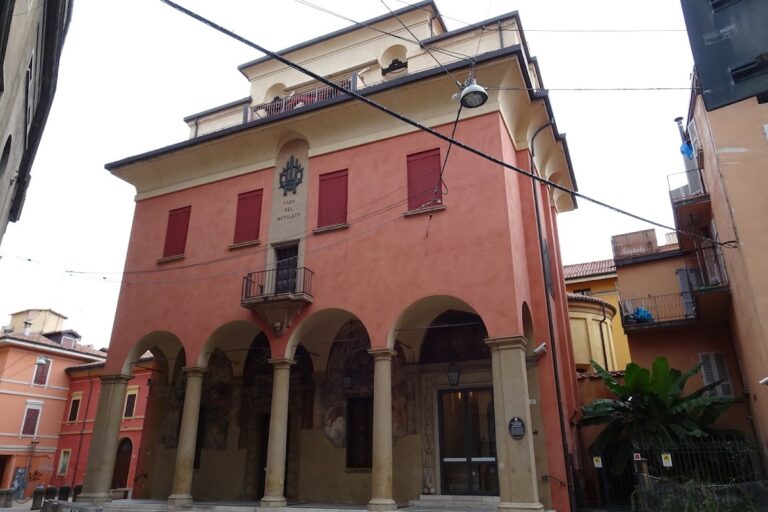
Palazzo Fava, also known as Palazzo Fava-Ghisilieri, is a historic Renaissance palace in Bologna, Italy. The building predates the Fava family’s acquisition of it in 1546, and it reached its present character through major restoration work commissioned by Filippo Fava after his marriage to Ginevra Orsi brought him a substantial dowry.
The Fava Family and Renaissance Transformation
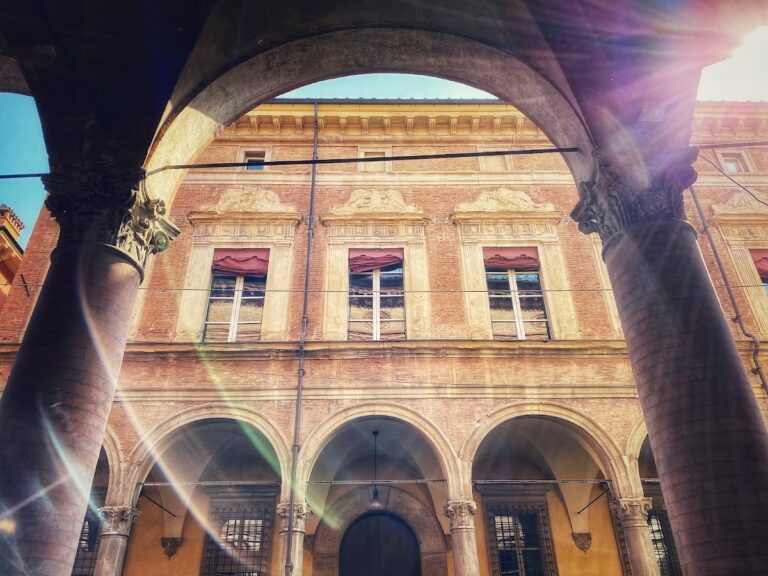
Filippo Fava’s rebuilding campaign gave the palace its Renaissance form, reflecting the period’s renewed interest in classical antiquity and major developments in architecture and the visual arts. Later alterations were commissioned by Count Carlo Fava, continuing the building’s transformation under the family’s ownership.
The Carracci Decoration
In 1584, Annibale, Agostino, and Ludovico Carracci were engaged to decorate three rooms on the piano nobile, the principal residential floor. Their introduction to Filippo Fava was arranged through Antonio Carracci, the father of Annibale and Agostino and Fava’s tailor. Francesco Albani worked with the Carracci on the rooms devoted to Jupiter and Europa and to Jason and Medea, while Bartolomeo Cesi also painted at the palace under their influence. The individual contributions are difficult to distinguish, but the decoration helped establish the palace as an important setting for Bolognese academic painting, even though the frescoes depended on the art of Raphael and Correggio.
Loss, Ownership, and Modern Use
At the end of the eighteenth century, an effort to whiten the palace walls destroyed numerous frescoes. Archaeological excavations during the same period probably revealed two Roman marble columns at the entrance. After the Fava-Ghisilieri branch became extinct, ownership passed to the Medica family. The building later housed the Institute for Cultural and Natural Heritage of Emilia-Romagna, while some rooms, including those with the Europa frescoes, passed to the Grand Hotel Majestic, formerly the Baglioni.
The Cassa di Risparmio Foundation of Bologna acquired Palazzo Fava in 2005 with plans to restore it and create a city exhibition palace. Restoration followed in 2007, and the building opened as Palazzo Fava, Palazzo delle Esposizioni, on 28 January 2011. It forms part of Genus Bononiae: Musei nella Città, a distributed museum network presenting Bologna’s historical and artistic heritage through several institutions and historic buildings. Palazzo Fava now accommodates temporary and other art exhibitions, as well as the Carracci Fava literary café.
Remains
Palazzo Fava retains a Renaissance architectural character at Via Manzoni 2 in Bologna. Its exhibition spaces extend across approximately 2,600 square metres and occupy the ground floor, piano nobile, gallery level, and a library. The historic frescoed rooms on the piano nobile remain integrated into the exhibition use of the building.
Mythological Fresco Cycles
Three rooms on the piano nobile preserve fresco decoration arranged as mythological narrative cycles. A fresco is a wall painting made on fresh plaster, so its pigments become integrated with the drying surface. At Palazzo Fava, the cycles present episodes from the stories of Jason and Medea, Jupiter and Europa, and Aeneas. Other scenes relate to the arrival of Ulysses. Their arrangement in sequences of connected episodes reflects the narrative character of the decoration and preserves the palace’s principal artistic feature.
Entrance Columns
Two marble columns from the Roman period stand at the palace entrance. They were probably brought to light during the archaeological excavations carried out in the eighteenth century, linking the building’s later setting with material from Bologna’s Roman past.
Nearby sites