Palazzo del Podestà: Medieval Civic Palace in Bologna


Site at a Glance
- Rating
- 4.6
- Popularity
- Low
- Country
- Italy
- Primary era
- Medieval
- Eras represented
- Medieval, Early Modern
- Civilizations
- Papal States
- Site type
- Civic
- Remains
- Palace
On this page12 sections
History
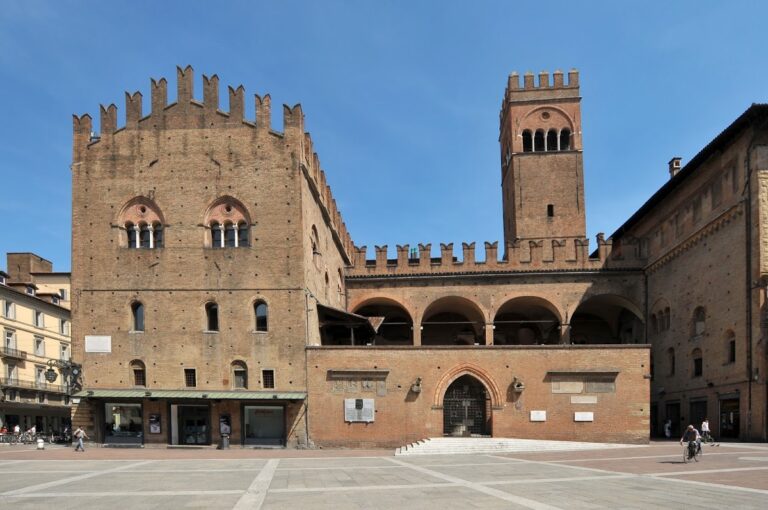
Palazzo del Podestà is a medieval civic complex in Bologna, Italy, erected around 1200 with Piazza Maggiore as a center for public functions and the seat of the city’s podestà and his officials. A podestà was the chief magistrate of an Italian medieval commune, a self-governing urban polity, and directed its executive and judicial affairs. The palace therefore formed part of Bologna’s developing communal government.
The communal palace and its expansion
The original complex soon became too small for the large popular participation in Bologna’s government. Palazzo Re Enzo was added beside it between 1244 and 1246, followed somewhat later by Palazzo del Capitano del Popolo. The three buildings were linked around the Torre dell’Arengo and the Voltone del Podestà. Palazzo Re Enzo was first called the “New Palace,” but later acquired its present name after Enzo of Hohenstaufen, son of Emperor Frederick II, was captured by Bologna and imprisoned there for life.
The Torre dell’Arengo began with a wooden structure dating to 1212. During the thirteenth century, this was replaced by a tower of masonry and terracotta. Its bell summoned citizens to assemblies and called the population together in extraordinary emergencies and during war. The tower consequently connected the palace’s administrative functions with the wider civic life of Bologna.
Renaissance remodelling
In 1453, Giovanni II Bentivoglio commissioned the Bolognese architect Aristotele Fioravanti to remodel the palace’s medieval facade in Renaissance style. The Bentivoglio were a powerful ruling family in Bologna whose political dominance ended when they were expelled from the city in the fifteenth century. Fioravanti’s project remained incomplete after the popular uprising that drove the family from Bologna. The building’s architectural record also places the work between 1484 and 1494.
Fioravanti also made the large bronze civic bell known as the Campanazzo in 1453. Its tolls traditionally marked public life in Bologna and summoned the population during war and other exceptional events. It sounded on 25 July 1943 to celebrate the fall of Fascism and again on 21 April 1945 to mark Bologna’s liberation and the end of the war.
Public uses and twentieth-century interpretation
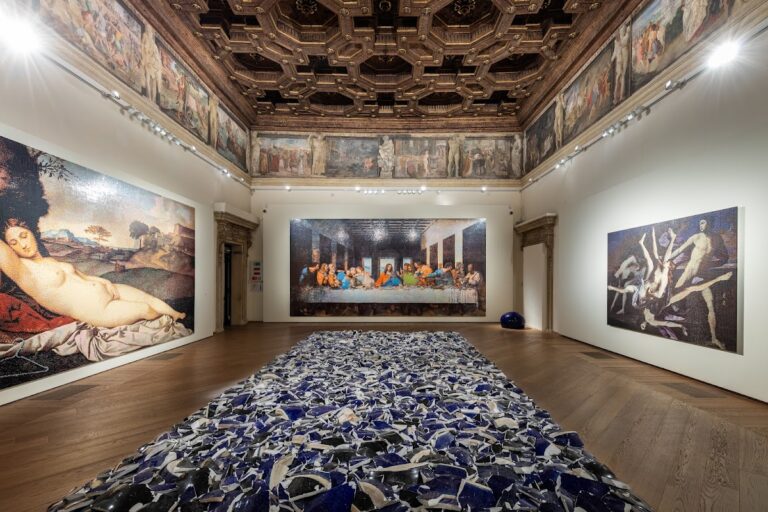
Before Palazzo dei Notai was built, notaries occupied offices beneath the palace’s original side stairways. From 1581 to 1767, the Salone del Podestà served as a public theater. The theater hosted the second version of Euridice in 1616. The hall was later used for ball games and then as a gymnasium for firefighters. It now serves as an exhibition and events space.
In 1911, the painter Adolfo De Carolis began a fresco cycle in the Salone del Podestà titled I Fasti della Città di Bologna. Executed in a Michelangelesque style, the cycle presented important people and episodes from Bologna’s history. Its subjects ranged from the city’s traditional Etruscan foundation and the arrival of the Romans to the University, the free commune, and the capture of King Enzo. It also recalled the abolition of serfdom in 1256 through the Liber Paradisus, a medieval Bolognese legal record associated with that change. De Carolis died in 1928 before the work was complete. After the Second World War, the frescoes were detached for conservation and were not reinstalled.
In 1924, the Municipality of Bologna purchased a residence built against Palazzo Re Enzo and Palazzo del Podestà, intending to enlarge the usable space of the two historic buildings. Palazzo del Podestà is protected as an Italian national heritage property and cultural asset.
Remains
Palace and civic passages
Arcade and Salone del Podestà
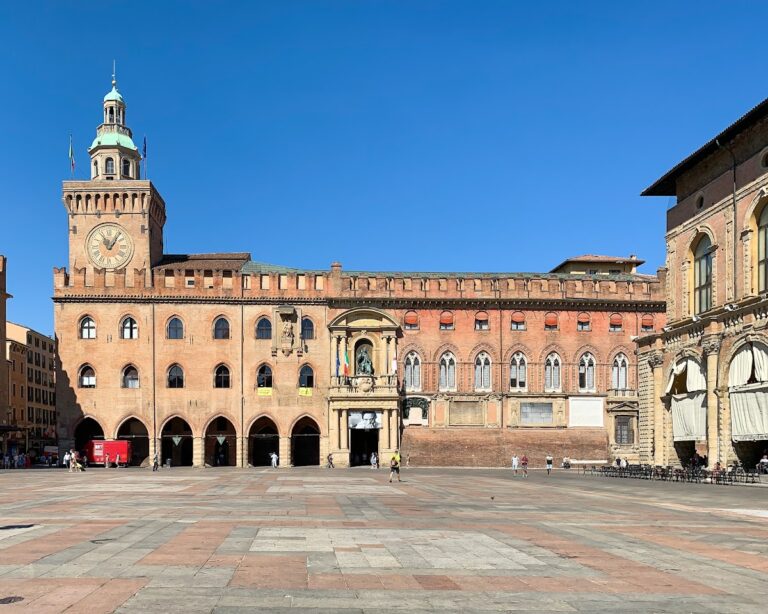
Palazzo del Podestà stands on the northern side of Piazza Maggiore, opposite the Basilica of San Petronio and beside Palazzo Comunale and Palazzo Re Enzo. It is an elongated complex crossed by two streets that meet beneath the Voltone del Podestà. The lower level contains an open arcade with two rows of shops, while the principal upper floor contains the large Salone del Podestà.
The facade associated with Fioravanti’s remodelling has two rows of half-columns. The imposing pillars of the ground-floor arcade are faced with stone and decorated with approximately 3,000 carved flowers, each one different. Above the arcade, the Salone del Podestà measures about 14 metres in width and 61 metres in length, making it Bologna’s largest hall. On the side facing the piazza, a balustrade formerly fitted with railings served as the place from which municipal decisions and death sentences were announced.
Voltone del Podestà
The palace’s original arrangement included two lateral stairways leading to the upper floor, with notaries’ offices beneath them. At the intersection of the two streets, the Voltone del Podestà forms a large vaulted passage. Its cross vault is supported at the four corners by four pillars, and the passage also functioned as a market containing numerous merchants’ stalls.
The Voltone has unusual acoustics. Two people standing at diagonally opposite corners, facing the walls, can hear one another’s low speech. The arcade was also associated with public executions, which were visible from Piazza Maggiore as a warning to the population. Beams used to attach the ropes remain visible. Four terracotta statues of Bologna’s patron saints, Petronius, Proculus, Dominic, and Francis, were installed at the four corners of the Voltone in 1525. The Italian Renaissance sculptor Alfonso Lombardi made them.
Tower and civic bells
Torre dell’Arengo
The Torre dell’Arengo rises above the Voltone at the point where the two streets pass beneath the palace. The present tower has a square plan and is approximately 47 metres high. Later rebuilding and consolidation shaped its current form, while its principal construction is in masonry and terracotta. It replaced the earlier wooden structure that had stood on the site from 1212.
Campanazzo and Cavaliera
The tower contains the large bronze Campanazzo, Bologna’s principal civic bell, made by Aristotele Fioravanti in 1453. Both the Campanazzo and the much smaller Cavaliera, cast in 1653, are fixed to their supporting frame and are sounded by striking their internal clappers. Their arrangement preserves the tower’s connection with the civic summons and the marking of major public events.
Decorative remains
The Salone del Podestà was decorated with Adolfo De Carolis’s fresco cycle, I Fasti della Città di Bologna. The ceiling paintings were executed in a Michelangelesque style and treated episodes from Bologna’s history, including the traditional Etruscan foundation of the city, Roman arrival, the University, the free commune, King Enzo’s capture, and the abolition of serfdom recalled by the Liber Paradisus. The ceiling frescoes were detached after the Second World War for restoration and were not returned to their original location.