Palazzo della Cultura “Pasquino Crupi”: Museum and Cultural Palace in Reggio Calabria


Site at a Glance
- Rating
- 4.5
- Popularity
- Low
- Country
- Italy
- Primary era
- Modern
- External website
- Open
- Eras represented
- Modern
- Civilizations
- Italian
- Site type
- Civic
On this page9 sections
History
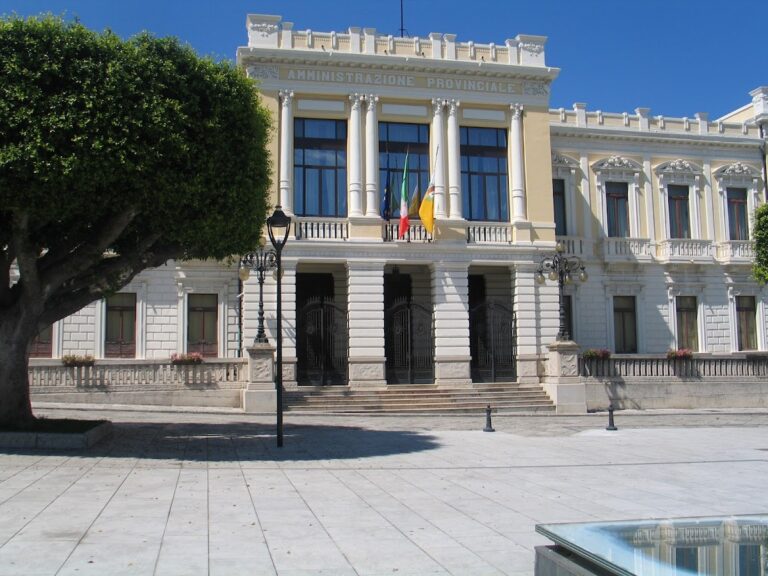
Palazzo della Cultura “Pasquino Crupi” is a museum and cultural palace in Reggio Calabria, Italy. Designed in the late 1920s by the engineers Leale and Calogero and completed in 1934, the building originally housed the city’s institution for abandoned infants and children.
From infant assistance to wartime destruction
The institution continued its work until the building was struck during a bombing raid on Reggio Calabria on 21 May 1943, in the Second World War. Thirty-three children, fourteen wet nurses, two childcare attendants, and one nun were killed. The attack also caused extensive structural damage to the building.
The infant institution was rebuilt in 1948 and continued providing child assistance until 1970. After the institution closed, the building was abandoned for a period before being used by the offices of the Civil Engineering Department. From 1983 to 1997, it accommodated the Faculty of Engineering of the Mediterranean University of Reggio Calabria.
Transformation into a cultural palace
After renovation and adaptation, the building was inaugurated as the Palace of Culture on 7 May 2016. It was named for Pasquino Crupi (1940–2013), a Calabrian teacher, journalist, commentator, literary critic, and writer. The dedication followed a public ideas competition promoted by the then Province of Reggio Calabria.
The museum’s opening was closely connected with the public return of a large group of confiscated paintings. After Gioacchino Campolo, an entrepreneur associated with the Calabria-based organized-crime network known as the ’Ndrangheta, was arrested in 2009, authorities carried out a confiscation valued at 330 million euros. The paintings remained in the vault of the Bank of Italy for almost three years, then appeared in a 2013 exhibition at the Museum of Magna Graecia in Reggio Calabria. In 2016, they were installed at Palazzo della Cultura as part of the permanent exhibition A tenebris ad lucem – L’arte ritrovata torna bene comune.
The building is owned by the Metropolitan City of Reggio Calabria. Its second floor also supports local artistic activity through works selected by a specially appointed Scientific Commission and through temporary exhibitions. The exhibition 33 Stelline, opened on 21 January 2020 for two months, commemorated the thirty-three children killed in the 1943 bombing.
Remains
The palace is arranged on a ground floor, a first floor, and a second floor, with different collections assigned to each level. The ground floor contains the Piccolo Museo San Paolo, the first floor presents the confiscated paintings and the Calarco Collection, and the second floor is devoted to contemporary art in the area known as PiCo, or the Contemporary Floor.
Piccolo Museo San Paolo
The Piccolo Museo San Paolo brings together religious art, archaeology, sculpture, precious objects, and books. Its icon section contains 180 works dating from the sixteenth to the twentieth century and originating in Eastern European countries. The painting section includes more than 130 canvases and panels, ranging from the fifteenth century to the contemporary period. Among them is a sketch attributed to Raphael, the Italian Renaissance painter and architect, rather than definitively identified as his work.
The museum’s silver section contains 200 objects from the fifteenth to the twentieth century, including monstrances, vessels used to display the consecrated host, chalices, censers for burning incense, and incense boats that hold the incense used with them. Other holdings include mostly medieval sculpture, coins from every period from Magna Graecia to the contemporary era, and an ivory section containing a crucifix dated to the sixteenth or seventeenth century. An associated library preserves incunabula, books printed before 1501, together with sixteenth-century books.
Confiscated paintings and the Calarco Collection
Confiscated art
The permanent exhibition of confiscated art contains 125 paintings dating from the seventeenth to the twentieth century. The works once covered the walls of Campolo’s house, while others were placed in domestic spaces such as the bathroom, kitchen, and corridors. An Antonio Ligabue painting was kept under a bed. At the Palazzo della Cultura, the group is presented as a public collection under the title A tenebris ad lucem – L’arte ritrovata torna bene comune.
Its principal works include Lucio Fontana’s Tagli and Concetto spaziale – Attese; Giorgio De Chirico’s Piazza d’Italia and Le muse inquietanti; Salvador Dalí’s Fuente de vida from 1988 and Romeo e Giulietta from 1975; Carlo Carrà’s Capanno sulla riva from 1955; and Agostino Bonalumi’s Concetto spaziale from 1976. The display also includes Antonio Ligabue’s Tigre e serpente, dated 1928/39, and Scoiattolo, as well as paintings by Giuseppe Migneco, Antonio Bueno, Mario Tozzi, and Fausto Pirandello.
Calarco Collection
The Calarco Collection presents twentieth-century paintings by prominent Calabrian artists, including Nunzio Bava and Fabon, the name used by Domenico Bonfà. The section also contains a library and a photographic archive. It derives from the private collection of Senator Guglielmo Calarco.
Contemporary Floor
The second-floor Contemporary Floor, known as PiCo, displays works by local artists chosen by the Scientific Commission. It also hosts temporary exhibitions organized during the year, giving the palace a changing contemporary-art program alongside its historic and confiscated collections.