Foti Palace (Corrado Alvaro Palace): Civic Palace in Reggio Calabria


Site at a Glance
- Rating
- 4.5
- Popularity
- Low
- Country
- Italy
- Primary era
- Modern
- Eras represented
- Modern
- Civilizations
- Italian
- Site type
- Civic
- Remains
- Palace
On this page9 sections
History
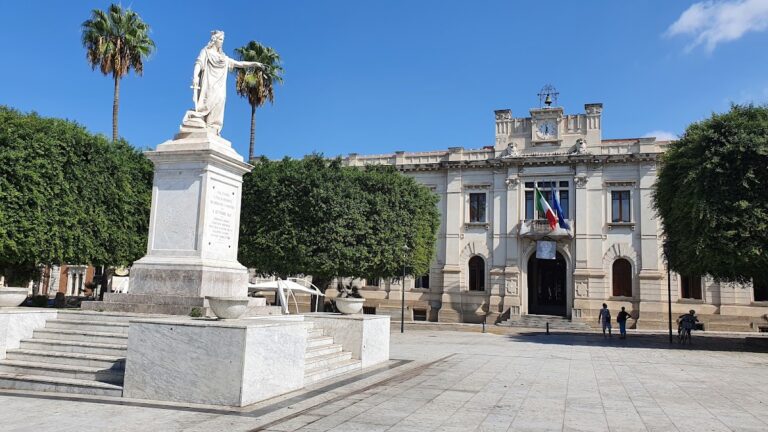
Foti Palace, now called the Corrado Alvaro Palace, is a civic palace in Reggio Calabria, Italy, designed in 1913 and built in 1920. It was named for Pietro Foti, a nineteenth-century mayor of Reggio Calabria associated with Italian patriotism, before being renamed in 2015 for Corrado Alvaro, a twentieth-century writer and poet born in San Luca.
Destruction and Reconstruction
The palace stands on the site of the former Palazzo dell’Intendenza, a building used for government administration. The earlier palace was destroyed in the 1908 earthquake. During the interval before its replacement was completed, the provincial administration operated from a barracks in the Manti district, between Via Possidonea and Via Filippini.
The replacement building was designed by the architect Camillo Autore and the engineer Gaetano Spinelli in 1913. Construction continued until 1920, with modifications made while the work was under way. The new palace then became associated with the civic administration of Reggio Calabria and served as the seat of the Province of Reggio Calabria.
Renaming and Civic Use
Following a lengthy restoration, the palace returned to civic use. Former cloister areas were adapted to create a conference hall and an exhibition hall, while a solarium was added on the terrace. The building now serves as the headquarters of the Metropolitan City of Reggio Calabria and provides rooms for exhibitions, conferences, meetings, and other civic events.
Remains
Exterior and Layout
Foti Palace occupies the block bounded by Piazza Vittorio Emanuele II, also known as Piazza Italia, Corso Giuseppe Garibaldi, Via Pietro Foti, and Via Miraglia. Its exterior is especially articulated on the side facing the piazza, where four architectural elements mark the corners. The ground floor has regularly rusticated façades, a treatment that emphasizes the joints or faces of masonry blocks and gives the lower level a heavier appearance. Its windows have architraves, the horizontal elements above their openings. On the first floor, balconies are crowned by curved pediments and additional ornament. A cornice topped by a balustrade finishes the building, with floral and geometric motifs incorporated into the railing.
Interior Decoration and Collections
Staircase and Council Chamber
The staircase leading to the first-floor rooms is artistically decorated and incorporates a Roman-era altar. In the council chamber, Alessandro Monteleone created a marble panel showing the Sacrifice of the Martyrs of Gerace, Giuseppe Garibaldi’s Landing and the Defense of Reggio, and Barlaam of Seminara Giving Greek Lessons to Petrarch and Boccaccio. Garibaldi was an Italian revolutionary and military leader. Barlaam of Seminara was a Calabrian scholar and cleric associated with teaching Greek, while Petrarch and Boccaccio were major fourteenth-century Italian writers.
Mosaics and Paintings
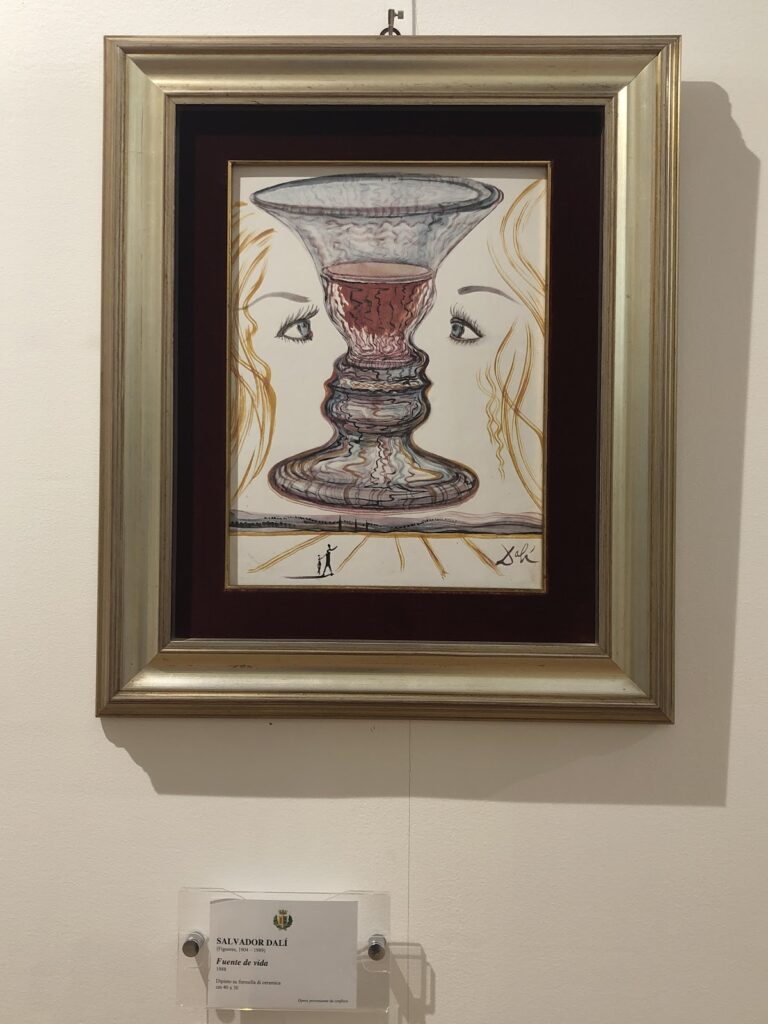
Two mosaics by A. Mori depict the Miracle of Saint Paul and the Burning Column and the Participation of the City’s Nobles in the Crusades. The palace also contains Benassai’s 1869 painting The Harvesting of Grain, Domenico Augimeni’s oil painting The Peasants, and Galante’s allegory of the Fata Morgana, an atmospheric optical phenomenon that can create distorted or elevated images near the horizon, particularly over water. Other works include Panetta’s Head of a Sleeping Woman and two women’s heads by Francesco Jerace.
Sculpture and Restored Furnishings
The restoration treated the palace’s mosaics, paintings, marble and bronze busts, antique furniture, railings, chandeliers, gates, and pastoral staffs. It also included paintings in the Monsignor Ferro Hall, Galante’s Fata Morgana, and works integrated into ceilings, floors, and walls. Monteleone’s 1954 reliefs in the council chamber were restored alongside Giuseppe Renda’s marble-and-bronze bust The General and Francesco Jerace’s sculptures The Heroine, The May Era, and Victa, dated from 1920 to 1924.