Palazzo del Podestà in Mantua: A Medieval Civic Government Palace
Site at a Glance
- Popularity
- Medium
- Country
- Italy
- Primary era
- Medieval
- Eras represented
- Medieval
- Civilizations
- Holy Roman Empire
- Site type
- Civic
- Remains
- Palace
On this page7 sections
History
Communal foundation and Renaissance rebuilding
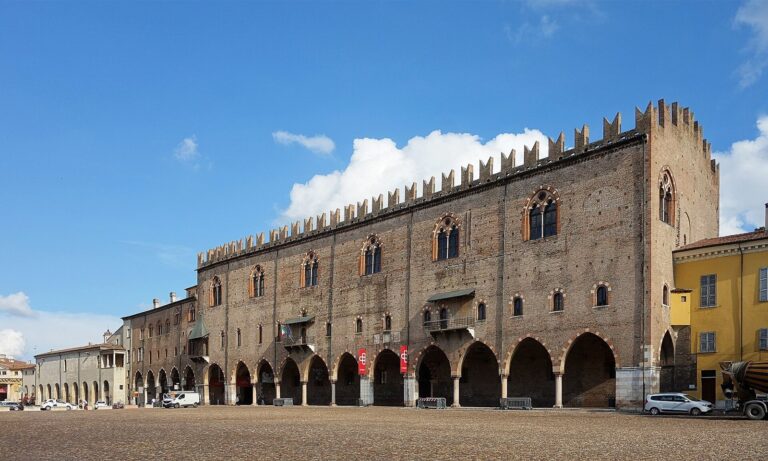
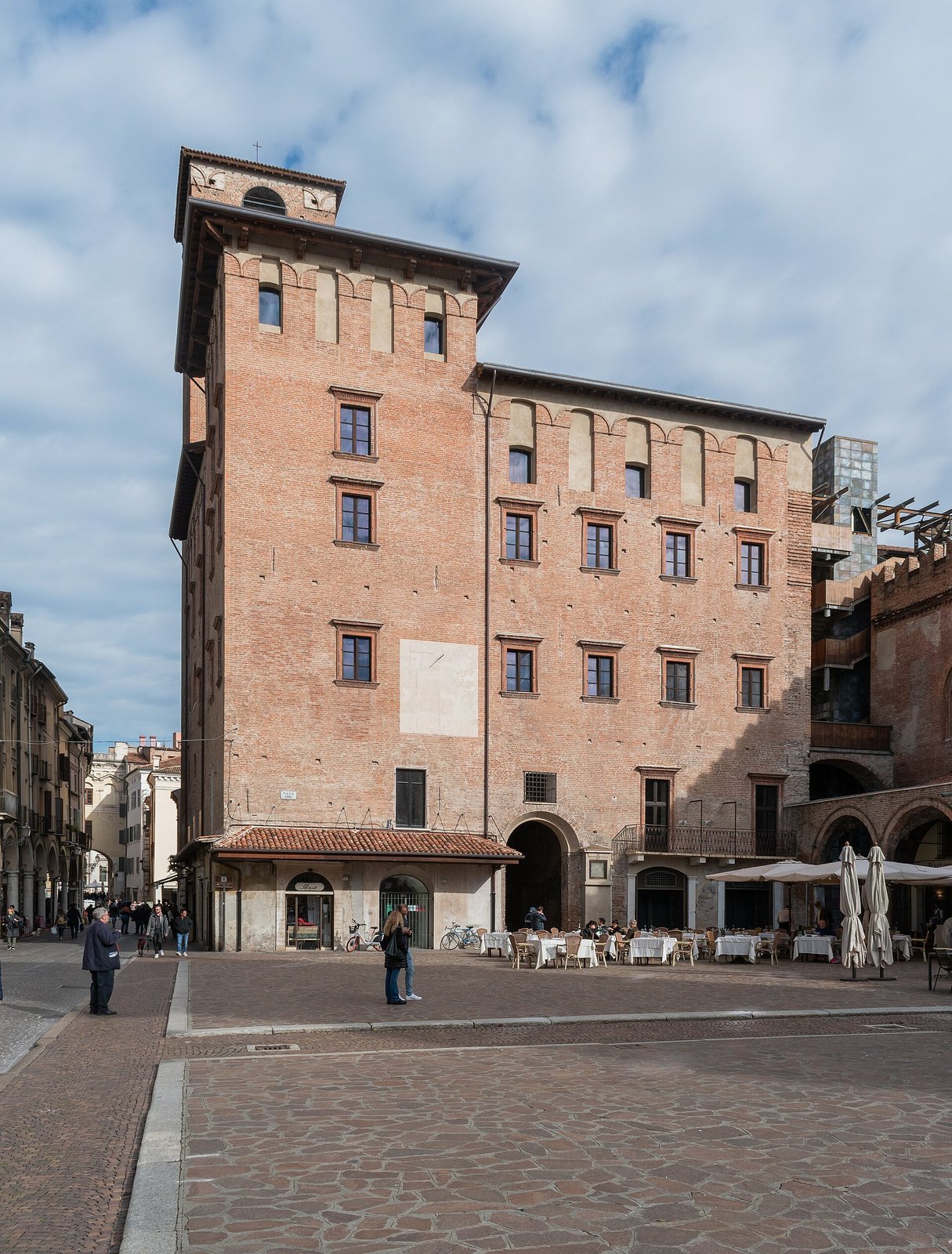
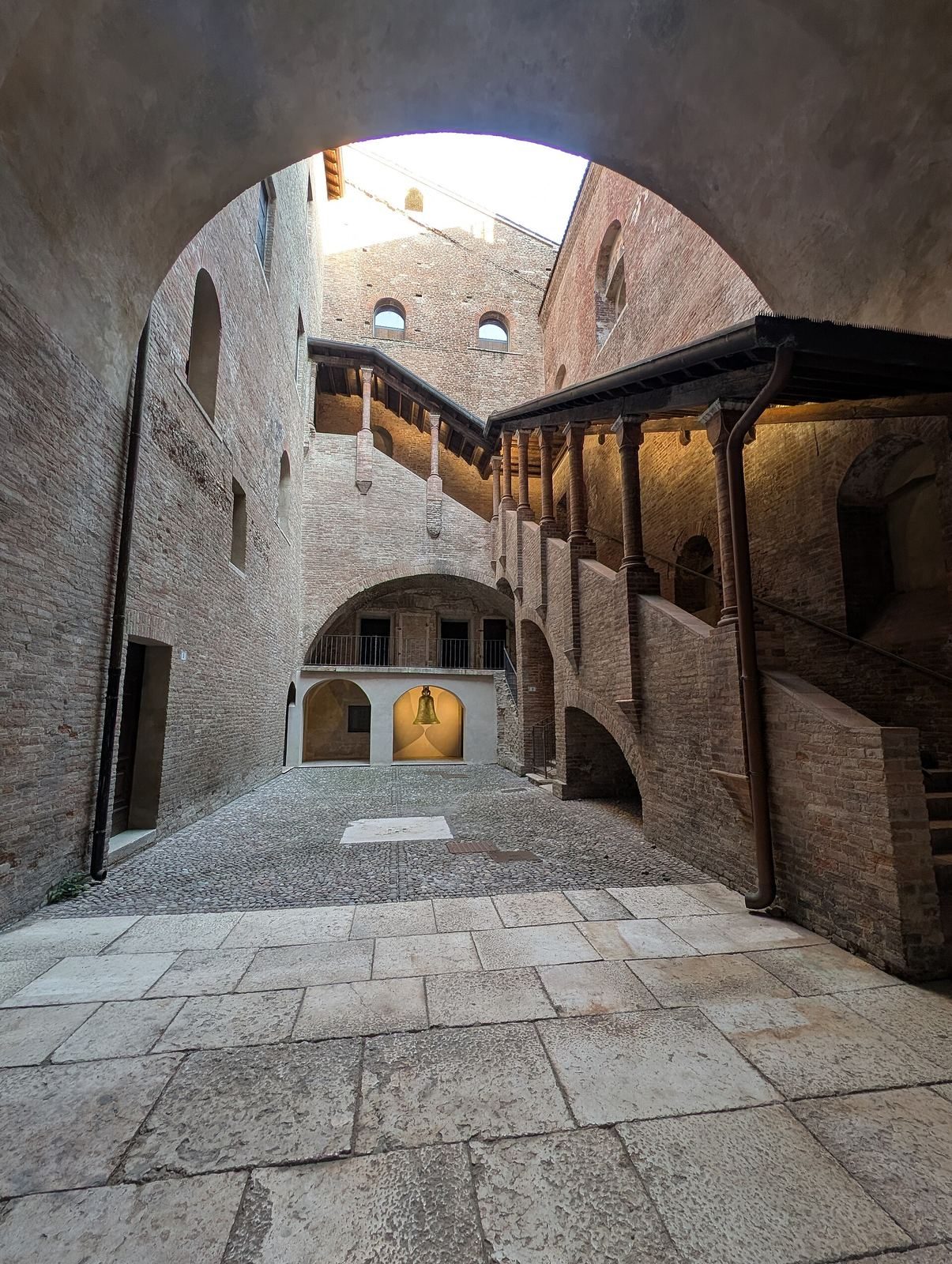
Palazzo del Podestà in Mantua is a civic palace in Italy, built in 1227 to house the city’s communal government and its offices. Laudarengo Martinengo, a Brescian appointed as Mantua’s podestà, or senior civic magistrate, commissioned the building. Its original builder is uncertain. Along with the Torre del Broletto, which has Casa Tortelli attached, the palace formed the administrative center of Mantua’s self-governing urban community.
Fires prompted repeated renovation and alteration. In the fifteenth century, fire damage led to a reconstruction in Renaissance style, a period of renewed interest in classical art and learning that began in Italy. A major restructuring started in 1462 under Giovanni Antonio da Arezzo, commissioned by Ludovico III Gonzaga, ruler of Mantua. Luca Fancelli carried out design work connected with the transformation.
Later uses and renewed civic role
During the last three centuries, the palace served several purposes, including use as a prison. The municipality is restoring it for a return to its administrative role as the town hall. The Virgil Museum, devoted to the poet traditionally associated with Mantua, opened in the palace on 7 December 2024.
Remains
Layout and adjoining structures
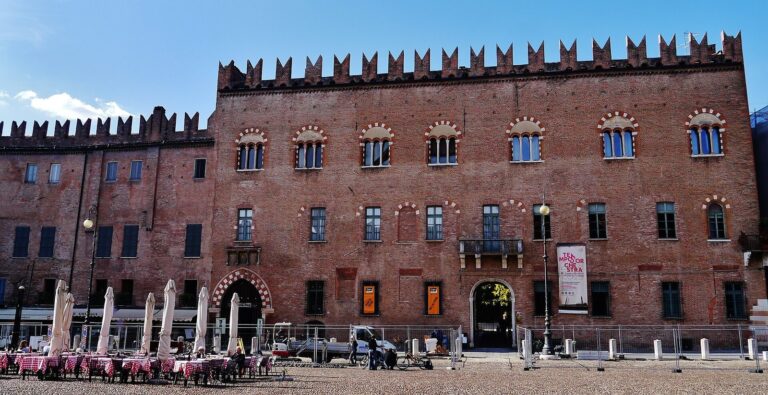
The palace stands between Piazza delle Erbe and Piazza Broletto, with a façade facing each square. On the Piazza delle Erbe side, it joins the Palazzo della Ragione. Toward Piazza Broletto, the Arengario, a large arched structure, connects it with the former General Warehouses; the adjoining building is identified as the municipal archives. The Arengario has mullioned windows, divided into sections by vertical bars. Nearby, the Torre del Broletto stands with Casa Tortelli attached.
Piazza Broletto façade
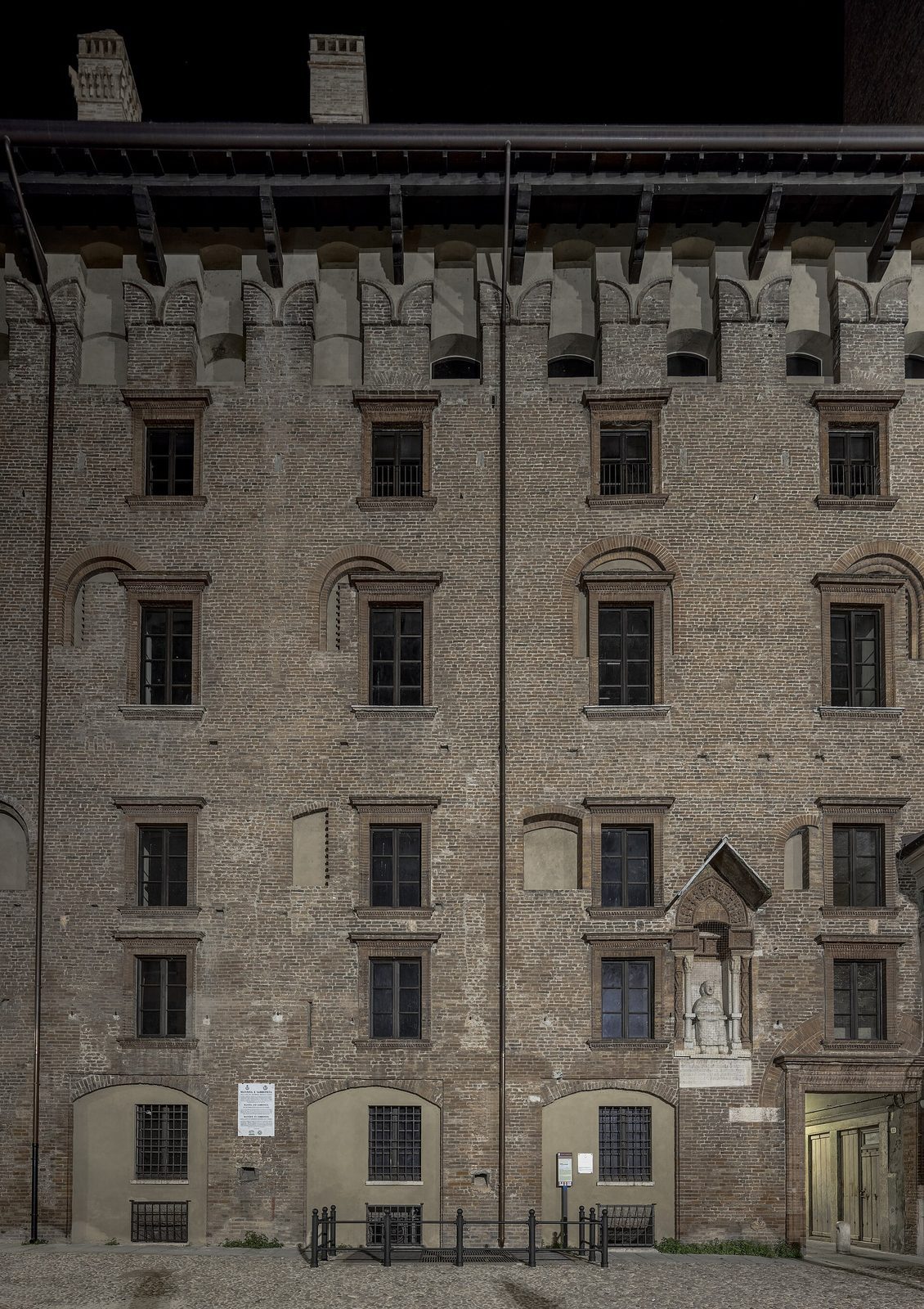
The principal façade faces Piazza Broletto and is crowned by a tall clocktower. A coat of arms occupies an unusual position on the façade. Its windows are irregularly arranged, with blocked arches from earlier openings interrupted by later construction. A row of decorative battlement-shaped forms crowns the wall. Luca Fancelli’s designs are associated with this feature, and he also designed rectangular brick windows.
Sculpture niches
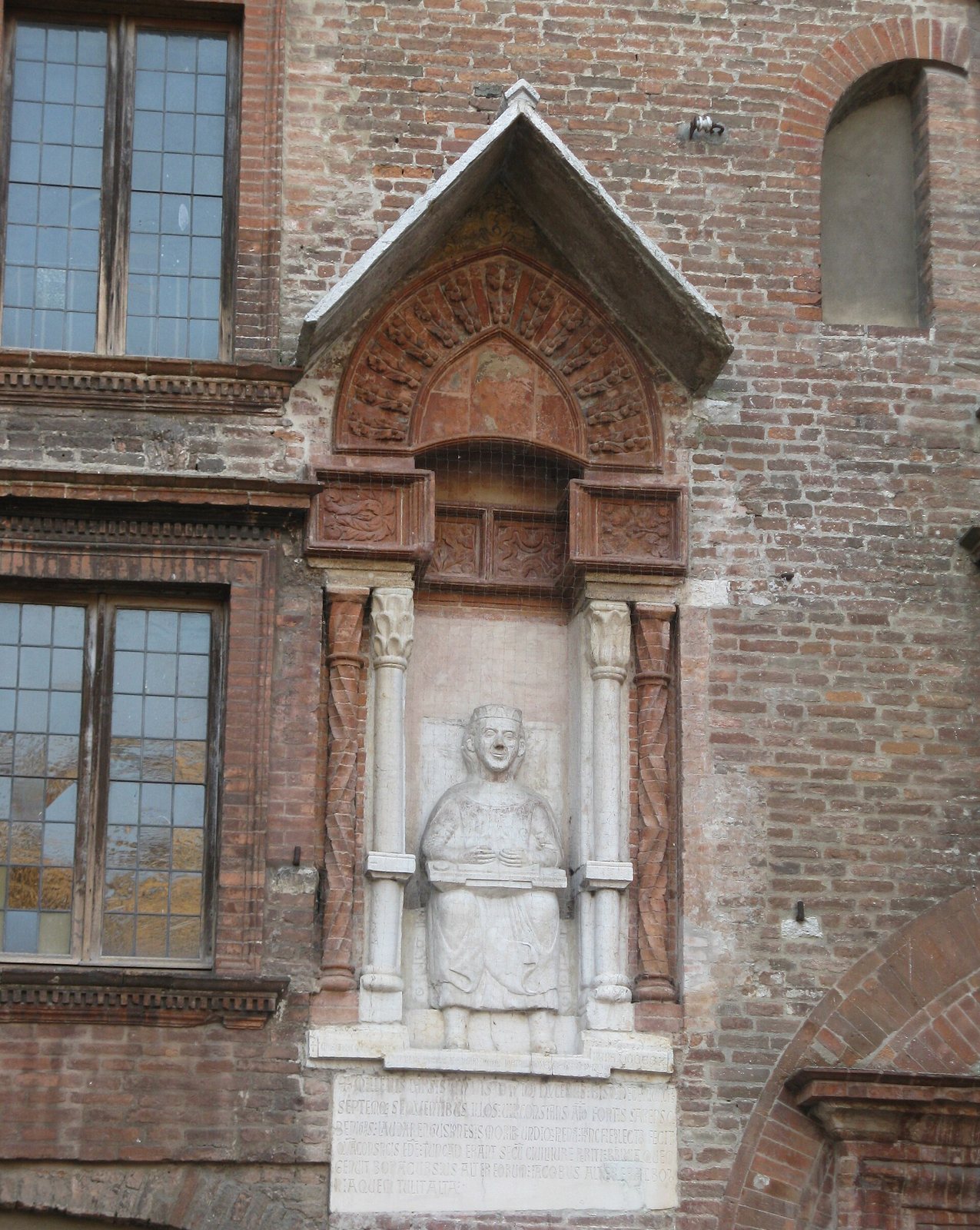
A thirteenth-century statue of Virgil stands in a niche on the Piazza Broletto façade, between two columns. Carved from white Verona marble by an anonymous sculptor, it shows the poet seated at a lectern and wearing a doctoral cap. The lectern bears the inscription Virgilius Mantuanus poetarum clarissimus, meaning “Virgil of Mantua, most illustrious of poets.” A niche on the façade also holds a statue of the Virgin Mary.