Palazzo Stefano De Mari: A Rolli Palace for State Guests
Site at a Glance
- Country
- Italy
- Primary era
- Early Modern
- Eras represented
- Early Modern
- Civilizations
- Genoese
- Site type
- Domestic
- Remains
- Elite Residence
On this page8 sections
History
Origins and the Rolli
Palazzo Stefano De Mari is a sixteenth-century Mannerist palace, a building in the late Renaissance style, in Italy. It was built on the site of medieval buildings owned by the Spinola family, perhaps in 1584. In 1588, it was recorded as De Mari property and included in the Rolli, registers of residences selected by the Republic of Genoa to host high-ranking official visitors. The palace stood between the Spinola and De Mari alberghi at Banchi. An albergo was a family-based association, not simply an inn. The palace remained in the registers through 1664, with its class changing from the third in 1588 to the second in 1599, the first in 1614, and the third again in 1664.
Stefano De Mari and later ownership
The palace later belonged to Stefano De Mari, a nobleman who repeatedly sought the Genoese dogeship. The doge was the republic’s chief magistrate and head of state. De Mari held the office from 1663 to 1665, and the palace retained his name. His family had commercial and business connections with Spain and Naples. In 1798, the owner was Carlo, Stefano De Mari’s nephew, who held the title of Prince of Acquaviva of Naples.
World Heritage inscription
On 13 July 2006, Palazzo Stefano De Mari became one of 42 Rolli palaces included on the UNESCO World Heritage List within “Genoa: the New Streets and the system of the Rolli palaces.”
Remains
Facade and entrance
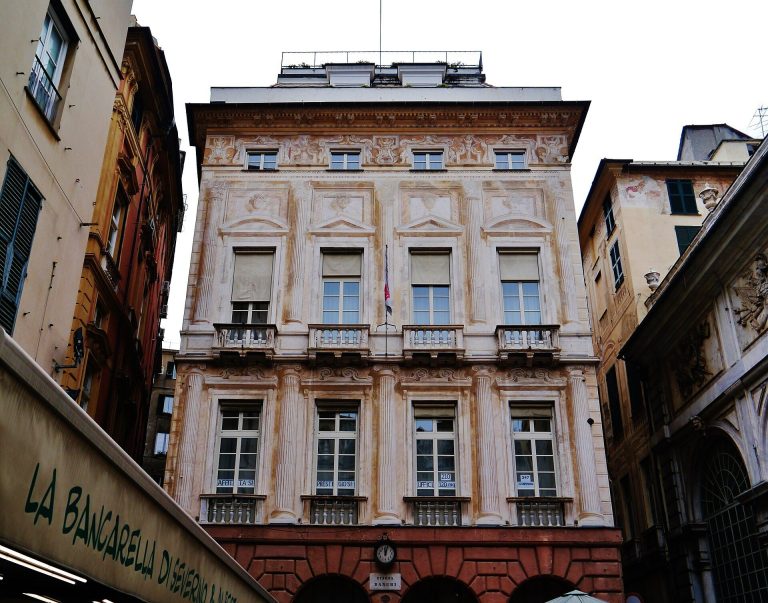
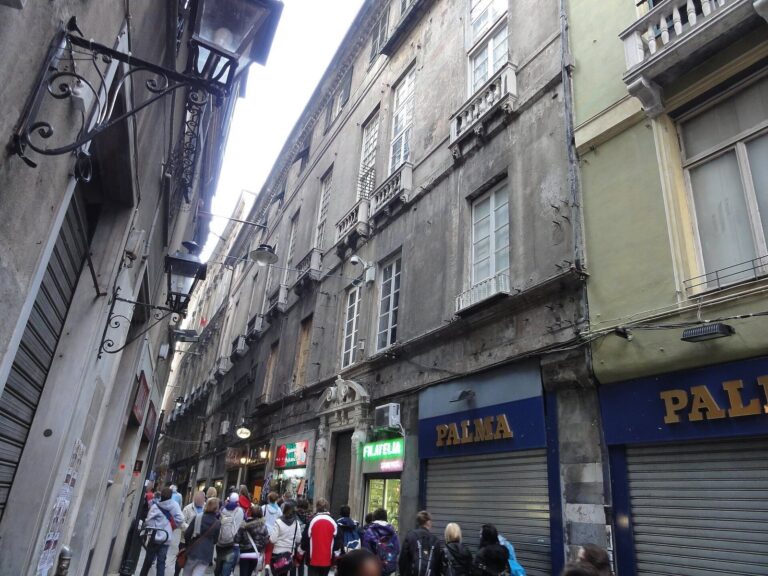
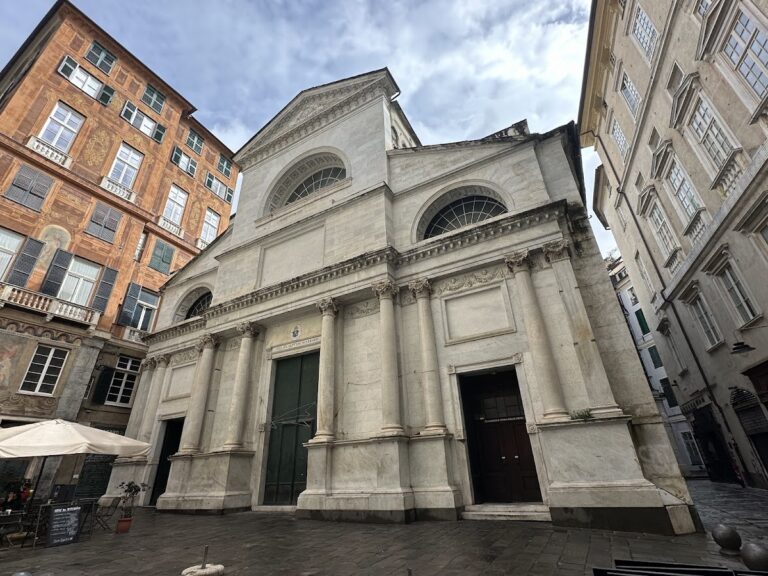
The palace’s narrow facade has rusticated stonework at ground level, while frescoes frame the windows and create the appearance of architectural features. A monumental marble portal, dating to the late sixteenth century, is framed by Doric pilasters and topped with a broken triangular pediment. It opens into an atrium renovated in the nineteenth century. A plaque in the atrium commemorates an episode of the Risorgimento, the nineteenth-century movement for Italian unification.
Courtyard and staircase
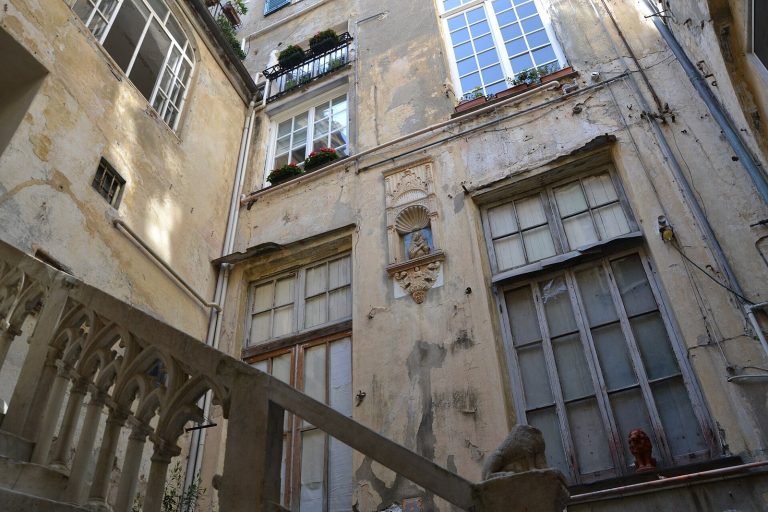
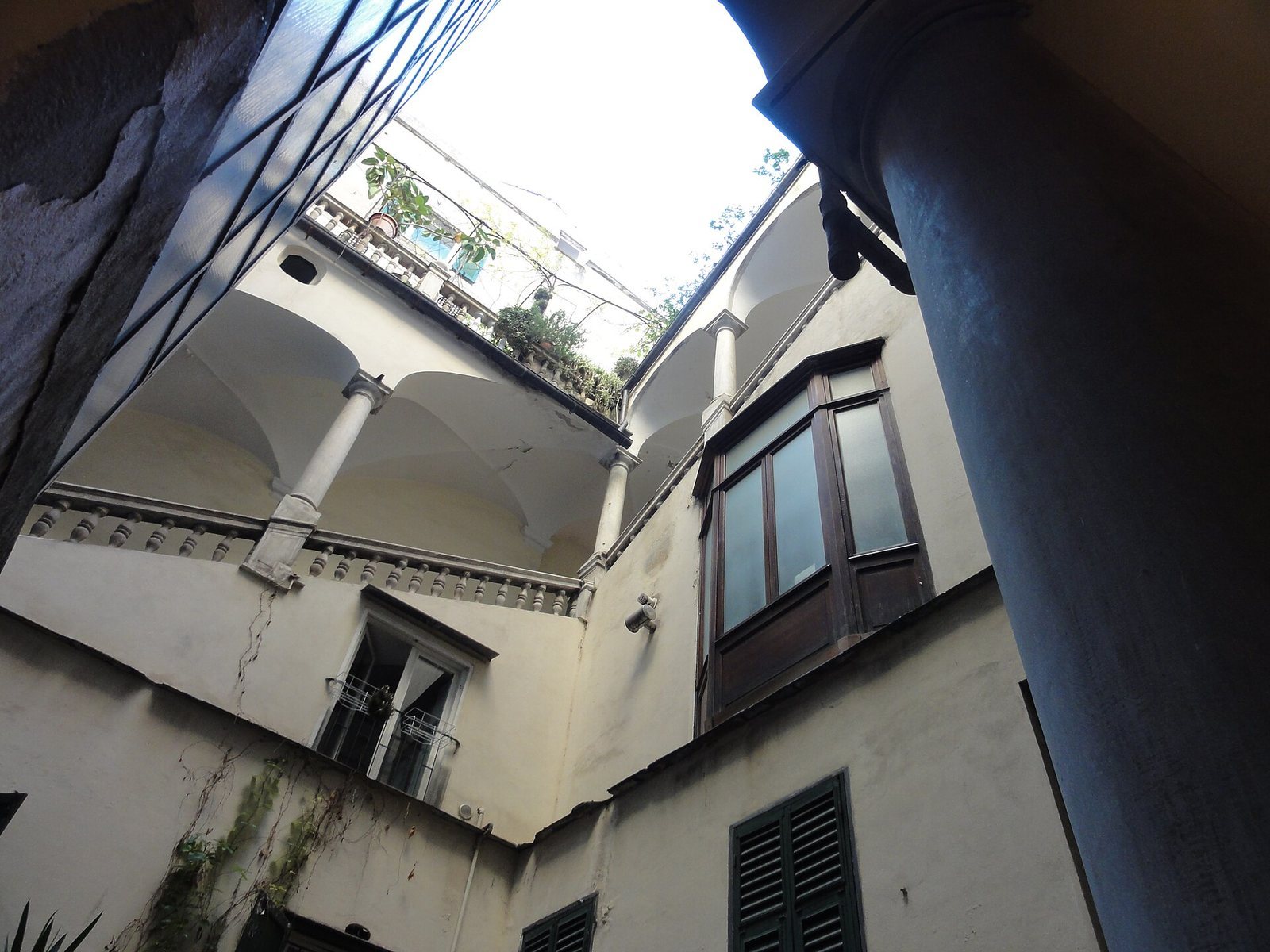
Beyond the atrium is a bright inner courtyard. A monumental staircase runs along it, bordered by a portico, or roofed passage, and is partly walled up.
Frescoed salons
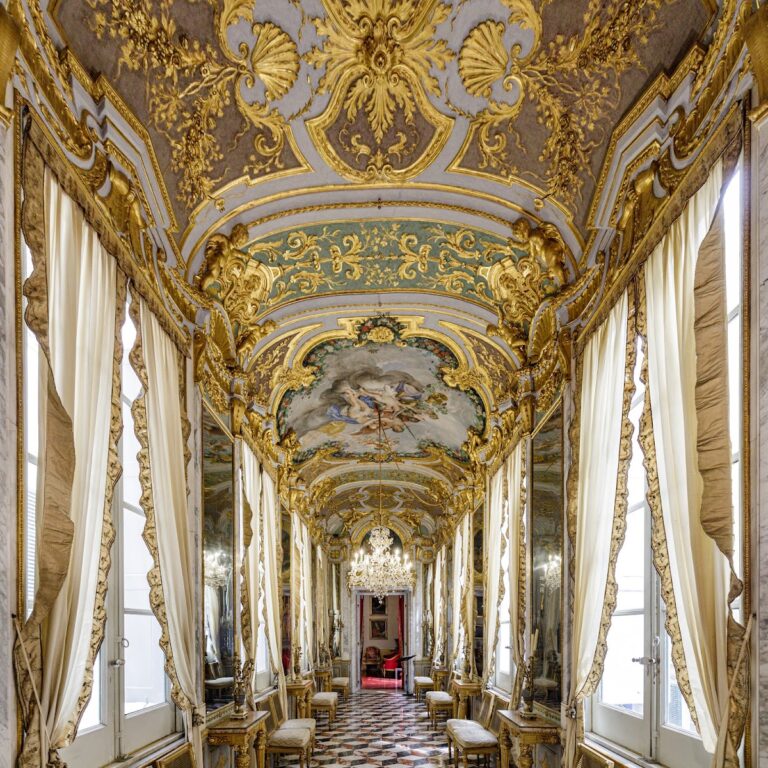
The building is now divided into numerous private apartments and used mainly for housing, with offices also among its uses. The monumental apartment on the piano nobile, the palace’s principal floor, retains two frescoed salons. Wall paintings in both create the illusion of colonnades and extended architecture; these are attributed to Enrico and Antonio Haffner, painters who specialized in this effect. Bernardo Castello is credited with the first salon’s ceiling painting, Episodes from Ancient History. The second salon’s ceiling depicts Tobias and the Angel, attributed to Giovanni Battista Carlone.