Palazzo Emanuele Filiberto Di Negro: A Palace in Genoa
Site at a Glance
- Country
- Italy
- Primary era
- Early Modern
- Eras represented
- Early Modern, Modern
- Civilizations
- Genoese
- Site type
- Domestic
- Remains
- Elite Residence
On this page11 sections
History
Palazzo Emanuele Filiberto Di Negro is a palace in Genoa, Italy, whose origins lie in a sixteenth-century project associated with the Genoese nobleman Emanuele Filiberto Di Negro. Its history connects a family residence to Genoa’s system of palaces used to accommodate distinguished state visitors. The palace is one of 42 buildings included in the UNESCO World Heritage property Genoa: Le Strade Nuove and the System of the Palazzi dei Rolli, inscribed on 13 July 2006.
Origins and the Palazzi dei Rolli
To create the original palace, the Di Negro family had medieval family buildings demolished, including a residential tower, and joined their plots. The family also owned extensive property nearby. In 1594, part of the building was removed to make room for an extension of Via Ponte Reale. The family then sold what remained to the Gentile family, and after 1614 Pietro Maria Gentile I built a larger palace on the site.
The palace appeared in the Palazzi dei Rolli between 1576 and 1664. These were palaces selected by the Republic of Genoa to host high-ranking guests on behalf of the government during state visits; their categories ranked them for that duty. A 1614 entry lists the palace under Pietro Maria Gentile I and places it in the second category. In 1664 it was assigned to the third.
Nineteenth-century hotel
In the nineteenth century, Pietro Maria Gentile II, a different member of the Gentile family from the earlier builder, initially owned the palace. It later became the Hotel Feder. During construction of the Carlo Alberto di Savoia road, now Via Antonio Gramsci, the palace’s façade was kept intact, although houses adjoining the Ripa were removed elsewhere. The German historian and classical scholar Theodor Mommsen and the American novelist Herman Melville stayed at the hotel during visits to Genoa.
Restoration and present use
The palace was restored in the second half of the twentieth century. It is now used for businesses, offices, and private apartments.
Remains
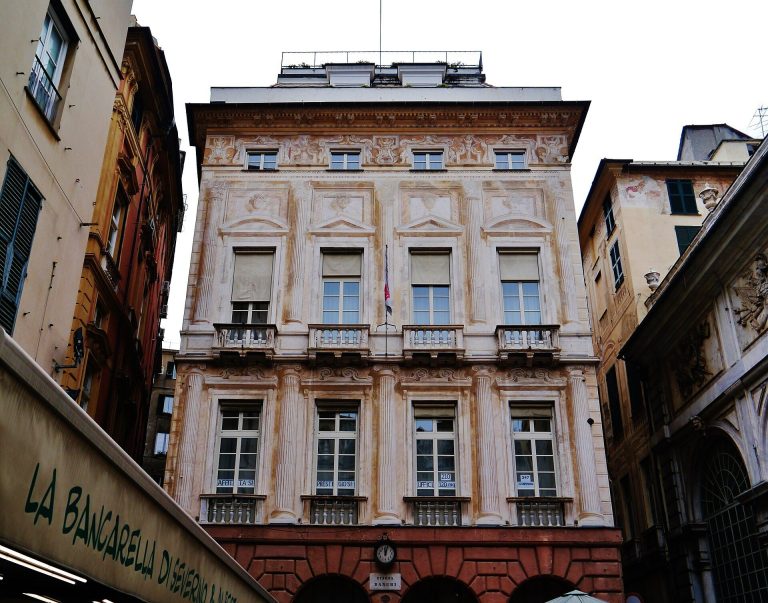
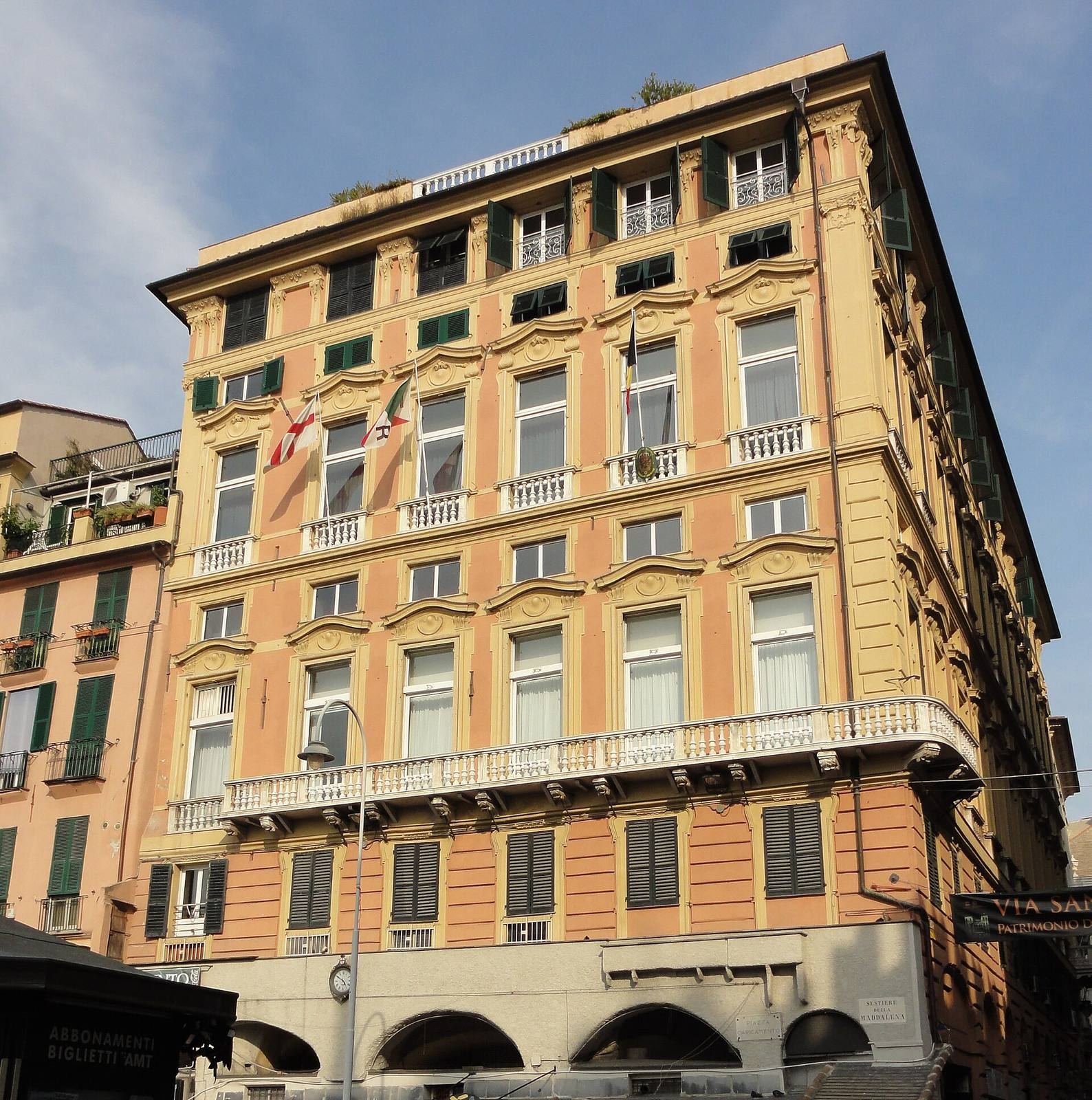
At Via al Ponte Reale 2, the palace stands on the corner of Via Ponte Reale and Piazza Caricamento, in the penultimate row of buildings before the waterfront and close to the port. The surrounding area has been settled since antiquity and the Middle Ages. The surviving architecture combines richly stuccoed façades with a group of interior spaces and stairways.
Exterior and internal spaces
Façades
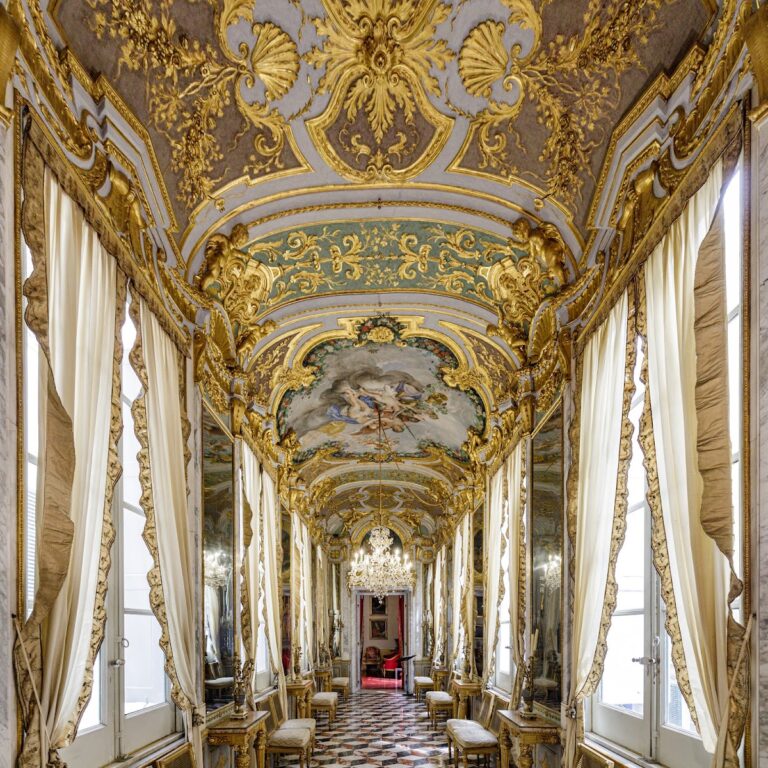
The richly stuccoed façades can be seen from unusually broad viewpoints for Genoa. Carlo Giuseppe Ratti, an Italian painter and art historian, praised the palace’s scale and height, as well as the quality of its exterior and interior. The façade treatment dates to the nineteenth-century hotel period. The exterior and interiors may also have been frescoed in the eighteenth century.
Atrium, courtyard, and staircases
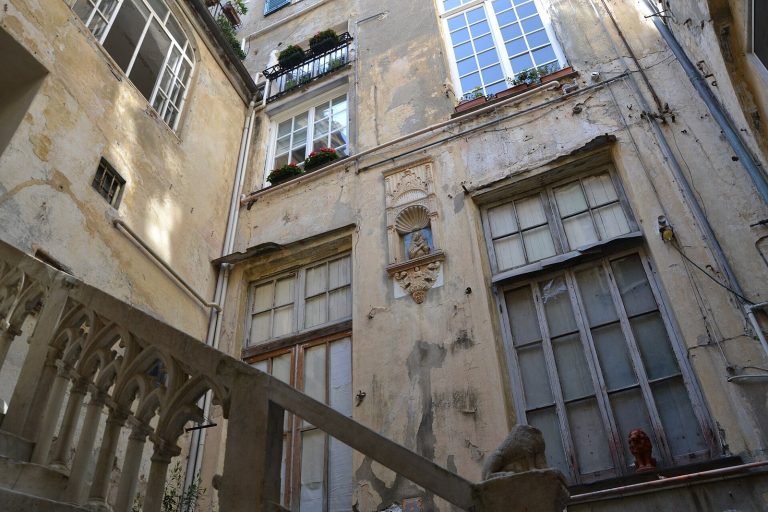
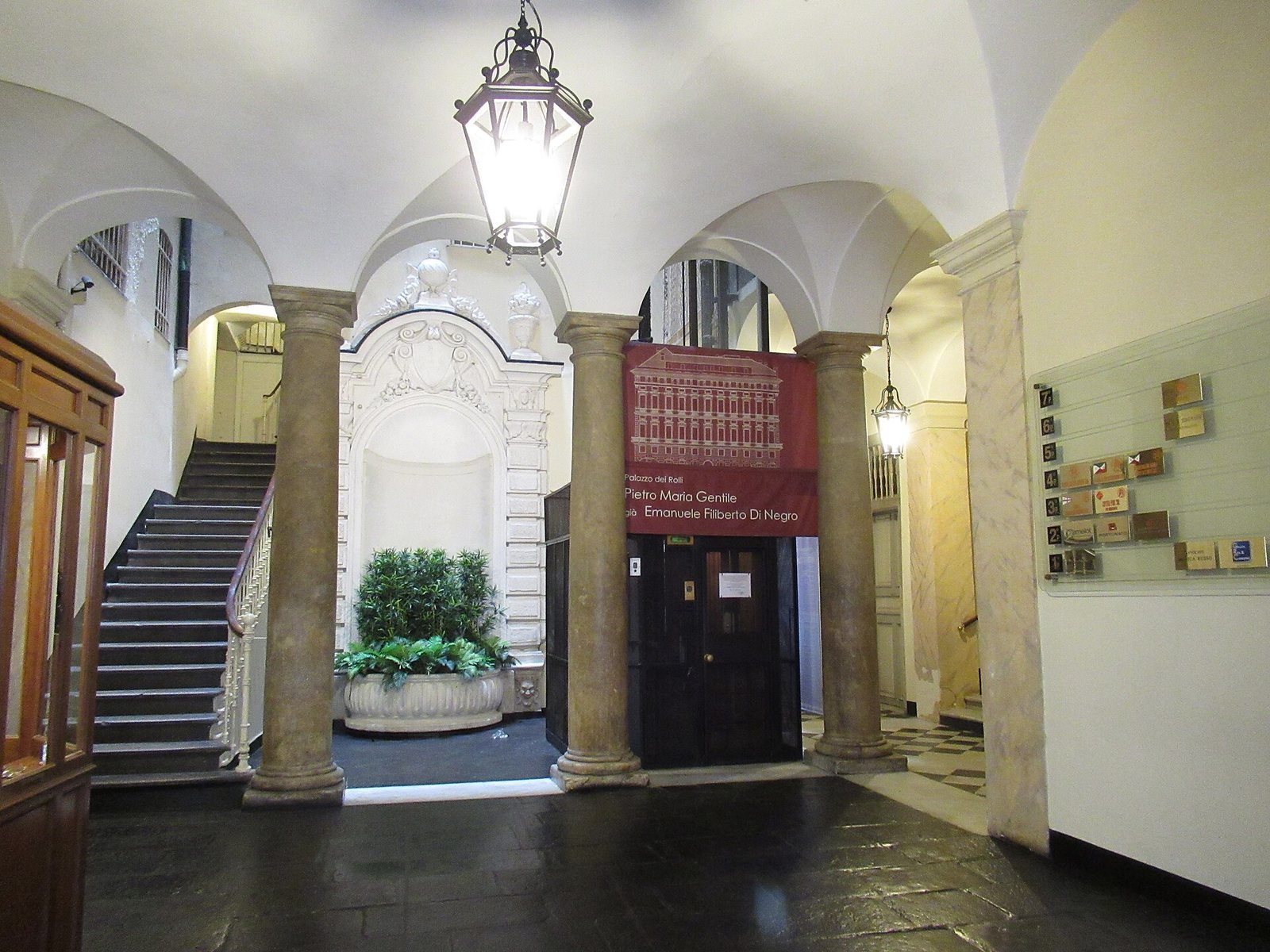
The interior includes an atrium with a niche and a courtyard with an open-sided gallery and a fountain feature. A main staircase is decorated with stucco, and a separate staircase serves the side of the building.
Art and commemoration
Picture collection
The palace once held an extensive collection of paintings, including works by Guido Reni, an Italian painter, Titian, a Venetian painter, and Peter Paul Rubens, a Flemish painter.
Daniel O’Connell plaque
A marble plaque associated with the palace commemorates Daniel O’Connell, an Irish political leader.