Palazzo Dall’Armi Marescalchi: A Baroque Palace in Bologna
Site at a Glance
- Popularity
- Medium
- Country
- Italy
- Primary era
- Early Modern
- Eras represented
- Early Modern, Modern
- Civilizations
- Papal States
- Site type
- Domestic
- Remains
- Elite Residence
On this page9 sections
History
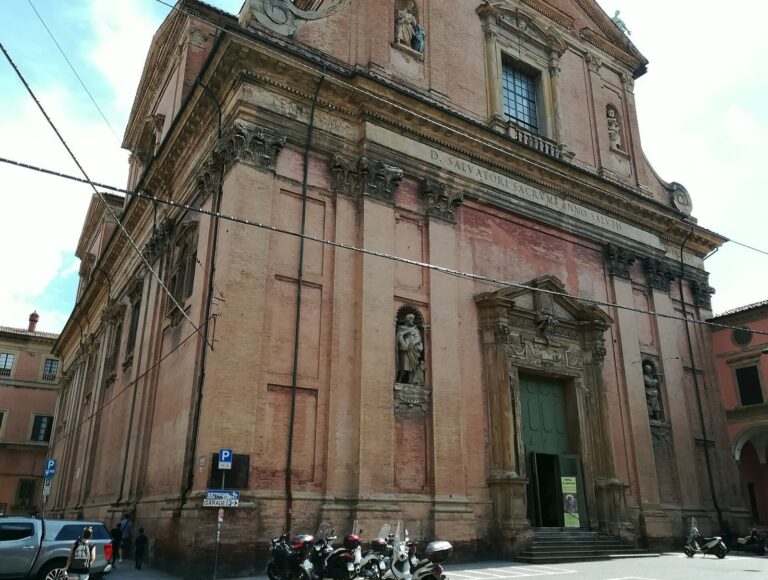
Palazzo Dall’Armi Marescalchi is a Baroque palace in central Bologna, Italy. It was first built over earlier buildings in 1466. Baroque refers to an ornate architectural tradition that developed in Europe from the late sixteenth century. The palace later became the birthplace of Guglielmo Marconi, an Italian inventor and physicist who pioneered radio communication.
Early building and family ownership
Floriano Ambrosini carried out a complete rebuilding and enlargement in 1613. Pellegrino Tibaldi may also have participated. After the male line of the Dall’Armi family ended in 1614, ownership passed through Eleonora Dall’Armi’s marriage to Senator Vincenzo Marescalchi, and the Marescalchi name was added to the palace.
Eighteenth-century expansion
During the eighteenth century, the property gained additional land and gardens. In 1777, the palace was rebuilt and enlarged, particularly to the east, where the family had acquired buildings to make room for the work. A small square was opened on that side. In 1935, the eastern part of the palace and the square were substantially altered to create Piazza Roosevelt.
Nineteenth-century changes and later history
In the nineteenth century, Ferdinando Marescalchi renovated and modified the palace, including its principal-floor apartment. The family’s fortunes declined from the second half of the century, and the palace was sold to the Orlandini family in the early twentieth century. Guglielmo Marconi was born on 25 April 1874 in the western wing, which had been rebuilt in the early nineteenth century.
Two bombardments during the Second World War damaged the palace. One struck the western part particularly hard. In 1961, after the owners sought permission to demolish the building, the Ministry of the Treasury acquired and restored it. Part of the palace was assigned to the Superintendency for Environmental and Architectural Heritage of Emilia, an Italian public authority responsible for heritage protection. The building is used for offices and private residences.
Remains
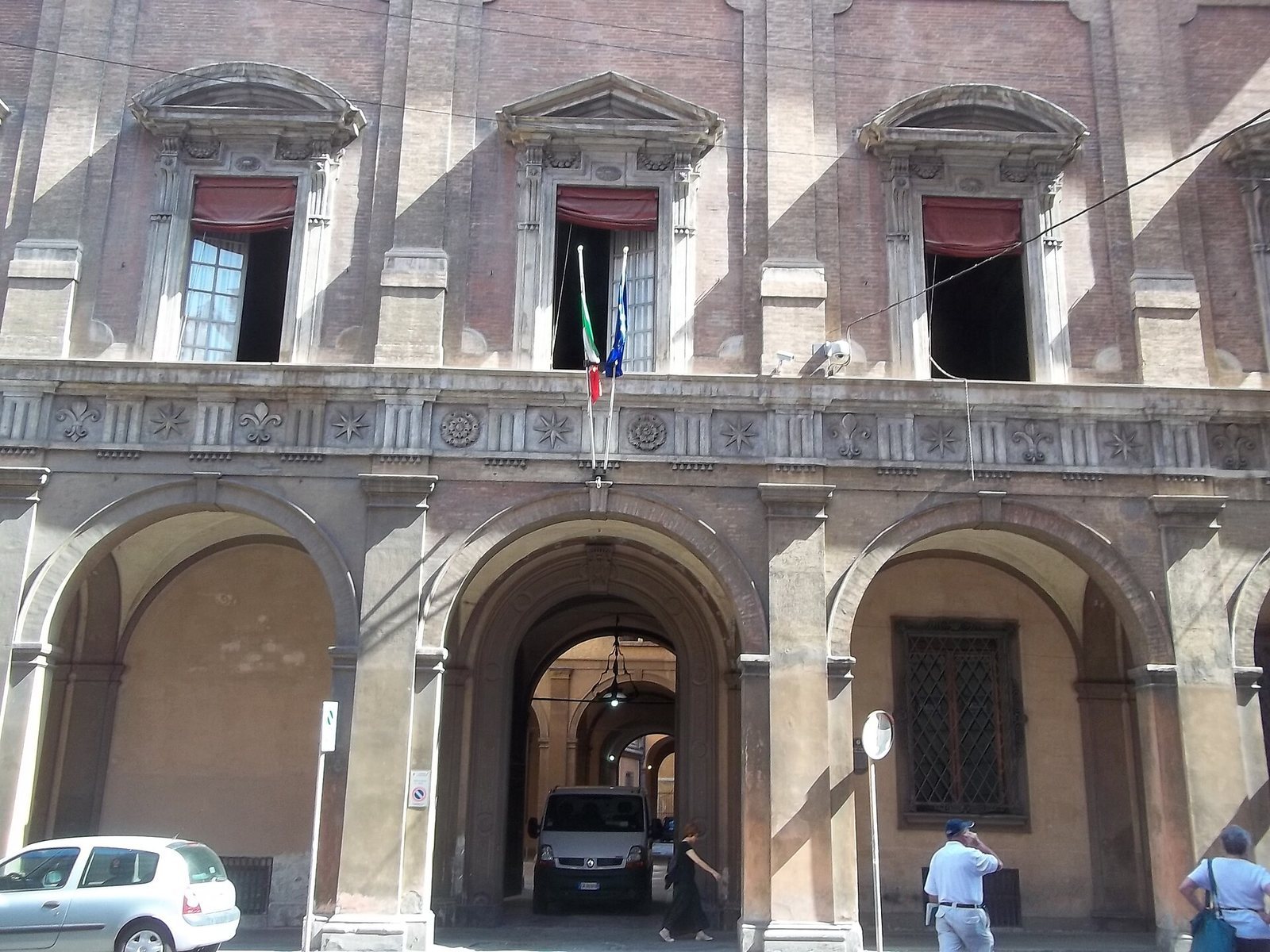
The Baroque palace stands on Via IV Novembre, formerly known as Via delle Asse. Its documented features include an English-style garden on the west side and decorated rooms on the main floor.
West garden
Work on the English-style garden began in 1811 after buildings toward present-day Via Cesare Battisti, then called Via Imperiale di San Prospero, were demolished. Carlo Marescalchi completed the garden and enclosed it with a wall that screened it from view.
Palace interiors
Noble apartment
A fireplace in the noble apartment bears a decoration titled La Vigilanza, meaning Vigilance, by Ludovico Carracci. Some rooms on the main floor retain frescoes, wall paintings made on wet plaster, by Carracci and Guido Reni, influential Bolognese painters associated with the Baroque period.
Oval hall
Felice Giani painted the large oval hall in 1780.