San Giovanni Battista dei Celestini: A Church and Monastery in Bologna
Site at a Glance
- Popularity
- Medium
- Country
- Italy
- Primary era
- Early Modern
- Eras represented
- Medieval, Early Modern
- Civilizations
- Papal States
- Site type
- Religious
- Remains
- Church
On this page7 sections
History
San Giovanni Battista dei Celestini is a Catholic church and monastic complex in Bologna, Italy, established by the Celestine congregation in 1368. Founded by Pietro da Morrone, who later became Pope Celestine V, the congregation built the church and monastery under the patronage of the nobleman Antonio di Ubaldino Galluzzi.
Foundation and rebuilding
Galluzzi invited the Celestines to Bologna and supported their construction of a church dedicated to Saint John the Baptist. His family owned several buildings nearby, and the area later took its name from them as Corte de’ Galluzzi. By 1482, the church had become a parish.
Major building work followed in the sixteenth century. The principal church works concluded in 1554, the monastery was rebuilt in 1560–1561, and a bell tower was added in 1580. The church acquired its present form through an eighteenth-century intervention.
Religious and civic uses
The monastery was planned for further expansion, including space for a meeting hall for Bologna’s Council of Thirty, the city’s governing council. It served as a meeting place for the council. After the Celestine congregation was suppressed in 1797, the complex continued to have civic and administrative uses. In September 1798, the administration of the Lotto lottery moved into the monastery; it later housed the Registry office, a conscription bureau, and the archive of suppressed religious corporations.
The church remained a parish until 1806, when it became a subsidiary of the parish based at Santissimo Salvatore. In 1824, the Canons Regular of the Lateran, a Catholic community of priests who live according to a shared rule, resumed control of the Salvatore church, and San Giovanni became a parish again. It held that status until 1987, when the parish was suppressed and its territory divided among neighboring parishes. The church became a rectorial church, administered by a rector rather than as a parish.
In the mid-nineteenth century, the monastery was adapted for an engineering school. It is now the seat of the State Archive. The sculptor Niccolò dell’Arca, active in Bologna in the fifteenth century, was once buried inside the church; his tomb was later transferred to the Certosa cemetery.
Remains
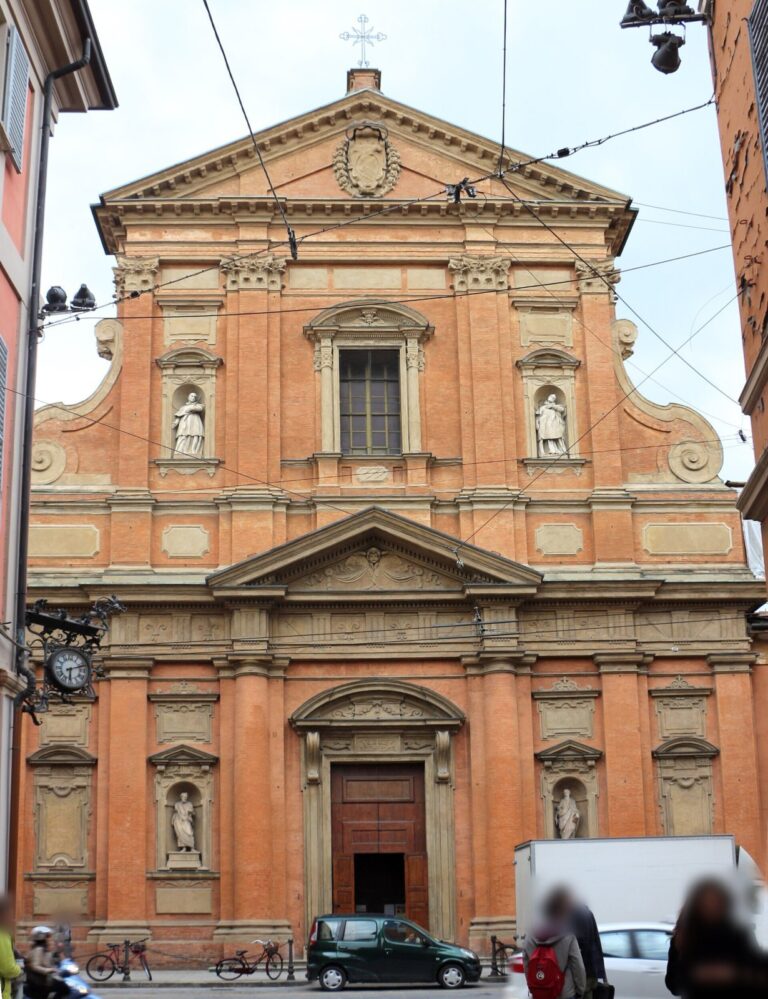
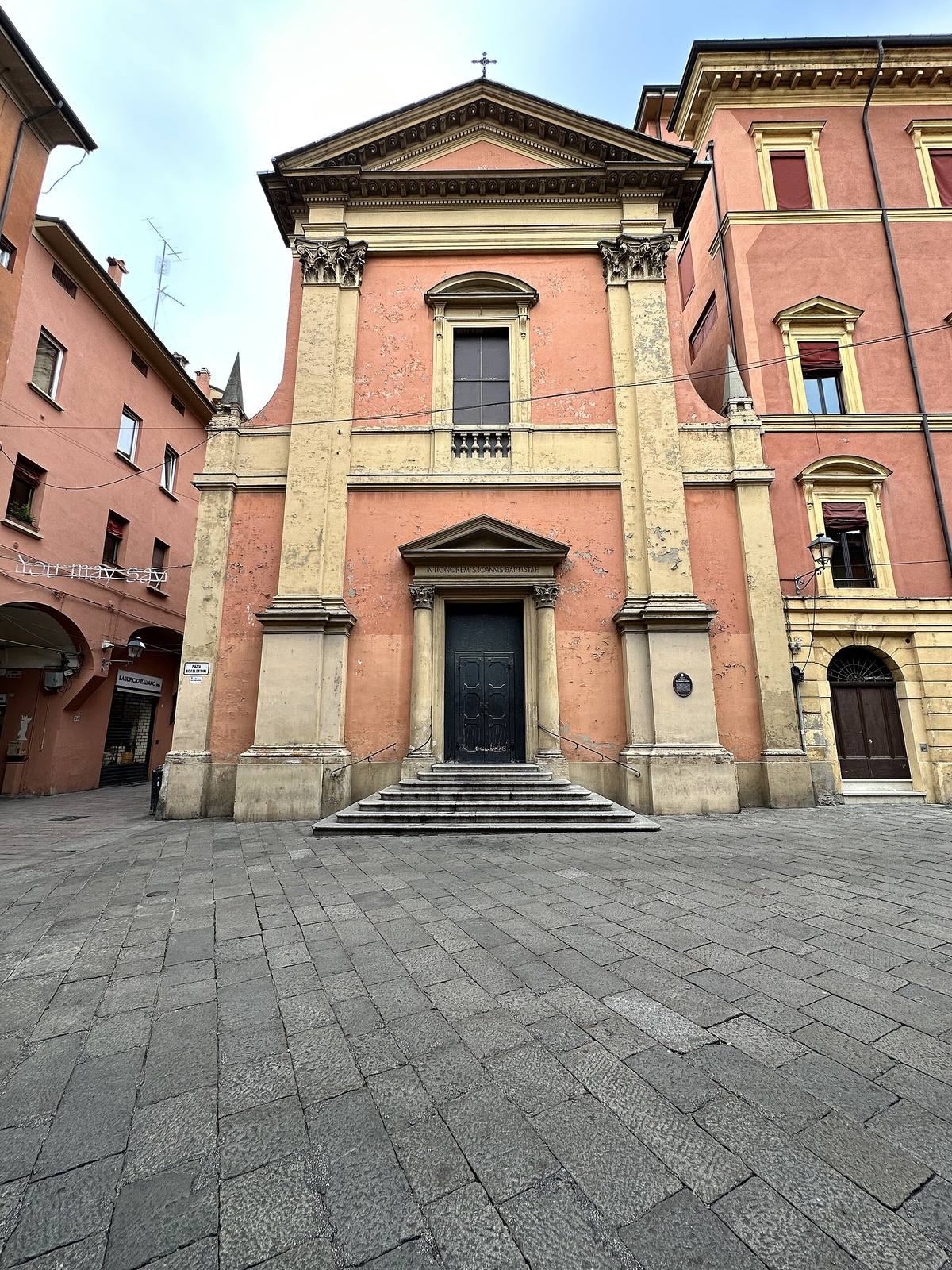
The church stands at the corner of Piazza dei Celestini and Via Massimo d’Azeglio, while the monastery extends as far as Via San Mamolo. The church’s plastered exterior has brick-red wall surfaces and straw-yellow architectural ribs.
Church exterior and plan
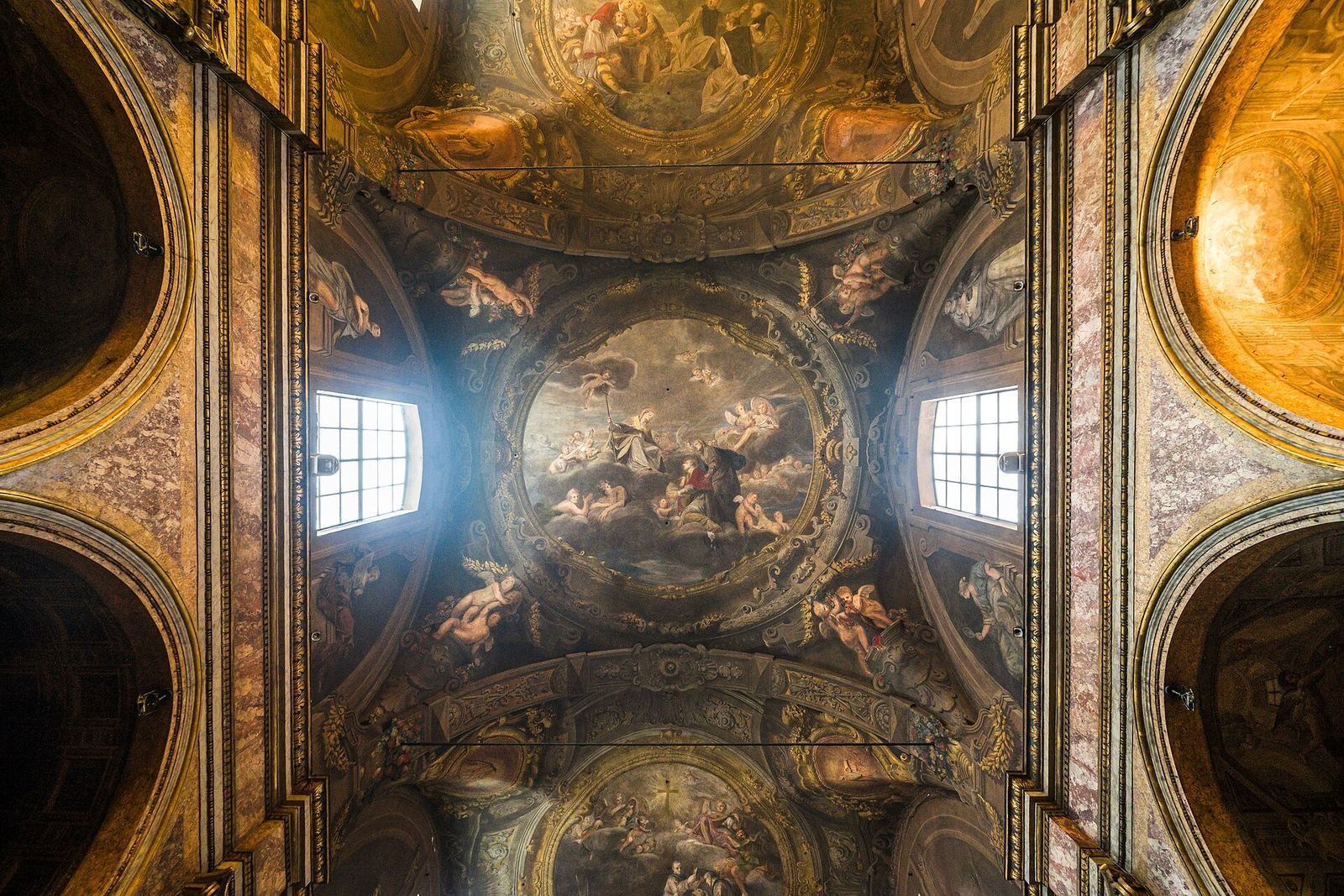
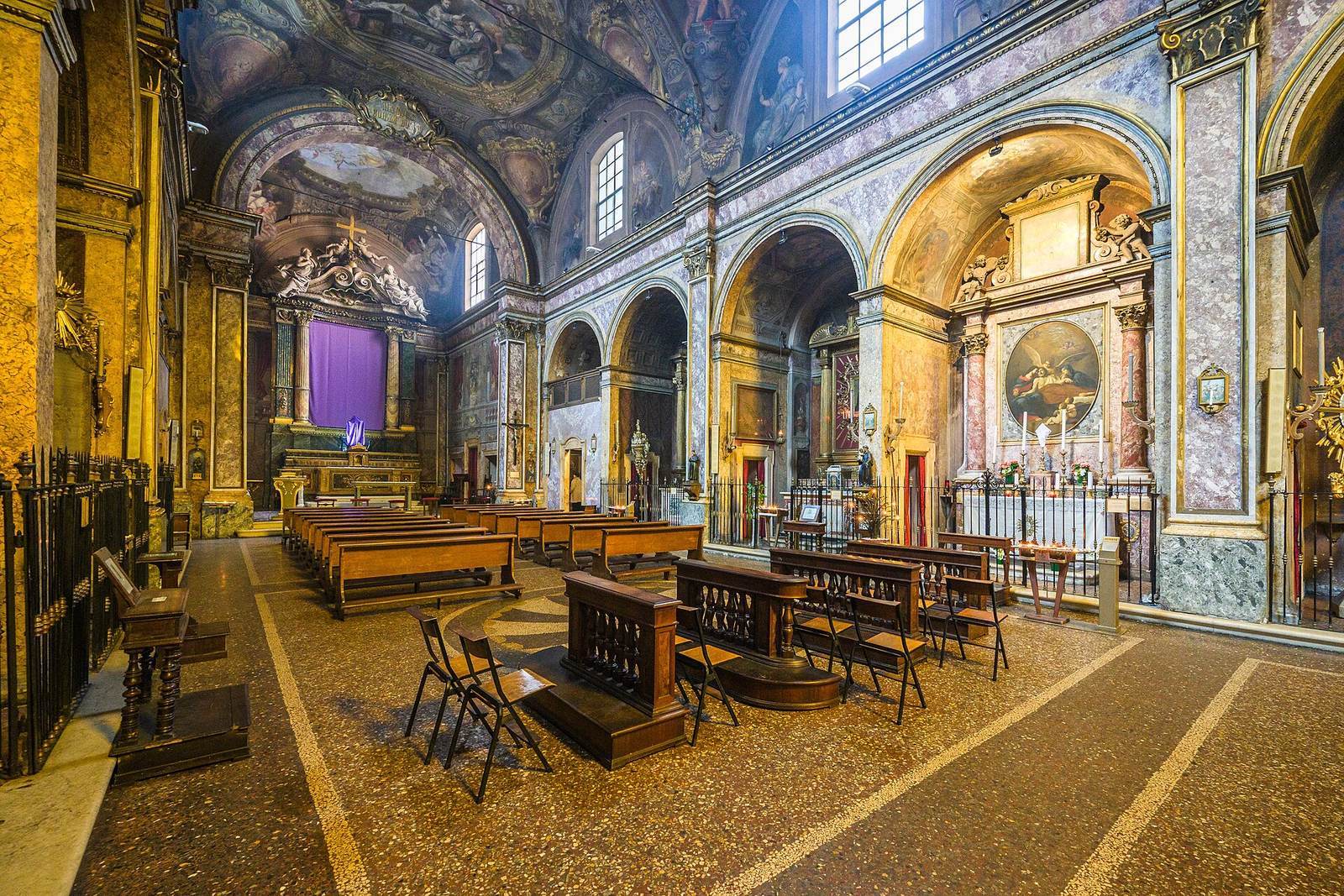
The facade has two levels, each divided into three sections, and ends in a pediment crowned by a stone finial and a metal cross. Inside, the church follows a lengthwise plan, with a single nave, the main space for the congregation, and four chapels on each side. At the altar end, the presbytery, the area around the altar, is covered by a sail vault, a curved ceiling with surfaces resembling sails.
Interior furnishings and artworks
Marble coverings and frescoes enrich the interior. Giacomo Antonio Boni and Giacinto Garofalini painted the vault frescoes, while the sacristy contains an altarpiece by Lorenzo Sabbatini. Other works in the church are by Marcantonio Franceschini, Mastelletta, and Masacci. A plaque commemorating Niccolò dell’Arca is fixed to the right side facade.
Bell tower
The spired bell tower was designed by architect Tommaso Martelli. Its bell chamber has paired windows, most of which are walled up. Four bells made by the Prospero Barigozzi foundry of Milan hang in a wooden frame; they are tuned to a major key and rung in the Bolognese manner.