Santissimo Salvatore: A Church with Medieval Origins and a Baroque Rebuilding
Site at a Glance
- Popularity
- Medium
- Country
- Italy
- Primary era
- Early Modern
- Eras represented
- Medieval, Early Modern, Modern
- Civilizations
- Italian, Papal States
- Site type
- Religious
- Remains
- Church
On this page19 sections
History
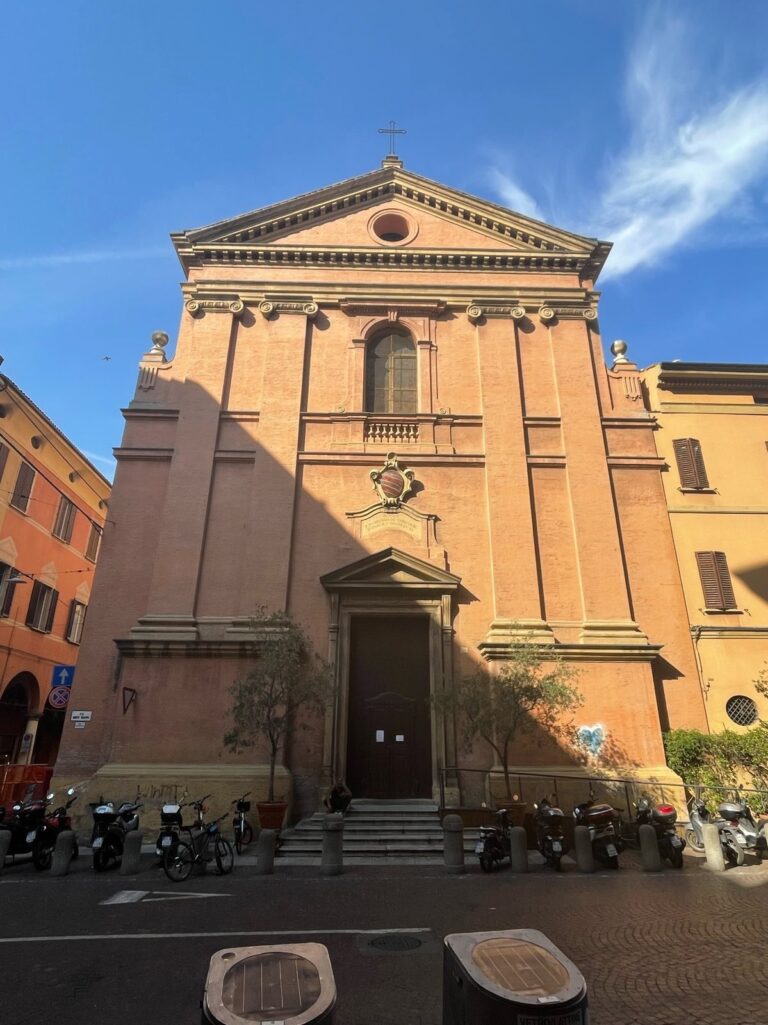
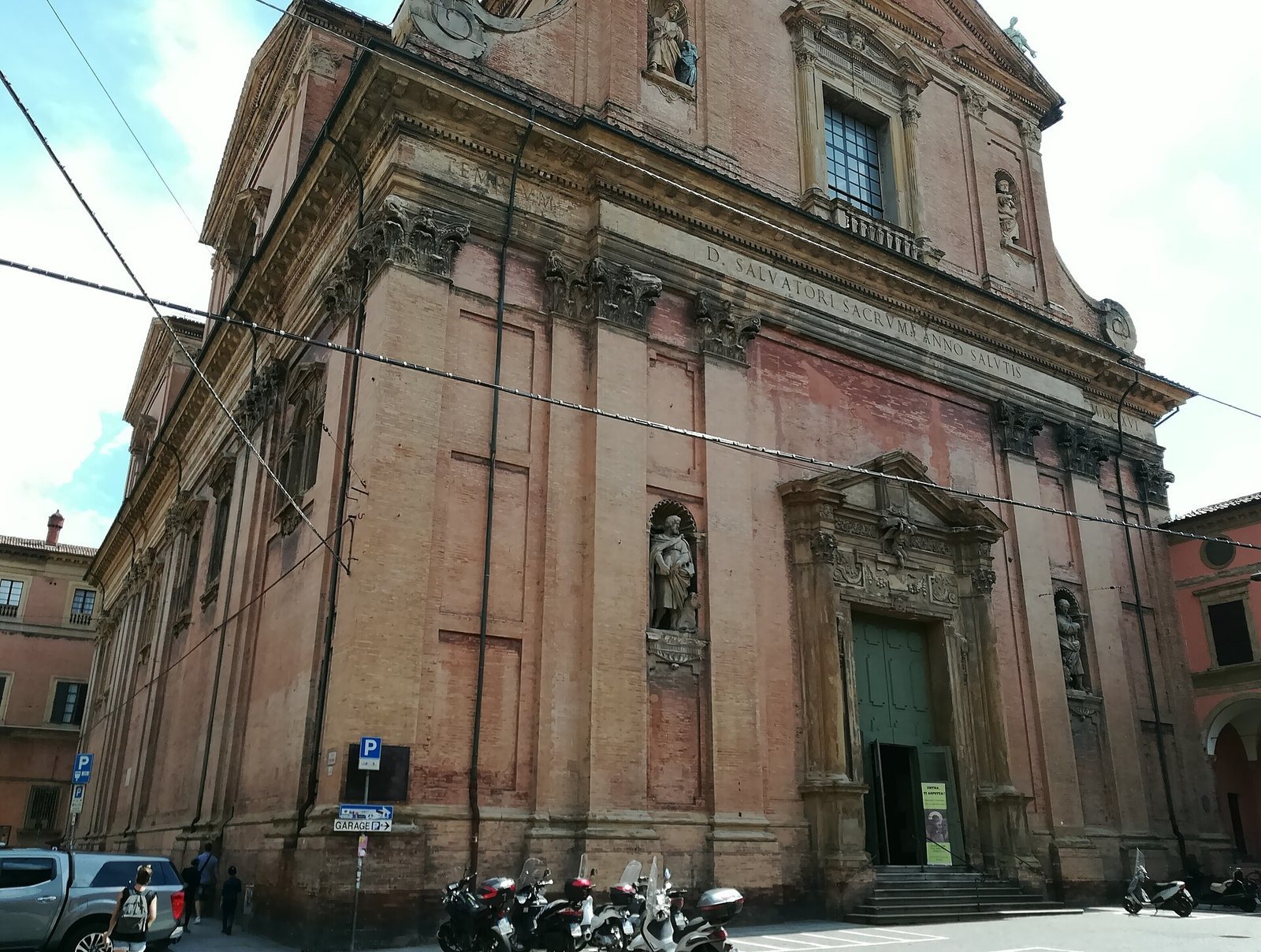
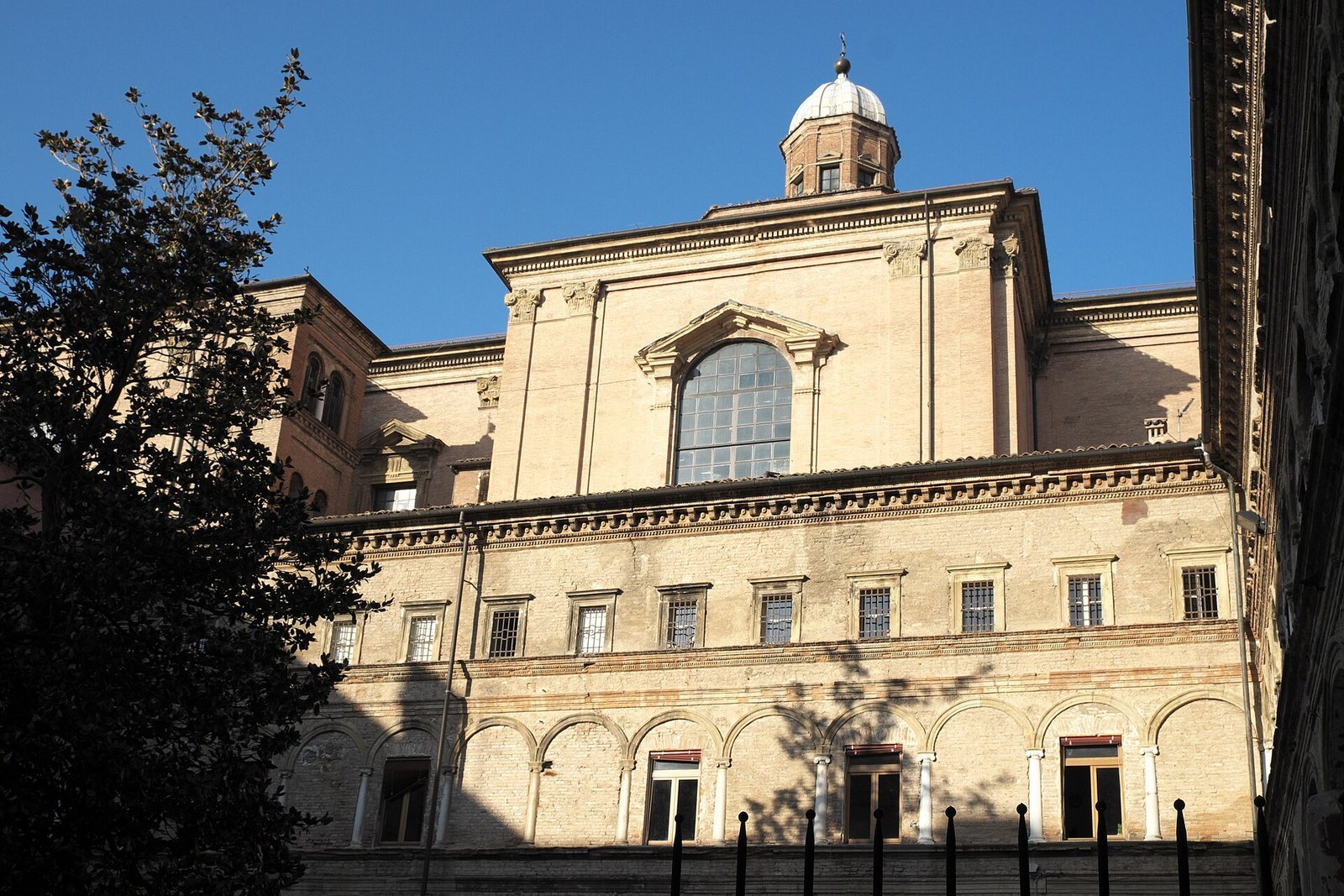
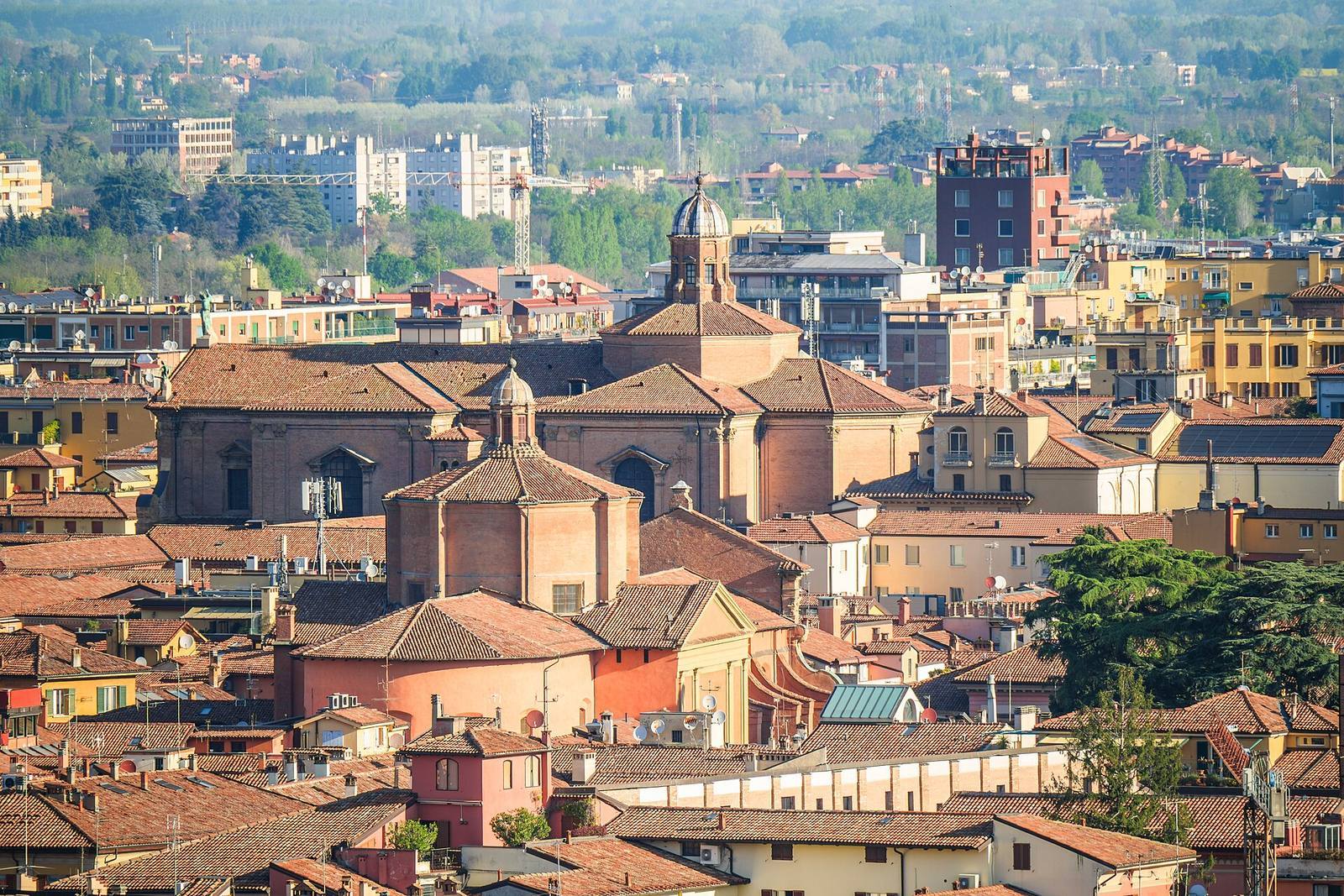
Santissimo Salvatore is a church in Italy whose present building, in late Mannerist and Baroque styles, was built from 1606 to 1623.
Medieval church and canons
A church at the site is documented by 1056. By 1136, the Canons Regular of Santa Maria in Reno, clergy who lived together under a religious rule, had a community there and built a church.
The earlier church was renovated in the fifteenth century. The Canons Regular of the Lateran also administered the church during its history.
Rebuilding and later use
In the late sixteenth century, the earlier church was demolished to make room for a larger, more elaborate building. Vincenzo Porta carried out the construction to a design by Barnabite priest Giovanni Ambrogio Mazenta and architect Tommaso Martelli. The church was consecrated in 1623.
The canons received painter Giovanni Francesco Barbieri, known as Guercino, who wanted to be buried at their church. He and his brother Paolo Antonio were buried there in 1666.
After almost a millennium of service, the canons left to focus on the parishes of Saint Joseph the Artisan and Saint Augustine and Saint Monica. In the late 2000s, the church and adjoining convent passed to French friars of the Community of Saint John, who served there until 2020. The Archdiocese of Bologna took over the church in 2021, and perpetual Eucharistic adoration, a continuing Catholic devotion focused on the consecrated Eucharist, has been practised there since.
Remains
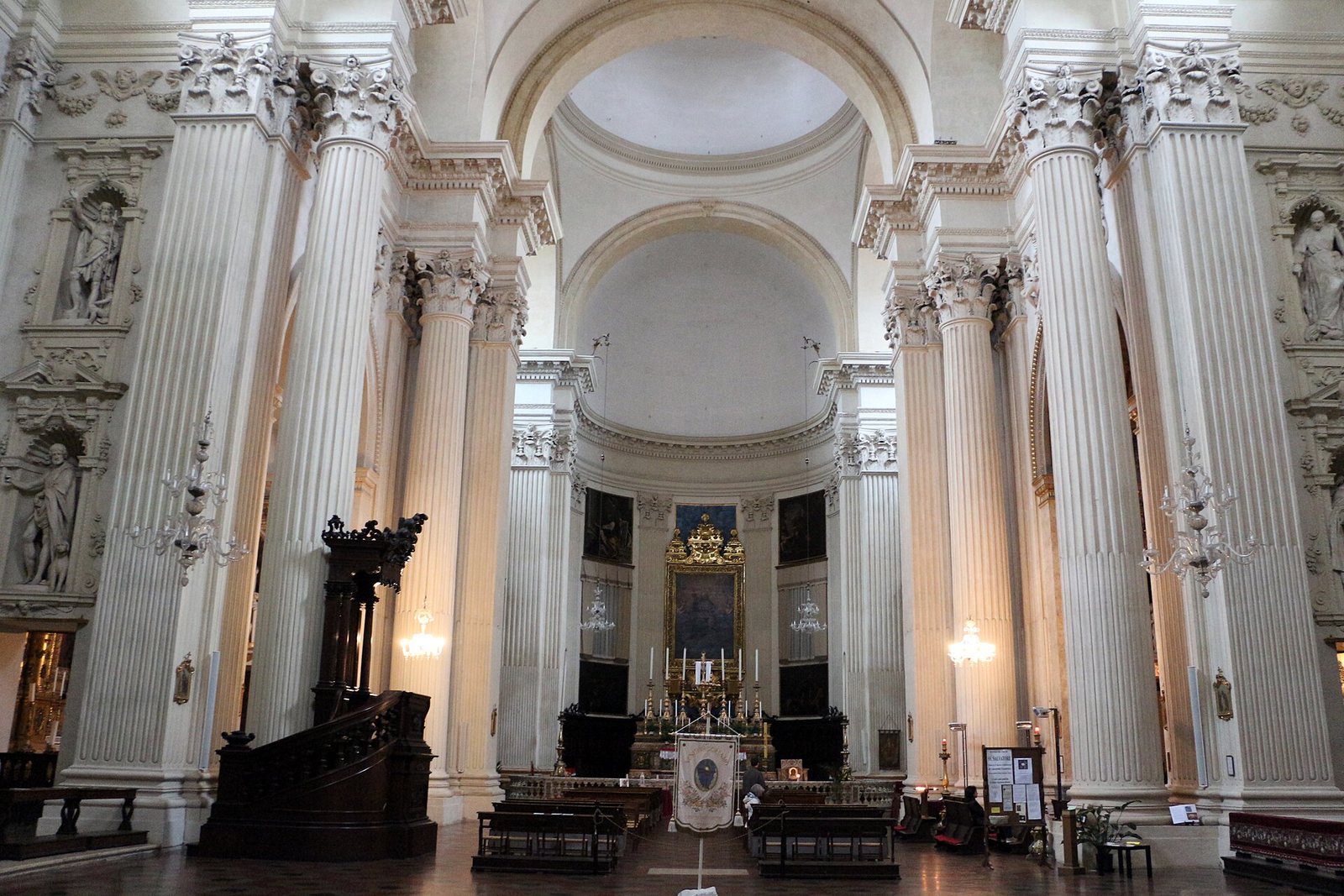
The church has a single nave lined with eight side chapels, four on each side. A marble tablet at the centre of the nave floor marks Guercino’s tomb.
Façade and bell tower
Façade
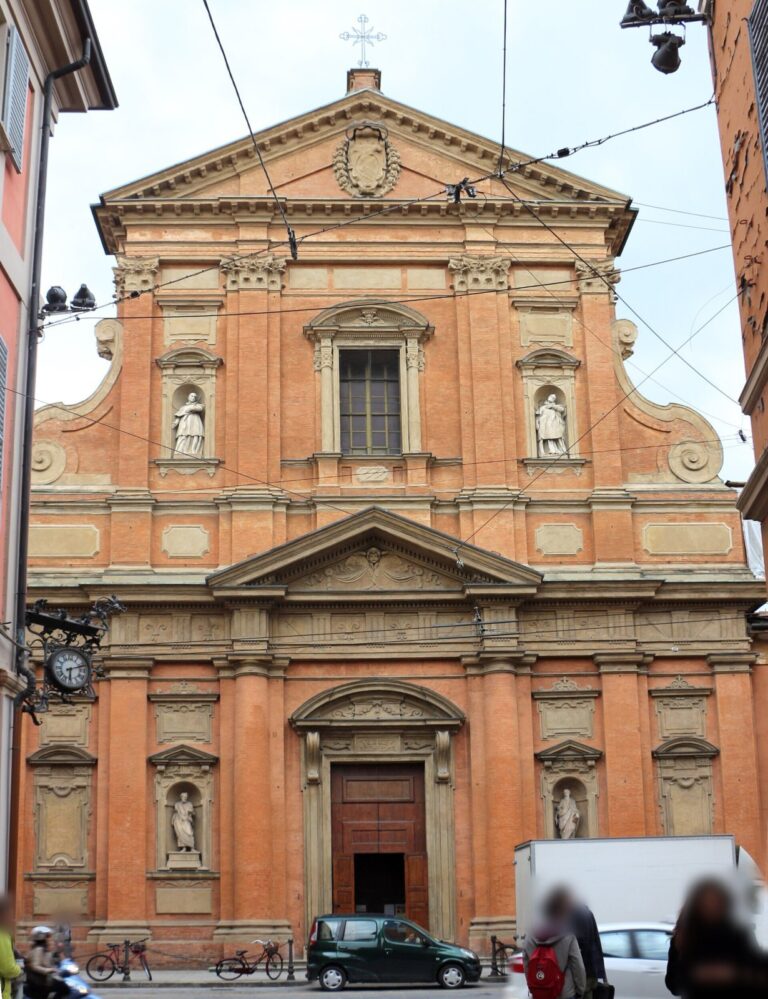
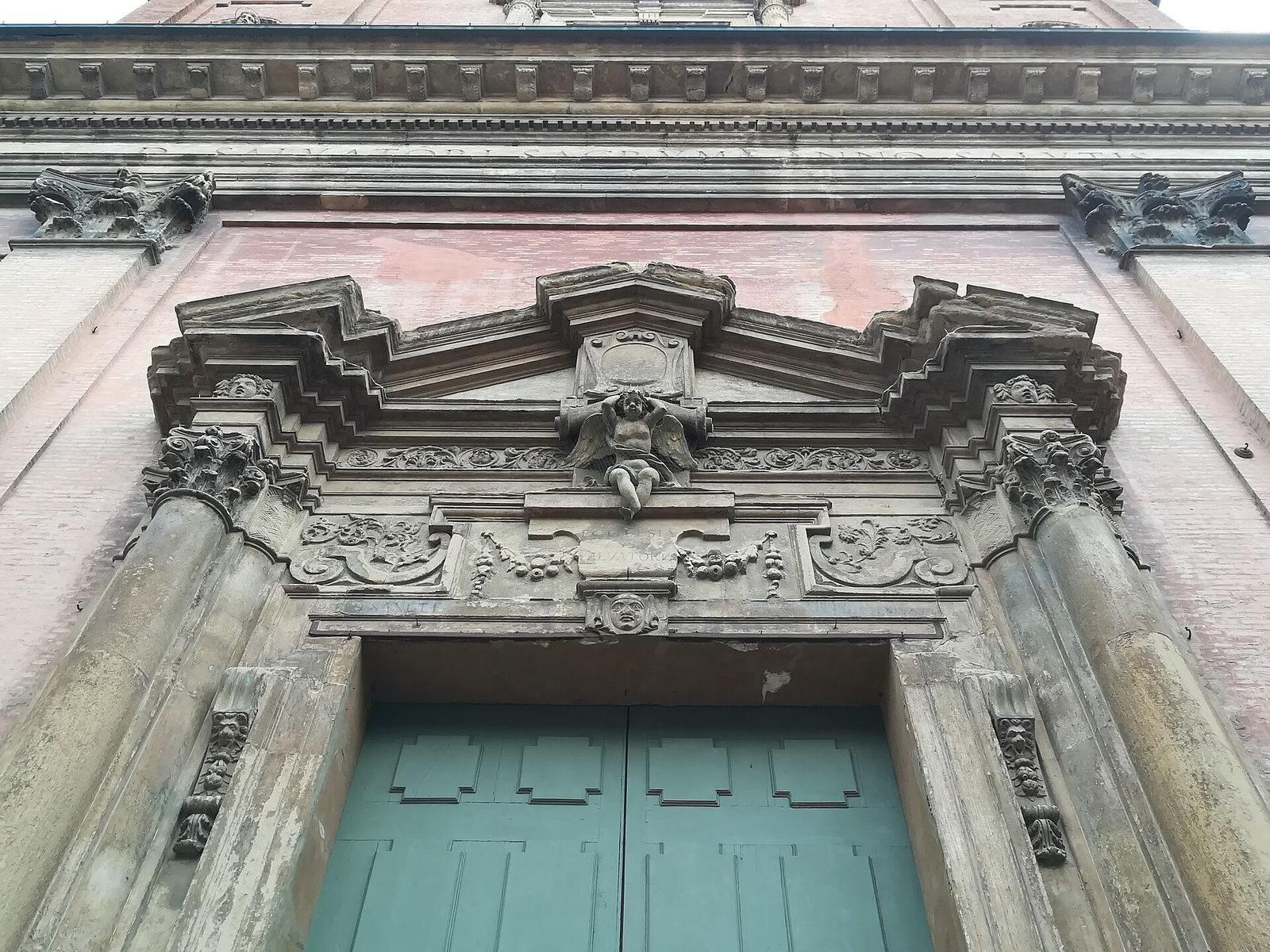
The simple façade has four niches containing terracotta statues of the Evangelists. Attributed to Giovanni Tedeschi, the statues were originally painted to resemble bronze. Three copper statues stand above them.
Bell tower
A small bell tower is attached to the church’s left side and cannot be seen from outside. It dates to the sixteenth century and is the sole surviving feature of the earlier church. Paired windows open in its belfry, which holds two bells.
The larger bell was cast by Ugolino di Toscolo in 1333. It is the oldest bell in Bologna still mounted in a bell tower, though a crack has left it unusable and silent. Antonio Censori cast the smaller bell in 1583, and it is still rung to call people to services. Both bells hang from wooden headstocks of a characteristic Bolognese type and are operated by hand.
Side chapels
First chapel on the right
A painting by Ercole Graziani the Younger shows Blessed Canetoli refusing Giuliano de’ Medici’s offer of the archbishopric of Florence. Statues of Saint Augustine and Saint Jerome, both early Christian theologians, flank the painting; Giovanni Tedeschi made them.
Second chapel on the right
Four sculptures by Giovanni Tedeschi and Clemente Molli occupy this chapel. Its altarpiece is Giovanni Andrea Donducci’s Resurrection, painted around 1620 to 1625. Donducci was also known as Mastelletta.
Third chapel on the right
The chapel contains the Madonna della Vittoria, also called the Madonna del Monte, a panel painting of the late fourteenth century. Originally kept at the church of Monte, now Villa Aldini, it is attributed either to Lippo Dalmasio or to Simone dei Crocifissi. A papal decree granted the image a crown in 1875. Nineteenth-century frescoes by Alessandro Guardassoni and Luigi del Samoggia decorate the chapel vaults.
Fourth chapel on the right
Vitale da Bologna’s 1353 multi-panel painting depicts the Coronation of the Virgin, the Nativity, the martyrdom of Saint Catherine, and other saints. The chapel also contains Jacopo Coppi’s large 1579 painting of the Miracle of the Beirut Crucifix, with a self-portrait of the artist at the far left. A separate mid-sixteenth-century work by Girolamo da Treviso shows the Presentation of the Virgin in the Temple before Saint Thomas Becket of Canterbury, the archbishop killed in 1170 and later venerated as a saint.
First chapel on the left
Garofalo’s 1532 painting is known as Saint John the Baptist and Saints and is also titled Farewell of the Young Saint John from His Father.
Second chapel on the left
Carlo Bononi’s large Ascension of Christ, painted between 1610 and 1620, was later restored by Camillo Tarozzi.
Third chapel on the left
Innocenzo da Imola’s 1539 painting of the Crucifixion with Saints is flanked by sculptures by Andrea Guerra and Giovanni Tedeschi. A carved walnut pulpit made by Carlo Bordoni and Ferdinando Rossi in 1926 stands just before the chapel.
Fourth chapel on the left
Alessandro Tiarini’s Nativity is here, and may have been intended for the main altar. The chapel also contains a Holy Family by Tiarini.
Main altar and organs
Main altar
Camillo Ambrosi made the main altar, which is surrounded by four paintings of prophets. Its altarpiece depicts Jesus the Savior in Glory. Four further paintings, attributed to Giacomo Cavedone and Francesco Brizzi, depict the story of the Beirut Crucifix.
Organs
Two eighteenth-century pipe organs stand on raised choir platforms on either side of the apse, the church’s sanctuary end. The working organ on the right incorporates pipes made by Vincenzo Colonna in 1621. It has 14 stops, each controlling a group of pipes, one hand-played keyboard, and a foot pedal.