Palazzo Contarini-Sceriman: A Historic Palace in Venice
Site at a Glance
- Rating
- 5
- Popularity
- Very Low
- Country
- Italy
- Primary era
- Medieval
- Eras represented
- Medieval, Early Modern
- Civilizations
- Venetian
- Site type
- Domestic
- Remains
- Elite Residence
On this page11 sections
History
Origins and Early Owners
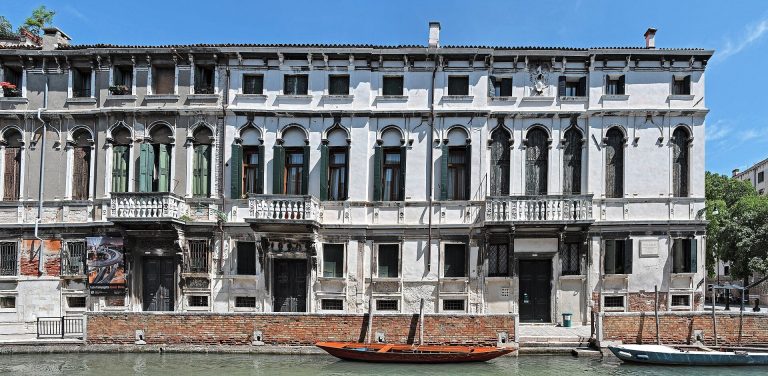
Palazzo Contarini-Sceriman is a palace in Venice, Italy, broadly dated to the 14th and 15th centuries and marked by a transition from late Gothic to Renaissance forms. The 16th-century Venetian writer Francesco Sansovino called it the Contarini palace and described it as a building already erected by the Dolce family. A property document from 1466 suggests that Pietro Como may have built it a few years earlier for the Dolces. It later passed to Contarina Contarini, wife of Piero Priuli Michiel.
The Gozzi and Seriman Families
The Gozzi family, nobles from Bergamo, settled in Venice during the 16th century. Alberto Gozzi joined Venice’s politically influential noble class in 1546. On 31 May 1638, he bought the palace as his family home. Known as “of the silk,” he owned a silk-fabric shop in Calle dei Toscani at Rialto.
The Gozzi family died out in 1698. Its last member’s widow, Adriana Donà, withdrew to a Capuchin convent in Castello, gave up her right to use the family properties, and put the palace on the market. The Seriman family, also called Sceriman, bought it in 1725. Of Armenian origin and associated with Isfahan in Persia, they had come to Venice in the late 17th century to escape Ottoman persecution. Their gift of 72,000 ducats to support the Venetian Republic’s war against the Turks secured their entry into the Venetian nobility. A major Baroque remodeling took place in the palace in the late 17th century.
Institutional and Modern Uses
For several years the palace housed the Accademia degli Industriosi, which later moved to Palazzo Morosini del Giardino. Until 2021, it served as the headquarters of the Servants of the Child Jesus and as a preschool. Ownership subsequently passed to the Bukhman Foundation for contemporary art.
Remains
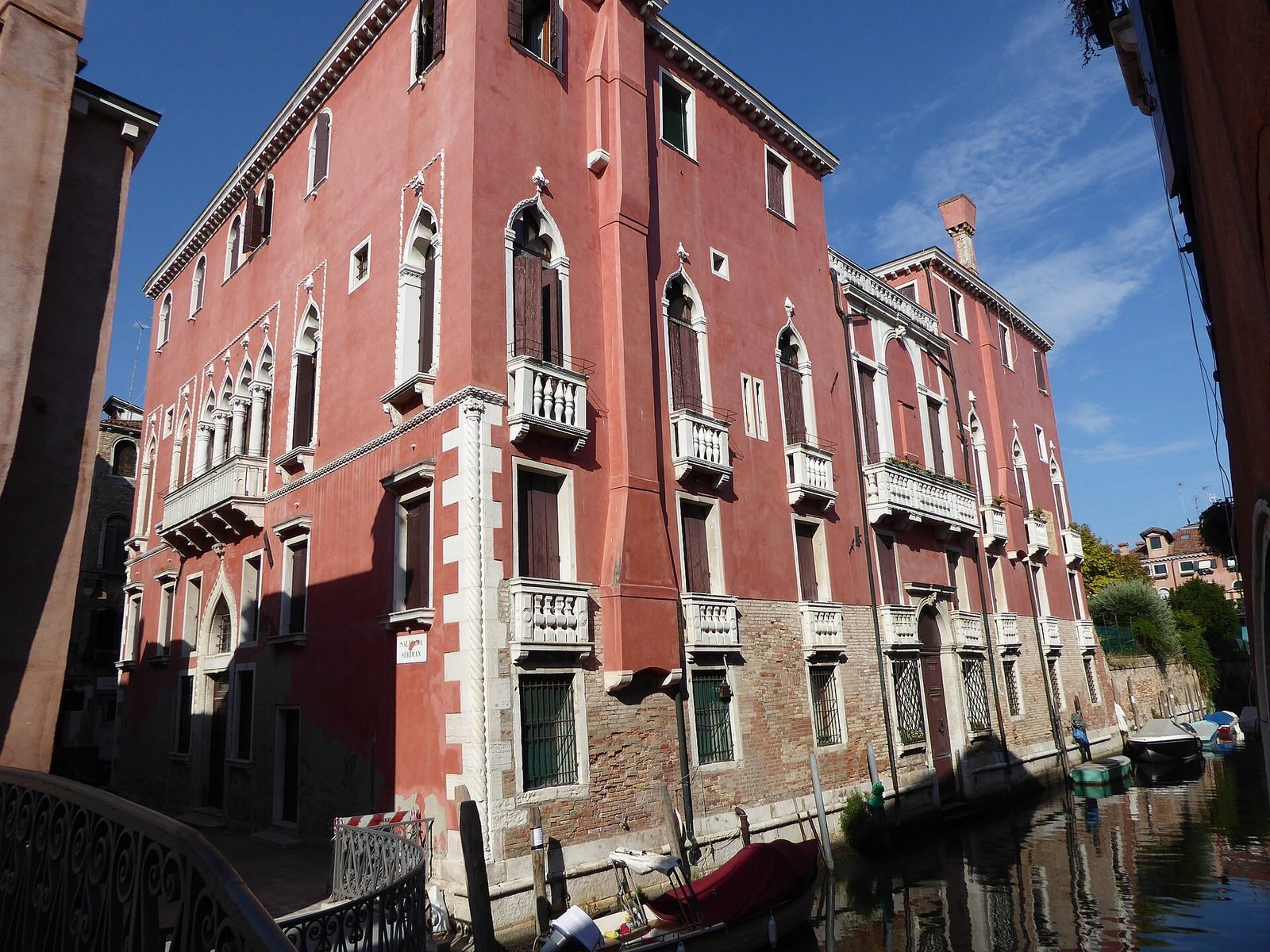
The three-storey palace has a façade on Salizada Seriman and another facing the Rio del Gozzi. Its openings and surviving architectural features reflect the shift from late Gothic to Renaissance forms. The original plan was probably C-shaped, with a courtyard and an open staircase.
Exterior and Garden
Street Façade
The street-facing front has a geometric arrangement of openings. The capitals of the four-light window on the principal floor have a near-Renaissance character. The mezzanine windows and entrance portal date to the 16th century.
Canal Façade and Garden
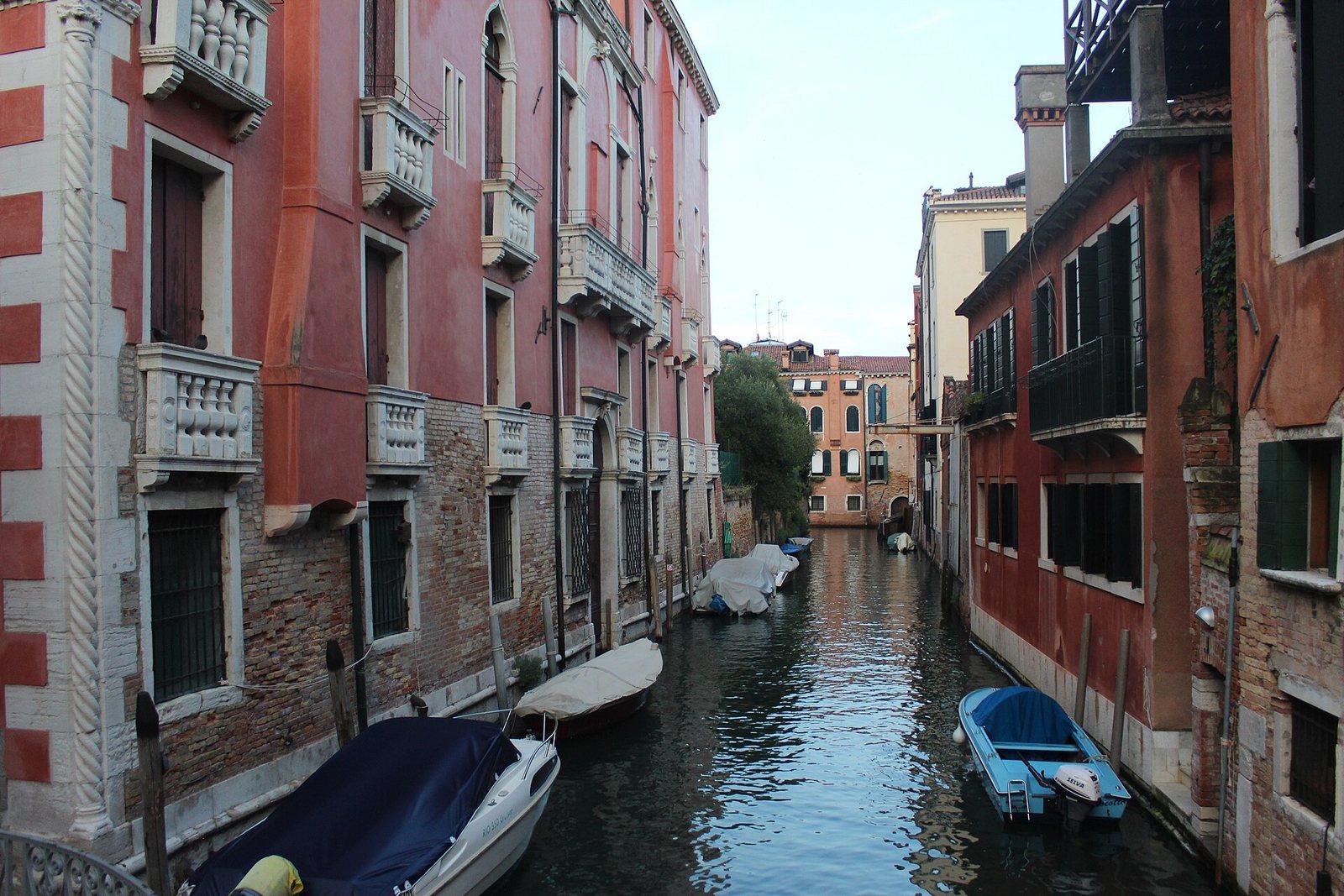
Pointed trefoil arches and a twisted corner column mark the canal side. A partly blocked Venetian window occupies the position of the former open staircase. Behind the palace, a surviving garden lies in an area once occupied by Palazzo Venier, demolished in the 19th century. Statues by Bernardo Falconi once decorated that palace’s courtyard.
Interior and Artworks
Baroque Staircase
Antonio Gaspari designed the interior Baroque staircase in the late 17th century. Its ceiling fresco, painted by Mattia Bortoloni in 1727, depicts the Apotheosis of the Sceriman Family.
Paintings
The palace contains two paintings by Sebastiano Ricci: Eliezer and Rebecca at the Well, from the 18th century, and Moses Defending the Daughters of Jethro, from the 17th century.