Palacio de los marqueses de Valverde: A Renaissance Palace in Valladolid

Site at a Glance
- Rating
- 4.5
- Popularity
- Very Low
- Country
- Spain
- Primary era
- Early Modern
- Eras represented
- Early Modern
- Civilizations
- Crown of Castile, Spanish
- Site type
- Domestic
- Remains
- Palace
On this page9 sections
History
Palacio de los marqueses de Valverde is a palatial residence in Valladolid, Spain, built in the second half of the sixteenth century in an Italianate or Florentine Renaissance style. It began as a Figueroa family house and later became associated with the descendants who held the title of Marquises of Valverde de la Sierra.
Origins and family patronage
The palace was commissioned in the mid-sixteenth century by Juan de Figueroa and his wife, María Núñez de Toledo. Juan was an oidor, a judicial official who heard and decided cases in a high royal court, serving in the Royal Chancery, a major appellate court of the Spanish monarchy. The couple had also founded the neighboring Concepción convent in 1521, whose patronage remained attached to their family house.
From Figueroa house to marquisate
The property passed through the Figueroa and Tovar families. On 2 September 1566, Hernando de Figueroa, a Valladolid alderman, transferred the house to his son Juan on the occasion of Juan’s marriage to Ana de Leiva. Their daughter and heir, Antonia de Figueroa y Leiva, married Sancho de Tovar y Enríquez de Castilla, lord of Tierra de la Reina, a royal corregidor and captain-at-war, meaning an administrative and judicial official and a military commander. Their grandson and successor, Fernando de Tovar y Enríquez de Castilla, was created Marquis of Valverde de la Sierra in 1678. The palace subsequently acquired the name by which it is known today.
Alteration, restoration, and protection
Eighteenth-century renovations altered the building, including the addition of plasterwork to its upper part. The palace was completely restored in 1981. It was declared a Property of Cultural Interest on 6 April 1967, with the declaration confirmed in the Official State Gazette on 25 April of that year. Its interior is now occupied by private dwellings and commercial premises.
Remains
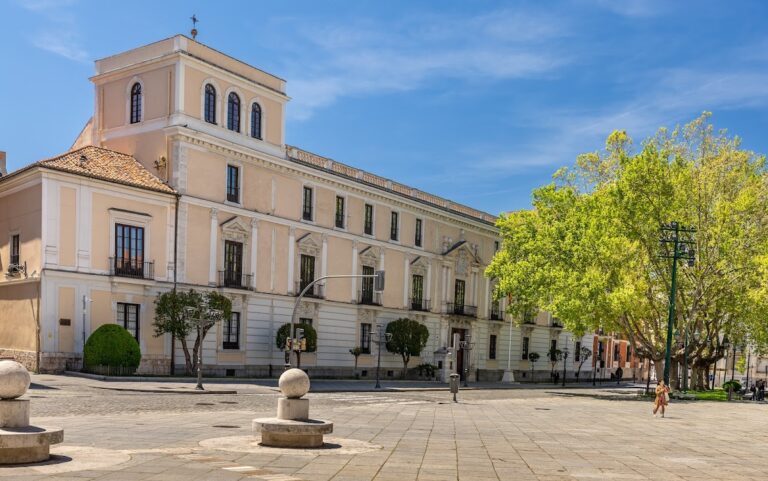
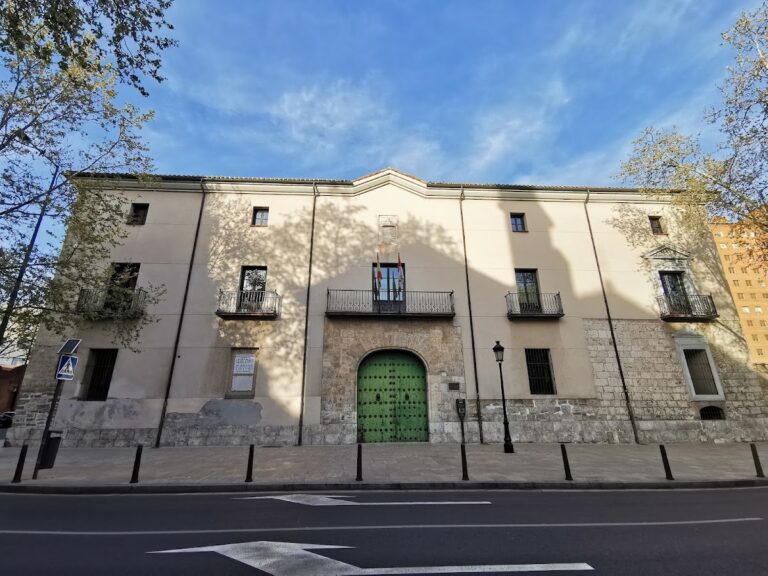
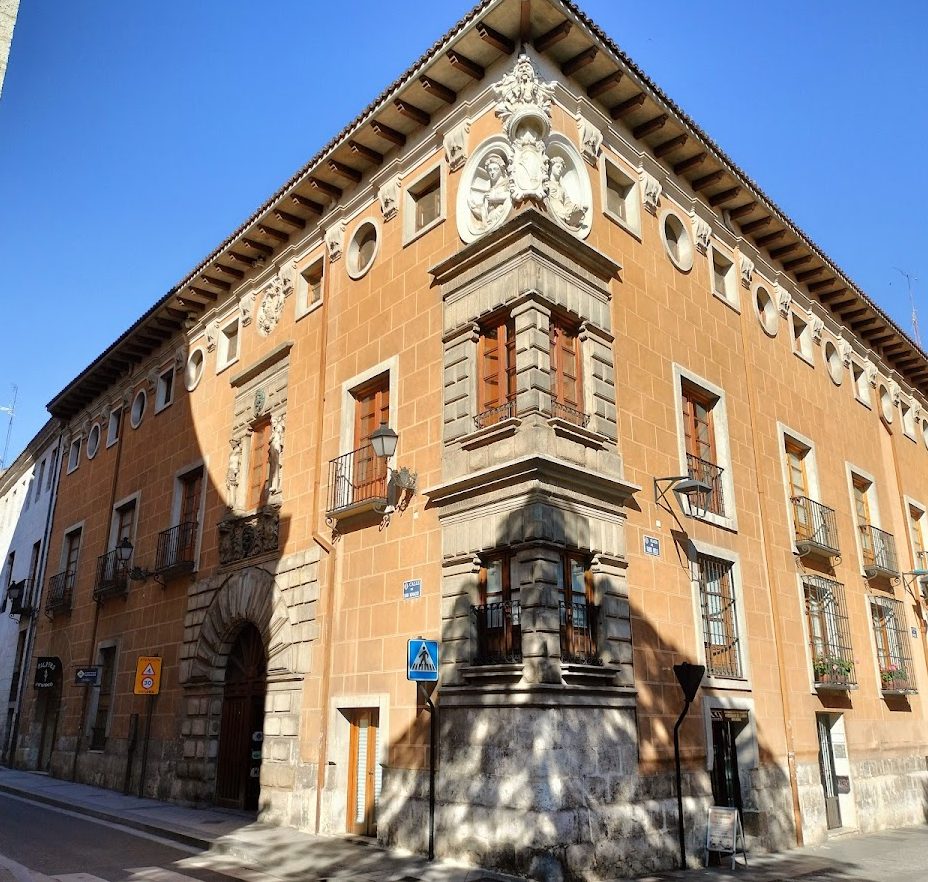
The palace stands on San Ignacio Street beside the Casa de los Arenzana and opposite the Church of San Miguel and San Julián. It occupies a corner facing Expósitos Street and Fabio Nelli Square, where the Palacio de Fabio Nelli houses the Valladolid Archaeological Museum. Its street-facing elevations combine rusticated stonework, semicircular arches, sculptural decoration, and Renaissance-inspired compositions.
Exterior and interior fabric
Entrance and principal facade
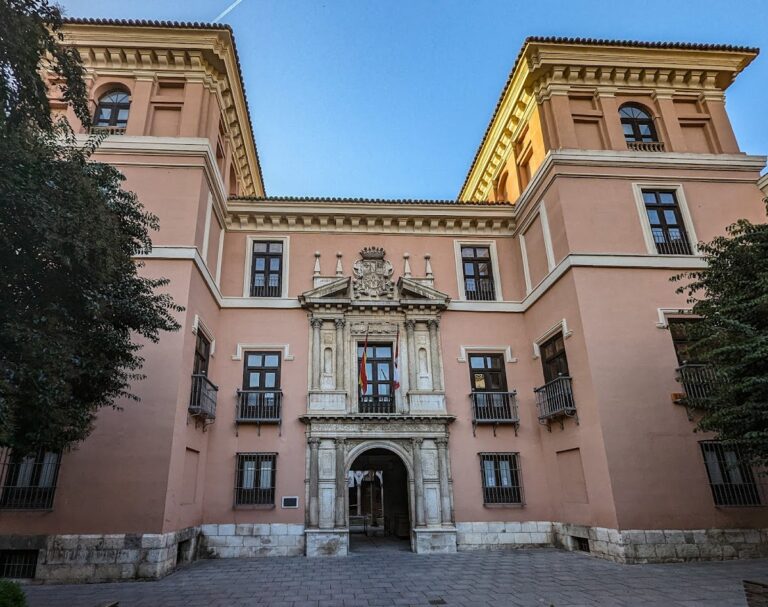
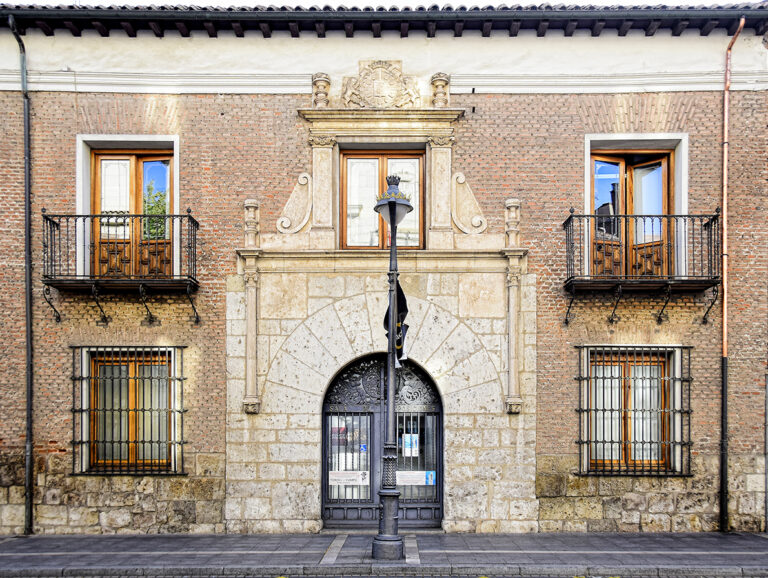
The principal entrance opens onto San Ignacio Street and bears the coats of arms of the founders, Juan de Figueroa and María de Toledo. The main facade is formed with semicircular arches in rusticated ashlar masonry, including the doorway and several windows. This stone treatment gives the palace’s exterior its distinctly Italianate or Florentine character, based on Renaissance architectural forms associated with Italy.
Noble-floor and corner windows
A prominent rectangular window on the noble floor is flanked by two sculptures popularly identified as the marquise and her lover. The composition also contains Mannerist medallions, a type of later Renaissance decoration using stylized figures and elaborate arrangements. The principal corner window is framed by representations of Hermes, the ancient Greek god associated with travel, commerce, communication, and boundaries, and a caryatid, a female figure used as an architectural support. The upper windows also incorporate mascarons, decorative faces or masks, and atlantes, male figures serving as supporting architectural elements.
Later upper fabric and present division
The eighteenth-century alterations added plasterwork to the upper portion of the palace. Inside, the historic building has been divided into private residences and commercial premises, while its decorated exterior continues to express the family and title associations that shaped its development.