Palacio de Pimentel: A Former Royal Palace in Valladolid


Site at a Glance
- Rating
- 4.7
- Popularity
- Very Low
- Country
- Spain
- Primary era
- Medieval
- Eras represented
- Medieval, Early Modern
- Civilizations
- Crown of Castile, Spanish
- Site type
- Domestic
- Remains
- Palace
On this page7 sections
History
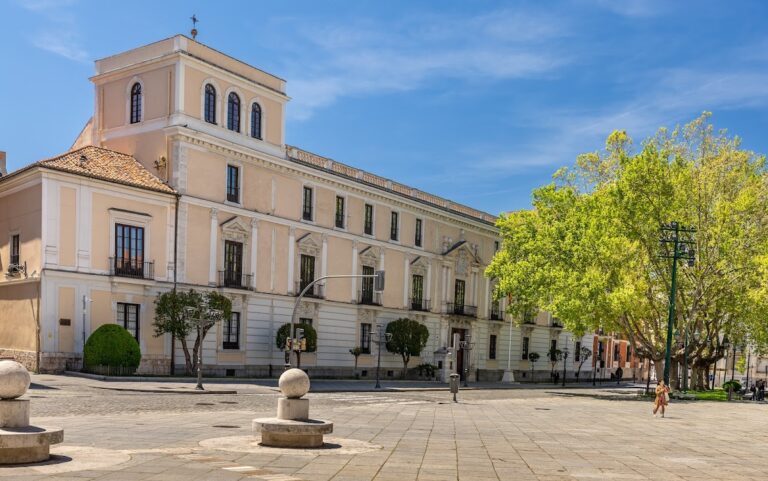
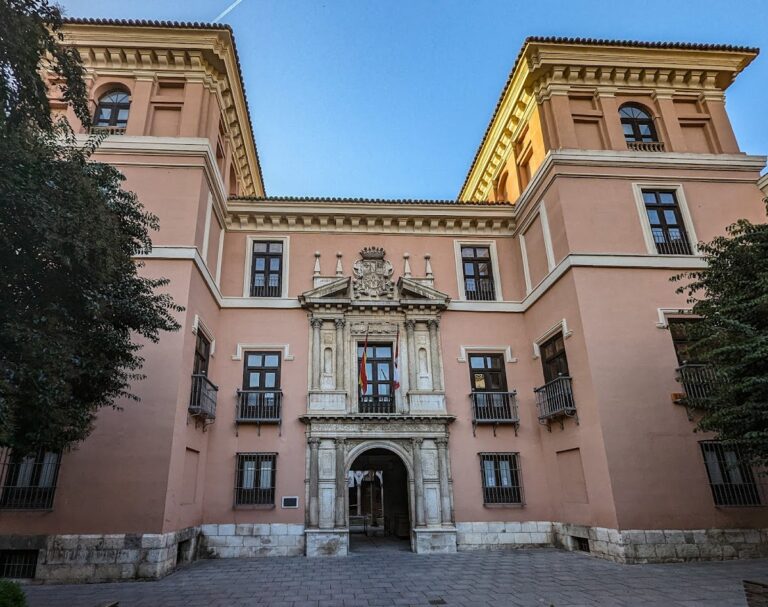
Palacio de Pimentel is a former royal palace in Valladolid, Spain, whose construction began in the fifteenth century and which later acquired architectural elements from successive periods. Its history is closely associated with the Spanish monarchy, particularly because Philip II was born there during a royal stay in 1527.
Foundation and aristocratic ownership
Construction began on the orders of the Marquess of Astorga, a hereditary aristocratic title. The palace later belonged to Bernardino Pimentel, a Valladolid regidor, or municipal councillor, and uncle of Alonso Pimentel y Pacheco, the 2nd Duke of Benavente.
Bernardino Pimentel owned the building when the royal family stayed there in April 1527 while attending the Cortes convened in Valladolid. These assemblies brought together representatives of the kingdom’s estates to address political and fiscal matters. During this stay, the future Philip II of Spain was born in the palace. As a sixteenth-century Habsburg monarch who ruled Spain and its global empire, his birth gave the building lasting dynastic importance.
Later ownership and public use
By 1530, the palace belonged to the Counts of Rivadavia. Their heirs sold it to Mariano Reynoso y Oscáriz in 1849, and Reynoso transferred it to the Valladolid Provincial Council in 1875. The council installed its offices in the building and remains its owner, occupant, and institutional headquarters.
A major restoration took place from 1985 to 1990 under a project by the architect Ángel Ríos. After this work, the palace incorporated a public exhibition space. It has been protected since 10 December 1998 as a Bien de Interés Cultural, Spain’s legal designation for cultural heritage recognized for historical, artistic, or archaeological value. The monument is protected by the government of Castile and León.
A longstanding tradition claims that the newborn Philip II was carried through a palace window suspended by a chain so that he could be baptized at the Church of San Pablo instead of the nearby parish church of San Martín. The story is regarded as a distortion of the event. An elevated passage was built between the palace and the church for the royal family, and one of the windows served as an exit, although its exact identity remains uncertain.
Remains
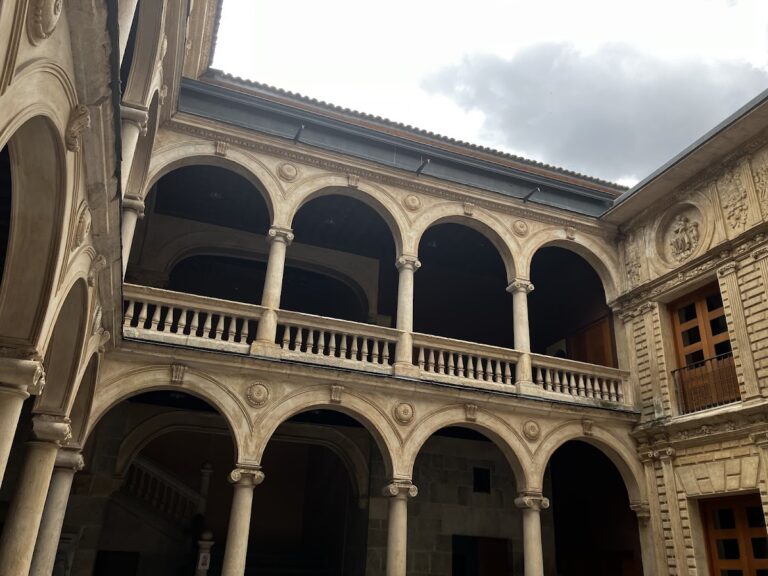
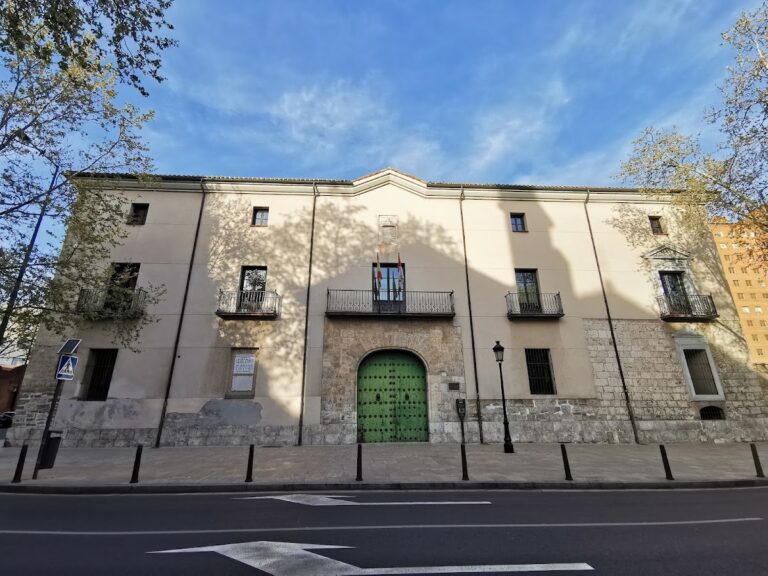
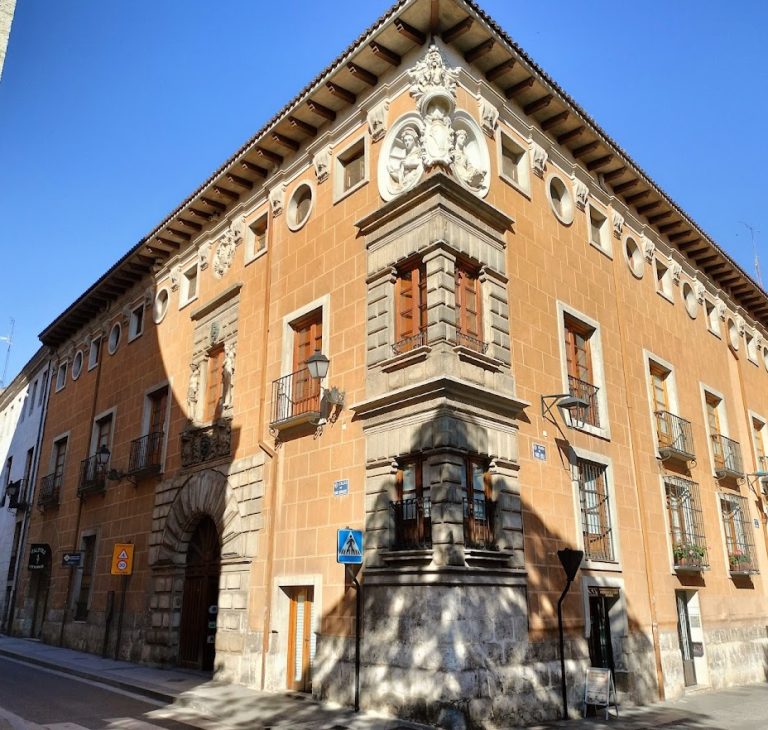
The surviving palace has been extensively transformed over time, but retains an arrangement around an inner courtyard, a characteristic plan in Valladolid’s domestic architecture of the period. The main body rises two storeys, while the adjoining tower has three. Brick forms the principal building material, with stone concentrated at the corners, portal, and plinth.
Courtyard and entrance
The inner courtyard is reached through a zaguán, an entrance passage linking the street with an interior courtyard. This route begins at a late-Gothic portal with a segmental arch. Together, the passage, portal, and courtyard preserve the building’s basic domestic organization despite later alterations.
Plateresque window and tower
The palace’s most prominent exterior feature is a Plateresque window from the beginning of the sixteenth century. Plateresque is an ornate Spanish Renaissance style known for elaborate surface decoration. Set at a corner, the window works with the tower rising at the same point to emphasize the angle and produce changing perspectives. Its bold arch carries grotesque ornament modeled on paintings from the Domus Aurea, the lavish ancient Roman palace complex built for Emperor Nero in Rome. The motifs of that complex influenced Renaissance and Plateresque decoration after its rediscovery.
Exhibition hall
The exhibition hall created after the 1990 restoration covers approximately 260 square metres. It presents works by local artists together with artists from other autonomous communities, giving the restored palace a public cultural function alongside its institutional use.