Palace in Wojnowice: A Nineteenth-Century Residence in Poland

Site at a Glance
- Rating
- 4.3
- Popularity
- Very Low
- Country
- Poland
- Primary era
- Modern
- External website
- Open
- Eras represented
- Modern
- Civilizations
- German, Kingdom of Prussia
- Site type
- Domestic
- Remains
- Elite Residence
On this page12 sections
History
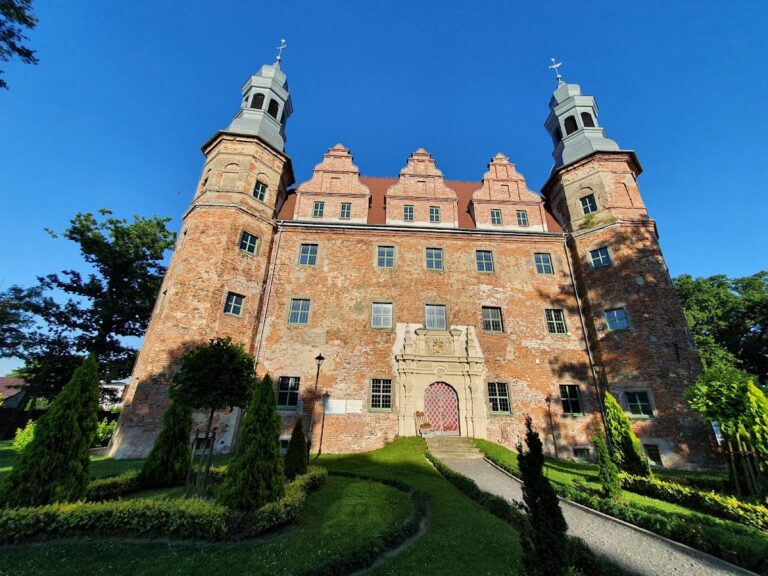
Palace in Wojnowice is a nineteenth-century palace in Wojnowice, Poland. Built during the 1830s and later enlarged in a Neo-Baroque-Classical style, it began as the residence of Carl Johann Christian Kuh, a physician whose career and coal-mining interests shaped the estate’s early history.
Kuh and the Wojnowice estate
In 1828, the 24-year-old Kuh acquired 425 hectares at Wojnowice through his father’s inheritance and the transfer of property rights from his mother and siblings. The following year he performed the required feudal homage, a formal acknowledgement of a superior authority in a feudal landholding relationship, and became the estate’s landowner.
During the 1830s, Kuh built a substantial residential house on the site of the present palace. He also carried out eye surgery there, often without payment, and became well known and respected in Silesia.
Coal mining and the von Banck family
Kuh expanded his interests beyond Wojnowice. In 1843, he became the sole owner of the Charlotte mine, later associated with Rydułtowy Mine, and acquired the smaller Eleonora, Von der Heydt, Durant, Minna, Michał, and Witt von Doring mines. He became the area’s largest coal producer. During his ownership, shafts including Bernhard, Cuno, Agnes, Erbreich, Pinder, Prinz Schonach, and Karl I were created or deepened.
After Kuh died in 1872, his family took over the mines and mining concessions. In 1884, they established the New United Charlotte Mine, whose holdings extended across 18,478 hectares in Gaszowice, Łuków Śląski, Piece, Czernica, Upper and Lower Rydułtowy, Krzyżkowice, Pszów, Pszowskie Doły, Kokoszyce, Radlin, and Zawada.
In June 1875, Heinrich Friedrich August von Banck, a cavalry captain in the von Seydlitz Cuirassier Regiment from Magdeburg, purchased the Wojnowice estate from Kuh’s heirs for 410,000 thalers. Extensive rebuilding and enlargement at the turn of the twentieth century gave the building the palace form that survives today. Postcards from this period identified it as Schloss Woinowitz.
The entail and twentieth-century changes
In 1912, the Wojnowice entail, or majorat, passed to Eduard Karl Christian Eugen von Banck. This type of estate was legally arranged to remain undivided within a designated family line. The holding comprised the palace, the farm, and 738 hectares of land. Eduard von Banck married Maria Adelheid von Dittrich in March 1924, and they had four children.
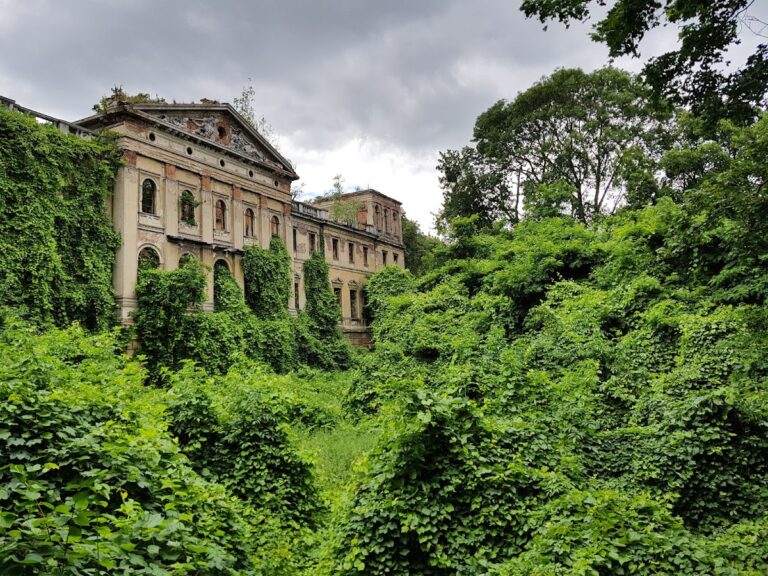
The palace was abandoned shortly before the front reached the area in spring 1945. It remained in the possession of the von Banck family until the end of the war. Afterward, the complex first served as a preparatory centre for higher education. It later contained offices and apartments for a state agricultural farm, a state-run agricultural enterprise, and was converted into a hospital during the 1960s.
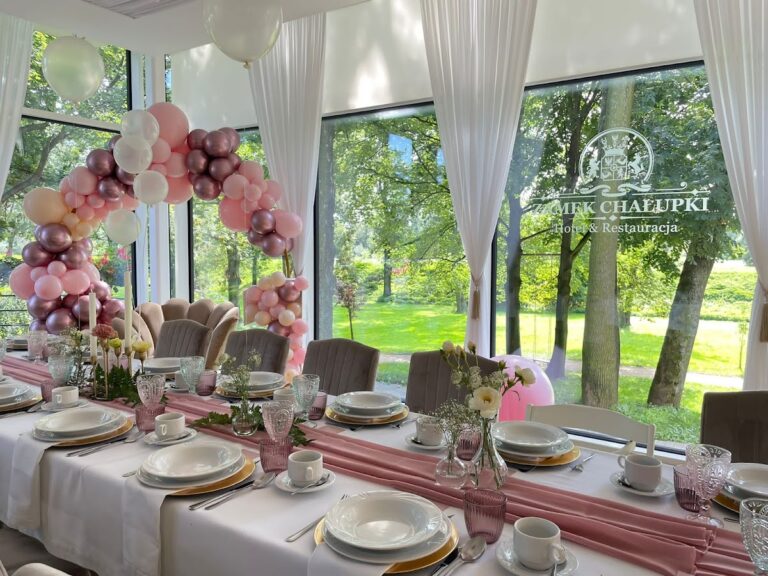
The hospital moved out in 2000, after which the State Treasury became the owner. The property passed into private ownership in 2003. Before returning to residential use, the palace served as a reception venue, an interiors museum, and an events venue. In July 2018, it returned to its historical function as the owner’s residence.
Two museums also occupied parts of the complex during its privately operated period. The Museum of the Former Village opened on 9 August 2008 through the owner’s initiative and collections, supplemented by private donations from Wojnowice and nearby communities. The Museum of Horror opened in September 2012. Both museums closed in July 2018.
Remains
Palace and park
Palace building
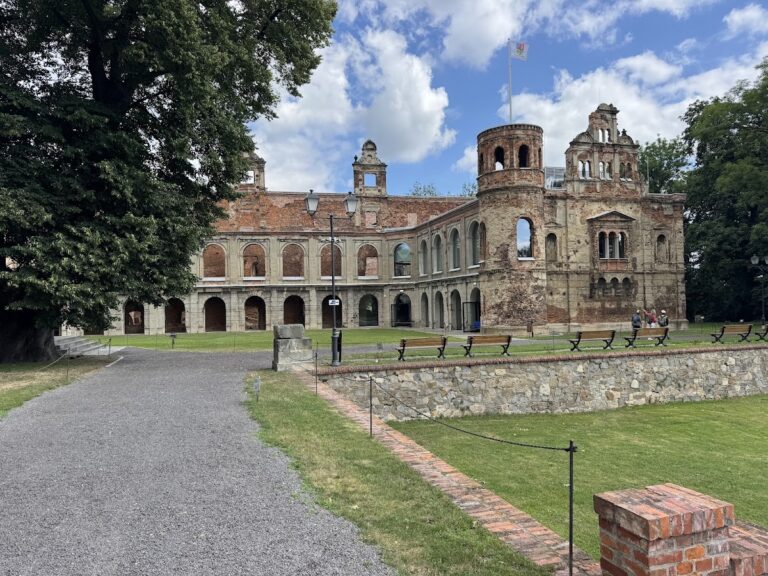
The palace combines Neo-Baroque massing and decoration with the ordered proportions and restrained vocabulary of Classicism. This appearance reflects the extensive rebuilding and enlargement carried out in the final years of the nineteenth century, rather than only the original residential house erected during the 1830s.
During the period when the palace was privately operated as a museum and events venue, historic fireplaces and tiled stoves were returned to the rooms. Stucco, a decorative plaster used on architectural surfaces, restored the former appearance of the ceilings. The interiors also contained period furniture, paintings, and other historic objects.
Park enclosure
A 4.5-hectare park surrounds the palace. A high wall of clinker brick, a dense hard-fired brick, encloses the grounds and includes two large wrought-iron gates. Arranged park landscapes contain rare and impressive trees and shrubs.
The trees include monument-sized red beeches, with the thickest measuring 675 centimetres in trunk circumference at breast height, as well as red, sessile, and swamp oaks, elms, black birches, horse chestnuts, yellow and Virginia horse chestnuts, small-flowered horse chestnut, sweet chestnut, Kentucky coffeetrees, maples, European ashes, Turkish hazel, Amur cork tree, an old cornelian cherry, and Caucasian wingnut. The last species originates in the mountain forests of Asia and is rarely encountered in Poland.
Animal enclosure and pond
A 1.5-hectare animal enclosure operates within the park and contains fallow deer, goats, and heath sheep. The grounds also support wild birds and other animals, including tawny owls, woodpeckers, jackdaws, starlings, tits, black redstarts, nuthatches, blackbirds, magpies, jays, sparrows, song thrushes, wood pigeons, grey wagtails, blackcaps, tree sparrows, pheasants, wild ducks, storks, chaffinches, waxwings, hedgehogs, and tree frogs.
A pond is associated with the evening chorus of breeding frogs, while nightingales are also heard in the park. These living features form part of the surviving landscape around the palace.
Collections in the palace
Museum of the Former Village
The Museum of the Former Village occupied the first floor of the palace’s north-western wing. Its collection brought together objects connected with rural work and household life, including a 200-year-old pea-pounding mortar, wooden harrows, quern stones for grinding grain, equipment for making butter and cheese, horse and cattle harness components, bread baskets, butter moulds, old irons, a nearly automatic washing machine, and mangle machines.
Other objects included bottles from Racibórz breweries, a historic household privy, school slates, wedding and First Communion memorabilia, and material associated with the First World War. The collection was assembled through the palace owner’s initiative and private donations, particularly from Wojnowice and surrounding communities.
Museum of Horror
The Museum of Horror occupied ten themed rooms during its operation from September 2012 to July 2018. Its displays included realistic gore scenes, a guillotine, skeletons, fairy-tale settings, a cinema room, and an interactive room containing torture instruments.
Nearby sites