Church of the Assumption in Racibórz: A Historic Gothic Parish Church
Site at a Glance
- Rating
- 4.8
- Popularity
- Very Low
- Country
- Poland
- Primary era
- Medieval
- External website
- Open
- Eras represented
- Medieval, Early Modern
- Civilizations
- Habsburg, Holy Roman Empire
- Site type
- Religious
- Remains
- Church
On this page6 sections
History
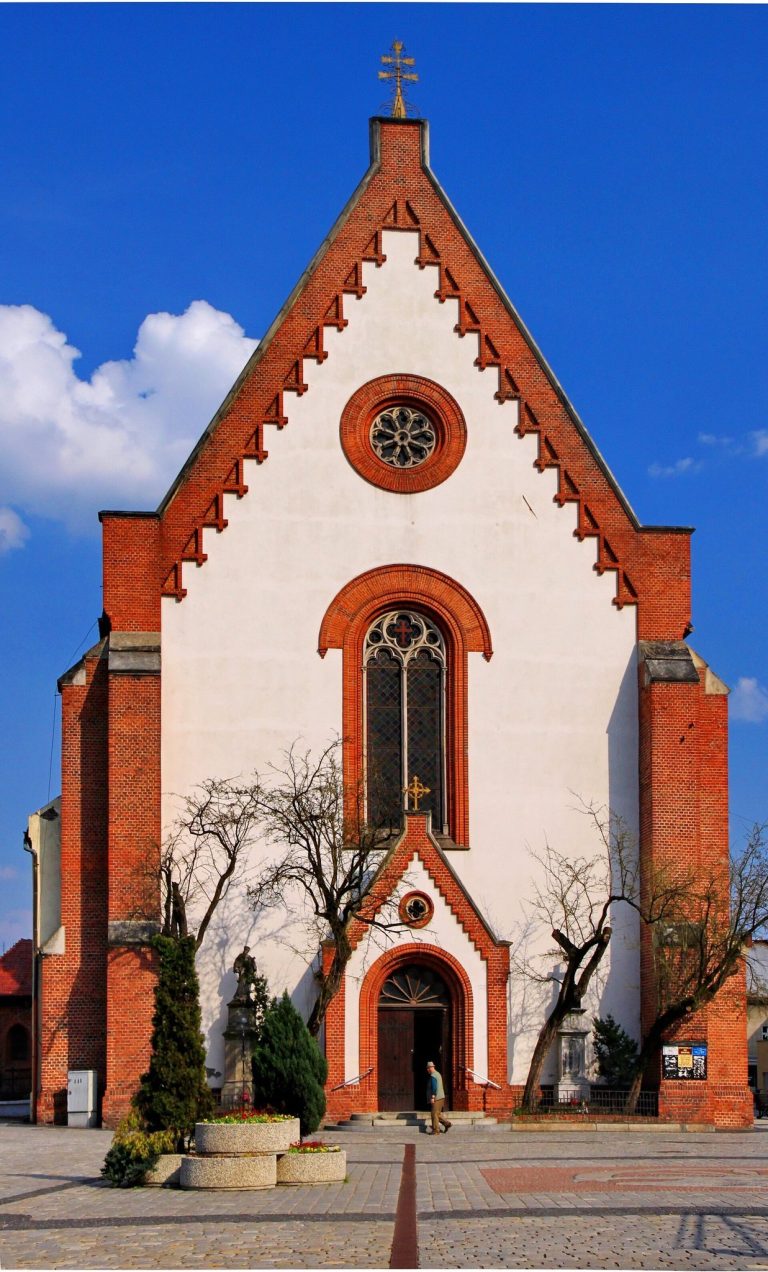
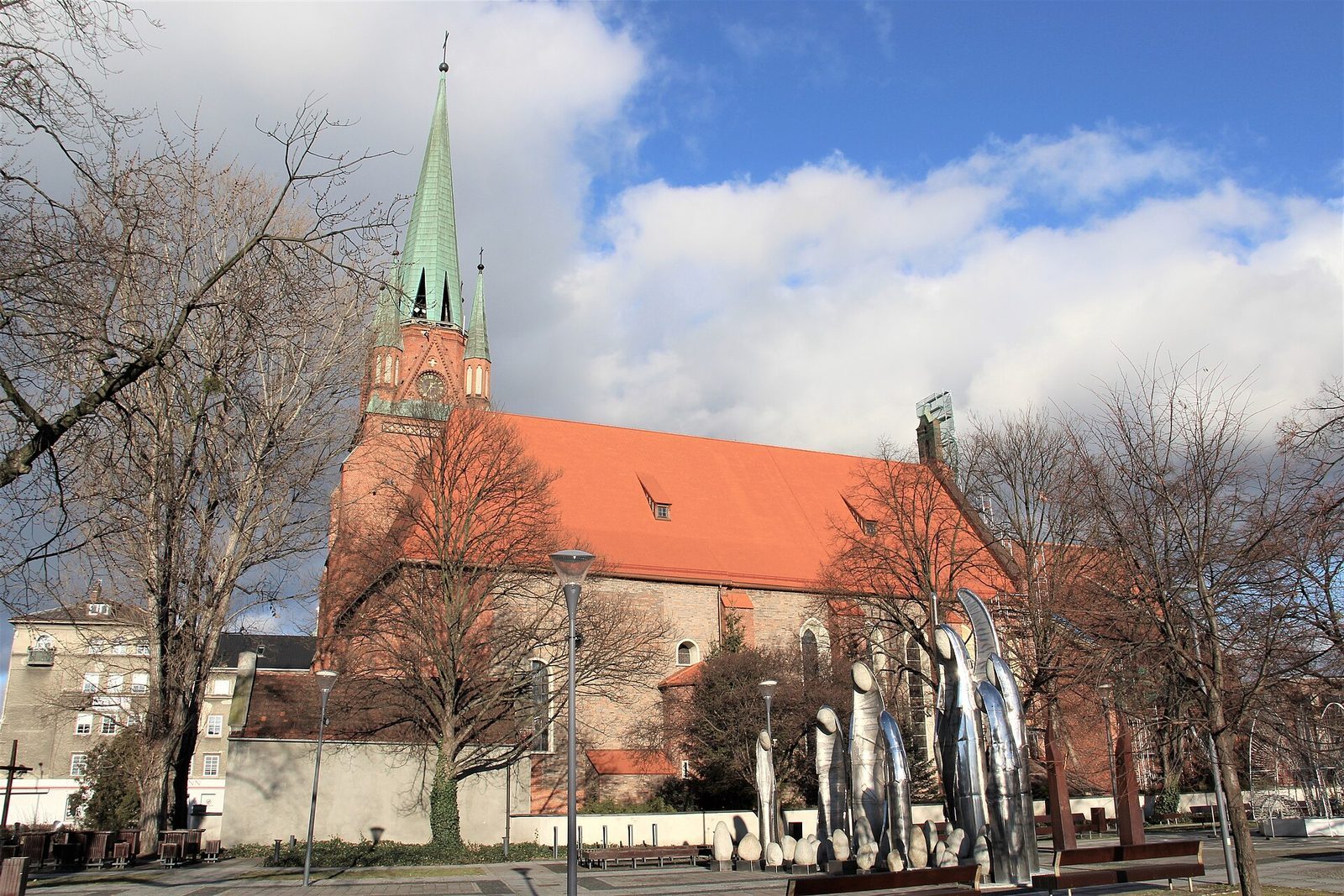
The Church of the Assumption in Racibórz is a Roman Catholic parish church in Poland, traditionally founded in 1205 under Duke Mieszko I Plątonogi. Built by settlers from the Netherlands, including Flemish and Walloon communities, it became the town’s oldest parish church and one of the oldest in Upper Silesia. Its construction continued through the medieval period and was completed during the fifteenth century. The church retains the historical character of early Gothic architecture in Silesia.
Early development and rebuilding
Most of the church was destroyed by fire in 1300 and was quickly rebuilt. The eastern part of the nave and the chancel preserve elements associated with this rebuilding, including early Gothic features. Further damage followed during periods of conflict and through later fires, notably in 1426, 1546, 1643, and 1774. Each event formed part of the building’s long process of alteration and renewal.
The collegiate chapter
In 1416, Duke Jan II Żelazny transferred the collegiate chapter from Racibórz Castle to the church. A collegiate chapter was a body of canons organized for formal worship and church administration. From that time, Racibórz’s canons were permanently associated with the church, and a chapter house for their meetings and a treasury for religious valuables and documents were added along the south side of the chancel.
The chapter’s institutional role ended in 1810, when Prussian authorities dissolved it and took control of its extensive landed properties. The church then became Racibórz’s largest parish church. At the end of the Second World War, in 1945, it was destroyed by the Red Army. The surviving building and its history are protected as a registered historic monument under entries dated 1948, 1997, and 2019.
Remains
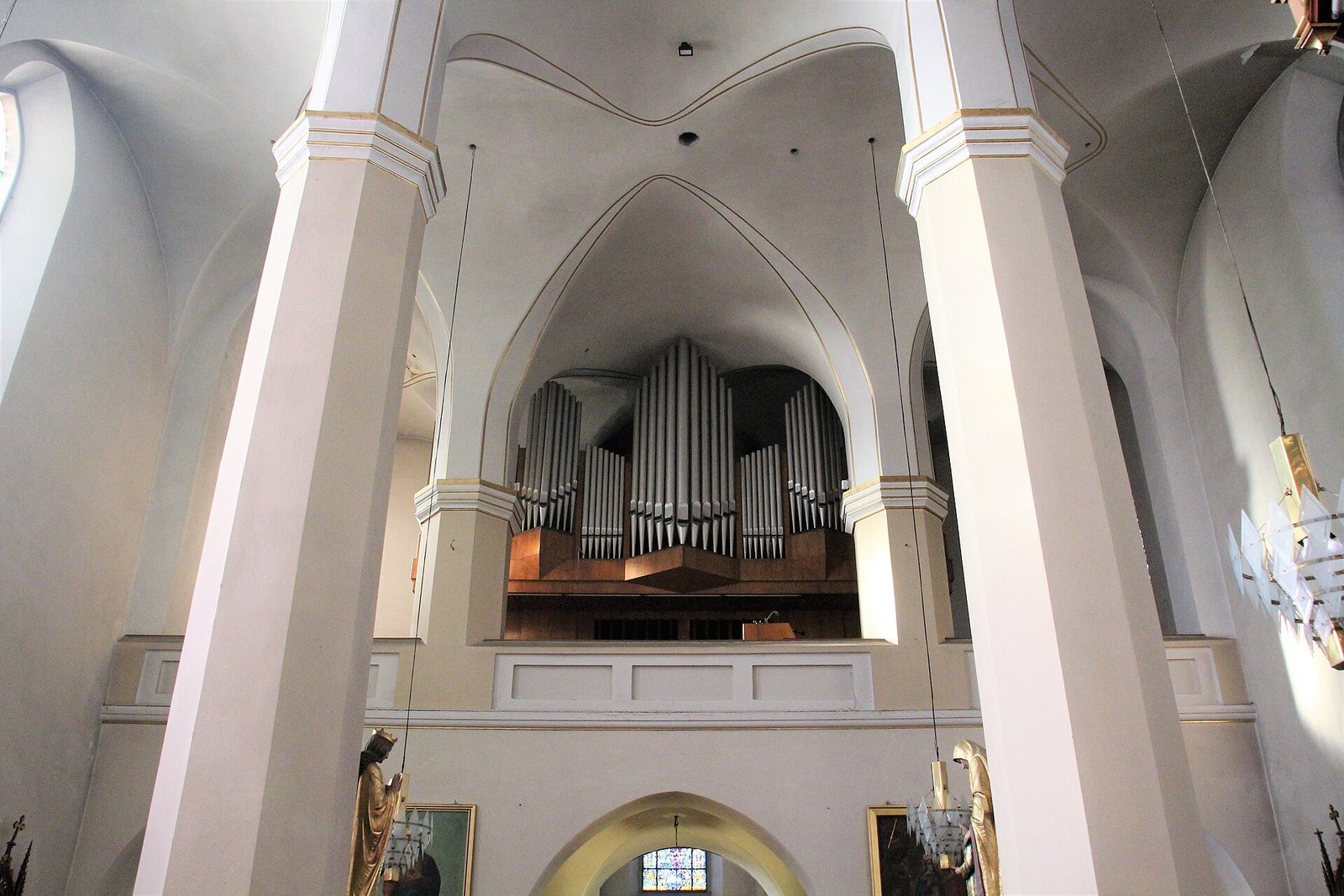
The church retains its original Gothic massing and is built of brick. It has a single nave and one tower, with a vaulted interior that includes star vaults. The eastern nave vaults and the chancel preserve elements from the rebuilding after the 1300 fire, while the chancel displays features characteristic of early Silesian Gothic. A former chapter house and treasury remain attached to the chancel’s south wall.
Chancel and altar
The chancel contains a Baroque high altar made between 1656 and 1660 by Salomon Steinhoff. Prelate Andrzej Scodonius and the Literary Brotherhood funded its construction. The altar includes a mid-seventeenth-century painting of the Coronation of the Virgin Mary and a painting of the Assumption of the Virgin Mary made in 1890 by the Polish painter Jan Bochenek. Niches between the columns hold sculptures of John the Baptist, Hedwig, John the Evangelist, Elizabeth, Wenceslaus, Sebastian, Roch, and Florian. The upper part carries a figure of Saint Marcellus, Racibórz’s patron saint.
The chancel also contains elaborate canonical choir stalls installed in 1654. Their design was modelled on the stalls in Saint Mary’s Church in Krakow.
Chapels and memorials
The fifteenth-century Polish Chapel is attached to the western end of the nave. Its purpose includes commemorating historical conflicts between Racibórz’s Polish- and German-origin inhabitants. A sandstone plaque inside the chapel commemorates the city fire of 1574.
The left side aisle contains a 1715 tomb in the form of a tumba, a raised chest-like monument, for Prelate Marcin Jerzy Korriger. It also holds the epitaph of Andrzej Florian Scodonius, provost of Opole and parish priest of the church, who died in 1660. The epitaph is decorated with a bust and a crucifix.