Palace in Chwalimierz: A Neo-Renaissance Palace in Poland
Site at a Glance
- Popularity
- Medium
- Country
- Poland
- Primary era
- Modern
- Eras represented
- Modern
- Civilizations
- German, Kingdom of Prussia
- Site type
- Domestic
- Remains
- Elite Residence
On this page7 sections
History
Construction and prominence
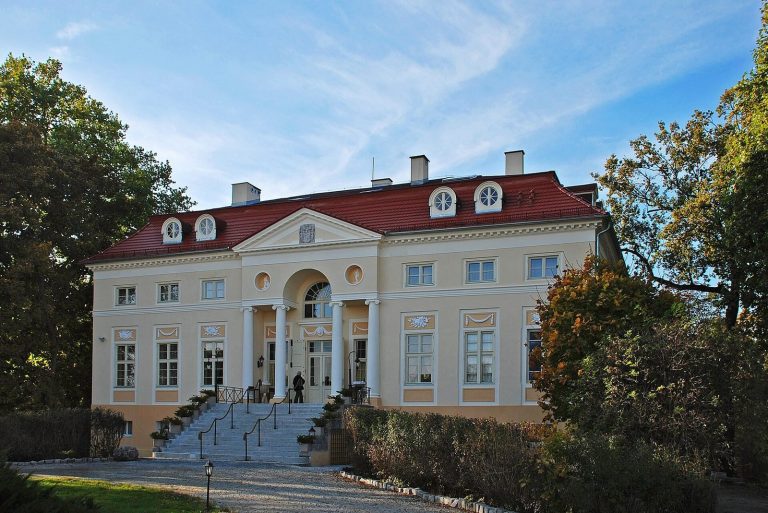
The Palace in Chwalimierz, in Poland, was built between 1884 and 1885 for Georg von Kramsta, a Silesian industrialist and landowner. Designed by Wrocław architect Carl Schmidt, it followed the neo-Renaissance style, which revived forms from the Renaissance. The palace was once renowned for its opulence and wealth.
Devastation and demolition
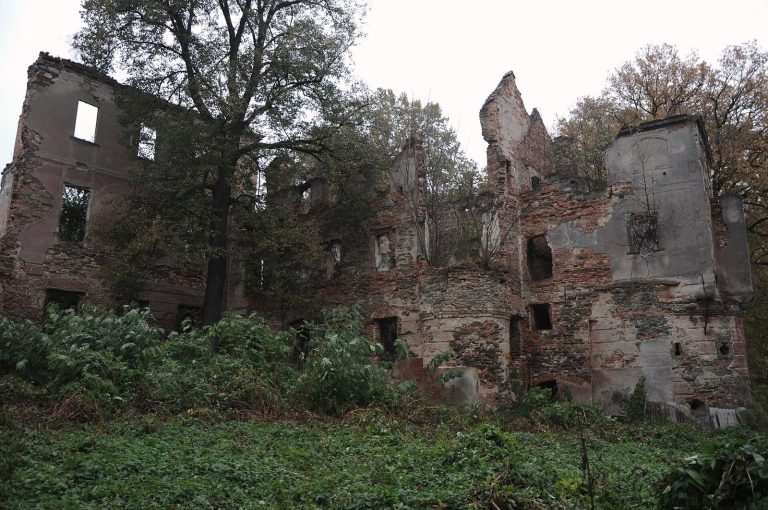
After the Second World War, the palace was devastated. It was still in relatively good technical condition in the early 1960s, but was later demolished.
Remains
Palace remains and park
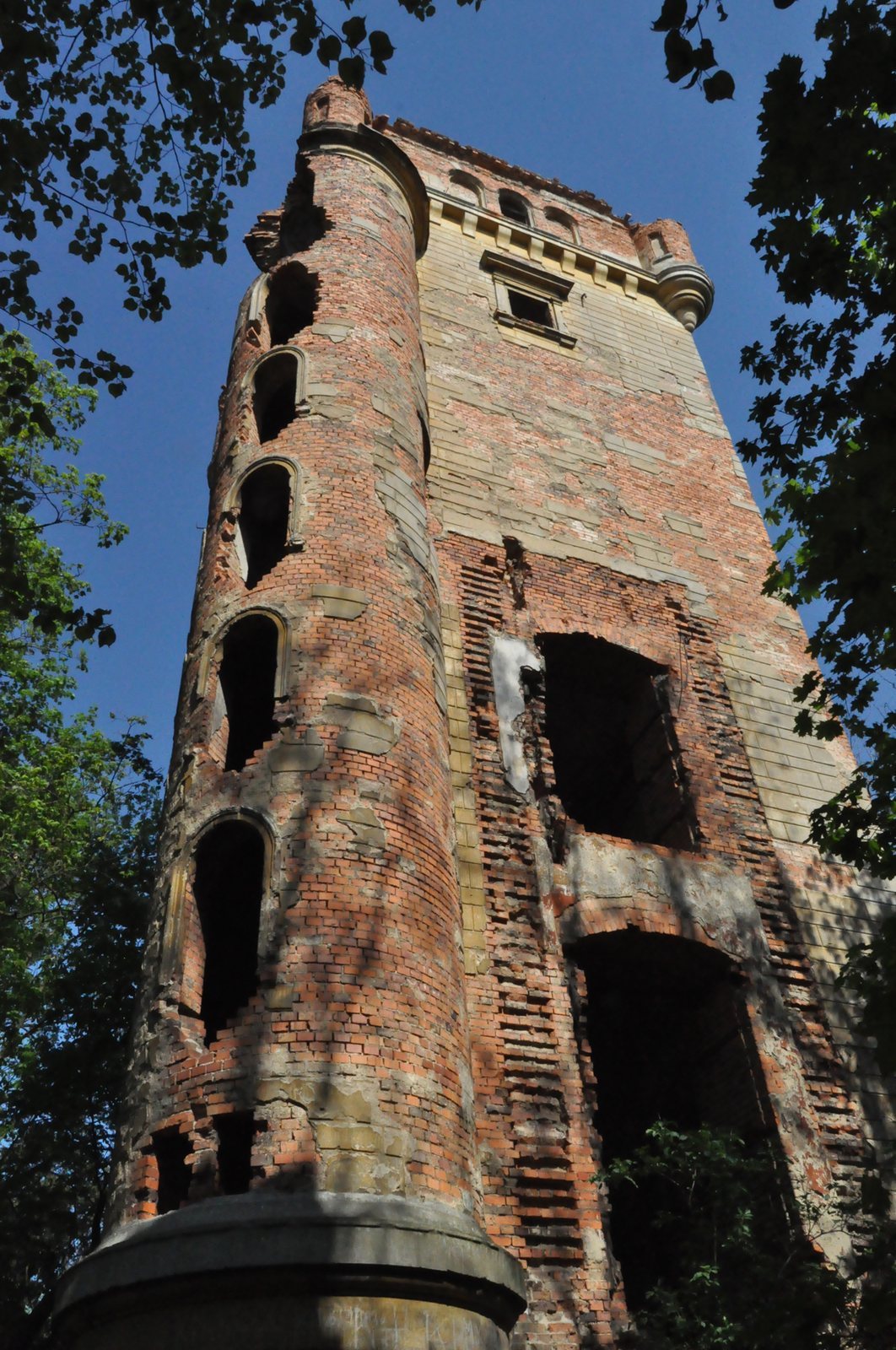
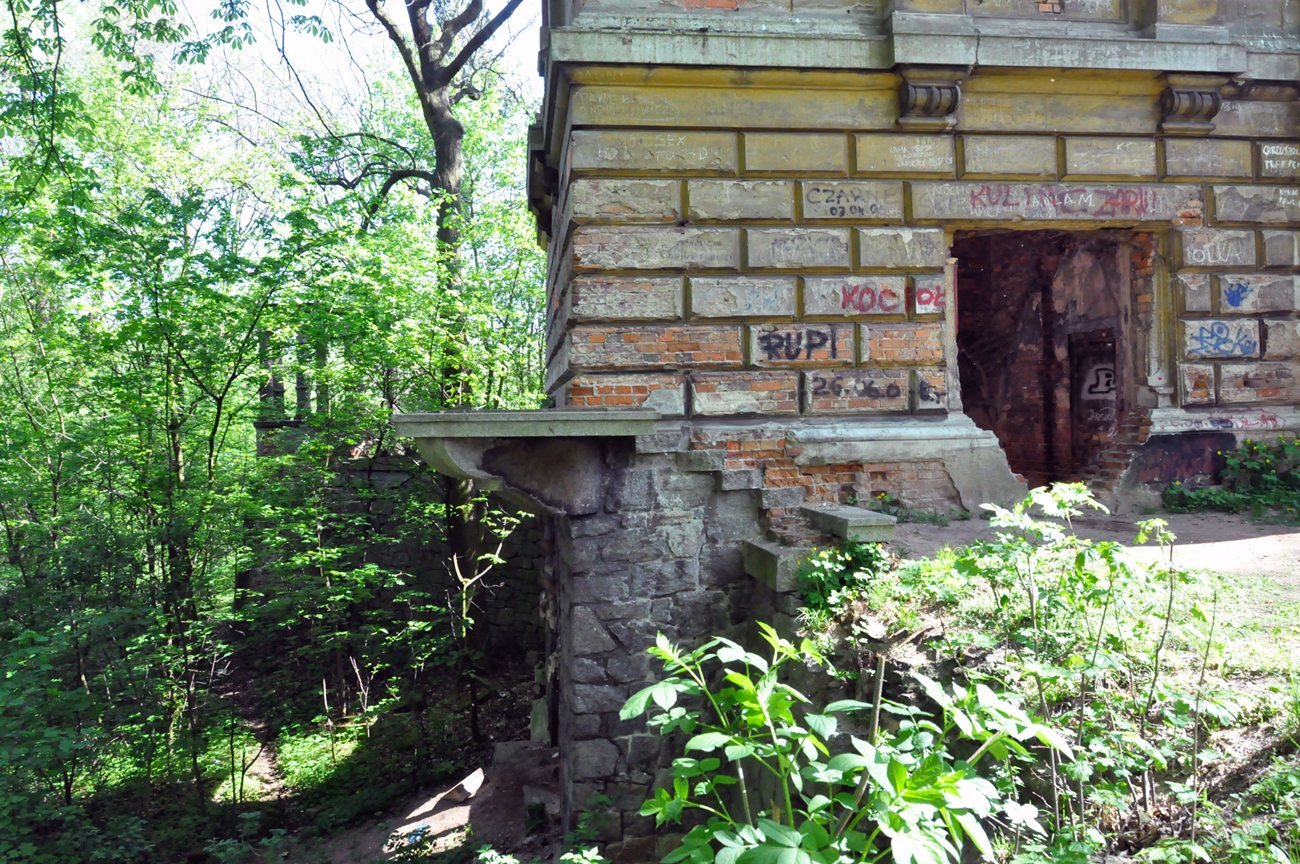
The estate’s surviving features occupy a park alongside an adjoining farm complex. The palace remains lie deeper within the park and include a ruined tower, a terrace, and a gloriette, an ornamental garden pavilion. Georg von Kramsta’s coat of arms appears on the tower. The palace complex also includes a stable dating to the second half of the nineteenth century. The park, from the same period, extends into woodland.
Farm buildings
The farm complex, dating to the turn of the nineteenth and twentieth centuries, contains residential and agricultural buildings. Its manager’s house dates to about 1910. A forge, three cowsheds, two barns, and a stable were built after 1890. The complex also includes a granary from around the turn of the century and a barn dating to the final quarter of the nineteenth century.
Farm grounds and boundaries
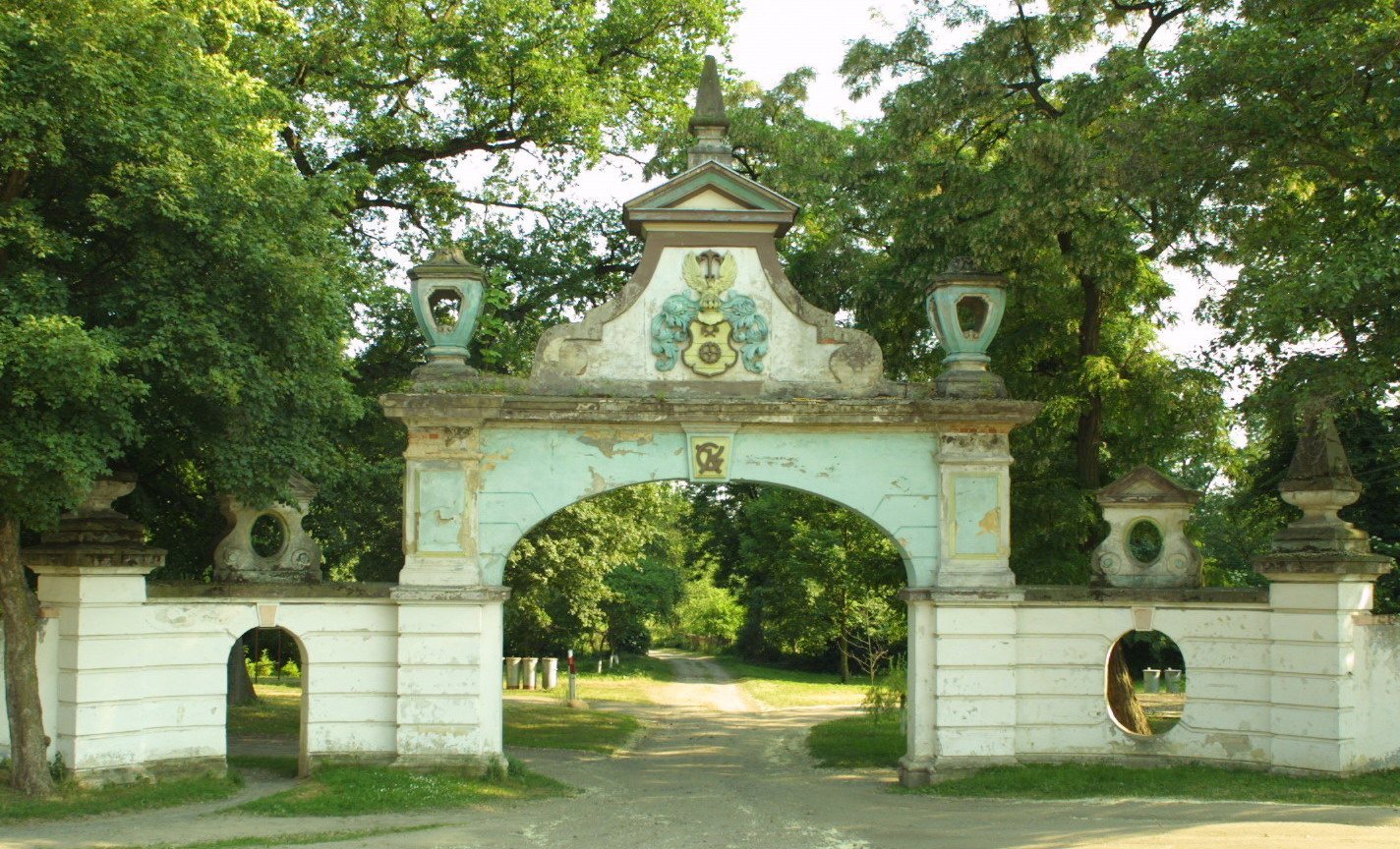
A garden in the farm complex dates to the second half of the nineteenth century. Other surviving features include parts of a boundary wall, paving, and a moat. A gate bears Georg von Kramsta’s coat of arms.