Saint Catherine’s Church in Piotrowice: A Gothic Parish Church in Poland
Site at a Glance
- Rating
- 4.6
- Popularity
- Very Low
- Country
- Poland
- Primary era
- Medieval
- Eras represented
- Medieval, Early Modern
- Civilizations
- Holy Roman Empire
- Site type
- Religious
- Remains
- Church
On this page9 sections
History
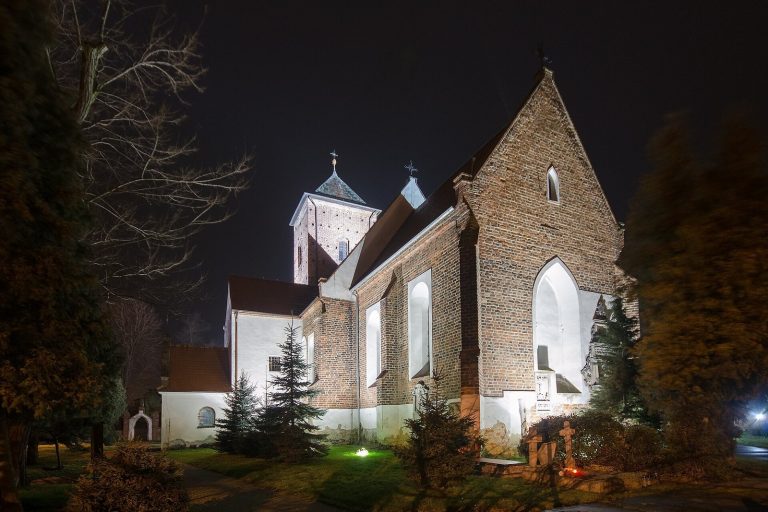
Saint Catherine’s Church in Piotrowice is a Roman Catholic parish church in Poland, built in the Gothic period no earlier than the second half of the fifteenth century. It is dedicated to Saint Catherine of Alexandria, a Christian martyr traditionally associated with Alexandria in Egypt, whose feast is celebrated on 25 November. The church’s founder is identified as Limburg-Stirum zu Groß-Peterwitz.
Medieval origins and later patronage
A church at Piotrowice is indirectly attested in 1298, when its parish priest, Benedict, witnessed a document. The present building belongs to a later phase, dating from no earlier than the second half of the fifteenth century. By the end of the nineteenth century, patronage of the church belonged to the counts of Limburg-Stirum.
Alterations and modern interventions
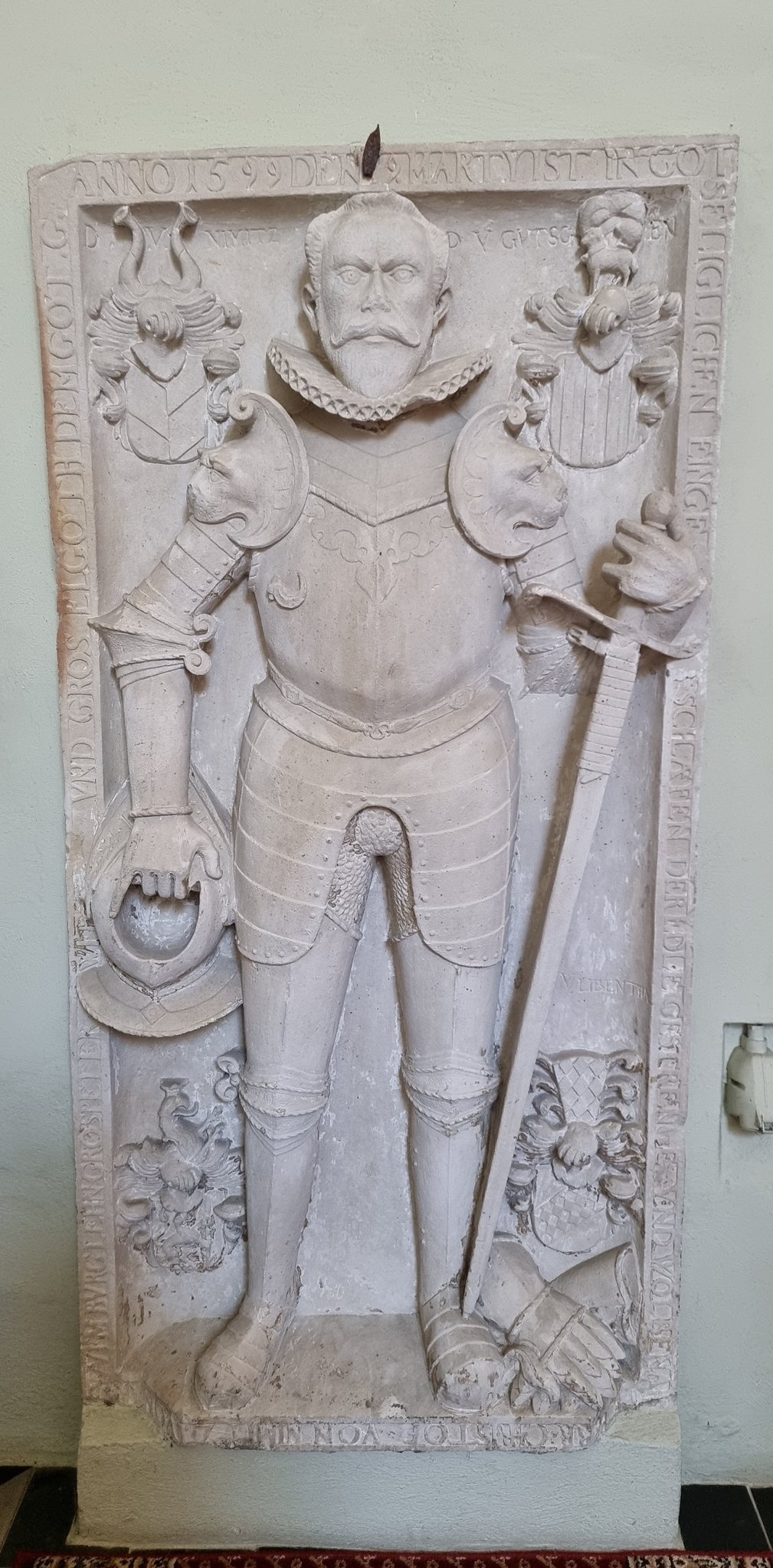
The church was rebuilt or altered in 1753, when its presbytery vault received Baroque polychromy, a multicolored painted decoration applied to architectural surfaces. Further major interventions took place in 1860, 1937, 1969, and 1972. During the thorough renovation of 1937, historic epitaphs were uncovered beneath the plaster on the interior walls.
After 2008, an improperly conducted renovation carried out without the consent of the heritage conservator destroyed the Baroque polychrome decoration on the presbytery vault. The church continues to contain three altars and serves as the parish church of a community dedicated to Saint Catherine of Alexandria. A monument in the western part commemorates victims of a Nazi labor camp who were murdered in Piotrowice in 1945.
Remains
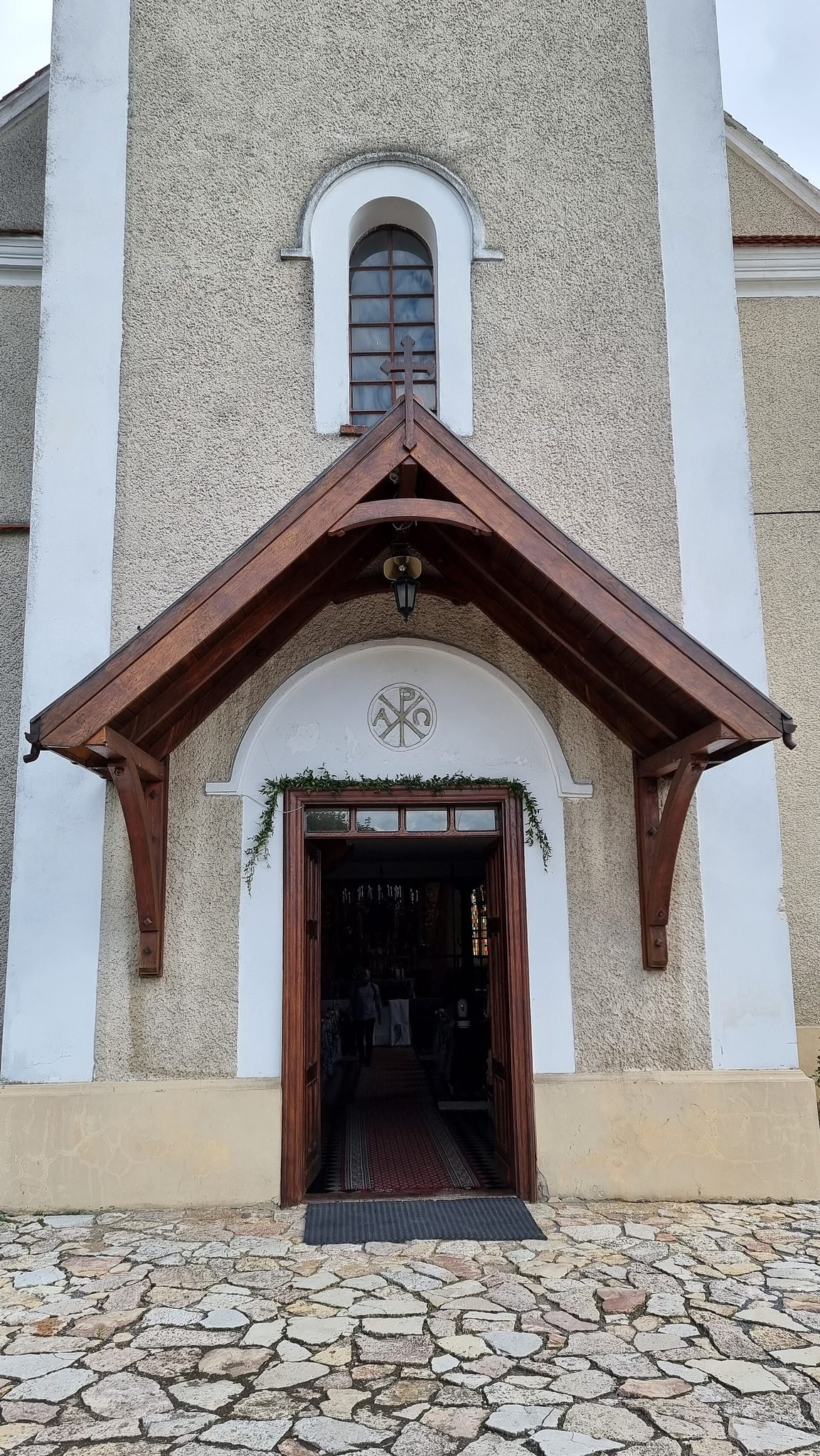
The surviving church is an oriented, single-nave Gothic building with a tower at its western end. Its presbytery has an octagonal plan, closes on three sides, and is strengthened by buttresses. It is covered by a late-medieval ribbed cross-vault, whose masonry is organized around intersecting ribs. The windows are divided into two sections and finished with tracery, the ornamental stone framework within a Gothic window.
Interior architecture and furnishings
Presbytery and sacrament house
The presbytery retains its late-medieval ribbed vault and the wall structure of its three-sided closure. A late-Gothic sacrament house also survives inside the church. This wall-built architectural receptacle was used for reserving the Eucharist. The vault’s Baroque painted decoration, added in 1753, was destroyed after 2008 during the unauthorized renovation.
Baptismal font
A Renaissance baptismal font dated 1616 remains inside the church, adding a later liturgical furnishing to the medieval building.
Funerary monuments
Niemitz and Seidlitz epitaphs
Nine figurative tomb epitaphs associated with the Niemitz and Seidlitz families are preserved inside the church. The oldest, set against the presbytery wall, commemorates Konrad von Nimitz, who died in 1563, and his wife Margareta, née Gotsch von der Schwartzbach, who died in 1567. Other monuments commemorate an infant son of Christoph von Nimitz who died in 1594, Christoph von Nimitz himself, who died on 22 August 1595 at the age of seven years, nineteen weeks, and two days, and another son of Christoph von Nimitz who died in 1595.
The group also includes epitaphs for Anna von Niemitz, née von Seidlitz, who died in 1610; Friedrich von Niemitz, who died on 8 September 1615 at the age of twenty-eight; George von Seidlitz of Szymanowice, who died in May 1607 at the age of thirty-eight; Cunradt von Niemitz, who died in 1656; and David Zuckmantel, dated 1708.
The epitaphs originally had frames formed by pilasters topped with an entablature, a horizontal architectural member above the supports. Their richly decorated heraldic frieze and acroteria, ornamental elements placed at the corners or summit of a classical composition, completed the frames. The pilaster panels contained early Renaissance leaf ornament, described as one of the latest artistic solutions of its period.