Ancient Theater of Calydon: A Greek Performance Venue
Site at a Glance
- Popularity
- Very Low
- Country
- Greece
- Primary era
- Classical
- Eras represented
- Classical
- Civilizations
- Ancient Greek
- Site type
- Entertainment
- Remains
- Theatre
On this page4 sections
History
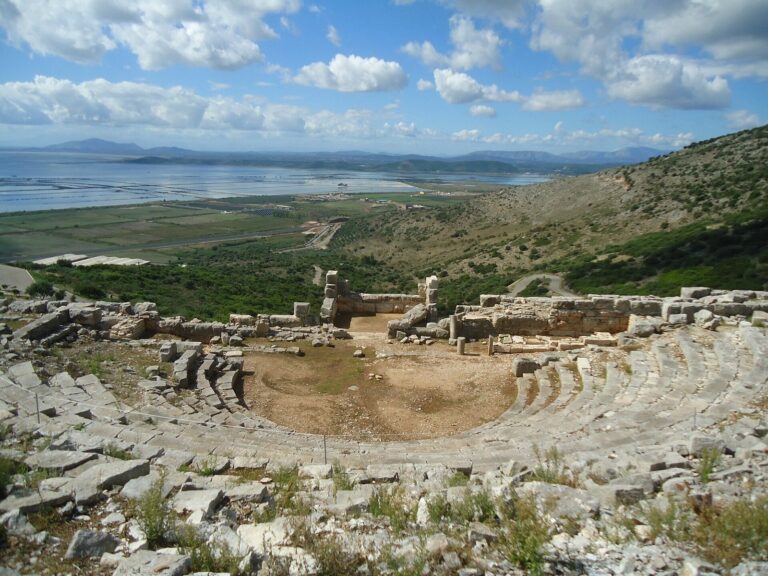
The ancient theater of Calydon is an ancient Greek performance venue near Evinochori in Aetolia-Acarnania, Greece. It belonged to Calydon, one of the most important ancient cities in Aetolia, a region of Greece. The theater was used and rebuilt during the Classical and Hellenistic periods, successive eras of ancient Greek history.
It underwent two or possibly three construction phases during its period of use. The orchestra’s nearly square plan has prompted the suggestion that the space may initially have served a mystery cult, a religious tradition whose rites or teachings were reserved for initiates.
The theater came to light in the 1960s during construction of the Antirrio–Ioannina National Road. Excavations began in 2001 and continued in 2002–03. Further work in 2011–13 established the orchestra’s dimensions.
Remains
Setting and layout
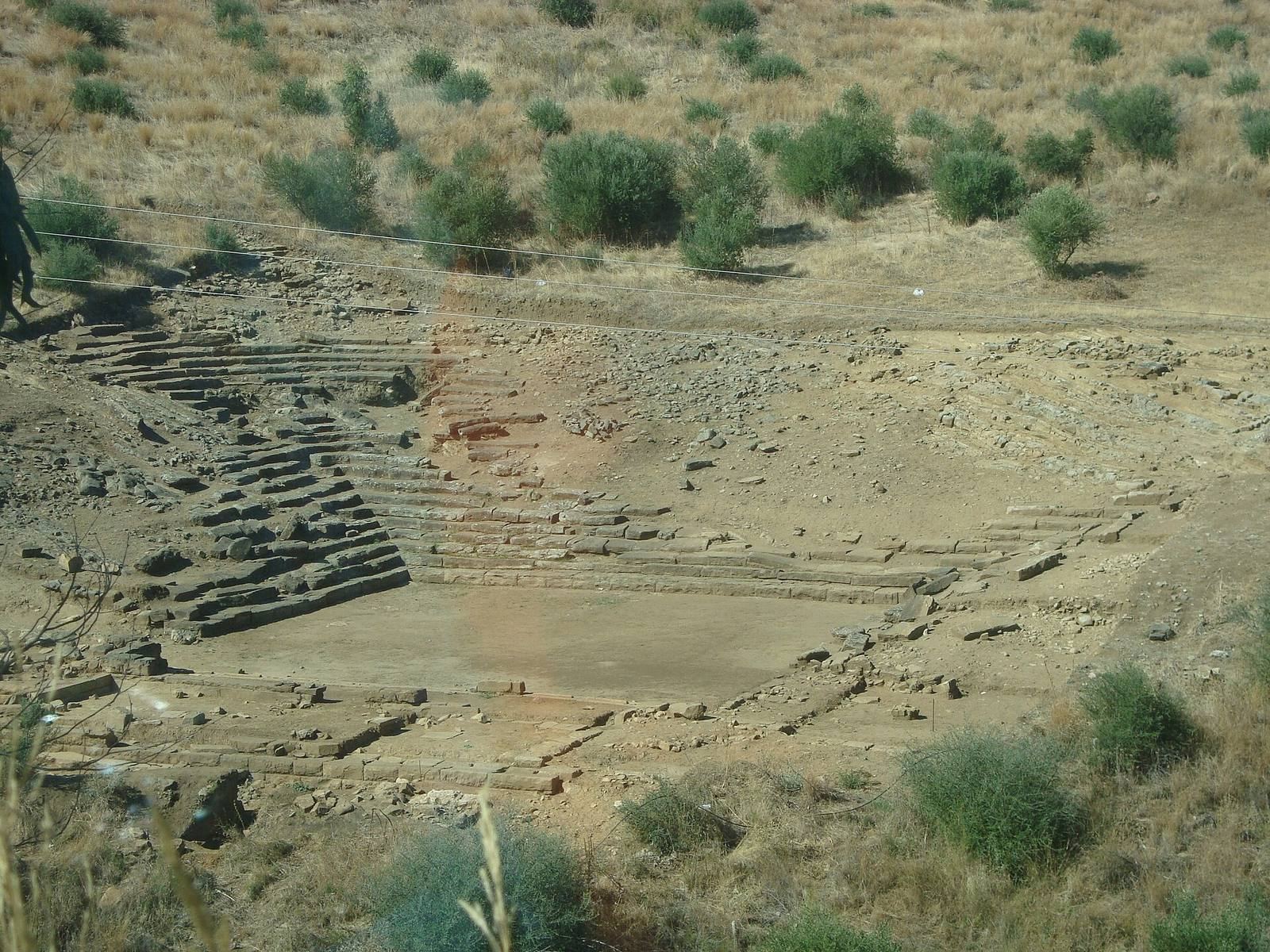
The theater occupies the eastern slope of a hill with a view toward the Gulf of Corinth. The hill also contains a sanctuary dedicated to Artemis and Apollo. Artemis was associated with hunting and wilderness, while Apollo was linked with prophecy, music, and healing; Laphria and Laphrios were the cult names for forms under which the deities were worshipped. The theater’s 26 rows of seating follow the rectangular outline of the central performance space, or orchestra, which is nearly square and measures about 16 by 14 metres. The lower nine rows belong to the earlier Classical phase, while the upper seating was added in the Hellenistic period. Capacity is estimated at well over 4,000 spectators, making the theater considerably larger than those at nearby Makynia and Pleuron.
Stage and water system
In front of the stage area stood a proscenium, the architectural front of the stage building, formed as a colonnade. Six Ionic columns, in a Greek style distinguished by scroll-shaped column tops, and fragments of capitals were found there. A drainage channel in front of the colonnade led to a square cistern for storing water. Roof tiles found around the stage building and proscenium indicate that the building had a roof. The stage building dates to the Hellenistic period and appears to have been built alongside the second phase of the seating.