Otagi Nenbutsu-ji Temple: A Tendai Buddhist Temple in Kyoto


Site at a Glance
- Rating
- 4.7
- Popularity
- Medium
- Country
- Japan
- Primary era
- Modern
- External website
- Open
- Eras represented
- Modern
- Civilizations
- Japanese
- Site type
- Religious
- Remains
- Temple
On this page10 sections
History
Otagi Nenbutsu-ji Temple is a Tendai Buddhist temple in Kyoto, Japan, traditionally founded in 766 by Empress Shōtoku as Otagi-dera near present-day Matsubara Street in the Higashiyama district. Tendai is a major Japanese Buddhist school historically centered on Enryaku-ji on Mount Hiei. The temple’s name is traditionally linked to its foundation as the first temple established in the Otagi District of Yamashiro, the historical province around present-day Kyoto.
Early History and Restoration
By the beginning of the Heian period, Otagi-dera appears to have become subordinate to the Tōji branch of Shingon Buddhism. During the reign of Emperor Daigo in the early tenth century, the temple was already declining when flooding from the nearby Kamo River destroyed its buildings. The institution was then abandoned.
Emperor Daigo ordered its restoration by the Tendai monk Senkan Naigu, known as the “Nembutsu Master.” Nembutsu is a devotional practice involving the recitation of the Buddha’s name. Because Senkan practiced it at the temple, the restored institution was renamed Otagi Nenbutsu-ji and became affiliated with Tendai Buddhism. It was temporarily provided with a complete compound of seven halls and received the status of an imperial-prayer temple, a temple established or supported for prayers on behalf of the imperial court.
Decline, Relocation, and Revival
After periods of prosperity and decline, only the main hall, Jizō hall, and Niō gate remained, while the original principal image was lost. The temple was destroyed again during a civil war in the thirteenth century and later deteriorated further. In 1922, it was moved and reconstructed at its present location in Arashiyama to preserve the main hall.
During the Pacific War, the temple became unstaffed. Severe damage from the 1950 Jane typhoon was followed by neglect and abandonment. In 1955, the Tendai headquarters at Enryaku-ji appointed the Buddhist sculptor and monk Kōchō Nishimura as abbot and entrusted him with reviving the institution. Encouraged by Ryōkei Ōnishi, the abbot of Kiyomizu-dera, Nishimura began the restoration while continuing to travel throughout Japan as a Buddhist sculptor.
A ten-year dismantling and repair of the Niō gate began in 1980, together with a full-scale revival of the grounds. From 1981, worshippers and amateur visitors began carving and dedicating arhat statues in the project known as the “Shōwa arhat carving.” An arhat is a Buddhist disciple who has attained spiritual liberation. The original aim was 500 statues, but the project produced 1,200 over ten years. Formally called Tōkakuzan Otagi Nenbutsu-ji, the temple venerates an image of the Thousand-Armed Kannon as its principal image and is also known as the “Temple of the 1,200 Arhats.” Kannon is a bodhisattva associated with compassion, while the Thousand-Armed Kannon represents the ability to respond to suffering in many ways.
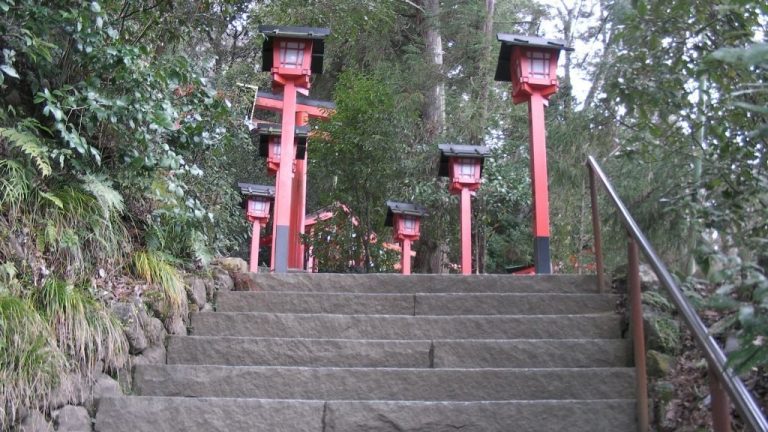
The temple stands at the entrance to the approach to Atago Shrine at the foot of Mount Atago and is recognized as a starting point for exploring Saga’s historic sites. Its main hall is an Important Cultural Property. The wooden seated image of Senkan Naigu also has that status, while the two wooden Niō statues are designated Kyoto municipal tangible cultural properties.
Remains
Hillside Grounds
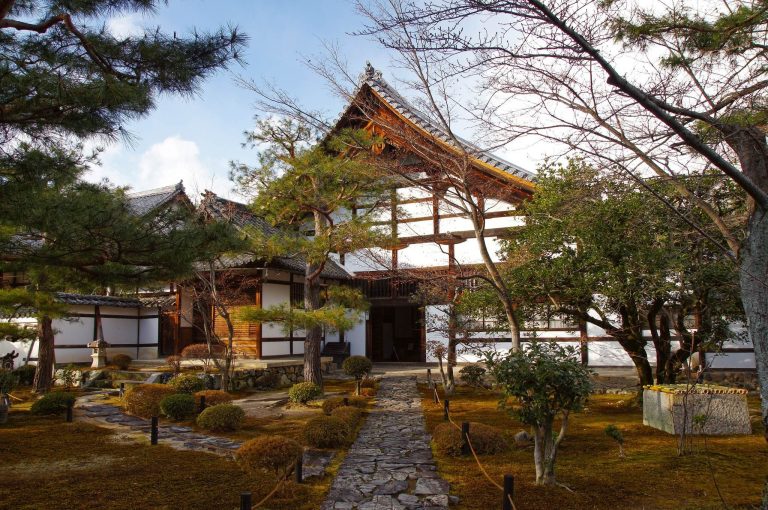
Otagi Nenbutsu-ji occupies a hillside in the western part of Kyoto’s Arashiyama area. Approximately 1,200 stone arhat statues surround the temple buildings and extend across the slope. Many are covered with moss, giving the present grounds their distinctive physical character.
Temple Buildings and Images
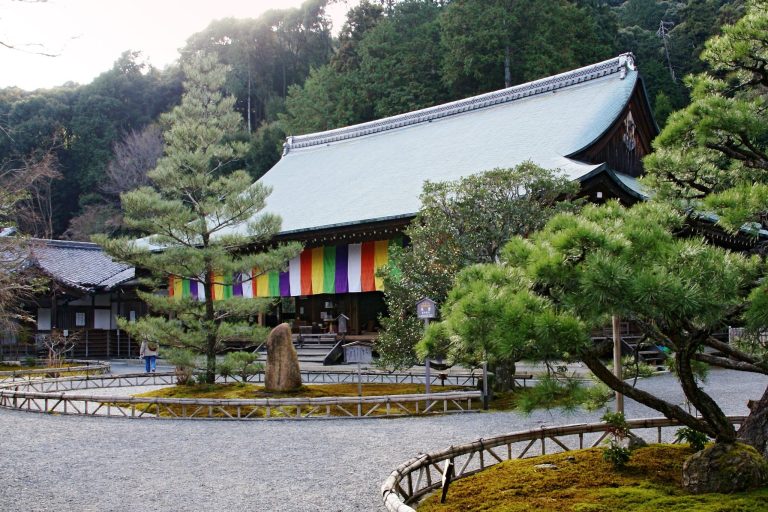
Main Hall
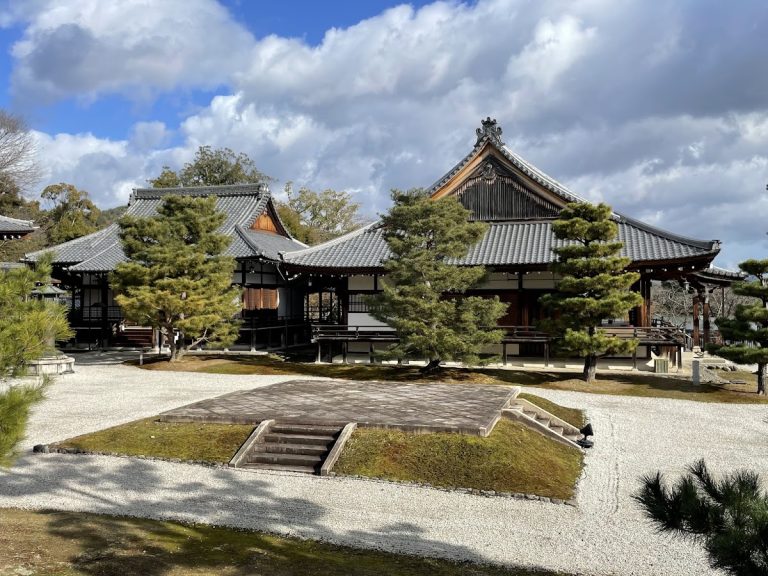
The main hall was relocated and reconstructed at the current site in 1922 to preserve the historic building. It forms part of the surviving temple grounds and is recognized as an Important Cultural Property. The earlier surviving complex had also included a Jizō hall, a hall associated with Jizō, the Buddhist bodhisattva traditionally linked with the protection of beings, especially travelers and the vulnerable.
Niō Gate
The entrance gate contains two fierce-looking wooden Niō guardian figures facing those who enter the grounds. Niō are paired guardians traditionally placed at the entrances of Buddhist temples. The gate underwent a ten-year dismantling and repair beginning in 1980.
Stone Arhat Statues
The stone figures represent disciples of the Buddha and were carved from individual stones under Nishimura’s direction. The carvers were encouraged to respond to the distinctive character of each stone, producing considerable variation in form and expression. Some figures appear in solemn prayer, while others show joy, laughter, or features connected with the personal interests of their makers.
Senkan’s Image and the Former Principal Image
The temple’s wooden seated image of Senkan Naigu is an Important Cultural Property. Senkan is traditionally said to have carved the former principal image himself, making one cut for every thirty-three prostrations. That image was revered as a Thousand-Armed Kannon believed to ward off calamity, but it was later lost.