Oratory of San Giacomo della Marina: A Baroque Confraternity Oratory in Genoa
Site at a Glance
- Rating
- 4.6
- Popularity
- Very Low
- Country
- Italy
- Primary era
- Early Modern
- External website
- Open
- Eras represented
- Early Modern
- Civilizations
- Genoese
- Site type
- Religious
- Remains
- Chapel
On this page14 sections
History
The Oratory of San Giacomo della Marina is a Roman Catholic religious building in Genoa, Italy, dedicated to Saint James the Greater and located on the Grazie walls in the historic Molo district. Built for the worship of one of the Twelve Apostles of Jesus, it became a stopping place for pilgrims travelling toward Santiago de Compostela and remains the historic seat of the Confraternity of San Giacomo della Marina.
Medieval origins and pilgrimage
An early oratory stood here by 1403, according to a marble inscription once placed near the entrance. Another inscription records the construction of a wall at the expense of the confraternity in 1450. Until the end of the nineteenth century, the section of Genoa’s walls beside the building was washed by the sea, giving the oratory a position beside both the city fortifications and the route followed by pilgrims.
During the Middle Ages, the oratory served as an important stopping place for pilgrims bound for Santiago de Compostela, the destination traditionally associated with Saint James. The building was also connected with a casaccia, a Ligurian oratory association in which several confraternities or companies shared a religious building and followed common organizational rules.
Baroque rebuilding and confraternal life
The original Romanesque building was completely rebuilt in the Baroque style during the first half of the seventeenth century. This transformation took place when the casaccia, and especially the Confraternity of San Giacomo della Marina, reached the height of its prestige. Twelve large paintings by leading Genoese artists were installed during the seventeenth century, creating an interior focused on the life, devotion, and iconography of Saint James.
Other confraternities were based in the oratory alongside the principal brotherhood. They shared its spaces and administration and joined religious processions according to defined rules. Differences between the groups nevertheless produced conflicts over the centuries. Members of the Confraternity of San Giacomo della Marina were active in the processions that formed an important part of the oratory’s earlier religious life.
The building acquired its present appearance toward the end of the eighteenth century, when decoration of the vault and walls was completed. Its organ case was made in 1792, while the walnut choir stalls installed near the end of the century represented congregations and companies that had joined the confraternity while retaining their autonomy.
Suppression, decline, and restoration
At the beginning of the nineteenth century, Napoleonic suppression laws affecting convents and oratories closed the building and dissolved the confraternity. The brotherhood was reconstituted after the Napoleonic period ended in 1814, but it did not regain its former prestige and entered a decline that continued through the nineteenth century and afterward.
Financial difficulties led to the sale of part of the furnishings and artworks. In 1905, however, the confraternity’s determined opposition prevented the sale of the building itself. The oratory was severely damaged during the Second World War. Extensive restoration began in 1987, with major work carried out from 1990 to 1992. The campaign addressed all parts of the building and conserved paintings that had survived the bombing but required treatment. Several paintings were rediscovered during the 1991 restoration.
Remains
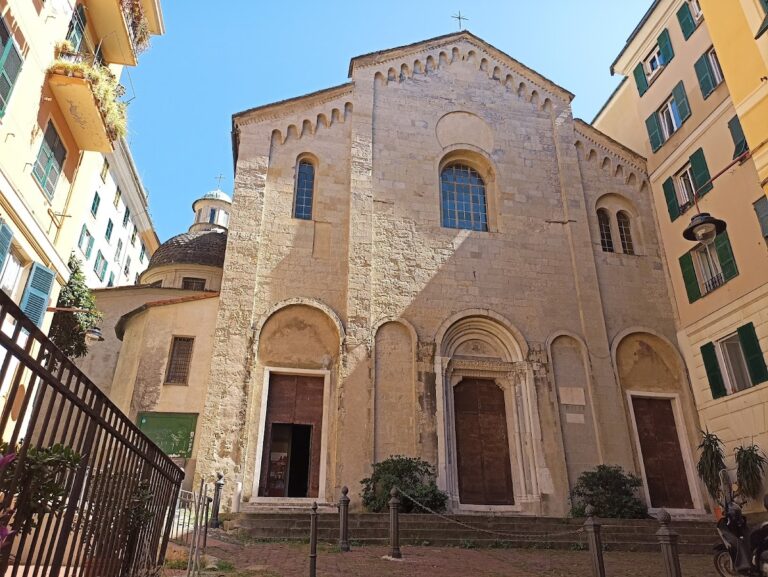
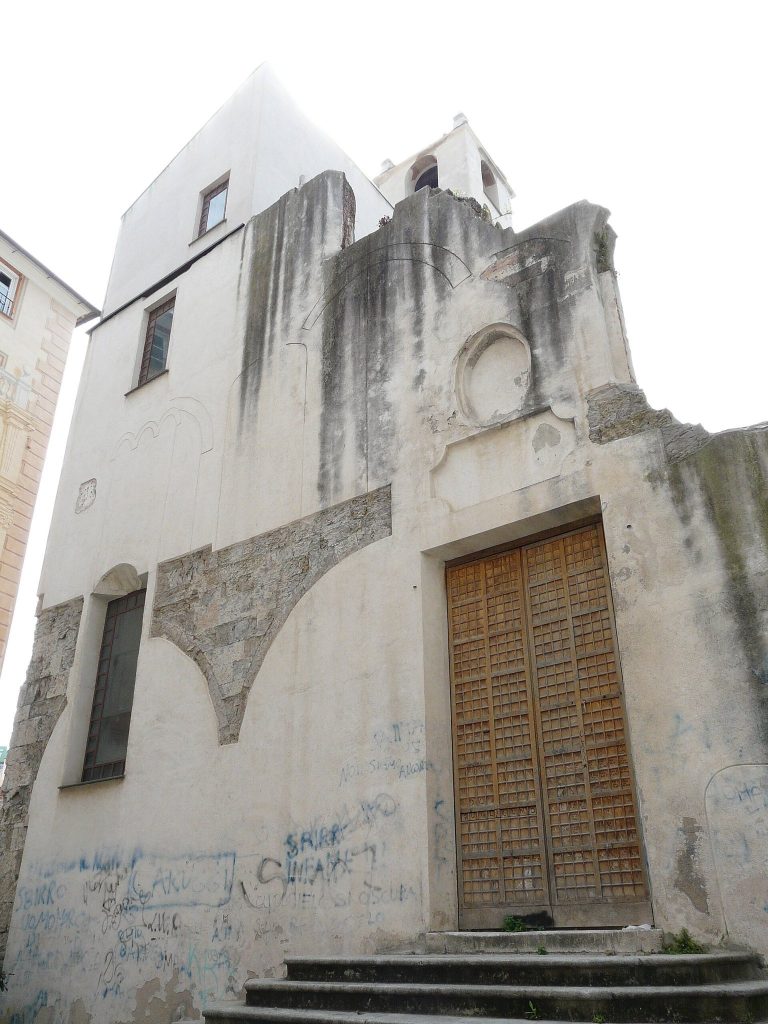
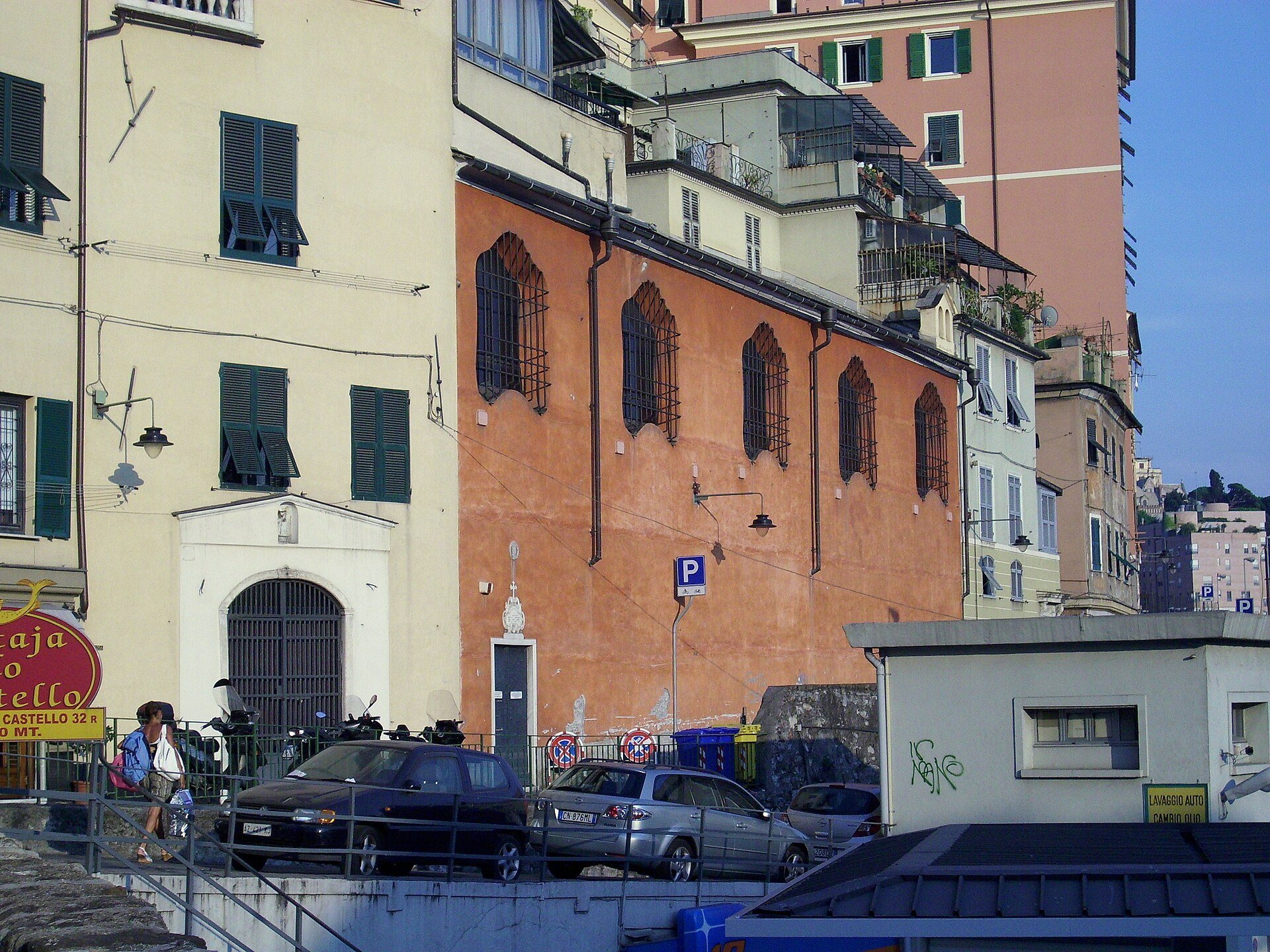
The oratory stands on the Grazie walls overlooking Corso Maurizio Quadrio and the elevated road. Its lateral facade is the only visible elevation and contains the entrance together with five eighteenth-century Baroque windows. These openings illuminate a simple exterior, while the interior follows the single-nave plan characteristic of oratories.
Nave and Baroque picture cycle
Paintings of Saint James
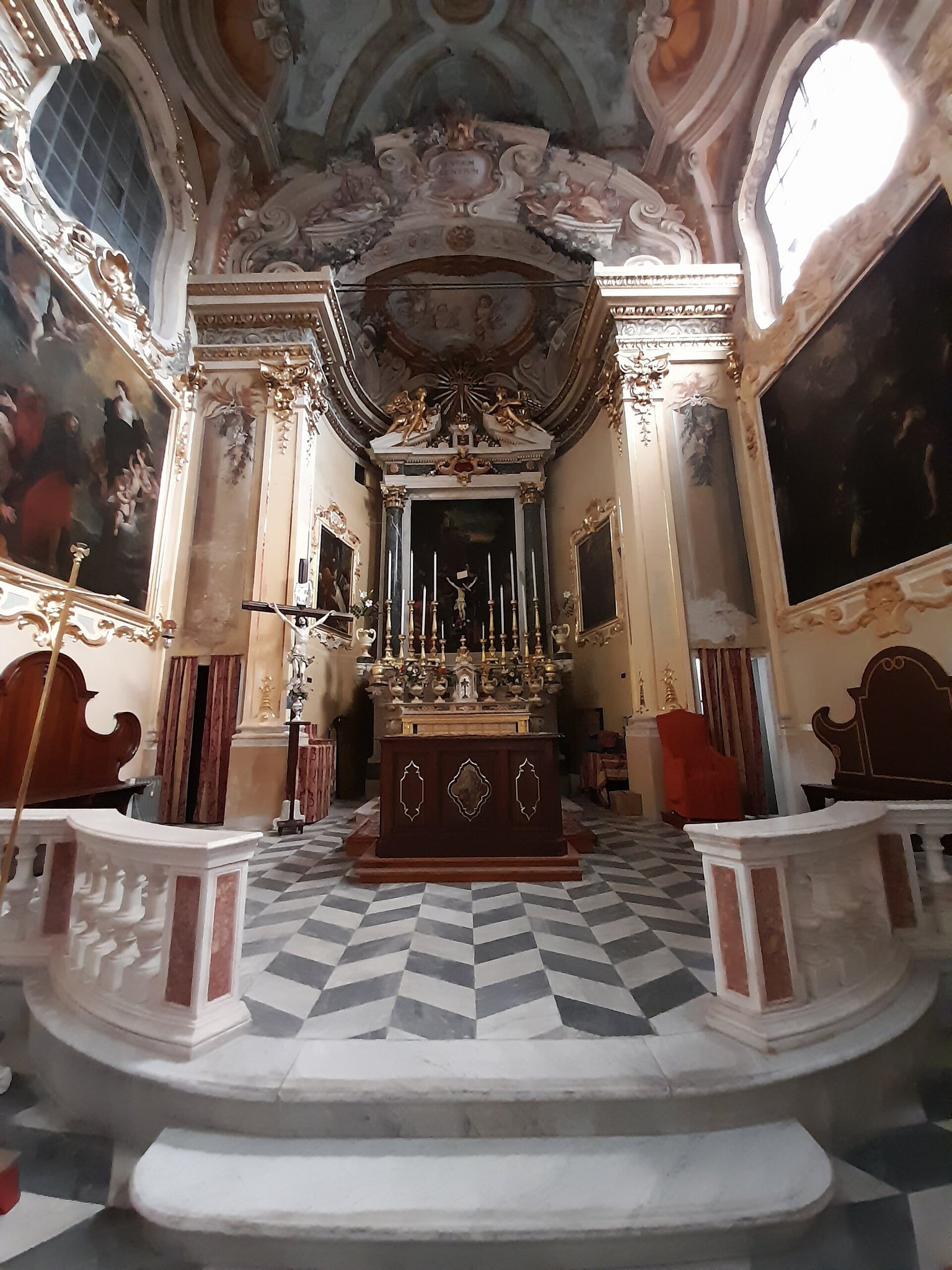
Paired pilasters alternate with stucco-decorated panels inside the nave, framing the paintings installed during the seventeenth century. Eleven large canvases depict episodes from the life of Saint James or legends connected with his iconography. Giovanni Domenico Cappellino’s Preaching of Saint James dates to 1647, while Giovanni Battista Carlone’s Saint James Opens the Gates of Coimbra to King Ferdinand dates to 1632 and his Saint James, on the Way to Martyrdom, Heals a Paralytic to 1646.
Other works include Valerio Castello’s Saint James and Saint John Baptized by Saint Peter and The Calling of Saint James, both from 1646 and 1647 respectively, and Giovanni Benedetto Castiglione’s, known as Il Grechetto, Saint James Defeats the Moors from 1646. Orazio De Ferrari painted The Virgin of the Pillar Appears to Saint James and Saint James Consecrates Saint Peter Martyr, Bishop of Braga, both dated 1647. Domenico Piola’s Martyrdom and Glory of Saint James also dates to 1647, while Aurelio Lomi’s The Sons of Zebedee Presented to Jesus was painted in 1595. Giovanni Lorenzo Bertolotto’s Finding the Remains of Saint James by Bishop Theodemir dates to 1720.
Presbytery decoration
The arch above the presbytery, the part of the church surrounding the main altar, contains Paolo Gerolamo Piola’s fresco of Faith and Hope. Three dancing putti by Nicolò Malatto decorate the apsidal semidome, and Carlo Baratta painted a perspectival fresco on the rear wall.
Side altars and organ case
The left side altar holds Cappellino’s Immaculate Conception between Saints James and Francis. The right side altar contains a nineteenth-century reproduction of an eighteenth-century panel by an unknown artist. Above the interior decoration is the organ case made by Antonio Corsi in 1792. Its richly gilded crest carries garland motifs, and its doors use trompe-l’oeil, an illusionistic painting technique that imitates three-dimensional decoration. The case is empty because the organ’s sound-producing mechanism was looted during the war.
Narthex and transferred paintings
The narthex, an entrance vestibule before the main worship space, contains paintings transferred from the destroyed Oratory of Our Lady of Suffrage in Salita del Prione. Francesco Sasso’s Holy Trinity among the Saints dates from around 1750, and Giuseppe Palmieri’s Christ Agonizing on the Cross from around 1700. The space also holds Giovanni Isola’s Martyrdom of Saint Thecla from 1840, Giulio Queirolo’s Education of the Virgin from around 1890, another seventeenth-century painting of the same subject by an unknown artist, and Gigi degli Abbati’s symbolic representation of the Crucifixion from 1992.
Sculpture and confraternity furnishings
Processional group and statue
Much of the original sculptural furnishing was sold during the confraternity’s nineteenth-century financial difficulties. A large processional group from the suppressed Oratory of Saints James and Leonard of Pré was acquired in 1925. Made in 1677 by the Marseille sculptor Honoré Pellé, it represents the risen Christ appearing to Saint James and Saint Leonard, who is identified as his disciple. The group is enclosed by a richly carved and gilded balustrade. A seventeenth-century statue from the Spanish school shows Saint James dressed as a pilgrim on an octagonal wooden pedestal.
Historic crucifixes
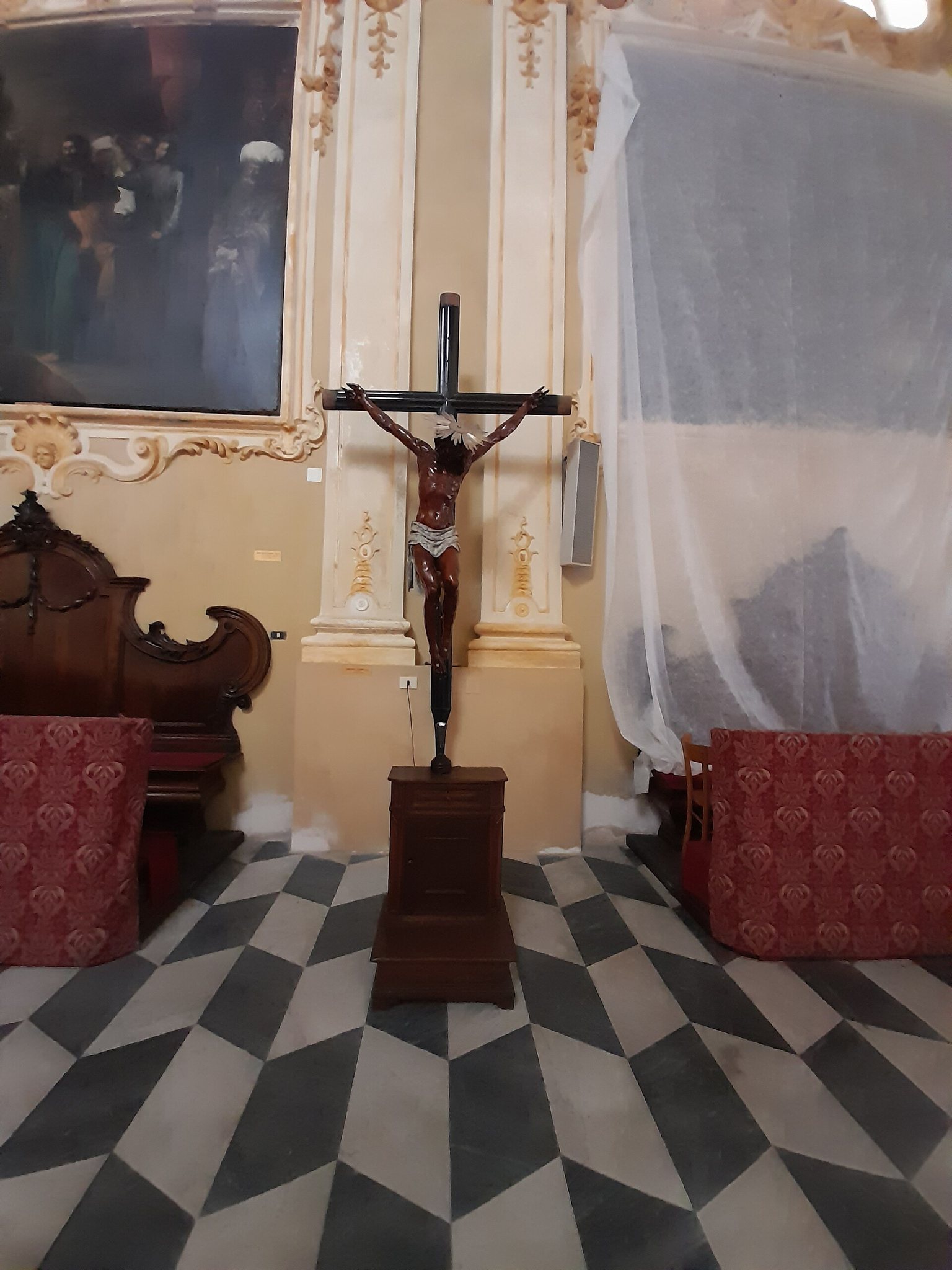
Three historic confraternity crucifixes remain associated with the oratory. The white crucifix on the left wall is attributed to the workshop of Maragliano and dates from around 1730. Opposite it is the dark crucifix made of natural jujube wood by Domenico Bissone around 1650, while a smaller crucifix by Bissone stands near the altar.
The confraternity’s original processional group, carved by Domenico Parodi near the end of the seventeenth century, is now kept in the Church of Saint James in Cornigliano. That church also houses a dark seventeenth-century processional crucifix that may have come from the oratory. A fourth processional crucifix by Maragliano, nicknamed the Thorned One because a thorn pierces Christ’s eyebrow, is kept in the Oratory of Saint Joseph in Albissola Marina.
Prior’s Bench and choir stalls
The Prior’s Bench is an eighteenth-century walnut structure worked on all four sides. It was originally used as a writing desk, chair, and repository for documents and registers, but now serves as an altar in the center of the presbytery. The walnut choir stalls stand against the walls. Their arrangement symbolically represented the congregations and companies that joined the Confraternity of San Giacomo while preserving their separate identities.