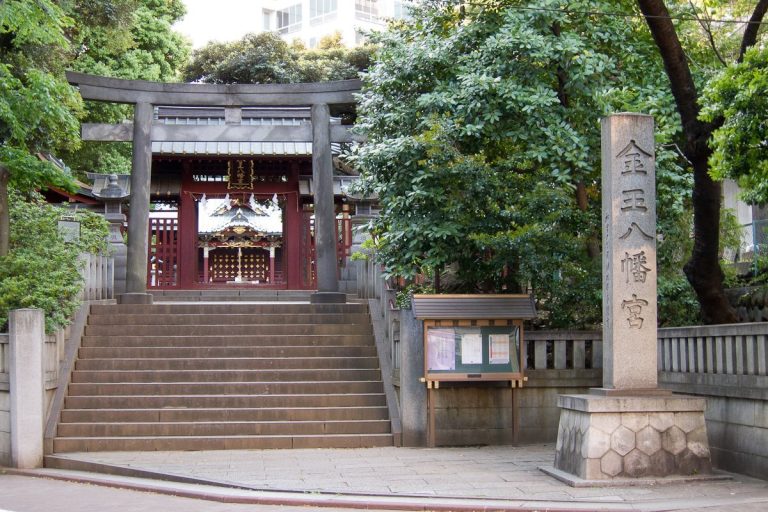
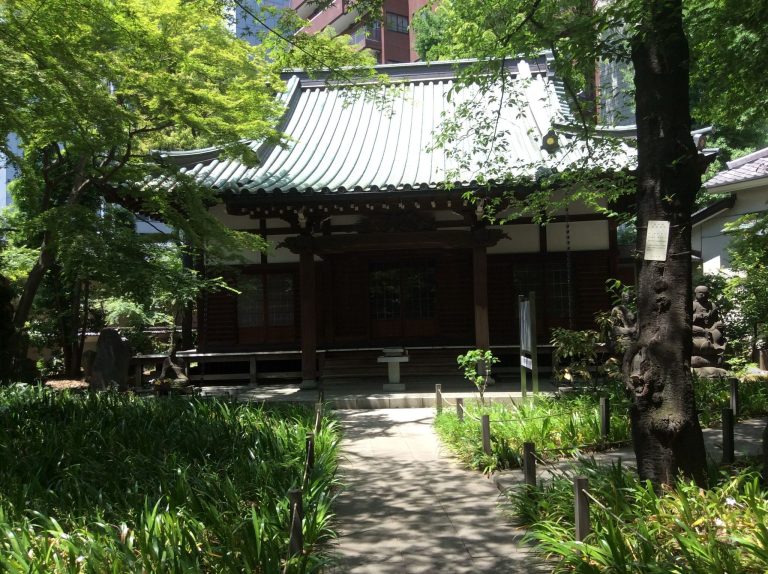
Ōmiya Hachiman Shrine: A Historic Shinto Shrine in Tokyo


Site at a Glance
- Rating
- 4.4
- Popularity
- Medium
- Country
- Japan
- Primary era
- Modern
- External website
- Open
- Eras represented
- Early Modern, Modern
- Civilizations
- Japanese, Tokugawa
- Site type
- Religious
- Remains
- Sanctuary
On this page13 sections
History
Ōmiya Hachiman Shrine is a Shinto shrine in Tokyo, Japan, established in 1063 after the Earlier Nine Years’ War in northeastern Japan. It is dedicated to Hachiman, a protective deity associated with warfare, the imperial lineage, and warrior houses, and identified here with Emperor Ōjin, Emperor Chūai, and Empress Jingū.
Foundation and Medieval History
The shrine’s foundation is traditionally attributed to Minamoto no Yoriyoshi, an eleventh-century military commander who led forces during the Earlier Nine Years’ War. While traveling toward the conflict in Ōshū, he is said to have seen eight bands of white cloud resembling the white banners of the Minamoto clan. He interpreted the sight as a sign of Hachiman’s protection and vowed to establish a shrine if he returned victorious. After the campaign, tradition holds that he transferred a divided spirit, a sacred presence ritually established at another shrine, from Iwashimizu Hachimangu near Kyoto.
The surrounding area is known as the Ōmiya archaeological site. The discovery there of Tokyo’s first excavated square-moated tomb indicates that the locality was regarded as sacred before the shrine was founded. A record dated January 10, 1363, links the local Asagaya family with Kumano Gongen, while monks living at Ōmiya Hachiman served as religious guides and ritual leaders.
Tokugawa Patronage and Edo-period Development
In 1591, Tokugawa Ieyasu, founder of the Tokugawa shogunate, granted the shrine land assessed at 30 koku, a historical measure of rice yield used to assess land revenue. Shrine buildings were later constructed through the patronage of Seiryō-in, a concubine of the feudal lord Yūki Hideyasu. Tradition says that the shrine’s orientation changed from south-facing to east-facing in order to protect Edo Castle.
During the Edo period, land outside the immediate precinct covered about 60,000 tsubo. Seven subsidiary shrines stood within the grounds, and Ōmiyaji, the shrine’s associated temple, was located at Horinouchi about two chō away. A non-public votive tablet preserved by the shrine is traditionally attributed to Yui Shōsetsu by the eighth shogun, Tokugawa Yoshimune. Yui Shōsetsu was a military instructor accused of plotting against the shogunate. The tablet later inspired an episode in Okamoto Kidō’s detective-fiction series Hanhichi torimono-chō.
Modern Institutional History
After the Meiji Restoration, a government land policy enacted in 1871 confiscated about 35,000 tsubo of shrine land outside the precinct. The institution was called Ōmiya Hachiman Jinja until 1952, when it returned to the older form Ōmiya Hachimangū. Its modern ranking began as a district shrine in 1872, rose to prefectural shrine in 1943, and became a shrine on the special list in 1966.
Rebuilding undertaken for the shrine’s 900th anniversary between 1963 and 1967 included the main sanctuary, wedding hall, and kindergarten buildings. Part of the shrine-owned woodland was sold to the Tokyo metropolitan government to help finance the work. The kindergarten itself began in 1950 in a hall for votive plaques, serving 25 children, before a new building was constructed at its present position in 1963.
The main annual festival takes place on September 15. The shrine is especially associated with prayers for childrearing and safe childbirth. It is also called “Tokyo’s navel” because of its position near the geographical center of Tokyo, including the Tama area. Ōmiya Hachiman Shrine is counted among the three major shrines of Musashi Province and is also known as “Tama’s Great Shrine.”
Remains
Precinct and Sacred Landscape
The present precinct covers about 14,000 tsubo, making it the third-largest shrine precinct within Tokyo’s 23 wards after Meiji Shrine and Yasukuni Shrine. It lies immediately south of Wadabori Park and beside the Zenpukuji River. Water known as Tama no Omiya Water is drawn by pump within the precinct.
Saddle-Mount Pine
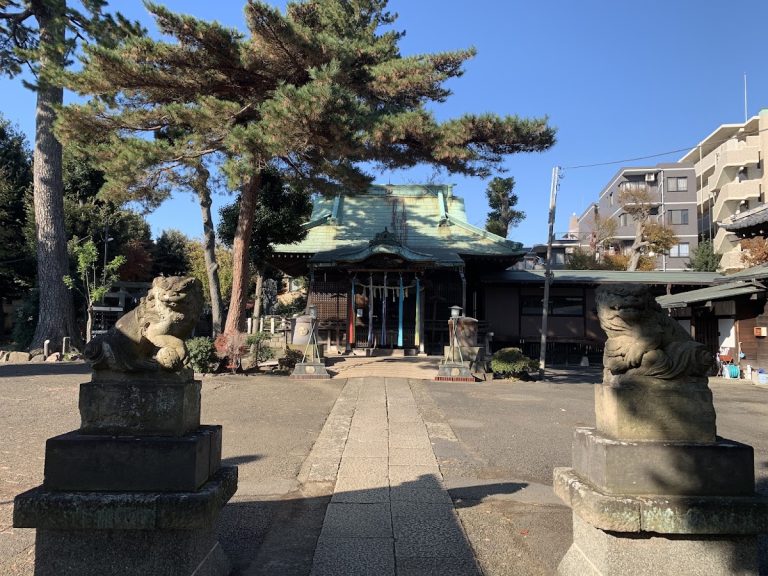
A large pine stands along the approach. It is regarded as the second-generation descendant of a tree traditionally said to have been planted by Minamoto no Yoshiie, Yoriyoshi’s son, after his return from the Later Three Years’ War. The pine is wrapped with a sacred rope, and a banner at its base identifies Yoshiie.
Shrine Woodland
The shrine grove is designated a natural monument of Tokyo and retains aspects of the Musashino landscape within the urbanized setting of Suginami. It contains numerous large and old trees, including a bodhi tree beside the shrine buildings that is said to be more than 350 years old and traditionally attributed to Seiryō-in’s planting.
Sacred Trees and Azaleas
A pair of ginkgo trees flanks the two sides of the shrine gate and is treated as sacred. Tokugawa Iemitsu is said to have sponsored the planting of 1,000 mountain azaleas. Their flowering gave rise to the name “mountain-illuminating azaleas,” and the planting has developed into about 6,000 plants representing 16 varieties. Holly oak and medicinal herbs add to the precinct’s varied plant cover.
Buildings and Archaeological Features
Main Precinct Buildings
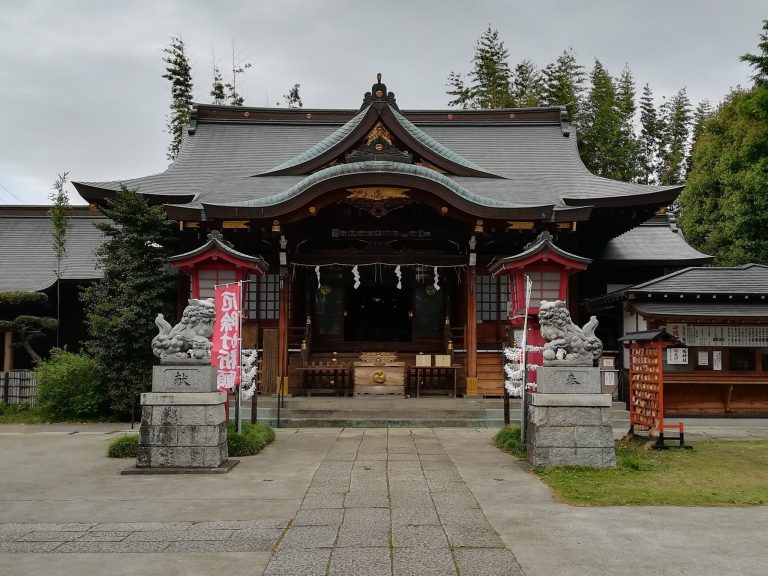
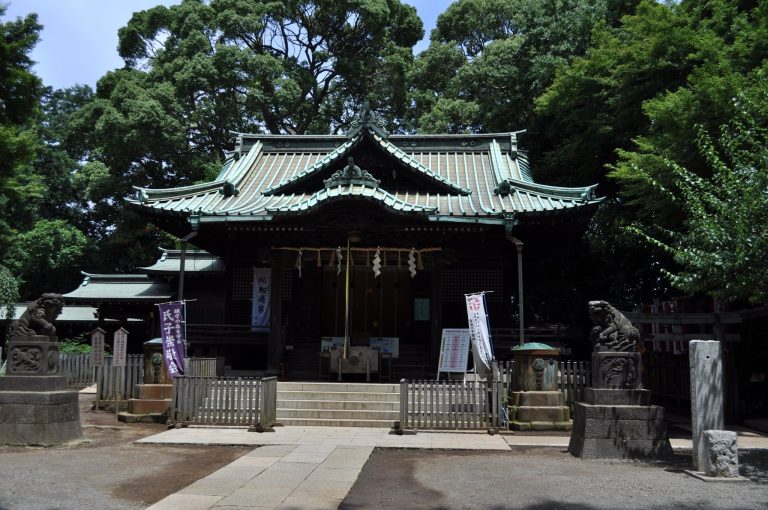
The developed precinct contains the main sanctuary, a worship hall, and Shimbuden, an archery hall. It also includes two tea houses, Shinsentei and Tsusenan, together with a wedding hall and the shrine-affiliated kindergarten. The main sanctuary, wedding hall, and kindergarten were rebuilt between 1963 and 1967 as part of the 900th-anniversary project, while the kindergarten moved to its present building in 1963.
Ōmiya Archaeological Site
The Ōmiya archaeological site contains a square-moated tomb, the first example of this type excavated in Tokyo. Its presence contributes to the interpretation of the area as a sacred locality before the establishment of Ōmiya Hachiman Shrine.
Votive Tablet
The shrine preserves a votive tablet that is not publicly displayed. Tradition attributes its handwriting to Yui Shōsetsu, although the attribution remains a traditional association rather than an established fact. The tablet’s later appearance in Okamoto Kidō’s detective fiction connects a preserved shrine object with the cultural memory of the Edo period.