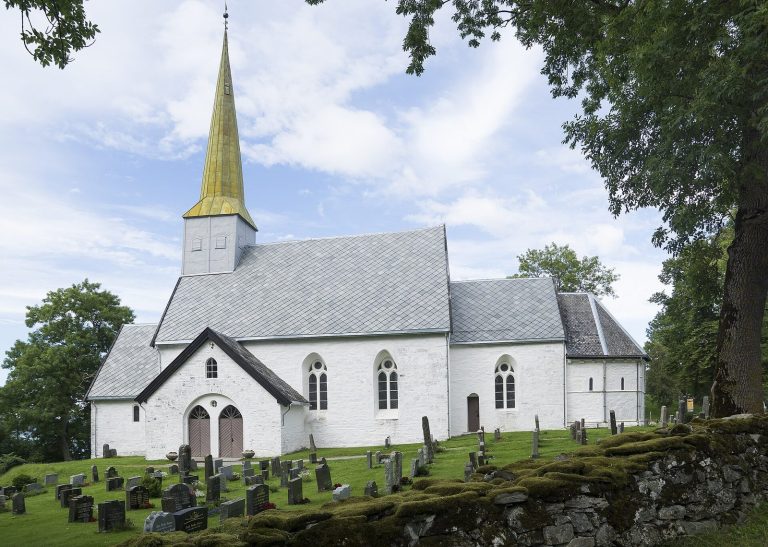
Old Sakshaug Church: A Medieval Parish Church in Norway
Site at a Glance
- Rating
- 4.6
- Popularity
- Very Low
- Country
- Norway
- Primary era
- Medieval
- External website
- Open
- Eras represented
- Medieval, Early Modern
- Civilizations
- Norwegian
- Site type
- Religious
- Remains
- Church
On this page10 sections
History
Old Sakshaug Church is a preserved former parish church in Norway, built as a medieval Romanesque long church between about 1150 and 1180. It was formerly the main church of Inderøy parish and is one of the oldest medieval churches in Trøndelag. The choir was constructed around 1150, followed by the nave during the next decades. Before the Reformation, the church belonged to the Catholic Church; it later became part of the Church of Norway, Norway’s Evangelical Lutheran national church.
Medieval construction and change
An inscription found in the church in the late eighteenth century stated that Archbishop Eysteinn Erlendsson of Nidaros consecrated it in 1184. Nidaros was the historic ecclesiastical centre of Trondheim. In the early 1200s, the choir was updated with Gothic details, including forms associated with the more pointed and vertically oriented architecture of that period.
The building continued to change during the later Middle Ages. Supporting walls were added along the south side around 1400, and a sacristy followed around 1440. The church also formerly had a west tower, but it was demolished during the medieval period.
From parish church to protected monument
In 1814, Old Sakshaug Church served as an election church and polling station during the selection of representatives to the Norwegian Constituent Assembly. The assembly met at Eidsvoll Manor to draft and adopt Norway’s Constitution. The parish first elected local electors, who then helped choose the assembly’s representatives.
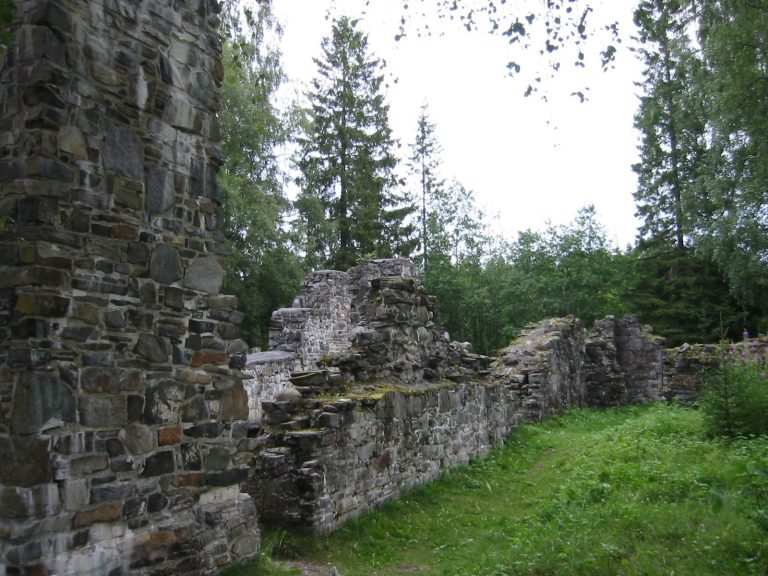
A new Sakshaug Church was built about 500 metres southeast of the old church in 1870–1871. Once the new building was complete, the medieval church closed. Its wooden roof, tower, decorations, and other woodwork were removed and sold, leaving the limestone walls. Ownership passed to the Society for the Preservation of Ancient Norwegian Monuments in 1873. Restoration began in the early twentieth century, and the ruins were enclosed by a roof in 1926. The work was completed in 1958, when the church was reconsecrated. Old Sakshaug Church is automatically protected as a Norwegian cultural heritage site.
Remains
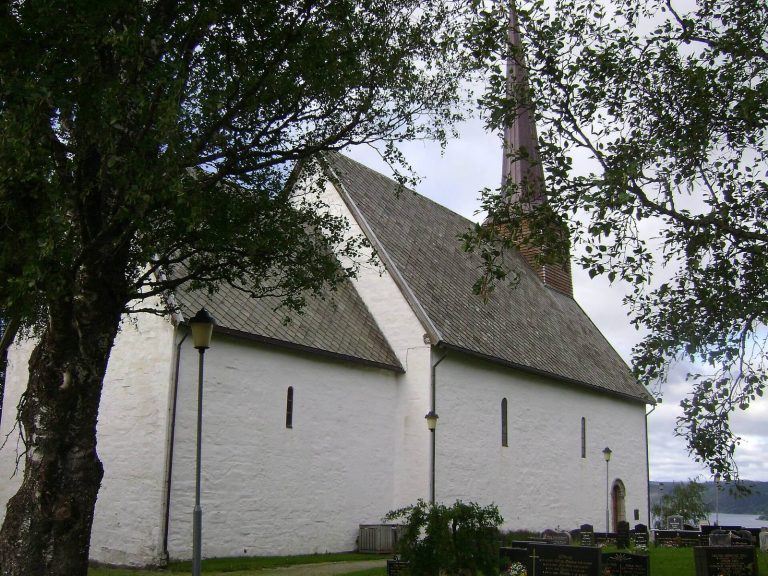
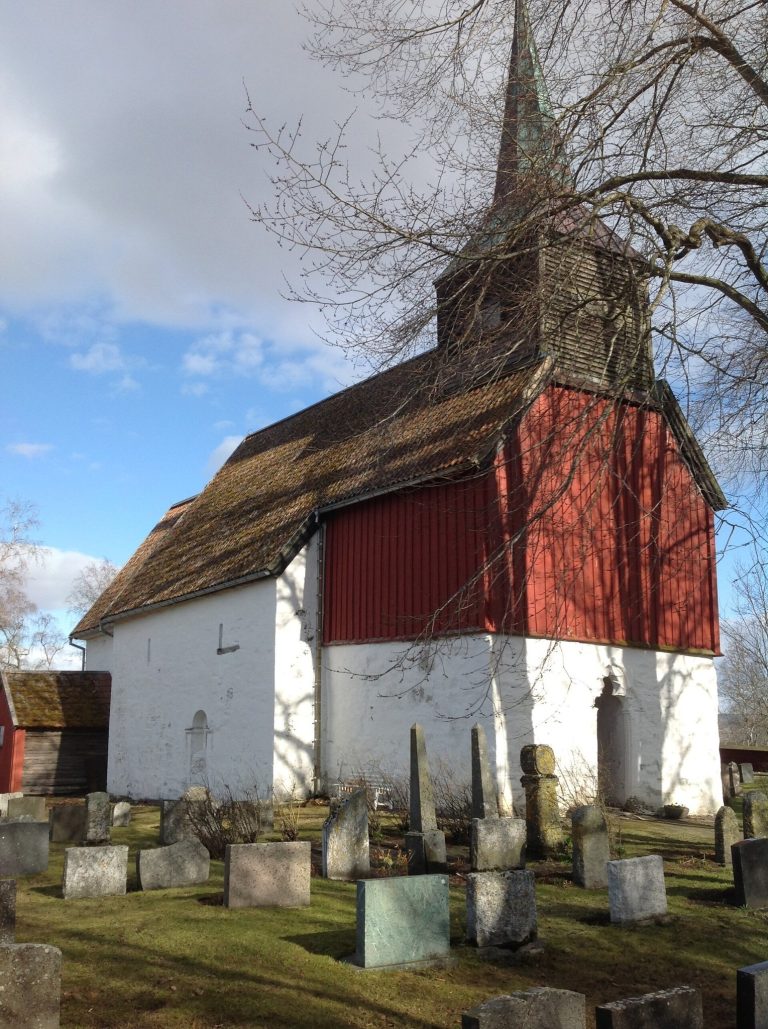
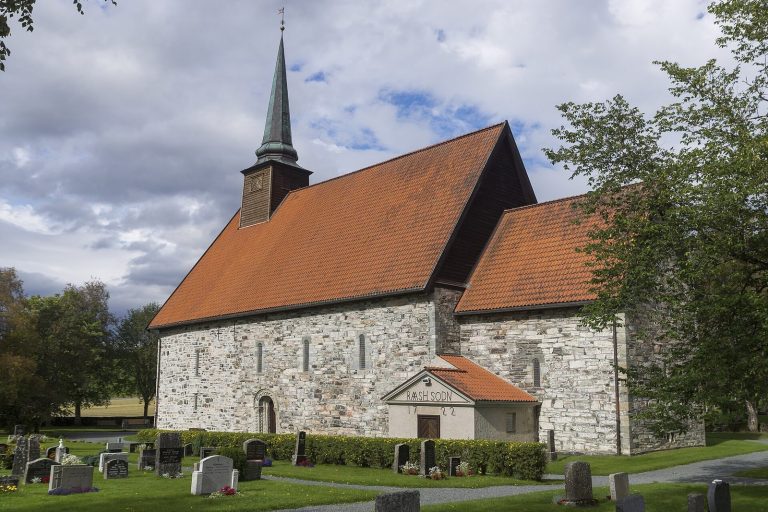
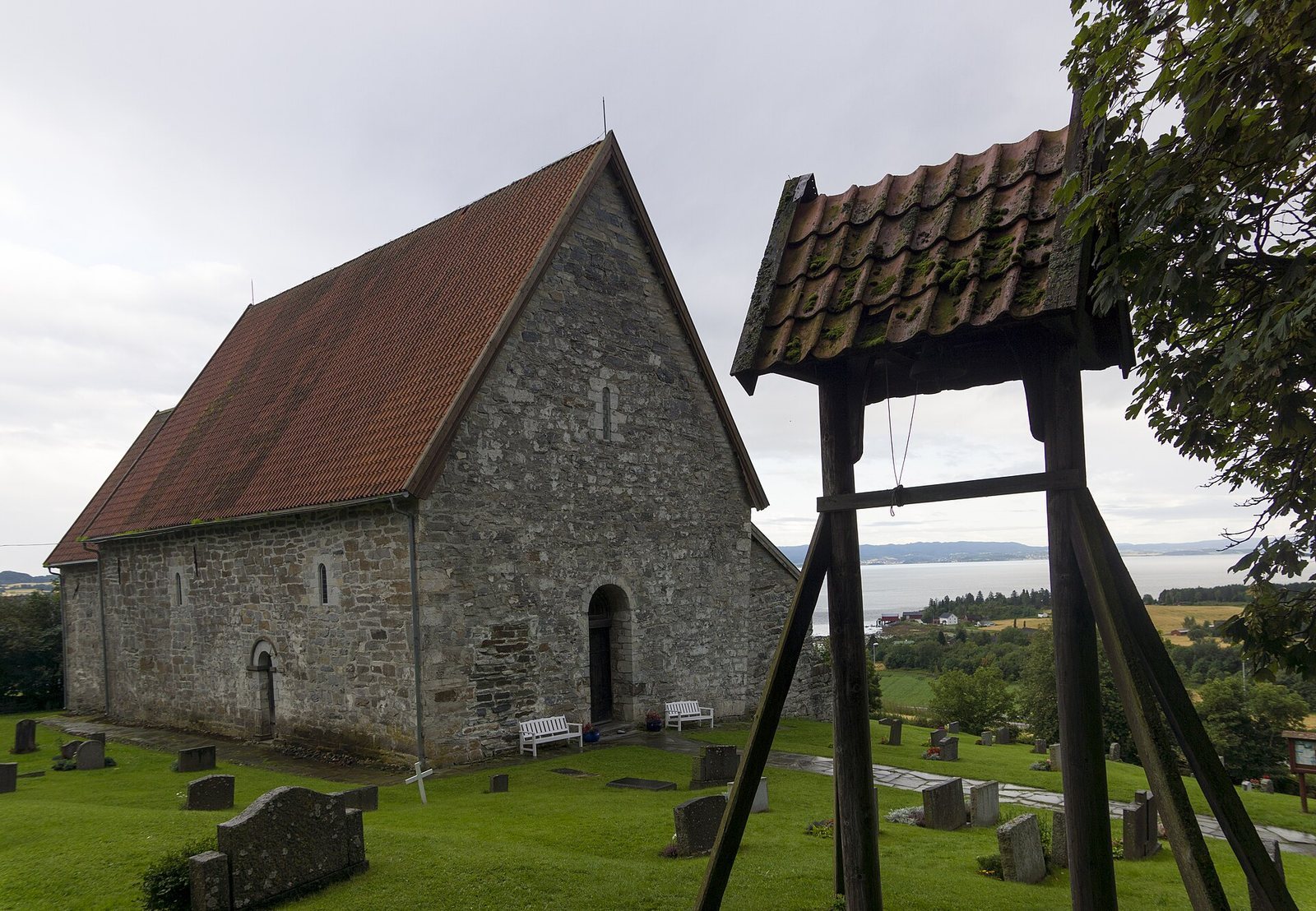
Old Sakshaug Church stands in the village of Sakshaug, just west of the municipal centre of Straumen. It is a limestone-built long church whose main design is Romanesque, with rounded arches and massive masonry, while the choir contains early Gothic alterations. The building has an approximate seating capacity of 200, and its plans are attributed to an unknown architect.
Stone church and portals
Long church and choir
The limestone walls define the surviving long-church form. The choir forms the oldest part of the building and preserves the early Gothic treatment added to it. Supporting walls along the south side belong to a later medieval alteration, while the sacristy, added around 1440, remains part of the church’s architectural history. The roof enclosing the ruins dates from 1926, when the surviving stone structure was given protection after the historic wooden roof had been removed.
Portals
Rounded portals open on the south, west, and north sides. The north portal has an arch decorated with chevrons, a repeated zigzag pattern in the stonework. Together, these entrances retain visible elements of the church’s Romanesque design.
Interior furnishings and carving
Pulpit and altarpiece
The wooden pulpit dates from 1646. Johan Johansen, an artist and craftsman from Trøndelag, carved it, while Johan Hanssønn painted it. The Baroque altarpiece dates from 1692, linking the interior furnishings to the church’s later period of use.
Carving of a woman
A carving of a woman in the church has been proposed as one of three Norwegian examples of a sheela na gig, a controversial type of medieval architectural carving depicting an exposed female figure. The interpretation remains uncertain because the carving appears more like a pine cone than a sheela na gig.