Old Church of Santa María, Alcalá de Henares: A Medieval Parish Church
Site at a Glance
- Popularity
- Medium
- Country
- Spain
- Primary era
- Medieval
- Eras represented
- Medieval, Early Modern, Modern
- Civilizations
- Crown of Castile, Habsburg, Habsburg Spain, Spanish
- Site type
- Religious
- Remains
- Chapel
On this page9 sections
History
The Old Church of Santa María was a Catholic parish church in Alcalá de Henares, Spain, established on the site of a medieval hermitage. Its history includes a family burial chapel, an unfinished plan for a larger church, and a long association with the town’s parish of Santa María la Mayor.
Hermitage and parish church
A hermitage dedicated to Saint John of the Knights, also known as the Lateran Hermitage, stood here before the fifteenth century. In the early 1400s, Pedro Díaz de Toledo, a royal judge serving King Juan II of Castile, founded a chapel on the site for use as his family’s burial place.
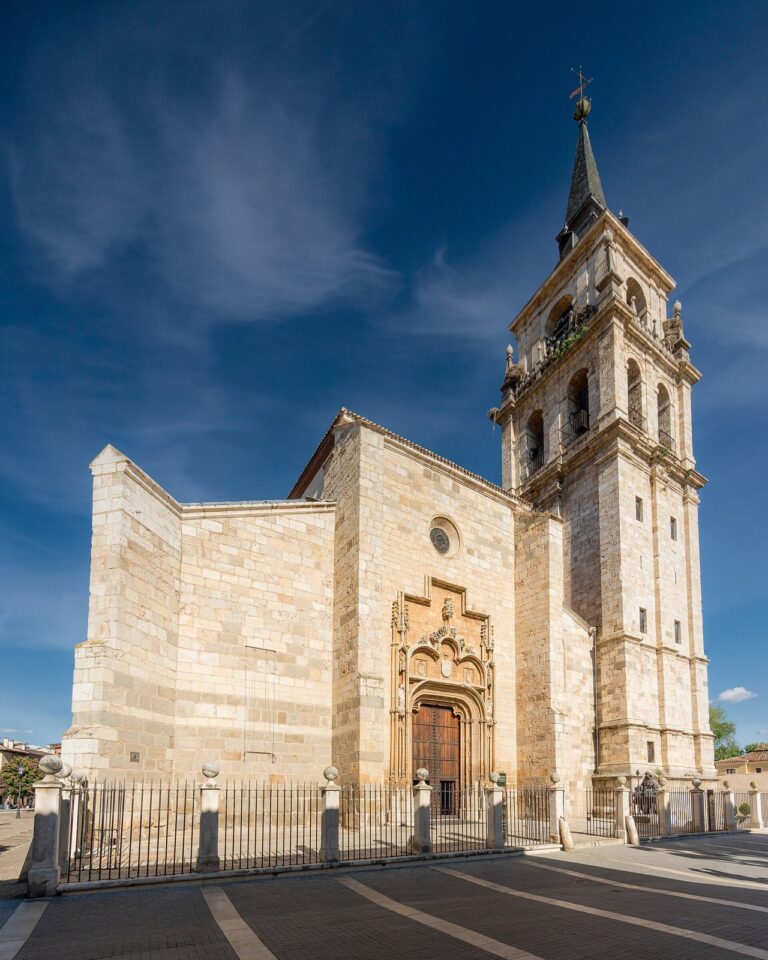
In 1454, Archbishop Alfonso Carrillo de Acuña moved the parish of Santa María la Mayor to the chapel and established it as a church under that dedication. The parish belonged to the Diocese of Alcalá de Henares, a bishop-led district of the Catholic Church. About a decade later, the church was equipped with a tower and bells. An unfinished tower dating to 1459 was eventually replaced by the present tower, built in the early nineteenth century.
Expansion and Cervantes commemoration
As the existing church deteriorated, construction of a much larger building began in 1553, following plans by the Spanish architect Rodrigo Gil de Hontañón. The work required the demolition of part of the hermitage, but financial difficulties prevented the project from reaching its intended scale.
In 1905, marking 300 years since the publication of Don Quixote, the Ministry of Public Instruction and Fine Arts restored the Oidor’s Chapel. The word oidor refers to a royal judge or hearing officer. The restoration included a reconstructed baptismal font associated with Miguel de Cervantes, the Spanish author of Don Quixote.
Destruction and later use
On 29 July 1936, during the opening days of the Spanish Civil War (1936–39), fought between the Republican side and a Nationalist rebellion, the church was set alight and destroyed by the Republican side. Its masonry was later taken for repairs to other buildings. Between March 1937 and October 1938, stone blocks from the church, including the main altar staircase, were used to build an air-raid shelter in Cervantes Square to protect civilians from Nationalist aircraft. The parish moved to a former chapel at the Jesuit College on Libreros Street and has remained there.
Fireworks during the town’s festivities ignited the tower’s spire on 27 August 1974, destroying it. The tower was restored in 1983, with a remade roof and the recovery of its weather vane and cross. The Oidor’s Chapel became a municipal exhibition space in 1982; in 2005, one of its rooms was adapted as the interpretation center The Universes of Cervantes. The church is protected as an Asset of Cultural Interest, Spain’s designation for protected cultural property.
Remains
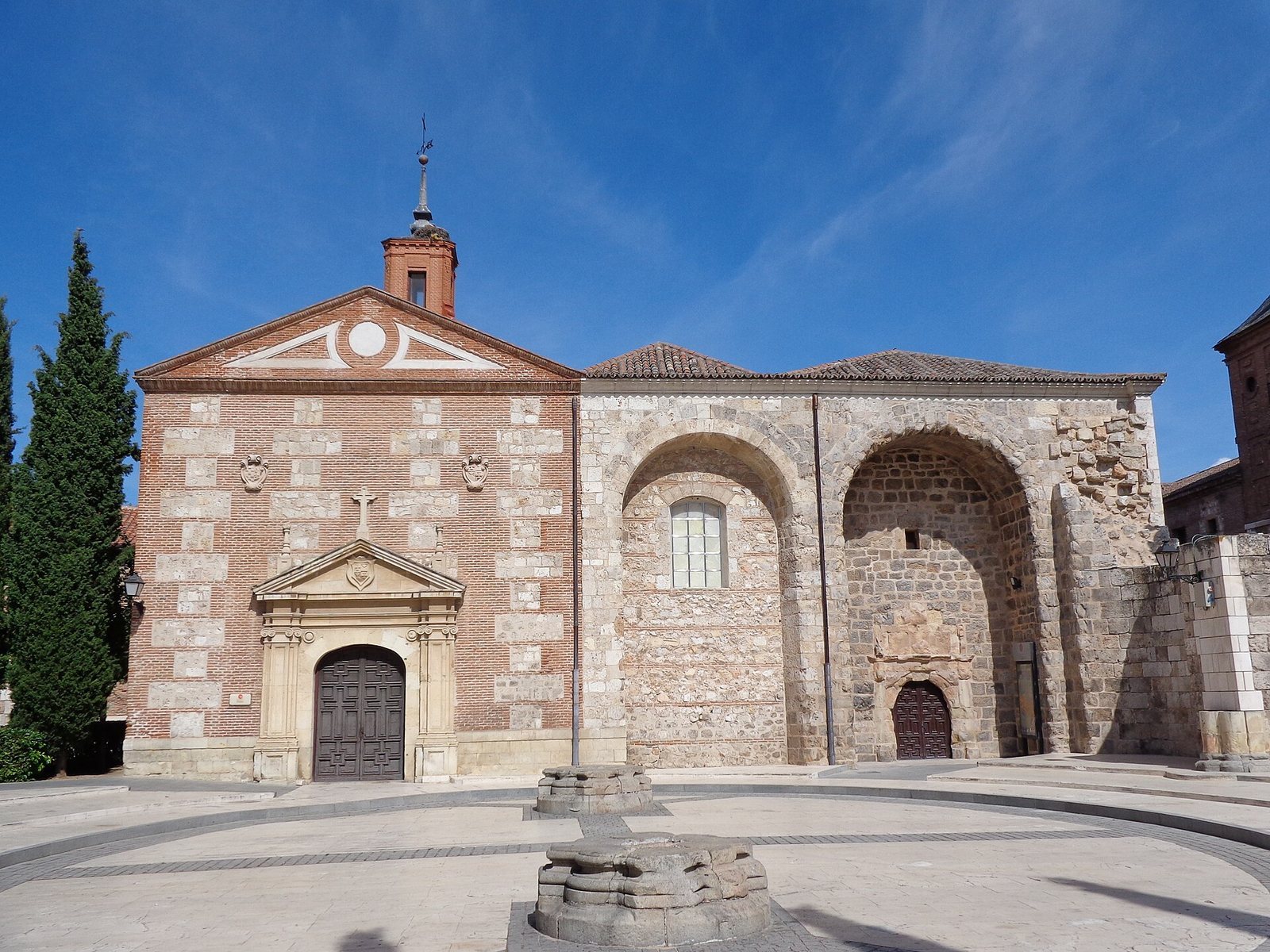
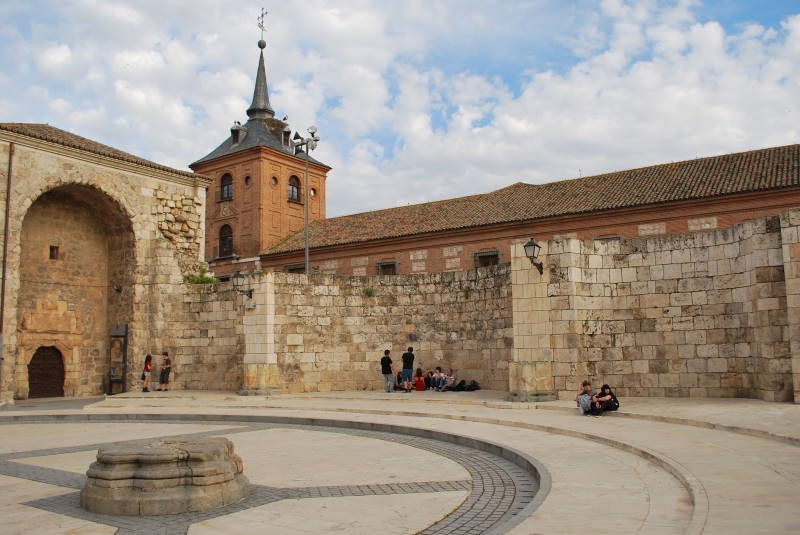
The church stood at the southern end of Cervantes Square, opposite the town hall. Its former ground plan is marked in the paving. The main surviving structures are the restored bell tower and the group of buildings known as the Oidor’s Chapel.
Oidor’s Chapel complex
Chapel of the Christ of Light
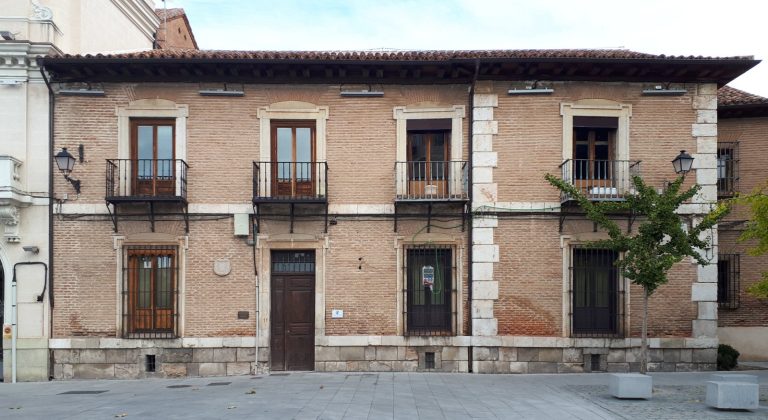
The complex’s entrance building is the former Chapel of the Christ of Light, also called the Antezana Chapel. Added to the parish in the seventeenth century, it was built over the earlier hermitage site. The brick building has a stone portico, a nave with a lunette vault, and a lightweight dome supported by a frame. A former sacristy beside the chapel serves as an exhibition room.
Oidor’s Chapel
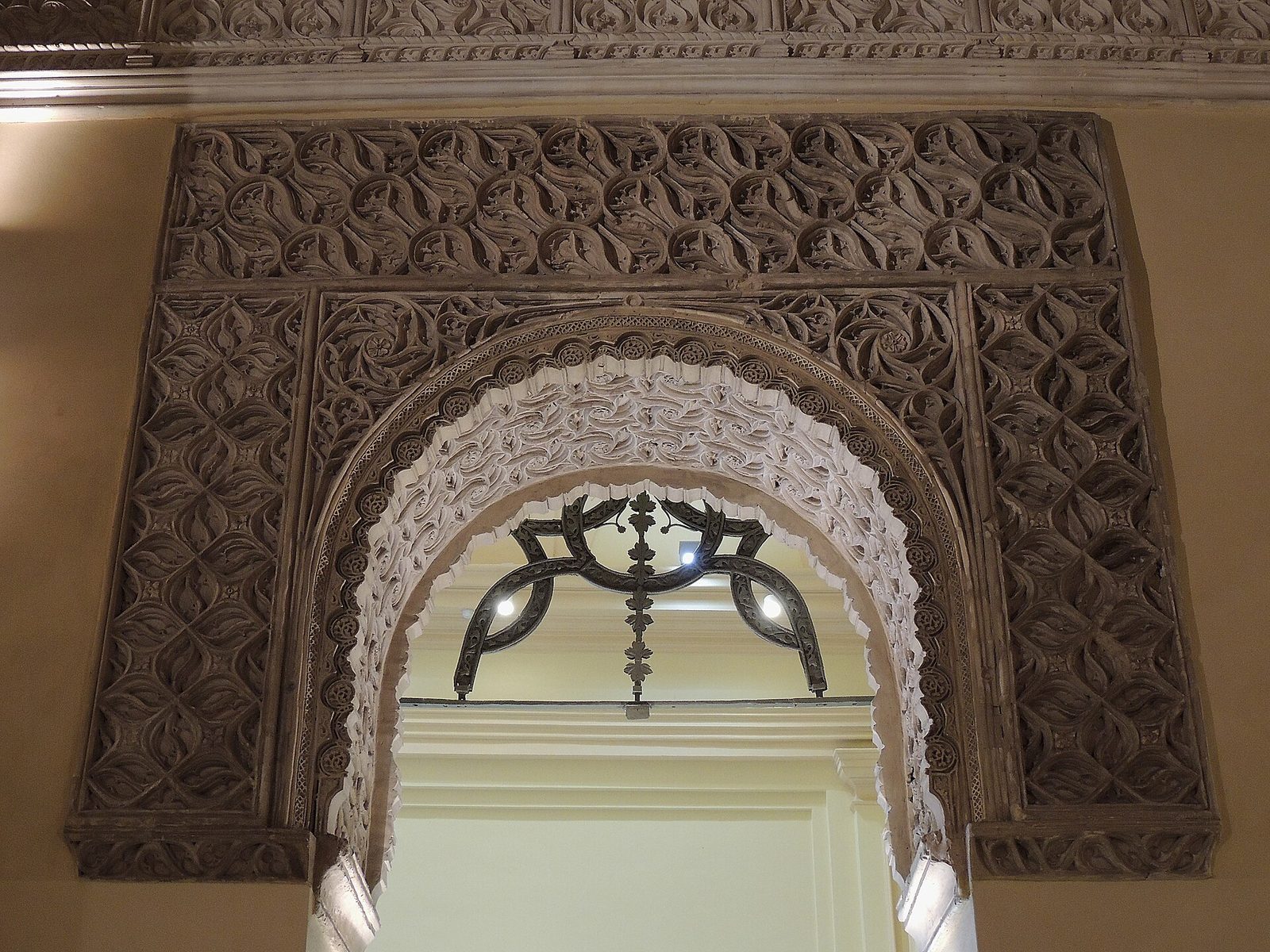
The Oidor’s Chapel proper opens southward from the Chapel of the Christ of Light through a stilted arch, whose supports extend vertically before the arch curves. Mudéjar plasterwork decorates the arch. The chapel contains the reconstructed baptismal font associated with Cervantes.
Bell tower
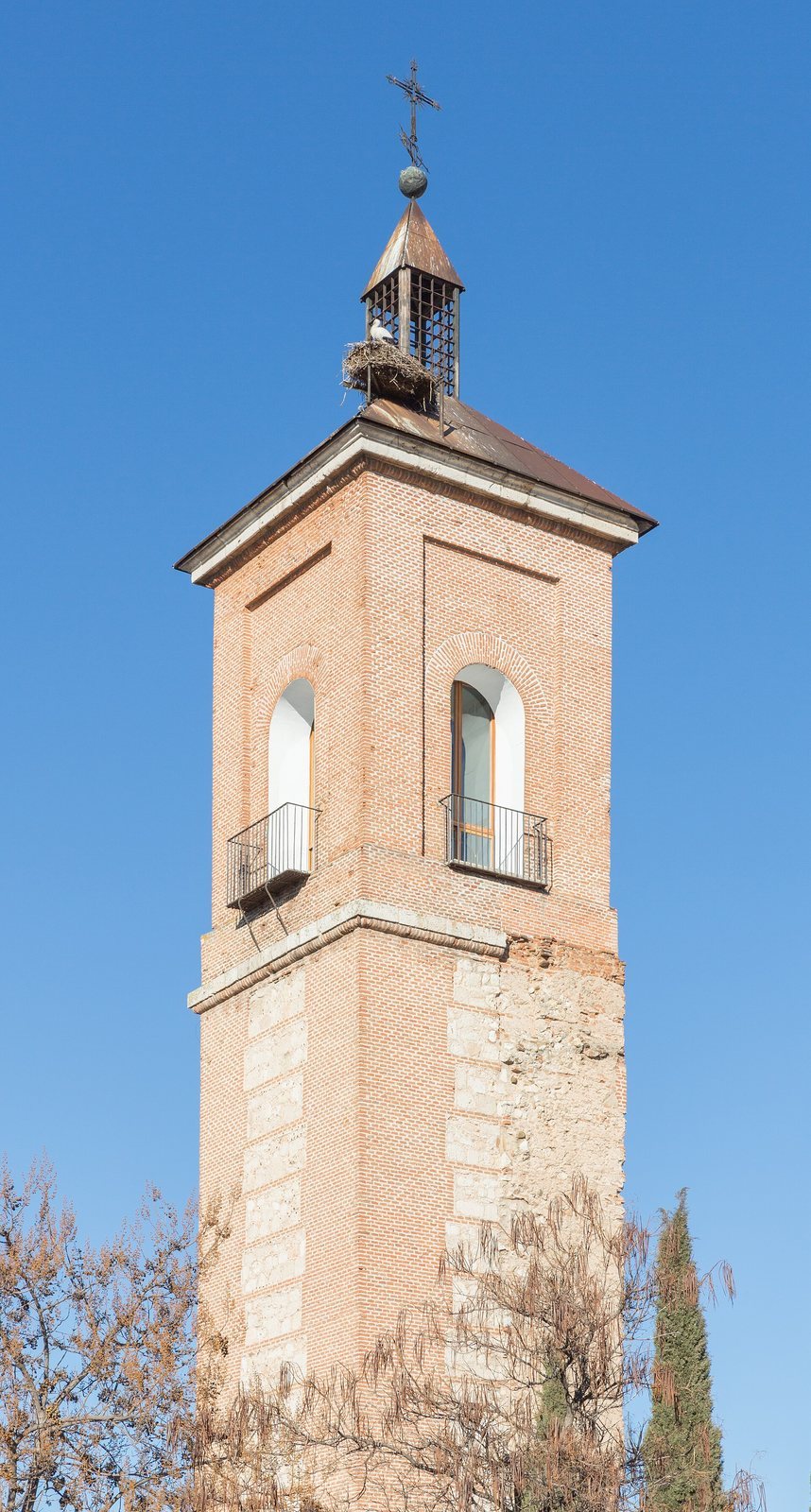
The brick tower rises 34 metres and has a metal spire. Its interior contains an aluminum spiral staircase, and its roof supports a protected stork’s nest. The tower has no bells.