Nyköping Castle: Medieval Fortress and Renaissance Palace in Sweden


Site at a Glance
- Rating
- 4.3
- Popularity
- Medium
- Country
- Sweden
- Primary era
- Medieval
- External website
- Open
- Eras represented
- Medieval, Early Modern
- Civilizations
- Swedish
- Site type
- Military
- Remains
- Castle
On this page14 sections
History
Nyköping Castle is a medieval fortress and later Renaissance palace in Nyköping, Sweden. Its earliest element was a fortified tower, or kastal, erected during the second half of the twelfth century. The castle later became a major setting for royal conflict, political agreements, dynastic events, and successive rebuilding.
From fortified tower to medieval castle
The original kastal formed an early defensive strongpoint. Its first plan is uncertain, since it may have been square or round, but it was later incorporated into a larger castle complex. A rectangular castle with two forecourts was built in two stages during the second half of the thirteenth century and appears to have been complete by the 1280s.
The Chronicle of Eric states that Magnus Ladulås, King Magnus III of Sweden, became duke over Södermanland and Nyköping Castle in 1266. Although the chronicle was written in the fourteenth century, it connects the castle with the political organization of medieval Sweden. The site is first mentioned in a surviving document in 1305, when Erik Magnusson signed a bond there. In 1308, Ingevald Estridsson of the Hammersta family served as bailiff for Erik and Valdemar at Nyköping Castle.
Royal conflict and political agreements
In 1310, the castle was assigned to Birger Magnusson after a division between him and his brothers, the dukes Erik and Valdemar. Seven years later, Birger imprisoned them there. Their supporters subsequently captured the castle, after which most of it was demolished. The site then remained deserted for many years.
The Nyköping Banquet took place on 10 December 1317. According to the Chronicle of Eric, the Christmas feast ended disastrously for Erik and Valdemar, who were Birger’s brothers and had been imprisoned at the castle. The event became closely associated with the conflict between the king and the dukes.
Raven von Barnekow, a German nobleman and knight, received Nyköping Castle as a fief in 1365 and restored it. Albrecht of Mecklenburg claimed the castle during the 1370s but apparently did not take possession before it passed to Bo Jonsson Grip in 1376. In 1388, the executors of Bo Jonsson Grip’s testament transferred it to Queen Margaret, the Danish ruler who later became monarch of Denmark, Norway, and Sweden.
The Nyköping Recess was signed at the castle on 20 September 1396. This medieval Scandinavian political agreement helped prepare the way for the Kalmar Union, the union that brought Denmark, Norway, and Sweden under a common monarch in the following year.
Later medieval and Renaissance transformations
Further alterations and extensions took place during the Middle Ages. In 1434, troops led by Engelbrekt Engelbrektsson, a Swedish rebel leader associated with opposition to Danish rule, besieged the castle. The garrison surrendered after an agreement. In 1516, Sten Sture the Younger stormed the castle after Sten Kristiernsson of the Oxenstierna family had declared his readiness to surrender it to Christian II, the Danish king who also ruled Norway and Sweden. The garrison capitulated after one assault.
Gustav Vasa, King Gustav I of Sweden, strengthened the castle for defensive purposes. A round gun tower from this period survives. In the late sixteenth century, Duke Charles, the future King Charles IX of Sweden, rebuilt the medieval castle as a Renaissance palace.
The palace burned with the rest of Nyköping in 1665 and was not rebuilt. Some of its bricks were reused during the reconstruction of Stockholm Palace. Further parts of the complex burned in 1719 during the Russian devastation of Sweden. After that destruction, Governor Nils Gyllenstierna requested the construction of a new residence within the castle. This building is now called the Old Residence.
Dynastic events and modern preservation
The castle continued to serve as a setting for important dynastic events. Svante Sture the Younger and Märta Eriksdotter Leijonhufvud married there on 3 March 1538. Charles IX died at Nyköping Castle on 30 October 1611, and Charles X Gustav was born there on 8 November 1622.
Parts of the castle were restored during the twentieth century. Sörmland Museum uses sections of the complex for exhibitions, with permanent exhibitions in the King’s Tower. The castle is a government-listed building complex owned by the National Property Board of Sweden and operated by Sörmland Museum. In October 2020, a previously unknown room was discovered and was considered likely to have been a defensive chamber, or casemate.
Remains
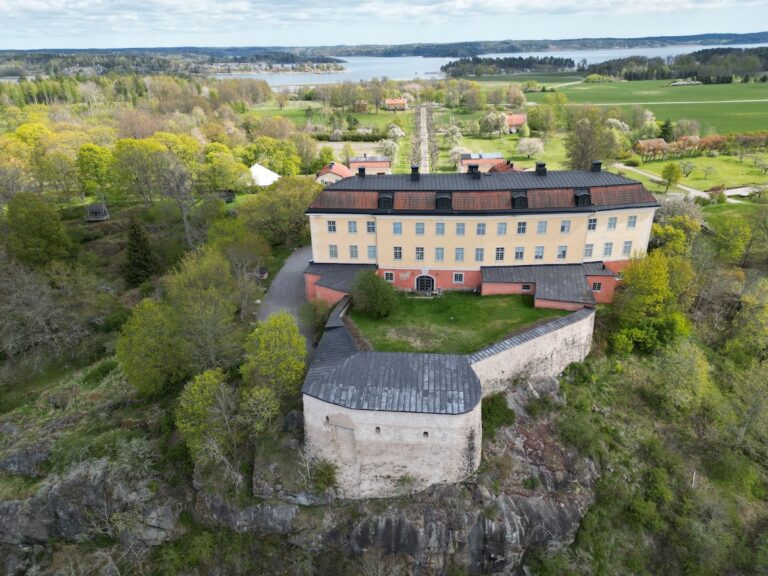
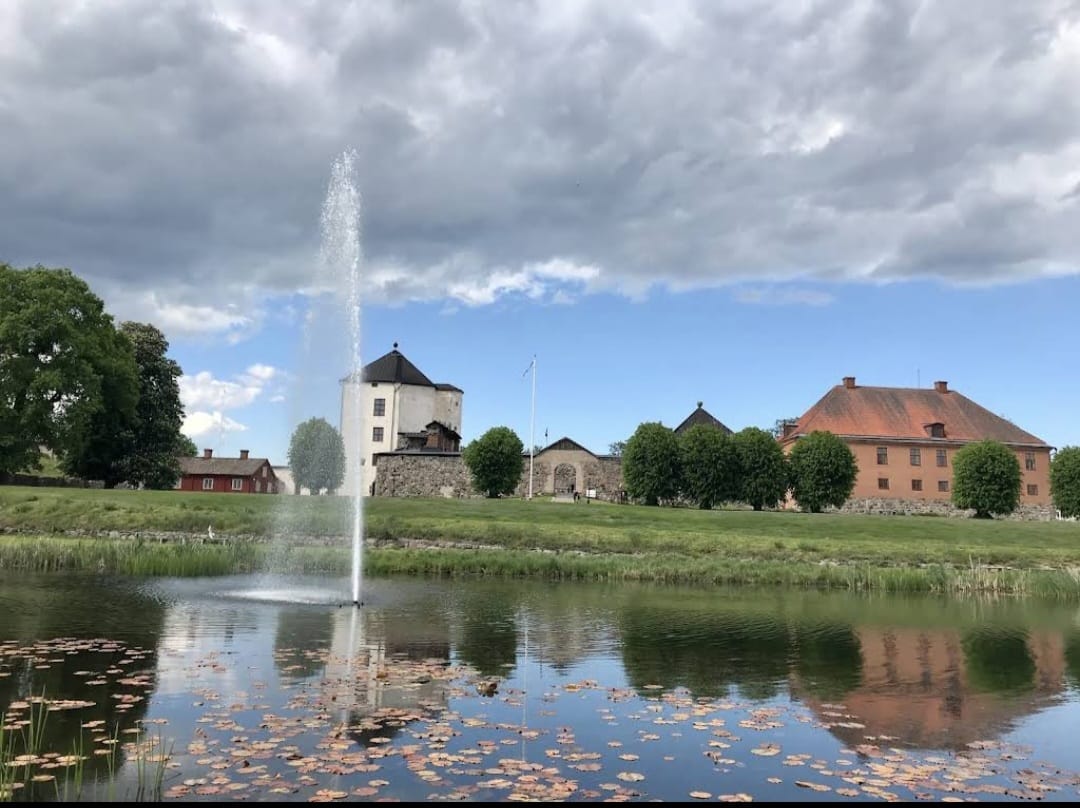
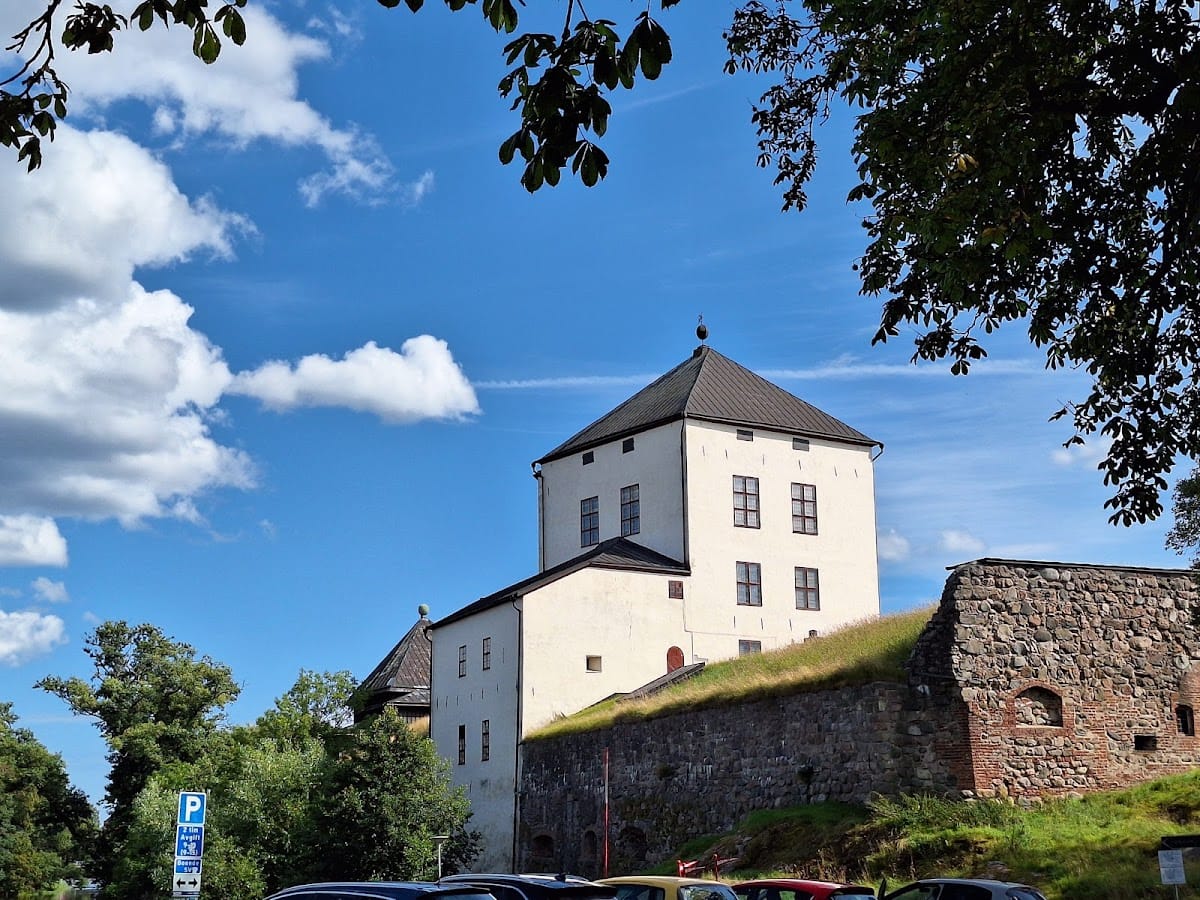
Nyköping Castle survives as a partially ruined complex whose remains reflect both its rectangular medieval form and the larger extent of the Renaissance palace. The medieval castle included two forecourts, while the original fortified tower was absorbed into the later buildings. Surviving and restored elements include the King’s Tower, the round gun tower, the Gatehouse, the Old Residence, and other fragments of the medieval and Renaissance complexes.
Medieval and defensive structures
King’s Tower
The King’s Tower, or Kungstornet, is a surviving tower within the castle complex. Its permanent exhibitions are used by Sörmland Museum, giving the tower a continuing interpretive role within the partially ruined site.
Round gun tower
The round gun tower, also known as the Rondellen, belongs to the defensive strengthening associated with Gustav Vasa. It remains as a distinct element of the castle’s military architecture and represents the later development of the medieval fortress for gunpowder warfare.
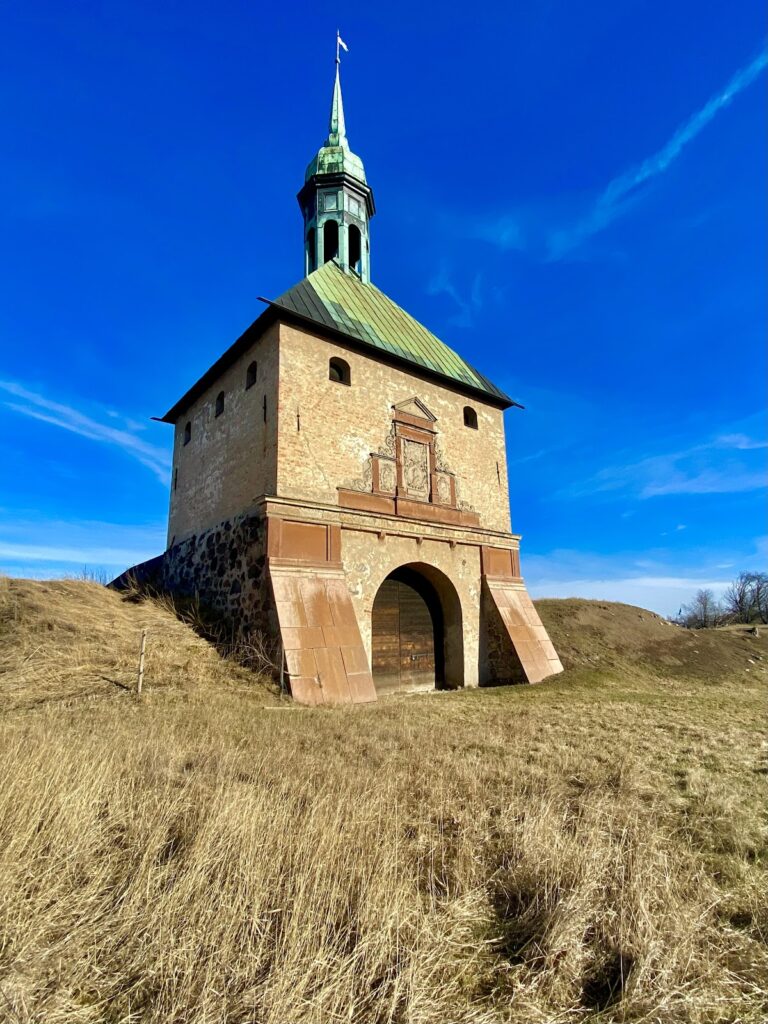
Gatehouse
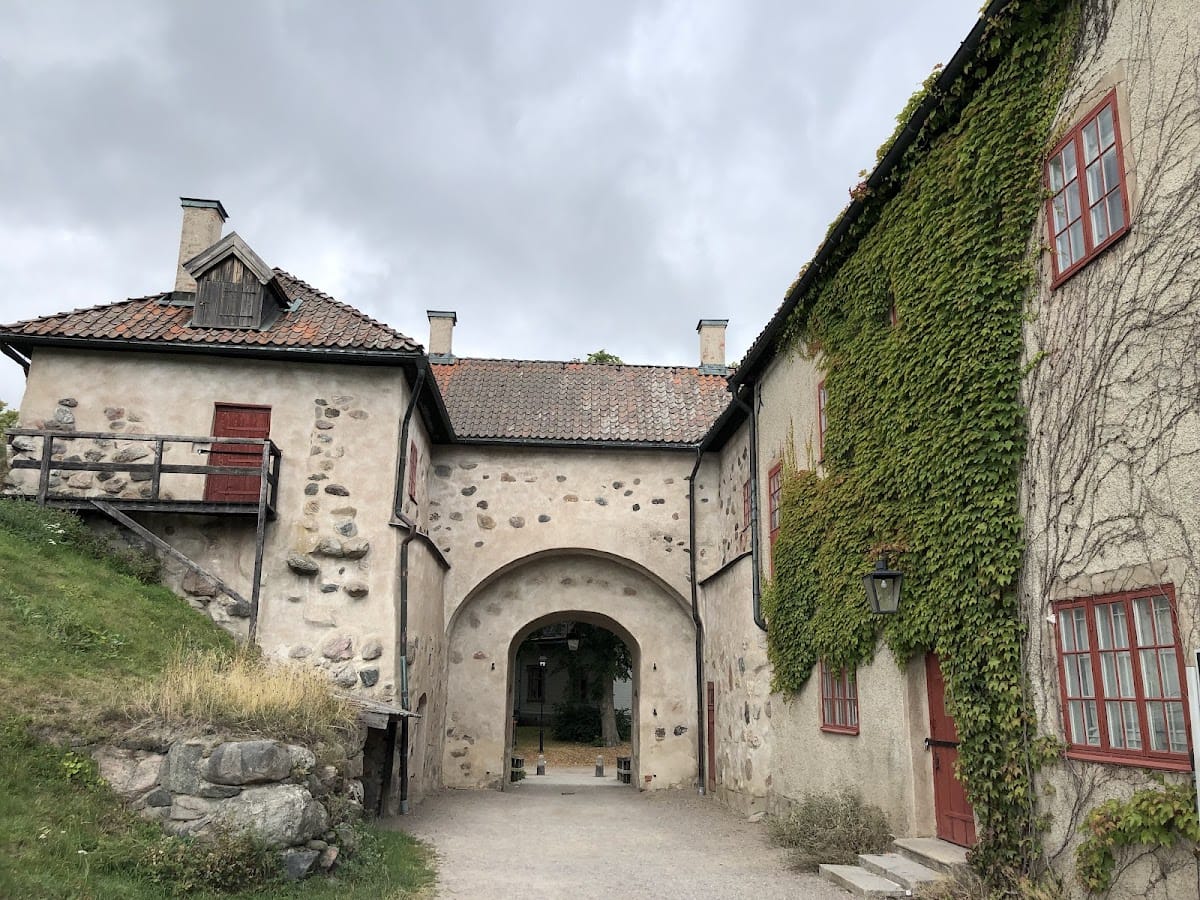
The Gatehouse survives as another distinct part of the complex. Its exterior and interior have both been described, preserving evidence of the controlled entrance through the castle’s defensive layout.
Defensive chamber
The room discovered in 2020 is probably a casemate, a fortified chamber intended for defensive use by troops or artillery. Its identification adds another defensive feature to the surviving archaeological remains.
Later residential and interior spaces
Old Residence
The Old Residence, or Gamla residenset, was built within Nyköping Castle after the destruction of 1719. It belongs to the later residential history of the complex and survives as a separate building among the castle remains.
Banquet Hall and Queen’s Cellar
The Banquet Hall and Queen’s Cellar are named interior spaces in the surviving complex. Both are used for restaurant operations, while the King’s Tower accommodates the museum’s permanent exhibitions.