Bärbo Church: A Medieval Parish Church in Sweden
Site at a Glance
- Country
- Sweden
- Primary era
- Medieval
- Eras represented
- Medieval, Early Modern, Modern
- Civilizations
- Swedish
- Site type
- Religious
- Remains
- Church
On this page12 sections
History
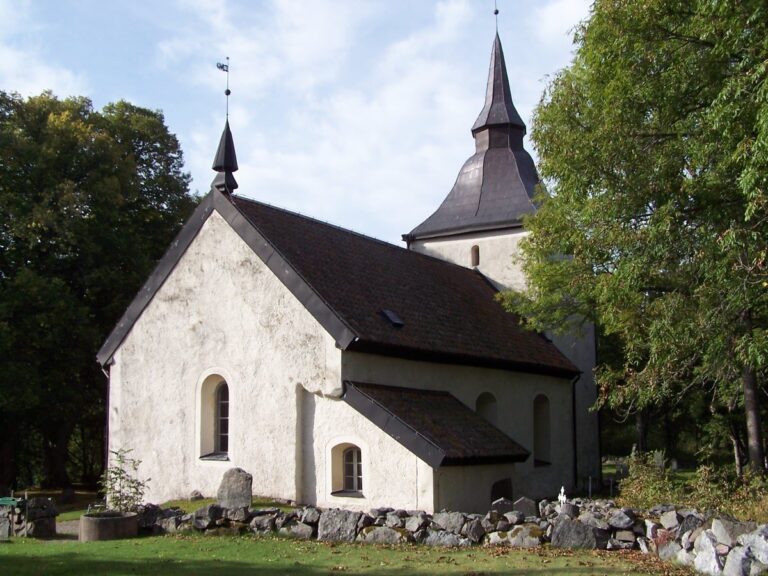
Bärbo Church is a medieval parish church of the Lutheran Church of Sweden in Nyköping, Sweden, probably built around 1200. It serves Stigtomta-Vrena parish, a local congregation, within Strängnäs Diocese, a regional church district. The church was consecrated during the 13th century.
Medieval church
In the late Middle Ages, probably during the 15th century, the church was extended westward. The sacristy, a room for storing church furnishings and preparing for services, and a porch that was later removed may have been added during this work.
Early modern changes and later history
In 1677, the choir received a hood-shaped roof and spire, the walls were raised, and a timber vault was added. The bell tower dates from the 17th century and was rebuilt around 1740. Cattarina Brant donated the church’s altarpiece in 1715.
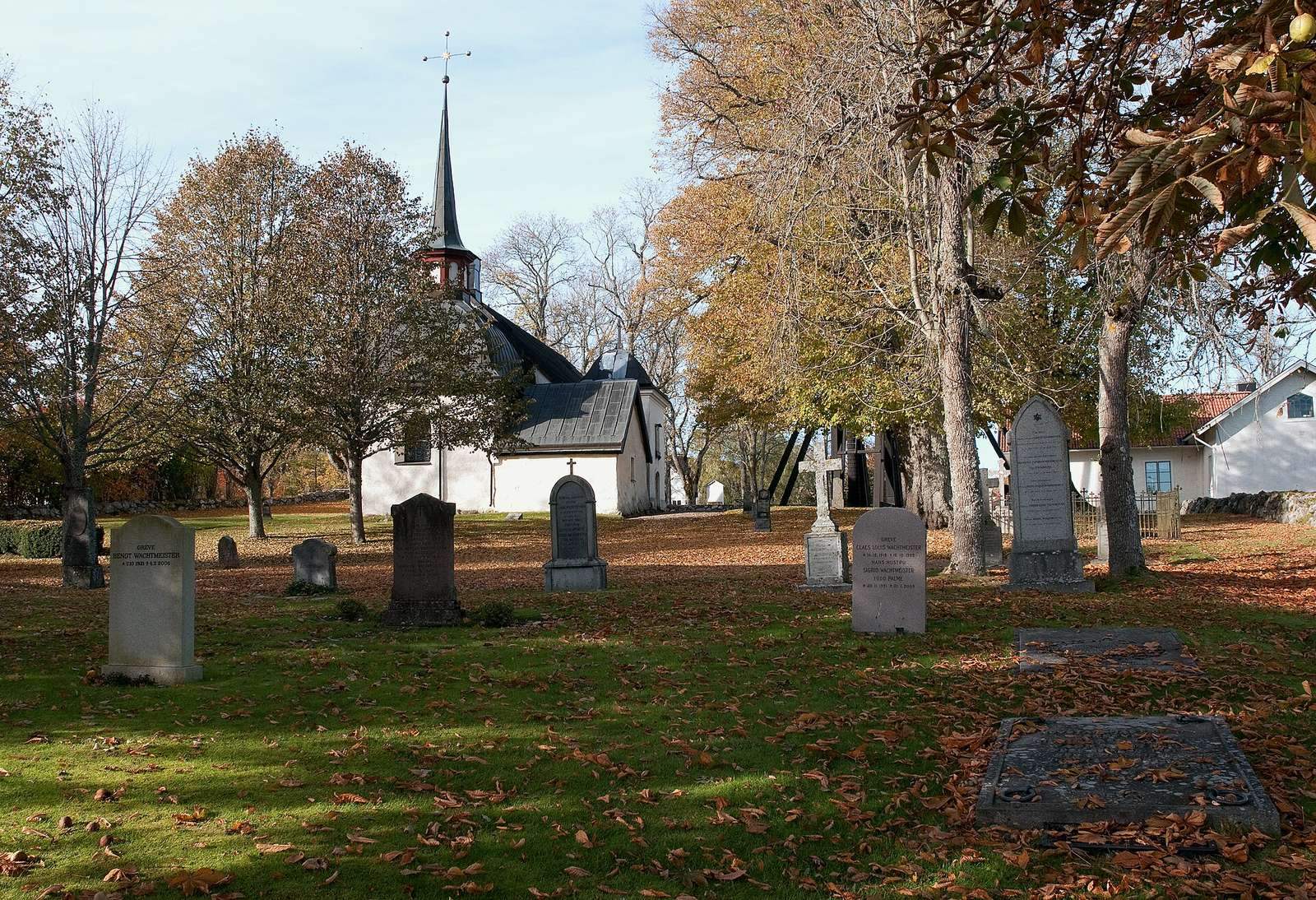
The north transept and gallery were built in 1755. Fredrik Bengt Rosenhane of Tista and his wife, Eva Sofia Stenbock, funded the gallery, while the nave’s timber vault was added in the mid-18th century. In 1938–1939, the church was restored. People buried in the old churchyard include Fredrik Wachtmeister and his wife Louise, née af Ugglas; Nils Wachtmeister and his wife Märta, née De Geer af Leufsta; Tom Wachtmeister; and Ian Wachtmeister.
Remains
Bärbo Church is built of fieldstone and has a rectangular nave, a narrower choir with a straight east end, a sacristy, and a north transept. Its plan and roof forms bring together parts added over several centuries.
Building and layout
Exterior and plan
The entrance is on the west side. The nave and sacristy have gabled roofs, while the choir and north transept have hood-shaped roofs. A bell tower is associated with the church.
Ceilings and gallery
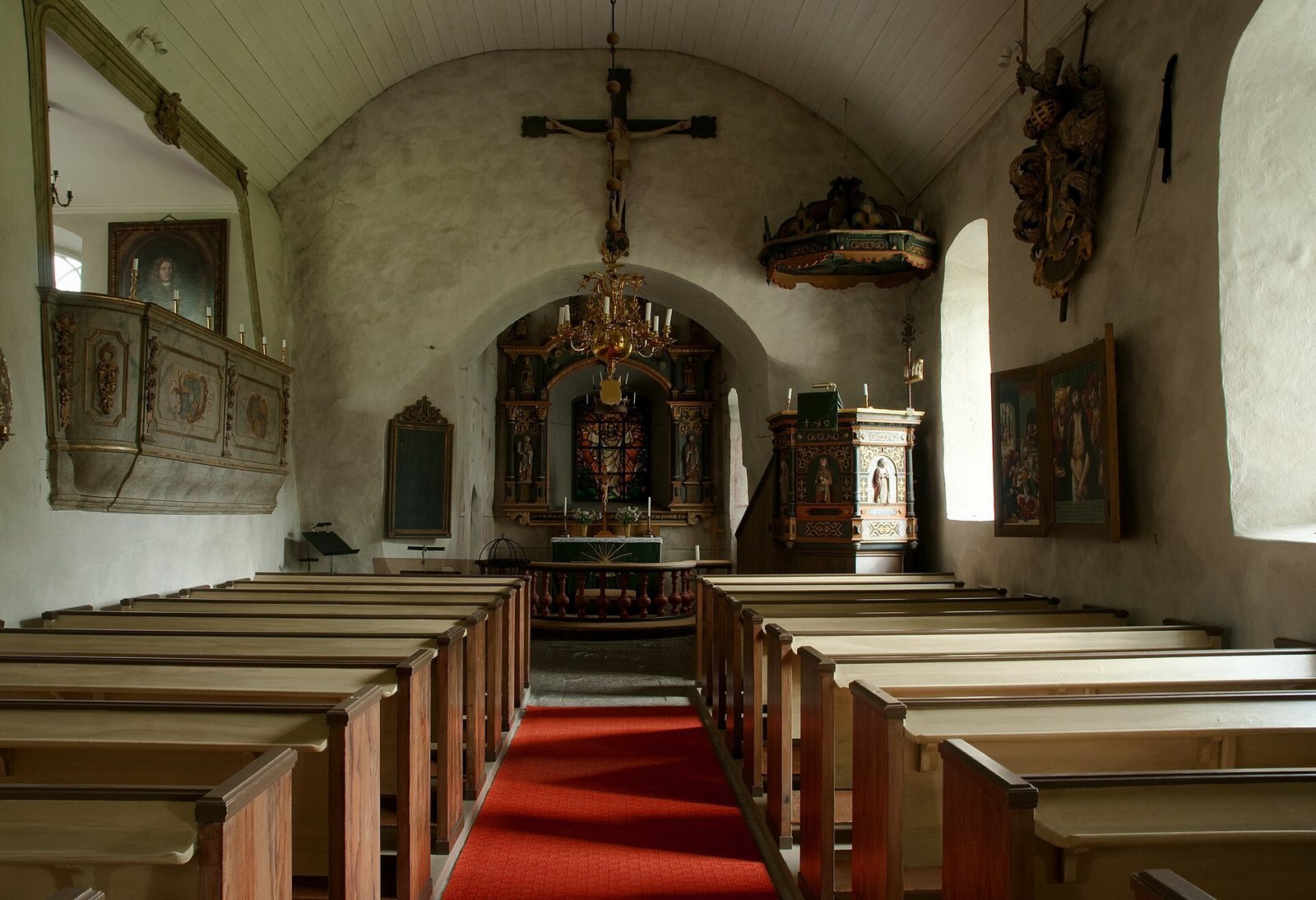
The nave has a continuous curved timber ceiling, called a barrel vault. The choir’s timber groin vault is formed by intersecting vaults. A gallery stands along the north wall and has its own entrance.
Furnishings and memorials
Baptismal font and chandelier
The baptismal font, among the church’s oldest furnishings, dates to the first half of the 13th century. It was found during water-digging work in the 1950s and is kept in the sacristy. A Gothic iron chandelier dates to the late Middle Ages, probably the 14th or 15th century.
Altarpiece and altar decoration
Cattarina Brant donated the church’s altarpiece in 1715. The three-panel painting was made in the 1530s by German artist Hans Kemmer. The church holds a photographic copy; the original is at Sörmlands Museum. The altar decoration also incorporates fragments of a medieval altarpiece arranged around a modern stained-glass window by Albert Eldh.
Sculpture, pulpit, and epitaph
A Swedish sculpture depicting Saint Olaf dates to the second half of the 13th century. Saint Olaf usually refers to Olaf II of Norway, an 11th-century king later venerated as a Christian saint. The pulpit was made in the 1640s and fitted with medieval figures in 1677; its hourglass dates to 1704. An epitaph for Lorens Stormhatt, made by Hans Jerling in 1677, hangs on the nave wall.
Organ
The mechanical organ was built in Stockholm in 1878 by Åkerman & Lund and was donated by Countess Henriette Wachtmeister of Nääs. It is largely preserved in its original condition. Before its installation, the church used a harmonium.