Novae: A Roman Legionary Fortress and City in Bulgaria
Site at a Glance
- Popularity
- Medium
- Country
- Bulgaria
- Primary era
- Classical
- Eras represented
- Classical, Medieval
- Civilizations
- Byzantine, Roman
- Site type
- Settlement
- Remains
- City
On this page20 sections
History
Novae was a Roman legionary fortress and later city on the southern bank of the Danube near Svishtov, Bulgaria. Rome established the fortress around the middle of the first century CE to oversee a river crossing and the Danube sector between the mouths of the Osum and Yantra rivers. Emperor Claudius selected the position, and Legio VIII Augusta was associated with Novae around 45–48, after taking part in the suppression of a Thracian revolt.
Legionary base on the Danube
Legio VIII Augusta gave way to Legio I Italica around 69–70. The latter remained at Novae into the early fifth century, while a detachment of Legio XI Claudia may also have been stationed there around 68–70. A land grant issued by Emperor Vespasian on 26 October 69 was associated with the settlement. After the Roman army drove Sarmatian forces from Moesia, Legio I Italica either transferred to Novae or continued its service there. The fortress became one of two legionary bases in Moesia Inferior, a Roman province along the lower Danube, after the province was divided in 86.
Novae guarded the lower Danube frontier and supported Roman and later Byzantine military campaigns. Its legion also built bridges across the river. The Roman fleet on the lower Danube, the Classis Moesica, was based at Novae after its reorganization during the Flavian dynasty, which ruled from 69 to 96. By the early fifth century, the legion watched both banks of the river, including the area around Sexagintaprista, a Roman fort and settlement opposite Novae.
Imperial campaigns and attacks
Novae escaped major damage during Emperor Domitian’s wars against Dacia in 85–89. The danger grew during Emperor Trajan’s campaigns to conquer Dacia. In the winter of 101–102, Dacian and Sarmatian forces entered Lower Moesia, and the Roxolani, a Sarmatian group, may have made an unsuccessful attempt to besiege Novae. Trajan’s rebuilding of the fortress took place during this period. Novae and the surrounding province later prospered especially under the Severan dynasty, which ruled from the late second to early third century. During the earlier Antonine period, the legion may have exercised control beyond the Yantra River. Trajan, Hadrian, and Caracalla visited Novae; the later emperor Maximinus Thrax may have been born there.
In 250, Goths led by Cniva crossed the Danube and besieged Novae with a force estimated at 70,000. The fortress held, but nearby civilian settlements were destroyed. Emperor Trebonianus Gallus repelled the Goths at Novae. Further attacks followed, and the eastern defensive line was extended later in the third century to shelter civilians.
Late Roman and Gothic rule
From the fourth century, the legion split into smaller detachments based at separate forts. Civilian buildings spread across much of the former camp, while the fortress and the settlement beside it became integrated. Novae grew poorer, and its streets incorporated inscribed stone reused from earlier buildings. Gothic attacks in 376–382 also affected the city.
Novae came under the influence of Gothic rulers. It was associated first with the Visigothic king Alaric and later with the Ostrogothic king Theodoric. In 476, Eastern Roman Emperor Zeno granted Theodoric the surrounding territory and made him a senior commander of the imperial field army. Earlier, in 441, Huns under Attila had destroyed Novae, after which the legion abandoned the site. Emperor Justinian I later oversaw its rebuilding and renewed fortification. Novae became an important Danube port and served as a bishop’s seat in the late fifth and sixth centuries.
Byzantine campaigns and the city’s later history
From the seventh century, Novae was a base for Byzantine forces campaigning against Slavs and Avars. In 594, Emperor Maurice replaced the general Priscus with his brother Peter. Peter held the position and patrolled the Danube between Novae and the Black Sea. Slavic attacks brought the ancient city to an end after 613. A church and cemetery remained in the western part of the town during the ninth to eleventh centuries.
Novae is also associated with Lupus, a slave of Saint Demetrius who was martyred by beheading and is venerated as a saint in the Orthodox tradition. The city appears in seventeen literary works, from the writings of Ptolemy onward. These include the late Roman Notitia Dignitatum, a register of offices and military commands, and the Notitia Episcopatuum, a list of church sees. Novae may also be represented on Trajan’s Column and appears on the Tabula Peutingeriana, an ancient map of the Roman Empire.
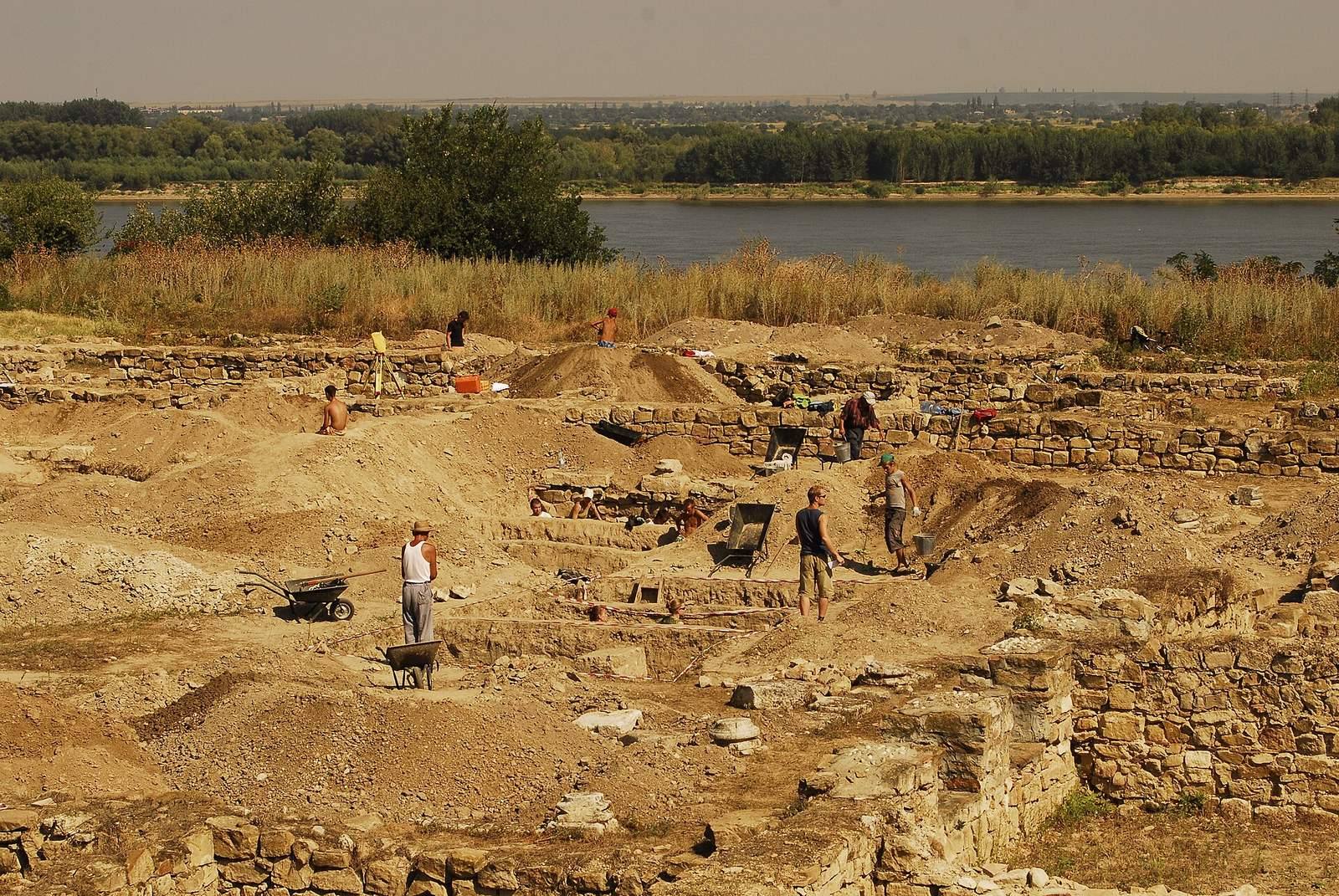
A Polish archaeological team working with the Bulgarian Academy of Sciences has investigated Novae since 1960. Excavation and restoration have focused on the central area.
Remains
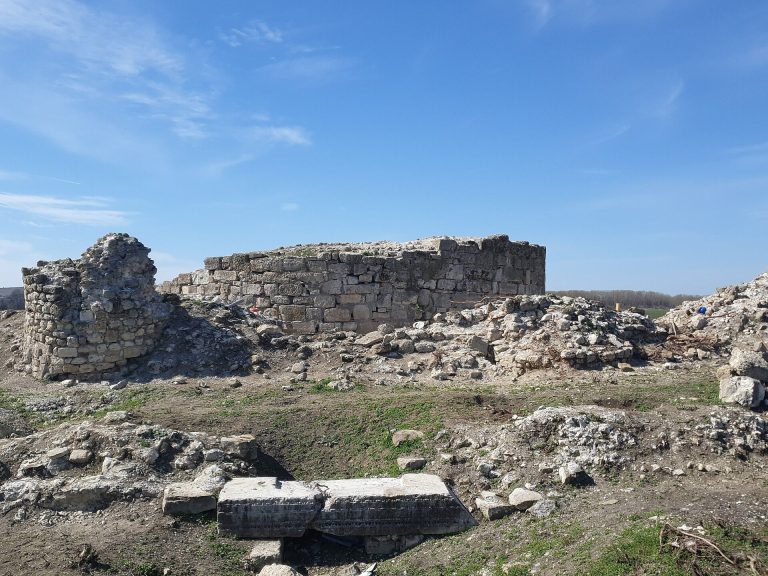
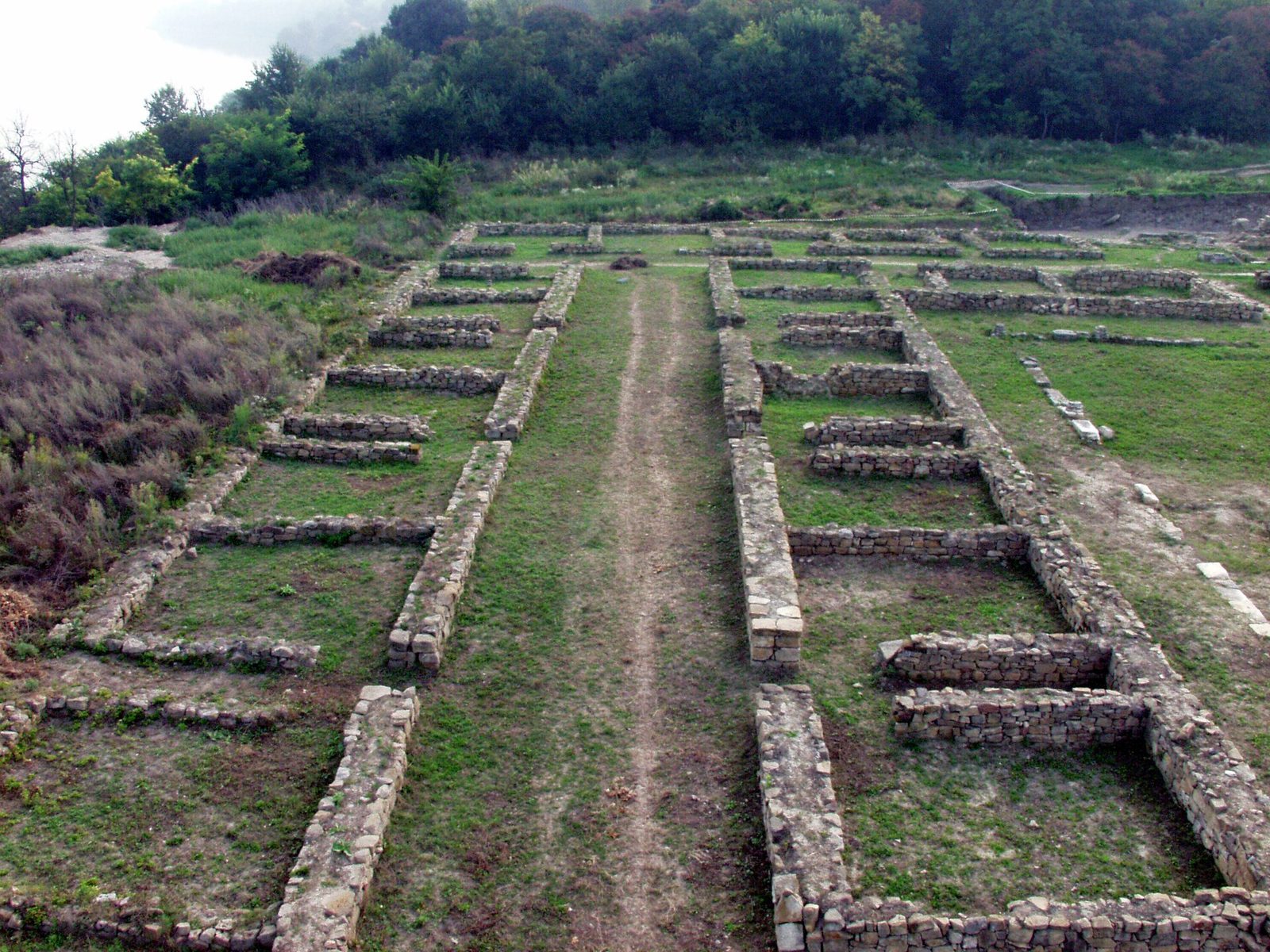
The camp occupied a slope descending toward the Danube, with terraced ground within its defences. Its footprint covered about 18 hectares and measured approximately 492 metres from north to south and 368 metres from east to west. The riverbank is about 40 metres above sea level, while the slope reaches roughly 70 metres at its southern high point.
The fortress
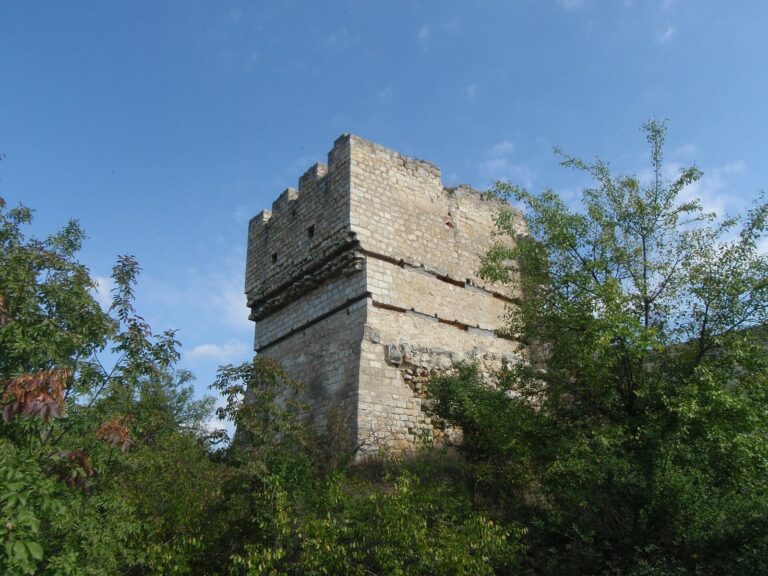
Earth and timber formed the earliest fortifications. Under Trajan, stone walls replaced them; the walls were up to three metres thick and reinforced with square towers, and the camp acquired stone barracks. The defences were strengthened again under Justinian. A separate enclosure, covering roughly 8–10 hectares, extended the city eastward in the later Roman period.
Military headquarters and hospital
Headquarters and basilica
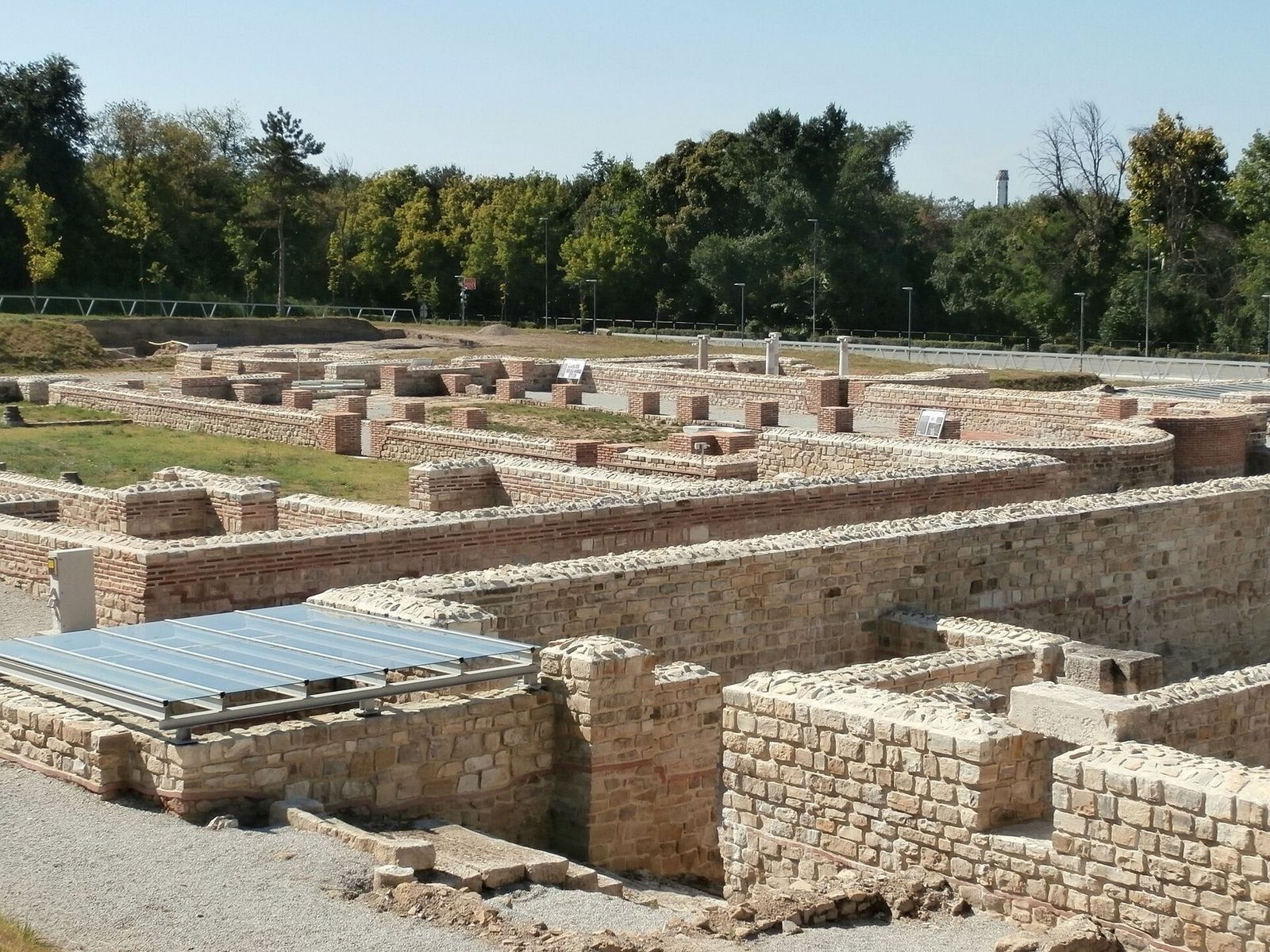
Trajan’s rebuilding included a monumental headquarters complex, a basilica (a large hall used for worship or administration), and a military hospital. The complex was constructed over the site of the earlier Flavian baths.
Military hospital
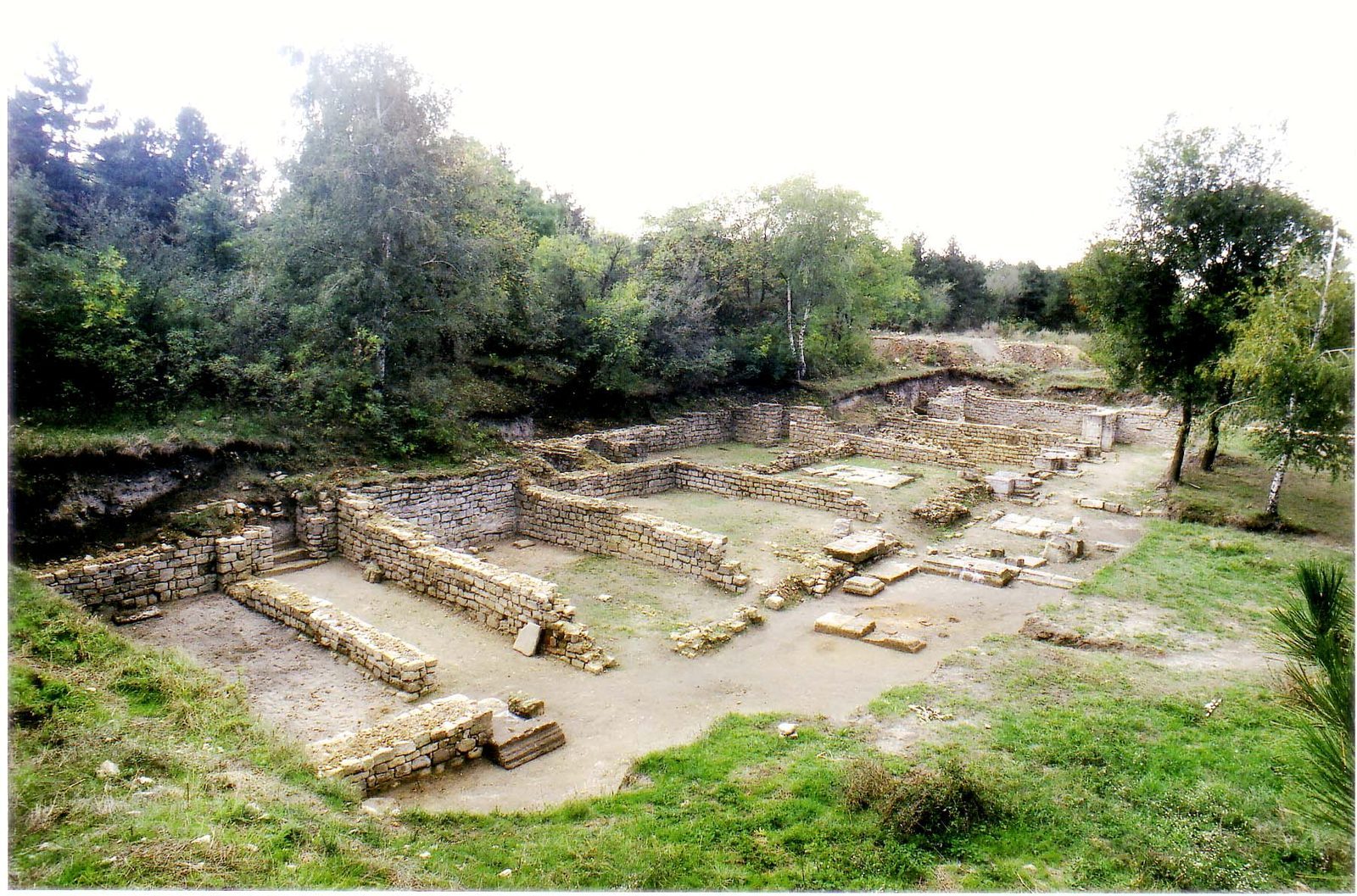
The hospital was arranged around a courtyard measuring 32.6 by 42.4 metres. Three wings, each 5.2 metres wide, enclosed it. Two wings contained rows of rooms, while the central one served as a corridor and could accommodate extra beds. Rooms were often grouped in threes, with a 1.8-metre-wide vestibule between two square patient rooms, each measuring 5.2 metres on a side. Two large rooms beside the main entrance served outpatients and treatment. The entrance faced the main camp road leading toward the headquarters and stood beside an external covered walkway. Of the courtyard’s three entrances, one aligned with the main entrance; the others lay at the western ends of the north and south corridors.
Other hospital rooms served as storerooms for pottery and lamps or for domestic use, and the building had its own latrine. Its walls were plastered and painted red, and the floors were finished with finely sifted sand. A raised central roof section admitted light. A plain classical-columned walkway surrounded the courtyard, where a small temple to healing deities measured 2.46 by 2.60 metres. Finds included an altar dedicated to Asclepius, the Greek god of healing, by the whole legion, along with smaller altars, bases for cult statues, and a clay altar. Some hospital walls still reach the level of their window niches.
Civilian settlements and surrounding features
Settlements and workshops
The settlement beside the legionary camp spread west and south of the fortress. During the early imperial period it covered about 70–80 hectares. A separate, smaller settlement at Ostrite Mogili lay more than two kilometres east of the camp and occupied about 15 hectares during the same period. Glassmaking workshops have been found there and elsewhere in and around Novae.
Villas
A villa west of the fortress, within the settlement beside the camp, may have served as an official residence. It was destroyed during Gothic attacks in the middle of the third century. Another villa occupied the site of the former military hospital and may have remained in use until the Gothic invasions of 376–382.
Water supply, burial grounds, and sanctuary
Three known aqueducts supplied the fortress, baths, and town. One extended for at least nine kilometres and fed a water-distribution tank at the fortress’s southeastern corner. A fountain structure was also associated with the water system. Burial grounds lay west, east, and south of the fortress along roads leading out of the camp, with another area to the east and southeast. About two kilometres south of the fortress, outside its eastern walls, stood a temple to Liber Pater, a Roman deity associated with fertility and wine.
Later streets and religious buildings
Streets and eastern district
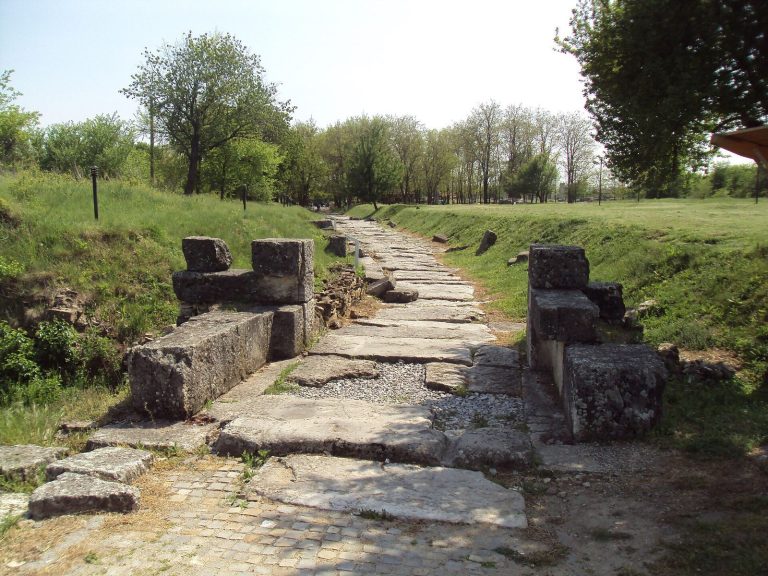
As civilian construction took over the former camp, new paved streets were laid using reused stone, often bearing inscriptions. Buildings from this phase also used sun-dried brick. Later defences enclosed the eastern part of the settlement.
Bishop’s complex
A complex covering about 6,500 square metres included two basilicas, residential buildings, and service areas. It appears to have begun in the first quarter of the fifth century over soldiers’ baths destroyed during the Gothic wars of 376–382. The larger basilica, probably the cathedral, stood at the western end of the forum. Divided into three aisles, it measured 40.6 by 24.3 metres and was rebuilt from the early fifth century through the third quarter of the sixth. A smaller three-aisled basilica northwest of it measured 16.7 metres long and dates from the second half of the fifth to the first half of the sixth century.
Other churches
Four further churches have been identified in the ancient city. At the eastern gate, a church built over a second-century building in the late fourth century remained in use until the early fifth; a smaller chapel then occupied the site until the seventh century. West of the fortress, the remains of a 31-metre-long, three-aisled basilica date to the middle of the fifth century. North of the forum, two churches were built one above the other, the earlier in the late fifth century and the later in the early sixth.
Western church and cemetery
A church and cemetery occupied the western part of the city in the ninth to eleventh centuries.
Possible amphitheatre and burials
A military amphitheatre has been proposed for the northeastern side of the camp. Possible Roman soldiers’ burials were discovered near Novae in 2018.