Cherven: A Medieval Bulgarian Fortified Town
Site at a Glance
- Popularity
- High
- Country
- Bulgaria
- Primary era
- Medieval
- Eras represented
- Iron Age, Medieval
- Civilizations
- Byzantine, Second Bulgarian Empire, Thracian
- Site type
- City
On this page12 sections
History
Early settlement and medieval rise
Cherven is a medieval fortified town whose ruins lie near the village of Cherven in northeastern Bulgaria. People had lived in the area since the arrival of the Thracians, ancient peoples of the Balkans. The medieval town succeeded a Byzantine fortress dating to the sixth century. Cherven was first mentioned in the eleventh century in an Old Bulgarian apocryphal chronicle.
From the twelfth through the fourteenth century, Cherven was one of the principal military, administrative, economic, and cultural centers of the Second Bulgarian Empire, a medieval Bulgarian state. After 1235, it also became the seat of an Orthodox bishopric, a church jurisdiction administered by a bishop.
Conflict and expansion
In 1242, raids by the Golden Horde, a Mongol khanate that ruled parts of Eastern Europe and western Asia, affected the town. Troops of the Byzantine Empire, the medieval continuation of the Roman Empire in the eastern Mediterranean, briefly captured Cherven during the reign of Ivailo, a Bulgarian tsar who ruled from 1278 to 1280.
Cherven underwent intensive urban development in the second half of the fourteenth century. It became a center for iron extraction and working, goldsmithing, construction, and the arts. Its position on routes linking the Danube with Bulgaria’s interior also supported its role as a trade center.
Conquest and archaeological study
Ottoman forces conquered Cherven in 1388 during the Bulgarian-Ottoman Wars. The town initially kept its administrative functions, but later declined in importance.
The first excavations took place in 1910 and 1911 under historian Vasil Zlatarski, and regular archaeological research began in 1961. Archaeologist Stoyan Yordanov of the Rousse Regional Museum of History has worked at the site for more than three decades and leads annual summer excavations. Cherven became a national archaeological reserve in 1965, and its remains are important to the study of medieval Bulgarian culture.
Remains
Fortified settlement
Layout
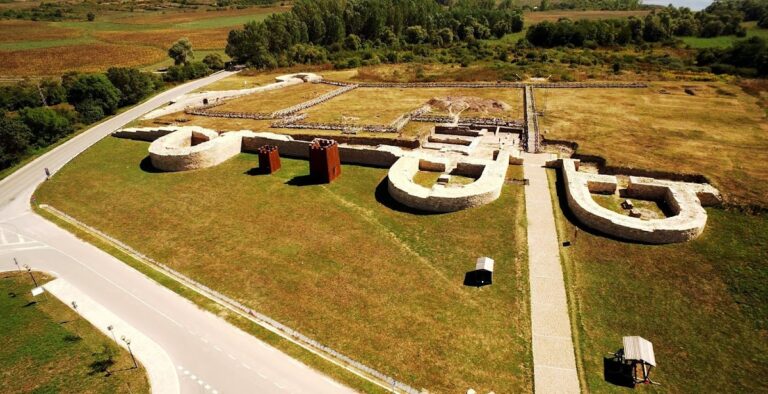
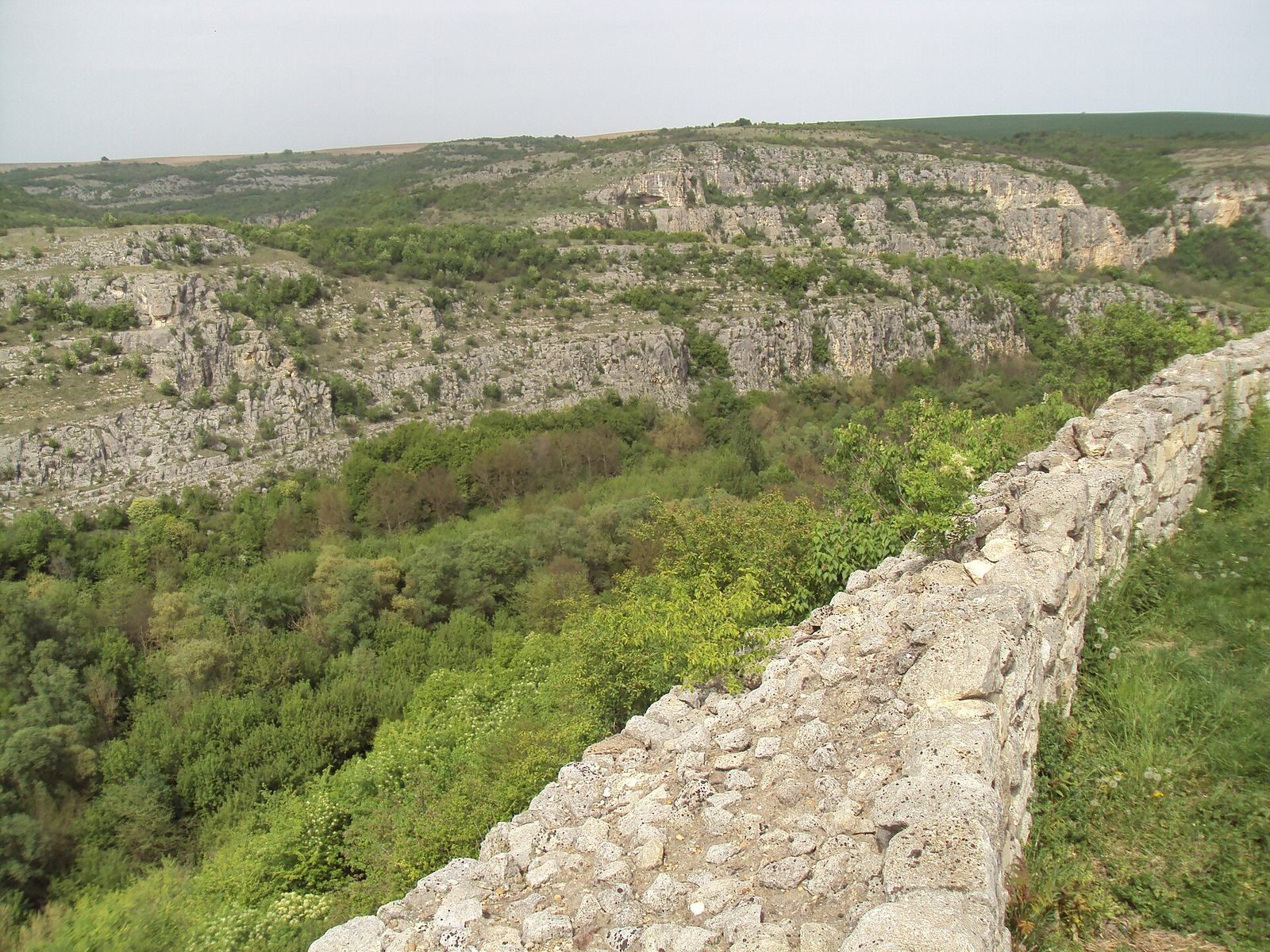
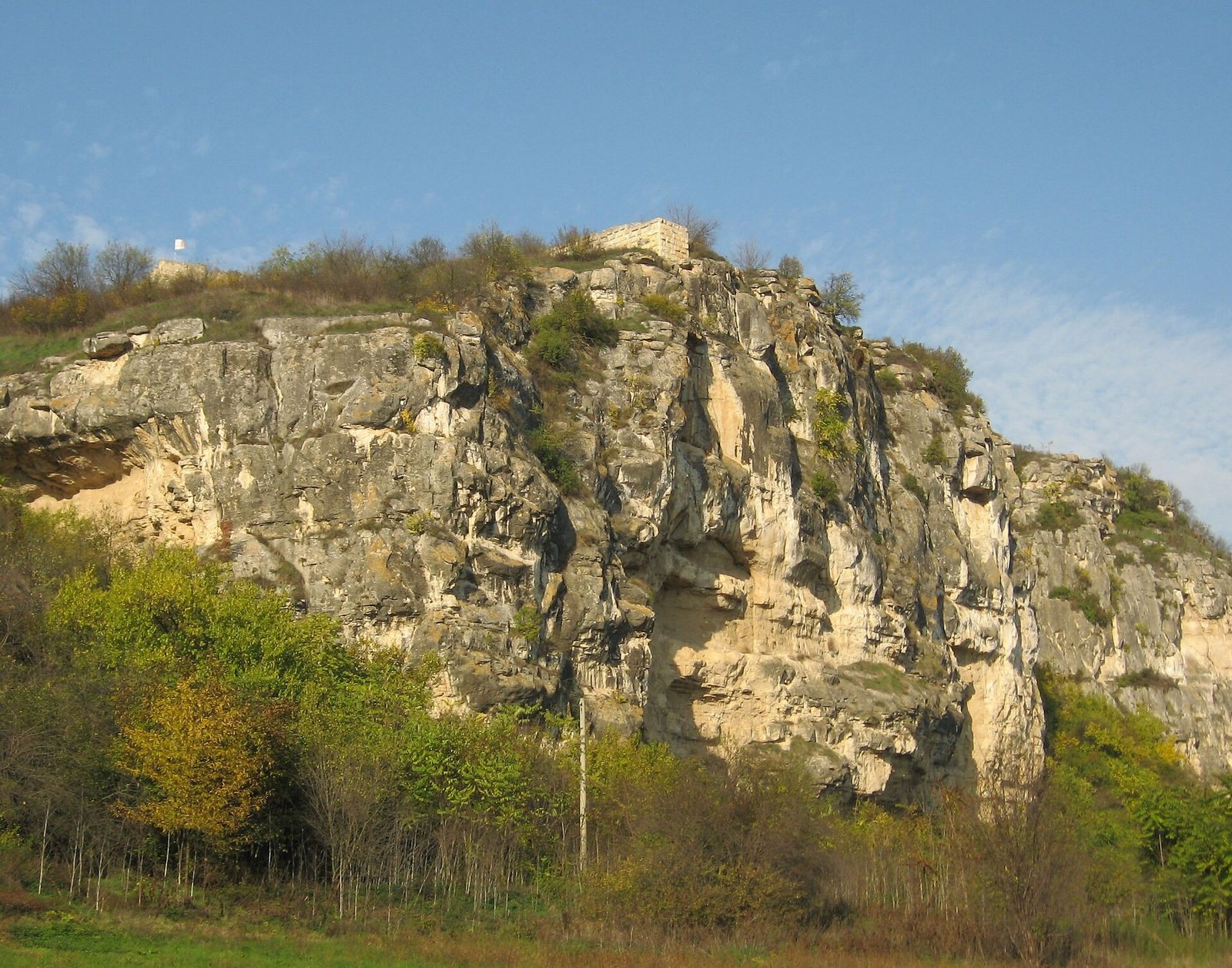
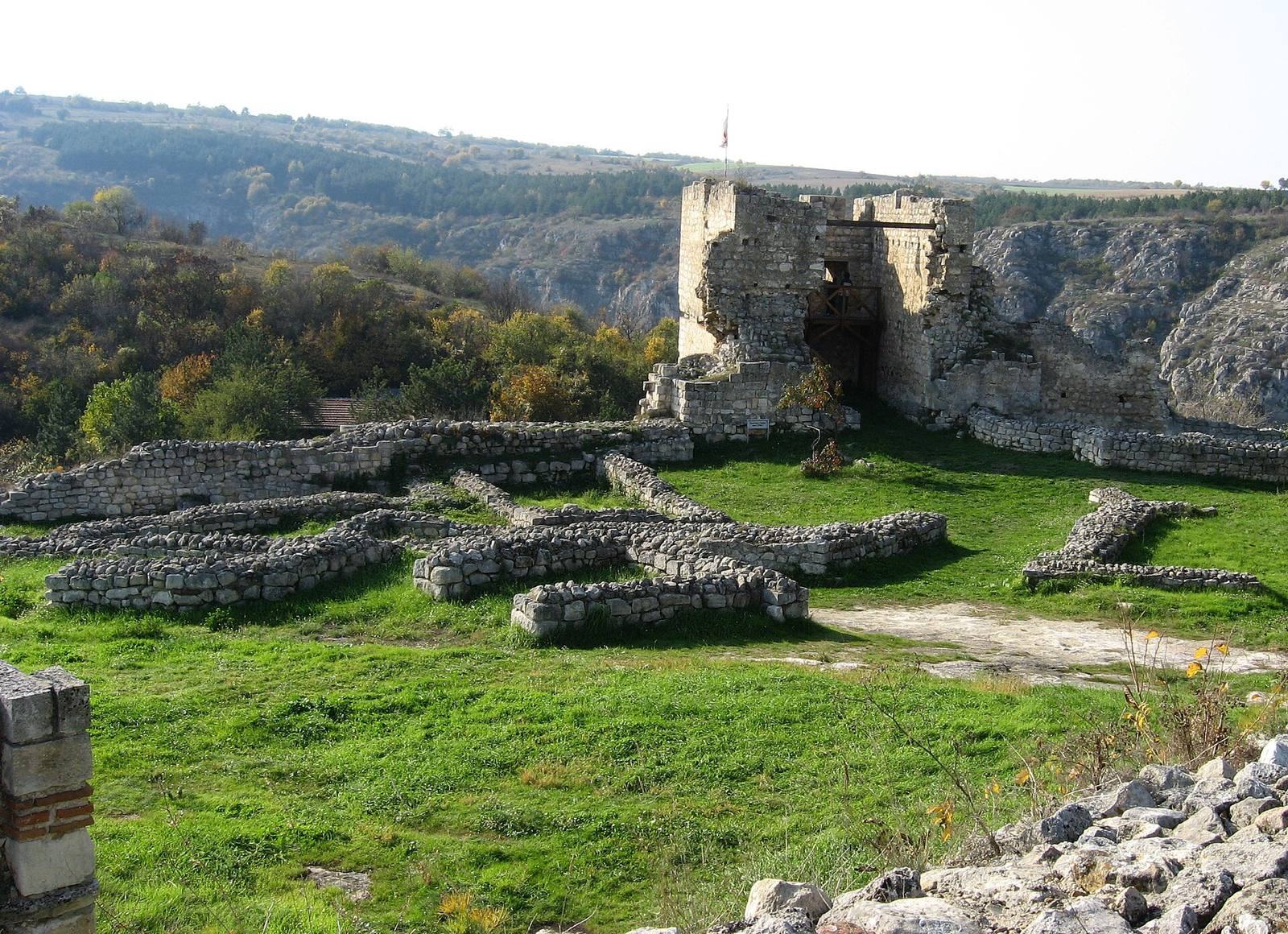
The town occupied a narrow plateau beside a cliff along the Cherni Lom River. In the second half of the fourteenth century, its urban area exceeded one square kilometer. The fortified inner town stood on rocky ground within a bend of the river, while the outer town extended below the rocks and across nearby hills. The settlement was densely built and protected by a complex system of fortifications.
Palace
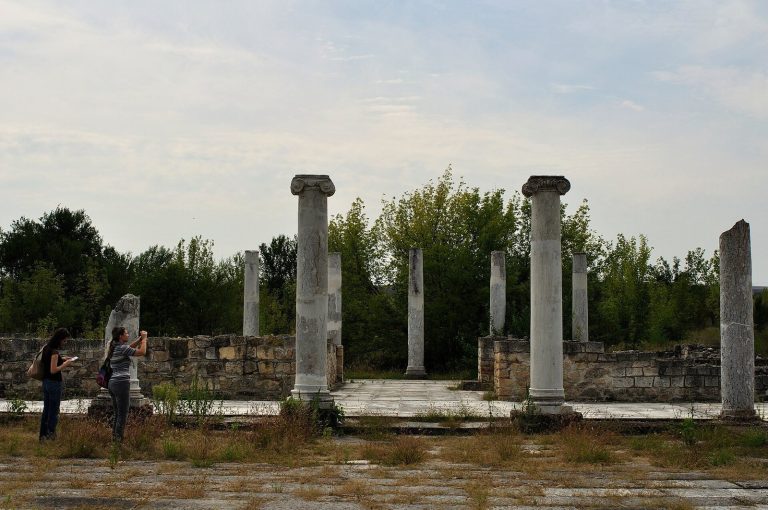
Excavation has revealed a large palace with fortified walls up to three meters thick. The surviving remains show the substantial construction of this complex within the fortified town.
Water passages and town buildings
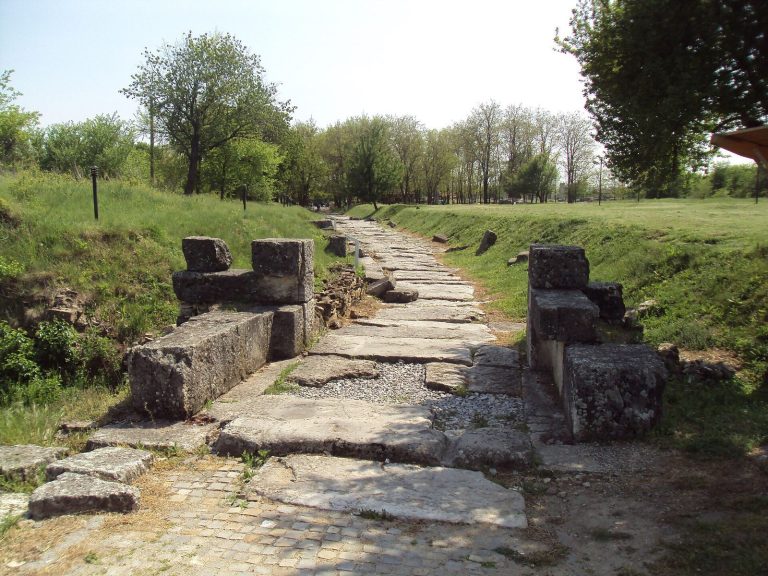
Two well-preserved underground passages formed part of the town’s water-supply system. Excavations have also exposed administrative and residential buildings, workshops, and streets.
Churches and tower
Churches
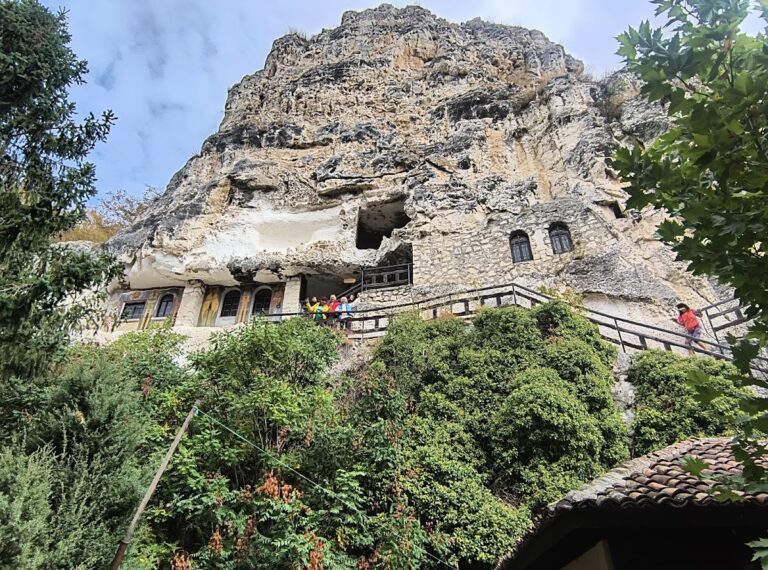
Thirteen churches have been excavated at Cherven, and six are now in ruins. A church dating to the fourteenth century had murals depicting warrior saints.
Three-storey tower
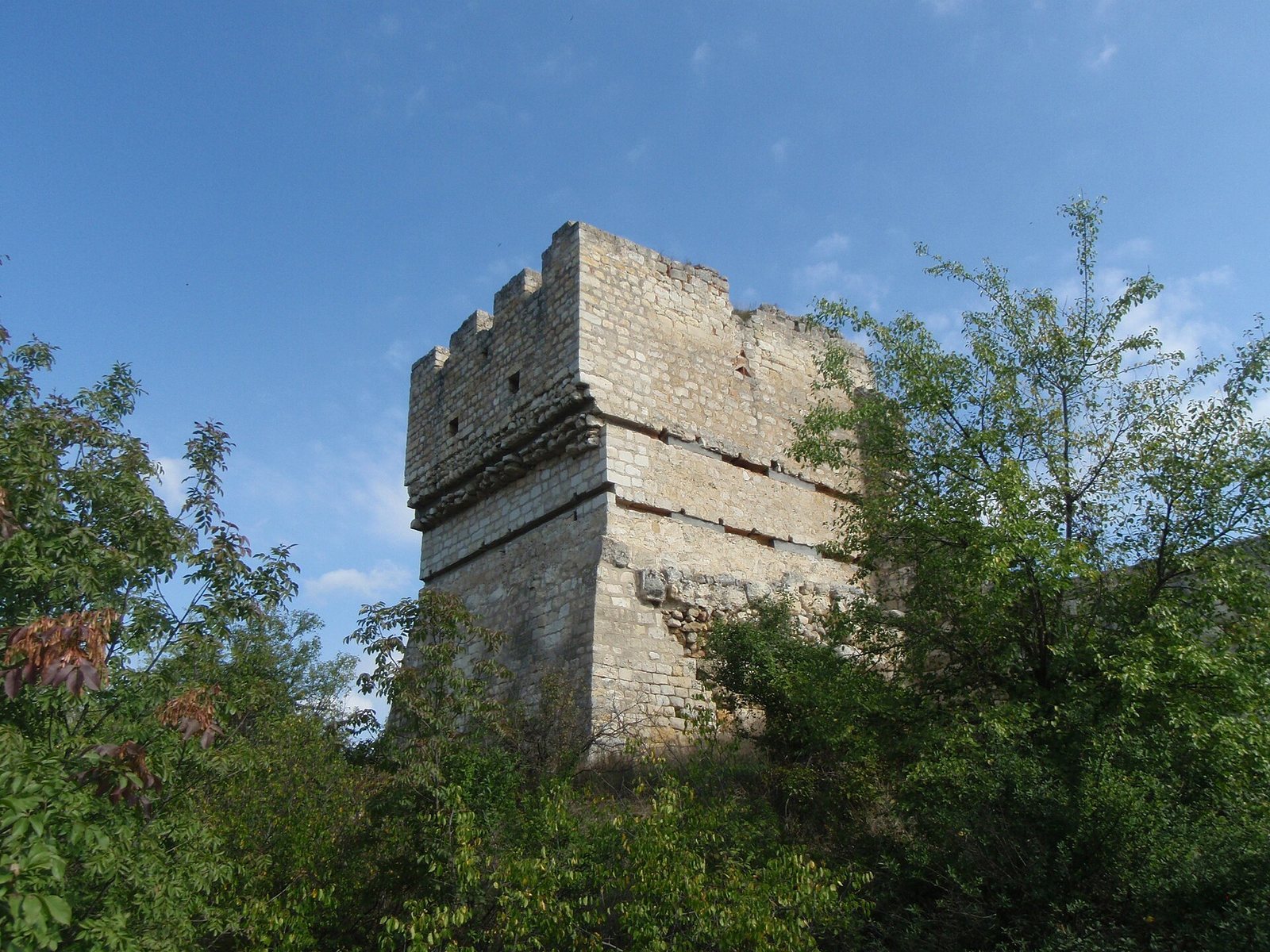
A fully preserved tower dating to the fourteenth century stands twelve meters high and has three storeys. It served as a model for the reconstruction of Baldwin’s Tower at Tsarevets in Veliko Tarnovo in 1930.