Rock-hewn Churches of Ivanovo: A Medieval Orthodox Monastic Complex in Bulgaria
Site at a Glance
- Country
- Bulgaria
- Primary era
- Medieval
- Eras represented
- Medieval, Early Modern
- Civilizations
- Ottoman, Second Bulgarian Empire
- Site type
- Religious
- Remains
- Monastery
On this page16 sections
History
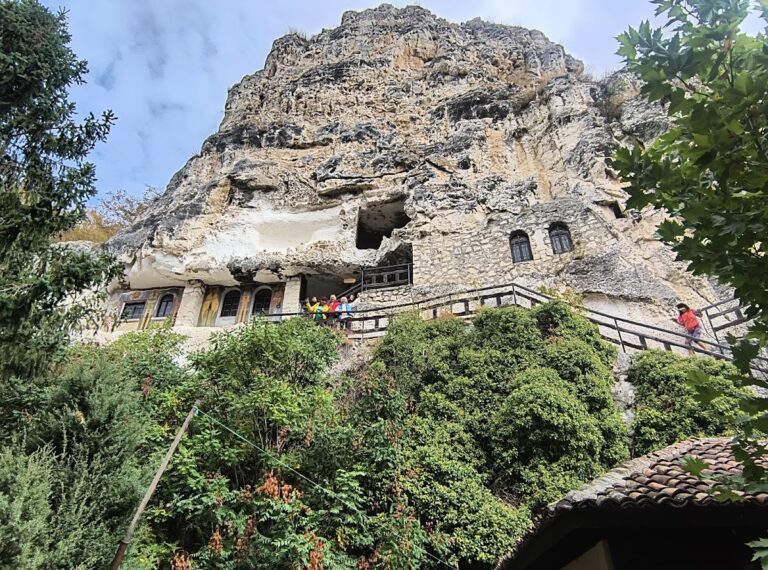
The Rock-hewn Churches of Ivanovo are a medieval Orthodox monastic complex near Ivanovo, Bulgaria, created by Bulgarian hermits and monks who began adapting limestone caves in the late 12th or early 13th century. The complex grew during the Second Bulgarian Empire, the medieval Bulgarian state centered at Tarnovo, and maintained ties with its royal court.
Origins and foundation
By the late 12th or early 13th century, hermits were living in natural caves in the Rusenski Lom valley. Over time, they cut additional rooms, chapels, and churches into the limestone. In the 13th century, the monk Joachim, who later became patriarch, the senior bishop of the Bulgarian Orthodox Church, founded the Monastery of St Archangel Michael.
The Church of the Transfiguration was carved before the monastery was founded. After returning from Mount Athos, an Orthodox monastic center in northern Greece, Joachim settled beside the Rusenski Lom. Monastic building and occupation continued into the 17th century.
Royal patronage and monastic life
The monastery maintained connections with the court at Tarnovo. Bulgarian rulers Ivan Asen II and Ivan Alexander donated gold and supported the community, as did nobles from Tarnovo and the medieval town of Cherven.
In the 14th century, the monastery became a center of Hesychasm, an Orthodox contemplative tradition that emphasizes prayer and inner stillness as a way of drawing closer to God. The wider Rusenski Lom valley and its tributaries also contained rock-cut churches, monasteries, hermitages, and individual cells, making the region a center of Bulgarian spiritual life. At its height, the Ivanovo complex included about 40 churches and roughly 300 other structures.
Ottoman rule and modern preservation
The complex remained in use during the early centuries of Ottoman rule, then gradually declined. Weathering and incursions into the area damaged some of its wall paintings.
In 1979, the Rock-hewn Churches of Ivanovo were inscribed on the UNESCO World Heritage List. The listed area covers 171.9 hectares. By the 1980s, light, humidity, temperature changes, and growing visitor numbers threatened the paintings, leading to restrictions on public access. Restoration work in the early 2000s, supported by UNESCO, preceded the reopening of the paintings in 2002.
Remains
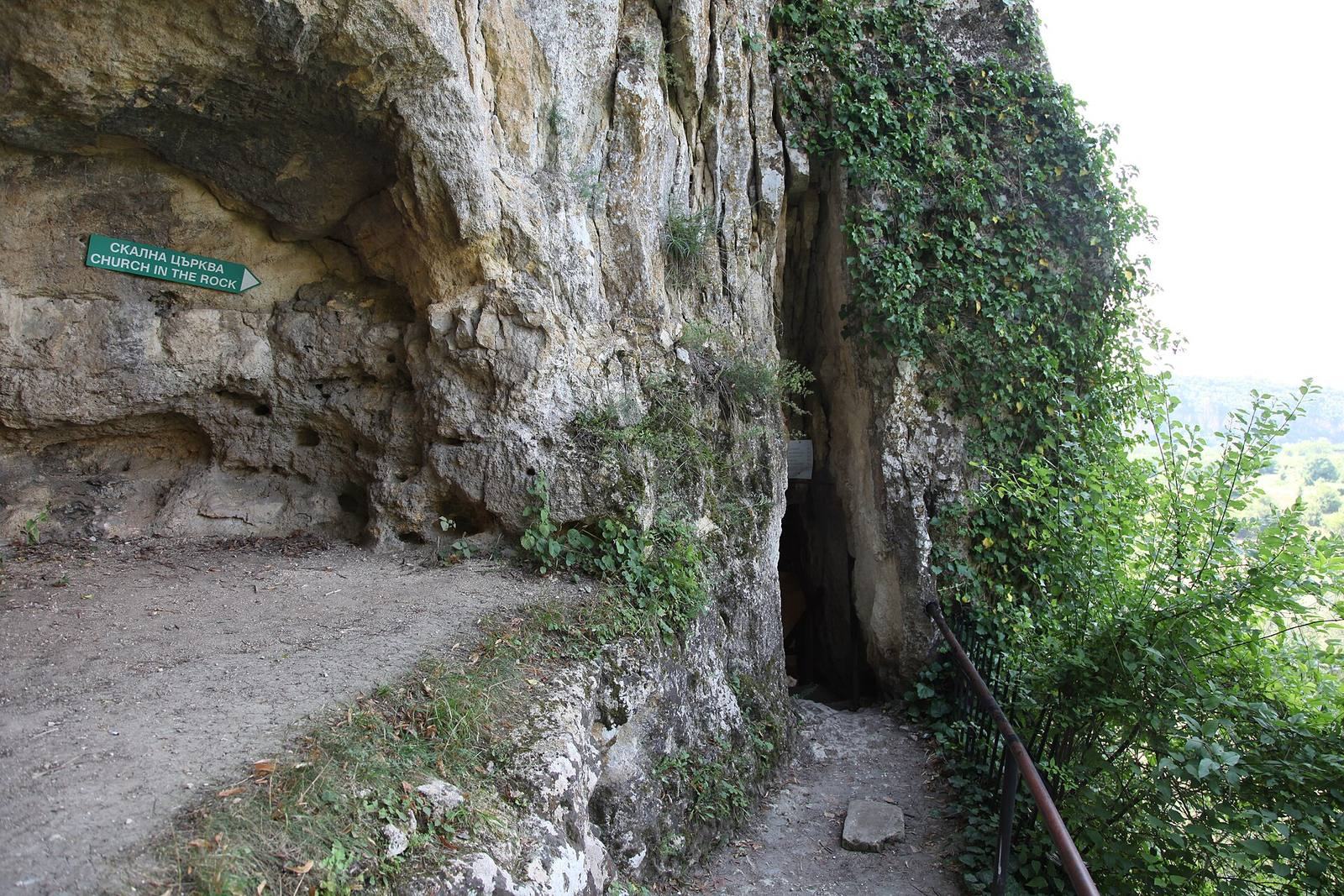
The complex occupies high limestone banks within Rusenski Lom Nature Park, about 20 km south of Rousse. The cliffs rise roughly 32 m above the Rusenski Lom, and the rock-cut rooms extend across different levels. Individual spaces vary in scale and arrangement, from linked chambers to larger churches with adjoining rooms.
The principal churches
Church of the Virgin Mary
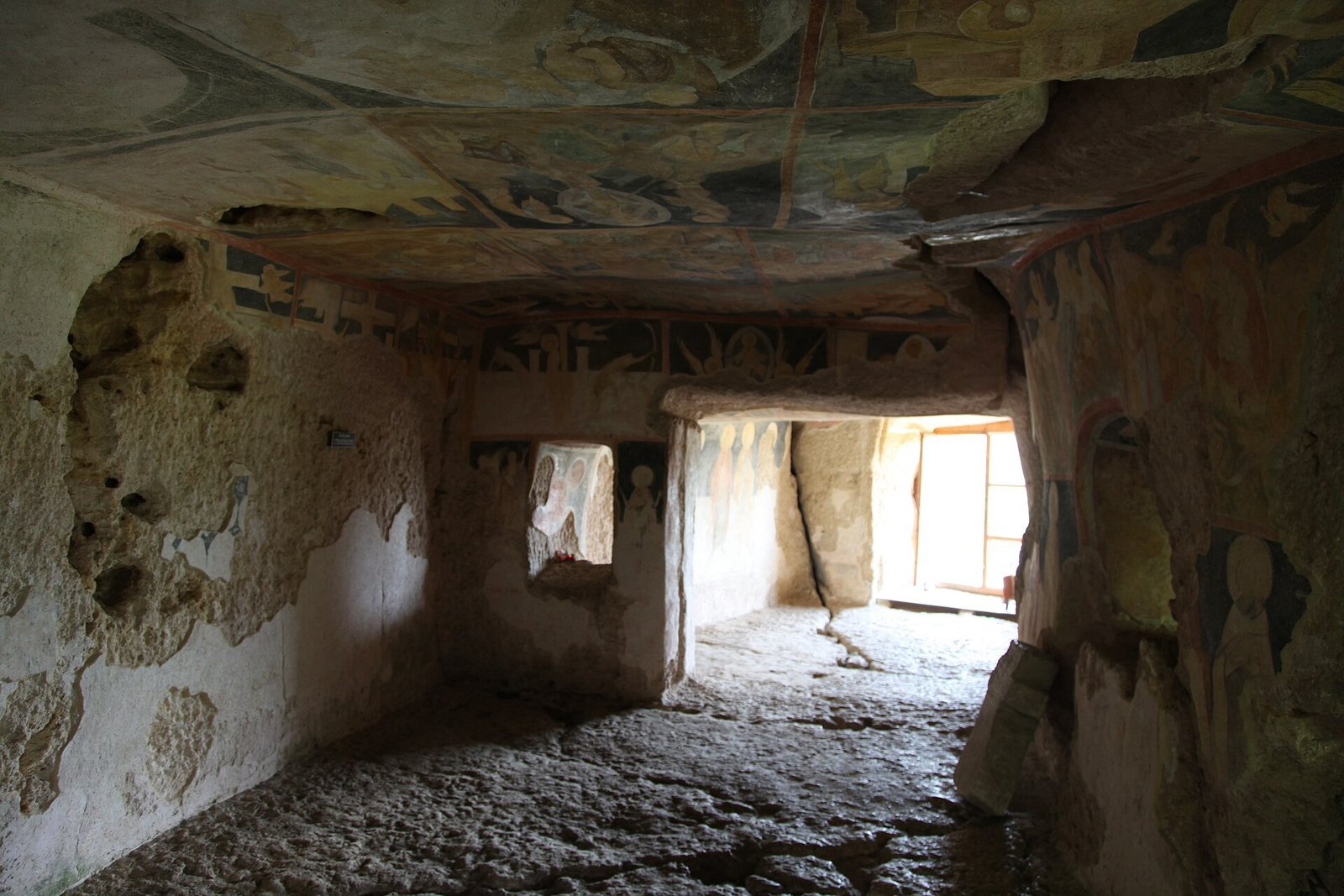
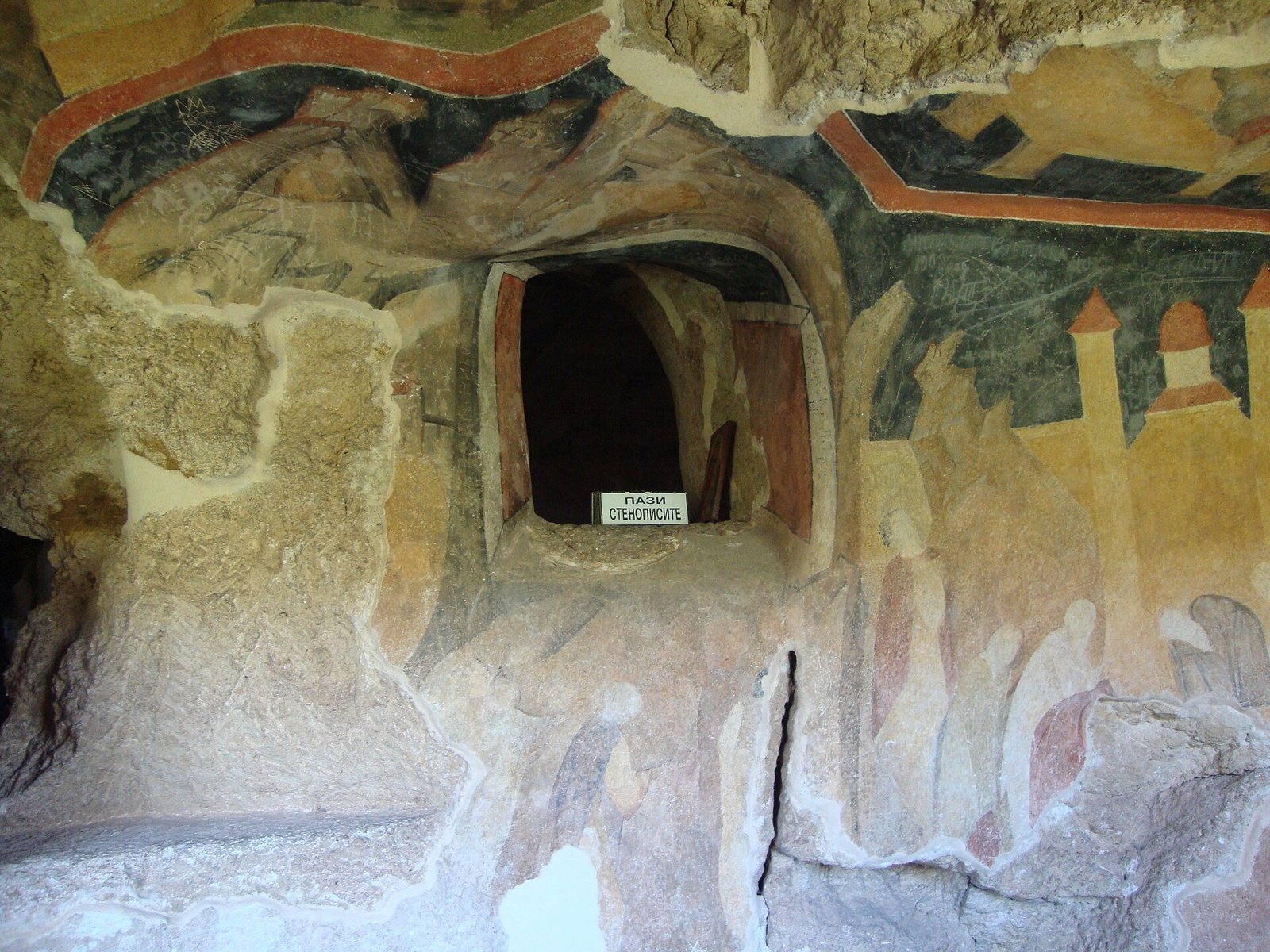
Cut into the rock, the Church of the Virgin Mary consists of an entrance vestibule, a main worship space, and an adjoining chapel. It measures about 16 m long, 4 m wide, and 2.15 m high, and stands roughly 38 m above the valley floor. Its 14th-century wall paintings show the final seven days of Christ’s life and the life of John the Baptist, a Jewish preacher regarded in Christian tradition as Jesus’s forerunner. The vestibule includes portraits of Ivan Alexander, Queen Theodora, and saints, while the chapel’s paintings depict early Syrian Christian ascetics, Christians who pursued disciplined, renunciant religious lives.
Buried Church of St Michael
The Buried Church of St Michael forms the oldest part of the complex. Its rooms are linked on a single level, with small passages connecting some chambers; many of those passages have since collapsed. Seven of the oldest caves were cut for the monastery of St Michael. The church’s walls are smooth, and one bears a portrait of Ivan Asen II.
Other rock-cut complexes
Baptistery complex
About 100 m from the Buried Church, the Baptistery complex includes a large church and living quarters. A baptistery is a place used for Christian baptism. One well-preserved church in the complex formerly served this purpose; scenes from the Passion of Christ cover its walls and ceiling.
Gospodev Dol
The Gospodev Dol complex has rooms on two levels that extend into a deep natural cave.
Demolished Church
Dedicated to Saints Theodore Tiron, meaning “the Recruit,” and Theodore Stratelates, meaning “the General,” the Demolished Church belongs to a three-level complex of a large church and surrounding rooms. It is, along with the Church of the Virgin Mary, among the most richly decorated churches in the complex. A donor portrait shows Queen Theodora, Ivan Alexander’s first wife, who later became a nun under the name Theophana.
Belbernitsa
About 50 m from the Demolished Church is Belbernitsa, a complex of rock-cut monastic cells.
Paintings and inscriptions
Frescoes
Wall paintings made on wet plaster, known as frescoes, from the 13th and 14th centuries survive in five churches. They are attributed to leading artists of the Tarnovo School, a medieval Bulgarian artistic tradition associated with the capital, and are regarded as important examples of Bulgarian medieval art. The paintings in the Church of the Virgin Mary are also representative of Palaeologan art, the artistic culture of the last Byzantine ruling dynasty.
Inscriptions and graffiti
Graffiti and inscriptions remain on the walls of the monastic rooms. One indented inscription by the monk Ivo Gramatik is dated 1308–1309.