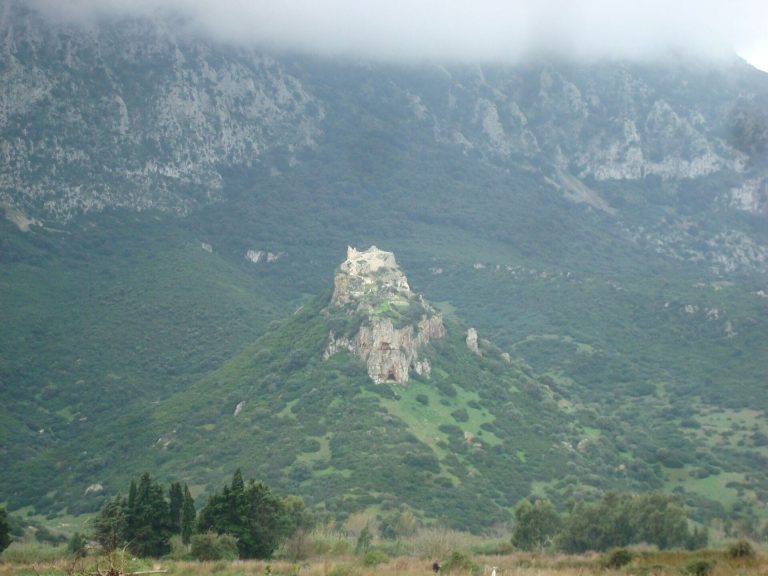
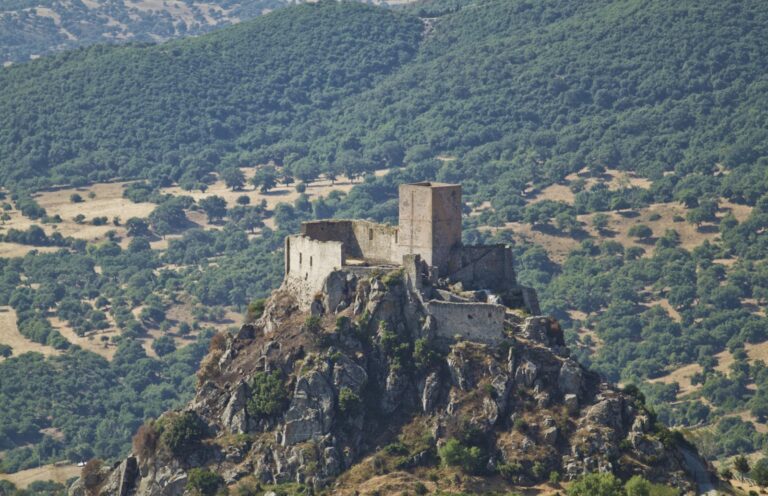
Nostra Signora ‘e su Monte: A Rural Marian Sanctuary near Nuoro
Site at a Glance
- Popularity
- Very Low
- Country
- Italy
- Primary era
- Early Modern
- Eras represented
- Early Modern
- Civilizations
- Crown of Aragon, Spanish
- Site type
- Religious
- Remains
- Church
On this page9 sections
History
Nostra Signora ‘e su Monte is a rural sanctuary dedicated to the Virgin Mary on Ortobene, near Nuoro, Italy. Its foundation stone was laid on 26 April 1608. The sanctuary belongs to the Diocese of Nuoro and follows the Latin rite, the Catholic Church’s principal Western liturgical tradition.
Foundation and family patronage
The Nuorese brothers Melchiorre, Giovanni Angelo, and Pietro Paolo Pirella Satta commissioned the church at their own expense. They had vowed to build it while returning from the sanctuary of Madonna of Montenero near Livorno. Melchiorre Pirella, a canon of Cagliari Cathedral, laid the first stone as delegate of Niccolò Cannavera, Bishop of Alghero. Cannavera had visited Nuoro in the days before and left on 26 April to continue his visitation. A dedicatory inscription says the church was completed within thirty days in honour of God and Our Lady of the Mountain.
The founders’ descendants held the right of patronage for about two and a half centuries. This legal right could include responsibility for a church’s upkeep and religious observances. Bartolomeo Pirella Chessa, one of the founders’ sons, is named as a patron. Among later chief patrons were his son Don Carlos Pirella Satta and Don Carlos’s cousins Carlos Pirisi Pirella and Antonio Angelo Thola Pirella. The patronage subsequently passed to Gavino Pirella Satta and, by the early nineteenth century, to Gavino Leonardo Tola Pirella.
In her will of 25 November 1834, Maria Francisca Pirella Tola left the patronage to her cousins Quirico, Antonio, Agostino, and Gavino Tola Pirella of Bitti, and to Grazia Satta. She charged them with arranging the feast according to the founder’s wishes. On 31 March 1846, the Tola brothers transferred the church and its properties to the Curia for the cathedral, giving up their patronage. They said the church’s distance made its upkeep and prescribed celebrations difficult; the cathedral took on responsibility for repairs and festivities.
Legal disputes and local associations
Private parties challenged the Curia’s possession of the church grounds in 1913. In February 1915, the Nuoro court restored the cathedral chapter’s possession of the church, its land, the adjacent cumbessias, small lodgings associated with rural sanctuaries and religious gatherings, and the surrounding area.
Grazia Deledda’s family spent summers at the church, which also provides the setting for events in her novel The Old Man of the Mountain. Deledda was a Sardinian novelist. From 1963, the church served briefly as a parish before returning to the cathedral’s jurisdiction. It has been a rectory since the early 2000s.
A bombing on 1 September 2002 destroyed some of the cumbessias, damaged the roof, and destroyed a plaque commemorating Deledda’s family’s stay. Repairs to the church exposed the letters M.P.F.O. where an interior arch begins rising from its support. They may be an abbreviation of a Latin phrase meaning “Melchiorre Pirella had this work made.” A small wooden copy of the statue of the Redeemer is carried around Ortobene’s circular road for the feast on 29 August.
Remains
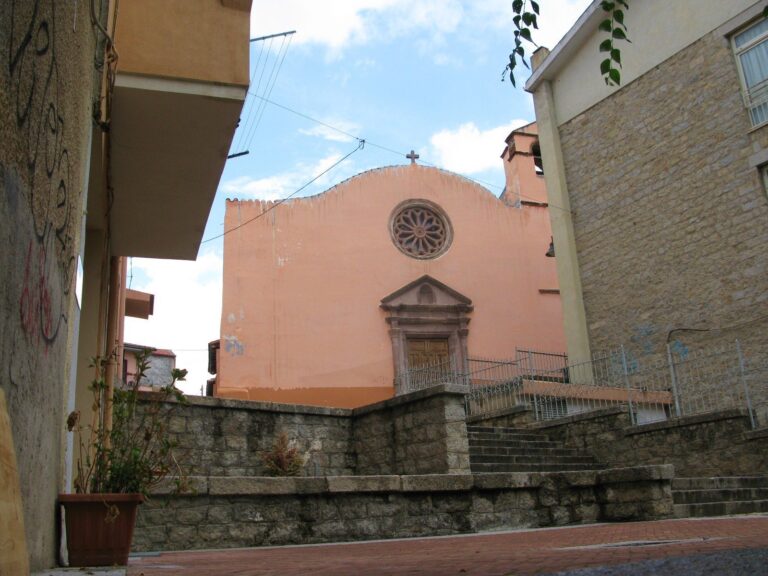
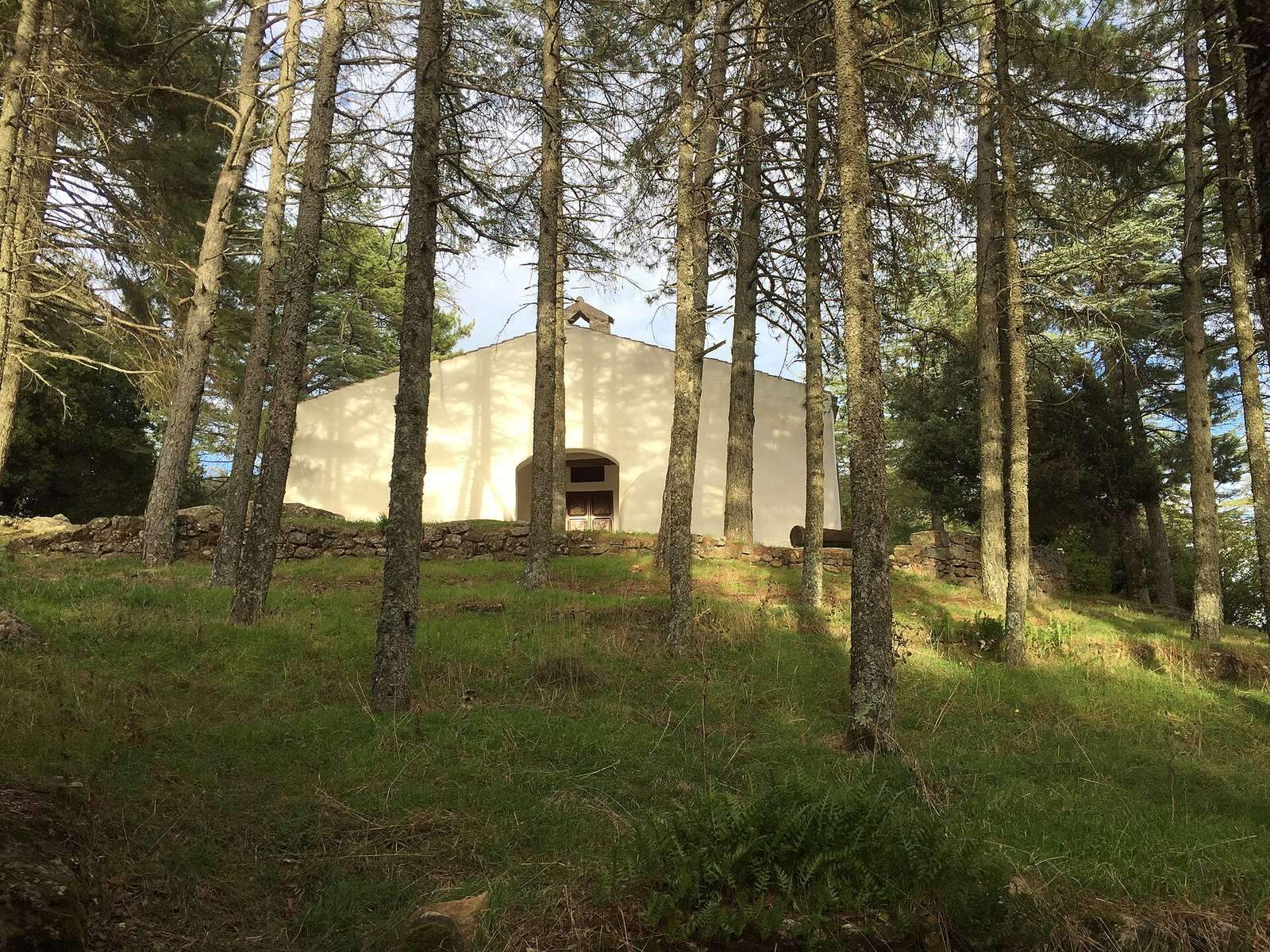
The sanctuary stands on elevated ground within Ortobene, a communal oak-bearing forest associated with Nuoro. Its church is a narrow hall, with a raised altar area at one end, while the surrounding grounds, once treated as the church forecourt, are now used as a park.
Church structure and interior
Hall and entrances
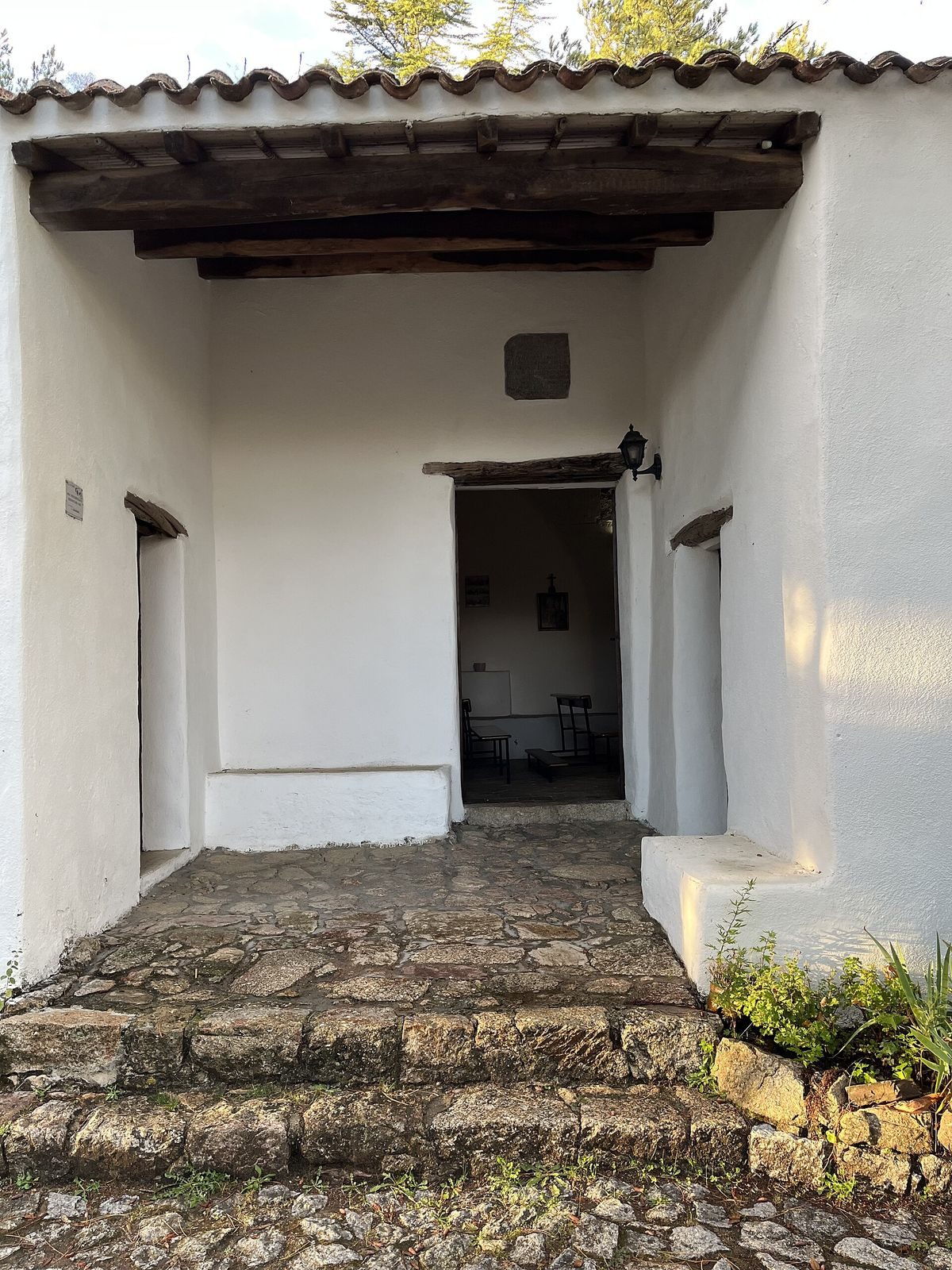
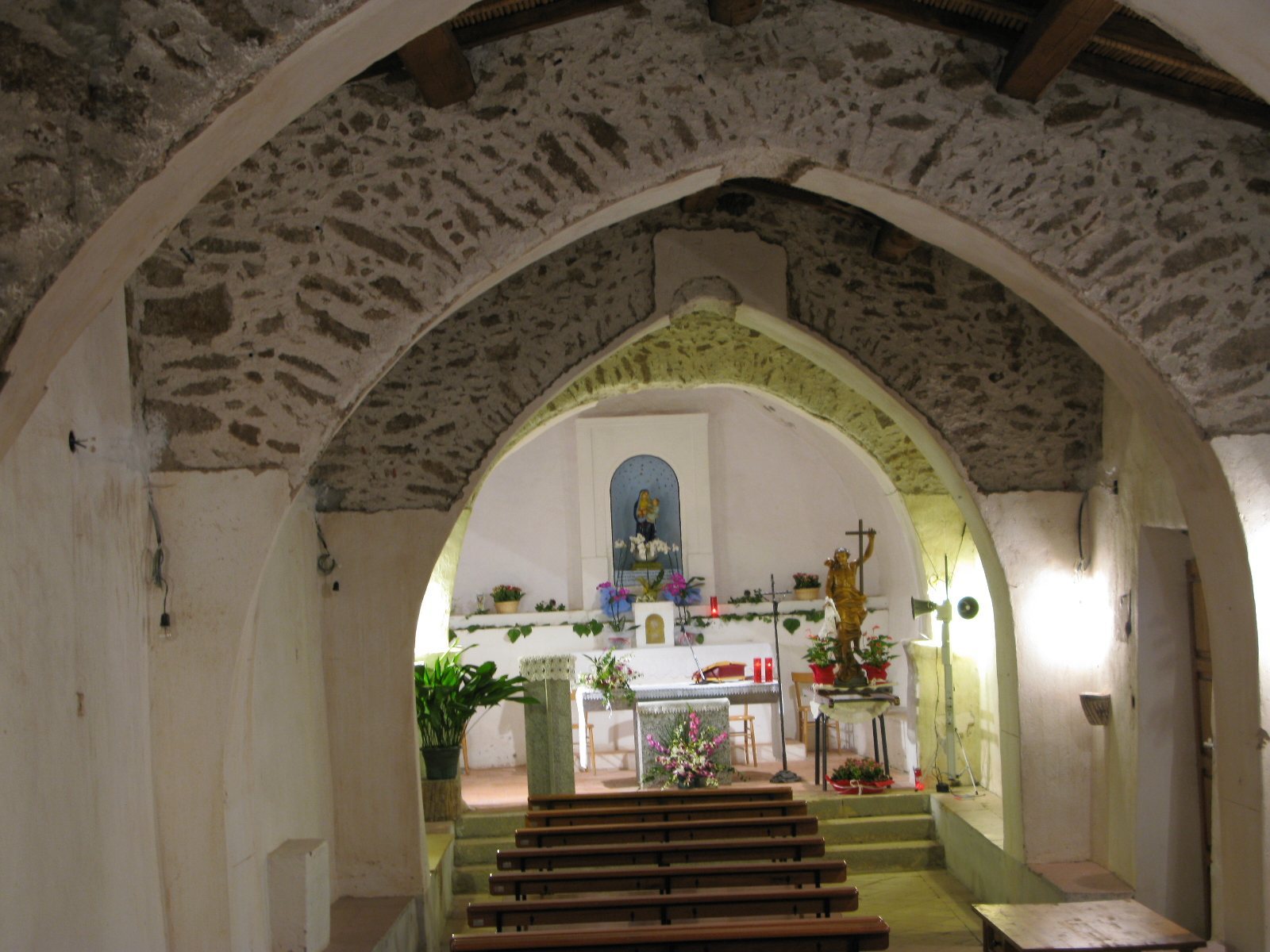
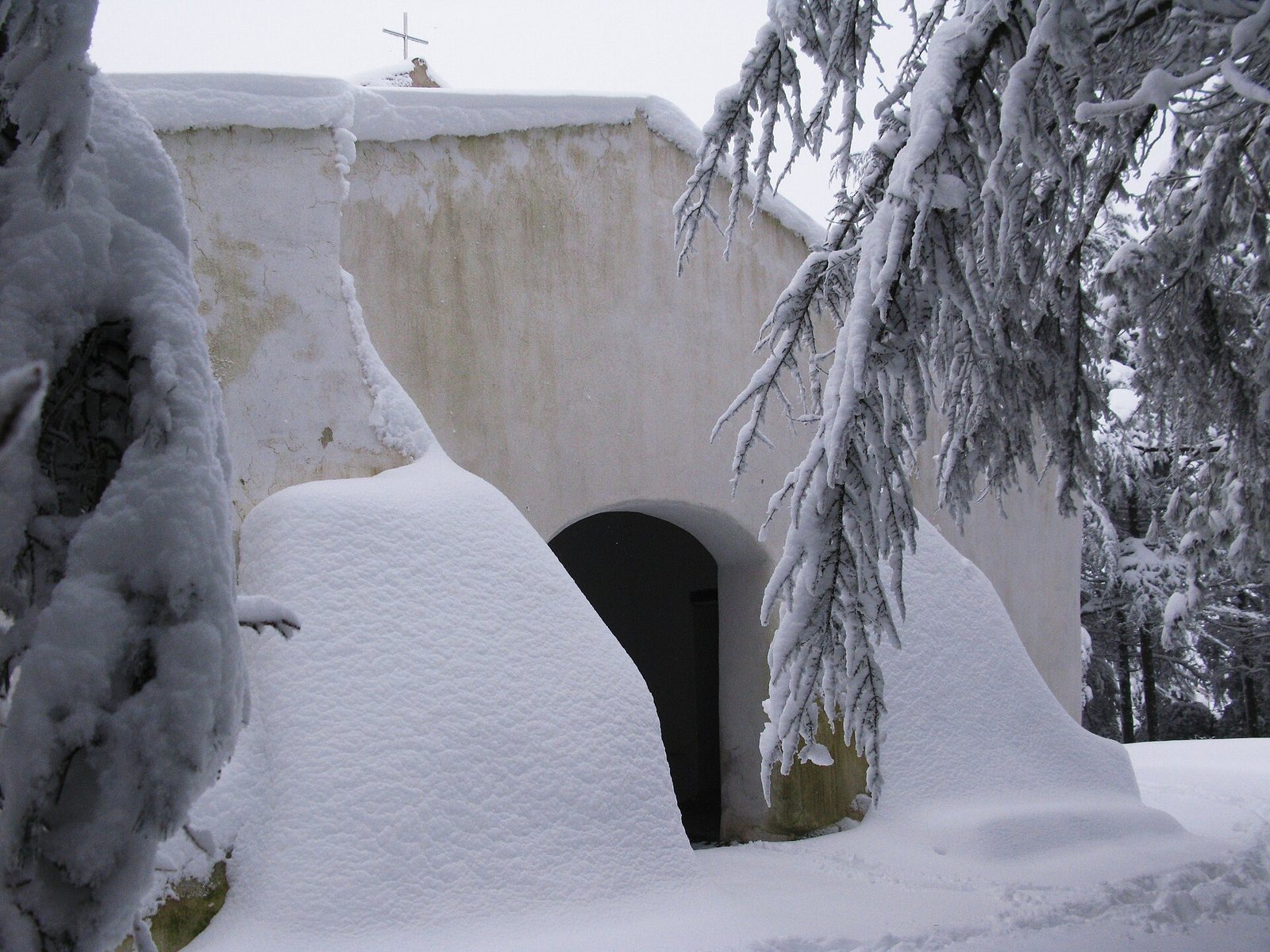
The single hall measures 22 metres long and nearly five metres wide. The main entrance opens through a small vestibule, and a second door provides side access. Above the main door, the Pirella family arms show an uprooted pear tree surmounted by three stars; the dedicatory inscription is beside the side entrance. Sardinian terracotta covers the floor. The restored roof uses reeds and canes, a construction typical of rural houses, and is divided by three slightly pointed arches.
Presbytery and devotional furnishings
Three granite steps lead to the raised presbytery, the area around the altar. One step bears the date 9 July 1887, marking its renovation by Giuseppe Sotgiu in fulfilment of a vow. The presbytery has a barrel-vaulted ceiling and a traditional Roman Catholic altar associated with the form of the Mass shaped by the Council of Trent. An inscription at the base of the niche above it says that the altar was donated to Our Lady of Mount Ortobene and thoroughly restored by Sotgiu on 15 July 1897, also in fulfilment of a vow.
The niche holds a statue of the Virgin with the Christ Child placing one hand inside her collar. The detail is comparable to the image at Madonna of Montenero, the sanctuary linked to the founders’ vow. A nineteenth-century painting in the presbytery depicts the Virgin with Melchiorre Pirella wearing episcopal vestments; Pirella had donated vestments to the church. A small wooden copy of the statue of the Redeemer is kept inside.
Grounds and associated features
Sanctuary grounds and lodgings
The church’s large grounds were formerly regarded as its forecourt and now serve as a park. Small lodgings known as cumbessias stood beside the church. The entrance step of one bears the initials D.Gr., said to have been carved by Deledda in her youth.