Nuragic Complex of Sa Sedda e Sos Carros: A Settlement and Metalworking Center in Italy
Site at a Glance
- Popularity
- Low
- Country
- Italy
- Primary era
- Iron Age
- Eras represented
- Bronze Age, Iron Age
- Civilizations
- Nuragic
- Site type
- City
On this page9 sections
History
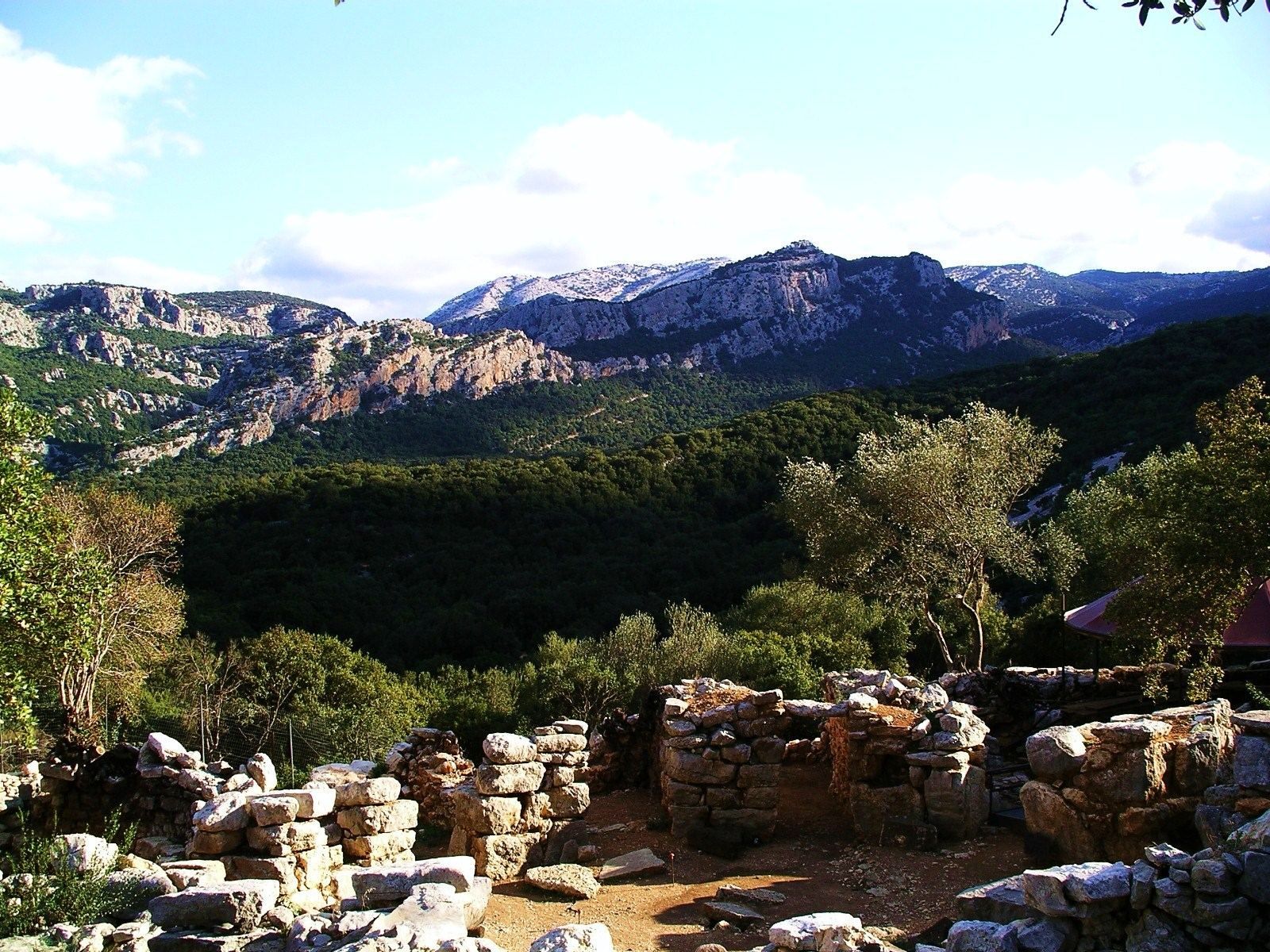
The Nuragic complex of Sa Sedda e Sos Carros is a settlement of the Nuragic civilization in Italy’s Lanaittu Valley, occupied from the Late Bronze Age into the succeeding Early Iron Age. The Nuragic civilization was a prehistoric Sardinian society named for its distinctive stone towers. The site’s Sardinian name is translated as “the passing point of the wagons.”
Sa Sedda e Sos Carros was a center of metalworking, with a foundry and evidence of ironworking, including slag. Its circular building is interpreted as a small shrine for water-related religious practices. The water system, substantial construction, animal sculptures and other evidence of wealth support this interpretation. Household or family worship has also been proposed, although the room’s small size would have limited its use.
In the building’s final phase, its purpose may have changed. A large deposit of metal objects and collapses in parts of the water system point to a possible shift in use.
Excavations began in 1977 and continued through later campaigns. Work in 1993 revealed the circular building and its basin.
Remains
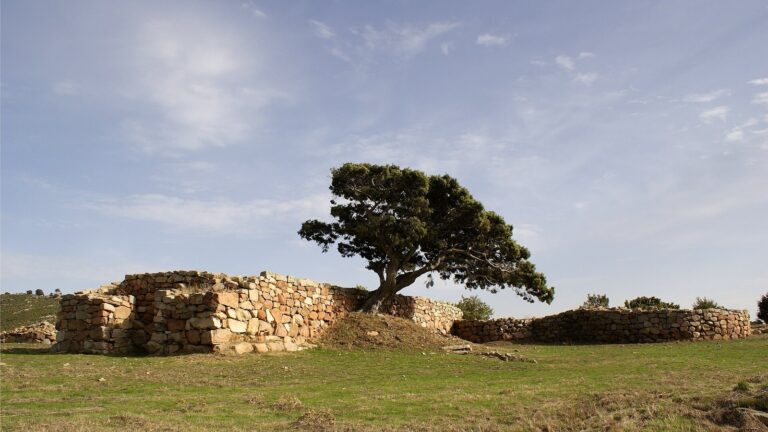
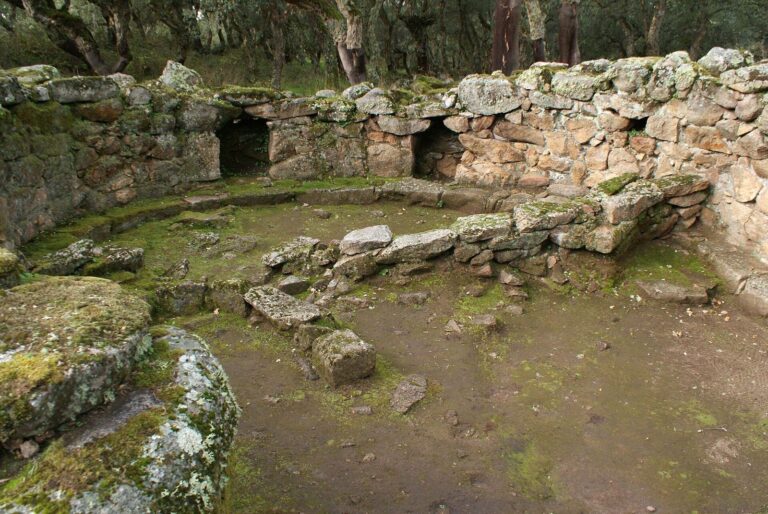
The settlement covers more than four hectares and includes numerous huts. Among its best-preserved features is a circular room with a basin. Its remains include structures built with material reused from earlier buildings.
Settlement and reused structures
Buildings beyond the housing block
Outside the housing block are remains of two circular huts and a rectangular room. The room’s irregularly arranged walls combine small polygonal blocks of local limestone with basalt blocks, probably salvaged from an earlier building.
Rectangular room
A deep niche in one corner held fragments of a large storage jar, a rectangular sharpening stone and a smoothing tool. A handled cup that narrows toward its base was found on the natural rock inside the room.
At the foot of the rear wall, a basalt basin about 71 centimeters across rests on a support 78 centimeters high. Fragments of a large storage jar inside it have been associated with water supply. A central circular hearth is edged with basalt fragments, probably reused from an earlier structure. Seven worked blocks in the opposite corner appear to come from the bench of an earlier circular room. Its basalt basin once stood at the center of that bench before being moved to the rectangular room, beneath the niche. Material found beside the room dates to the late seventh century BC. The arrangement resembles an elliptical building at Sirai, where an earlier circular room was reworked between the late seventh and first half of the sixth century BC, with parts of its bench and floor incorporated into the later structure.
Circular building
Room and sculpted wall
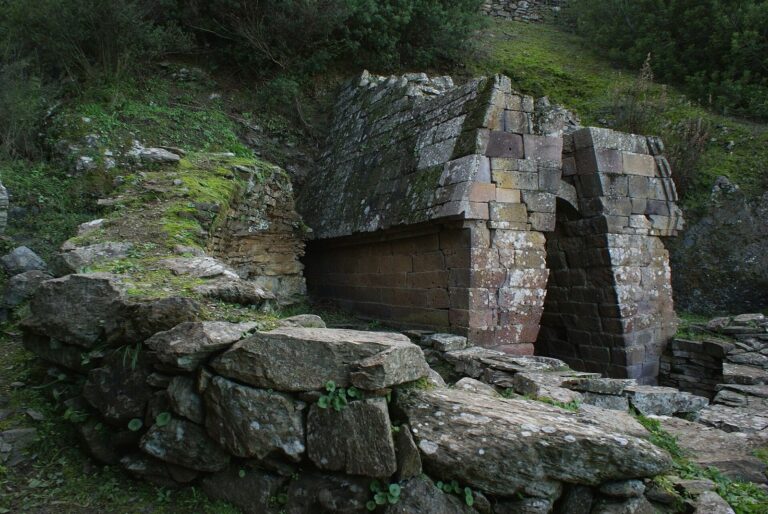
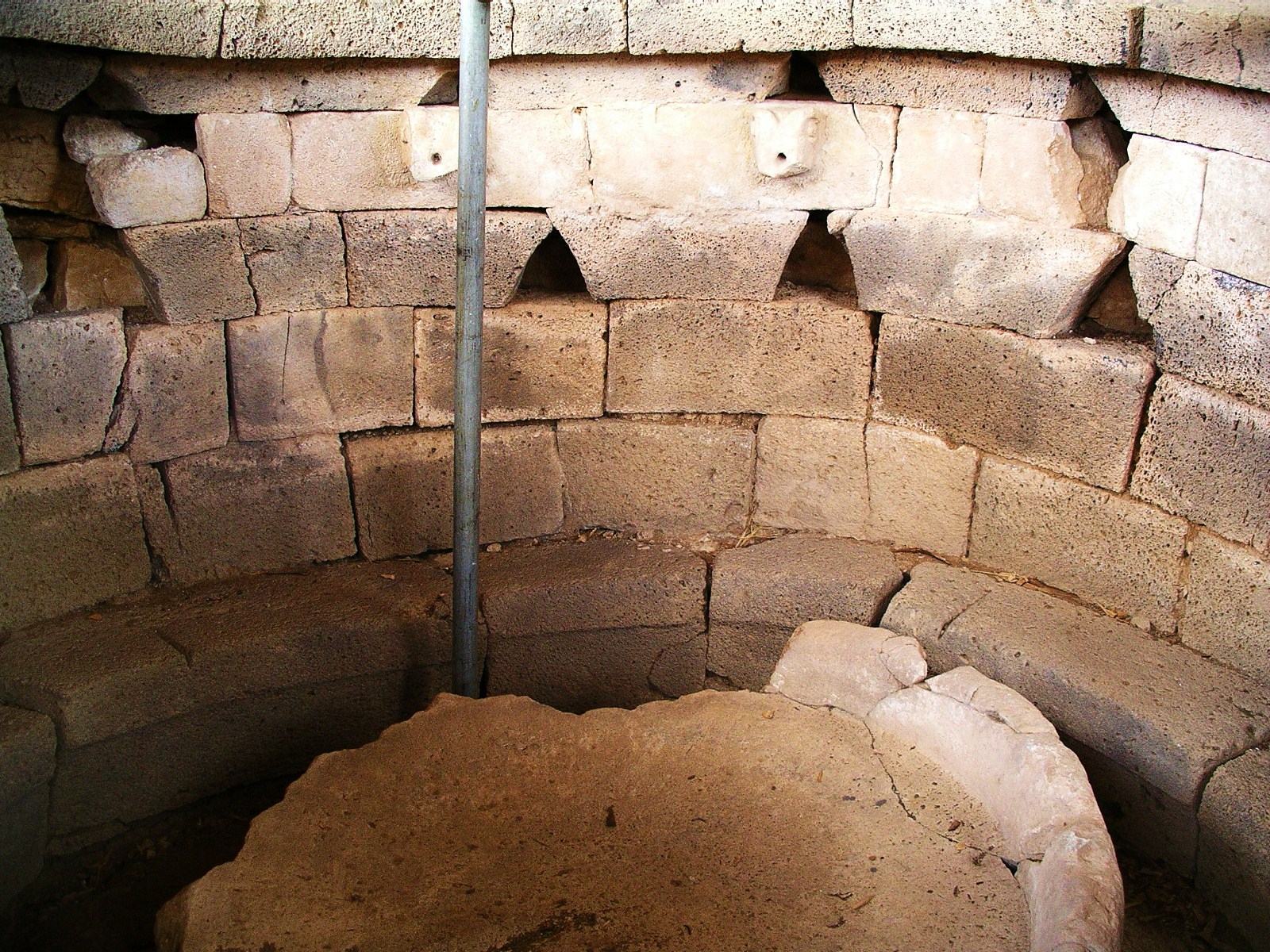
The circular room is about 2.5 meters across, with walls surviving to a height of roughly 1.8 meters. Most of the wall is built from basalt blocks laid in regular courses. About a meter above the floor, a course of sculpted limestone bears seven raised animal foreparts, representing rams or mouflons, a type of wild sheep. Each sculpture has an opening at the mouth. Small basalt blocks with sloping outer faces form the top of the wall.
The floor is sloping natural limestone. Part of the entrance sides survives, along with a basalt threshold. A bench made from carefully shaped basalt blocks follows the curve of the interior walls.
Basins and water system
At the room’s center is a sandstone basin carved from a single block. It measures 70 centimeters across and 45 centimeters high, with a ring-shaped base and a hole passing through it. On one side, a two-part rectangular basin of trachyte connects to a ring-shaped channel within the wall. The channel emerges on the other side into a basin built from basalt blocks.
Water flowed from openings in the animal sculptures toward the central basin. Lead pipes that emerged from the sculptures also formed part of the water supply.
Metal objects
When the room was found, it contained whole and broken metal objects, mostly bronze. These included fragments of axes, picks, spearheads and spear butts, as well as numerous tool-socket rings, basin handles, brooches, pins with plain or elaborately shaped heads, and fragments of metal ingots, or cast bars. Other finds included a sheet-bronze vessel with two necks, one shaped as the front of a bull, and boat-shaped objects of different types and sizes. The collection may have been intended for remelting.