Natività di Maria Santissima: A Baroque Sanctuary in Genoa
Site at a Glance
- Popularity
- Low
- Country
- Italy
- Primary era
- Early Modern
- Eras represented
- Medieval, Early Modern, Modern
- Civilizations
- Genoese, Italian
- Site type
- Religious
- Remains
- Sanctuary
On this page10 sections
History
Natività di Maria Santissima, also known as the Sanctuary of Our Lady of Belvedere, is a Roman Catholic church of the Roman rite on Belvedere hill in Genoa, Italy. It began as a thirteenth-century chapel serving an Augustinian monastery and became a pilgrimage destination before its rebuilding in 1665 in Baroque style, a European artistic style that flourished especially in the seventeenth and eighteenth centuries. The rebuilt church retained the form it has today.
From monastery chapel to Augustinian friary
The chapel served the monastery of Santa Maria di Belvedere, a convent intended for young women from aristocratic families. It is first mentioned in a notarial document of 1285 concerning a bequest. In 1351, after the nuns’ community had greatly diminished, they moved to the monastery of Santa Consolata in Fassolo, and Augustinian friars took their place. Augustinians are members of religious communities that follow the Rule of Saint Augustine.
Financial difficulties led the friars to leave in 1409. The convent then came under the authority of the Metropolitan Chapter of San Lorenzo, a body of canons associated with a cathedral. The Augustinians returned in 1416 and remained until 1797, when the government of the Ligurian Republic suppressed religious orders. The republic was a short-lived state centered on Genoa during the French Revolutionary era.
Pilgrimage and rebuilding
Although the church then stood outside the city in the countryside, it drew pilgrims in the early sixteenth century, who came to venerate an old image of the Madonna kept inside. In 1563, Pope Pius IV granted a plenary indulgence to people who visited on September 8. In Catholic teaching, this is the remission of temporal punishment for sins whose guilt has already been forgiven. The church was declared a sanctuary in 1650.
By 1665 the building was in poor condition and too small for the number of pilgrims. A complete rebuilding followed, giving the church the form it retains today. The September 8 feast celebrating the Nativity of Mary formerly attracted large crowds from across Genoa. During the Republic of Genoa, the feast also coincided with a civic commemoration of the naval victory over the Venetians at Curzola, an Adriatic island now part of Croatia.
Diocesan care and parish life
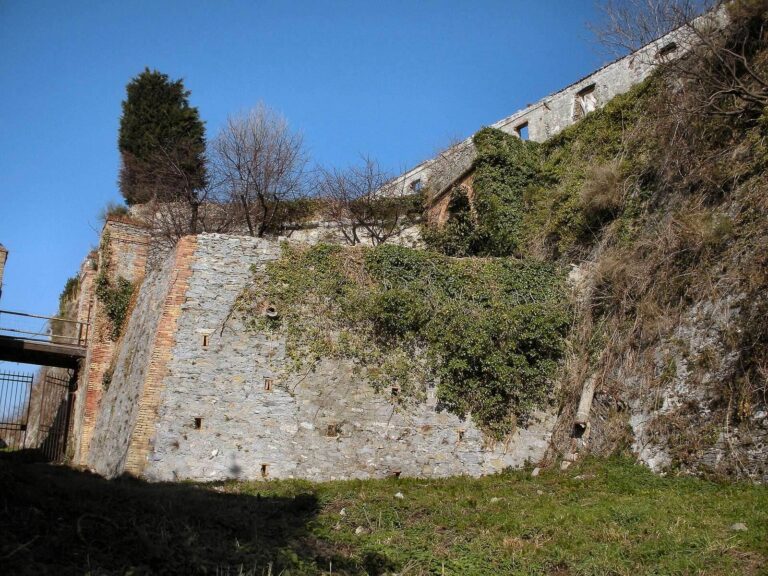
After the religious community left in 1797, worship continued under the care of a diocesan priest serving as custodian. Augustinians returned briefly in 1815, after Napoleonic rule ended. In 1819, plans for fortifications under the Savoy government threatened the church with demolition. Following local opposition, officials decided in 1821 to build the fort on land slightly downhill instead. That year the church was permanently entrusted to diocesan clergy. Nearby military installations affected the hill settlement and church through much of the nineteenth century.
Restoration work took place in 1846 and again in 1896. Cardinal Carlo Dalmazio Minoretti, Archbishop of Genoa, established the church as a parish in 1931 under a decree dated December 24, 1930. It has been under architectural protection since 1933. After the Second World War, urban expansion brought Belvedere hill into Sampierdarena’s built-up area, and the sanctuary became less important as a pilgrimage destination. Its parish community belongs to the Sampierdarena vicariate, an administrative subdivision of the Archdiocese of Genoa.
Remains
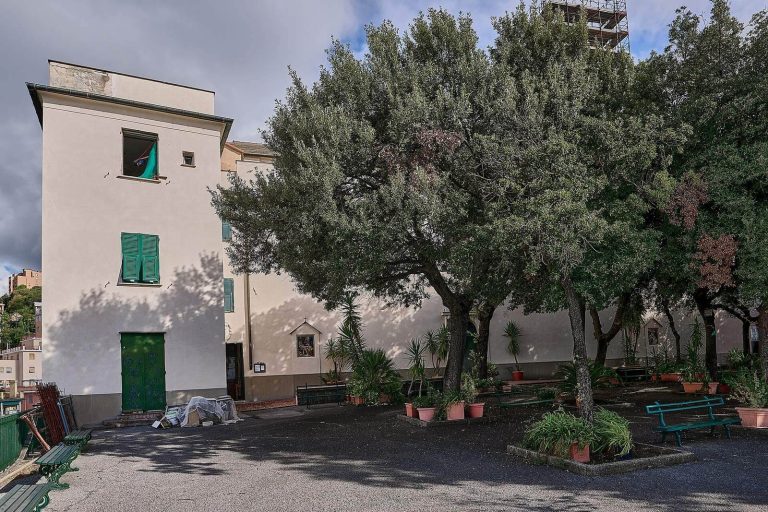
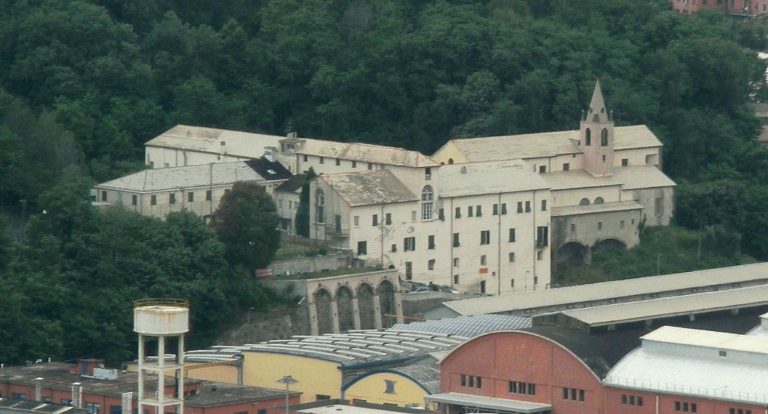
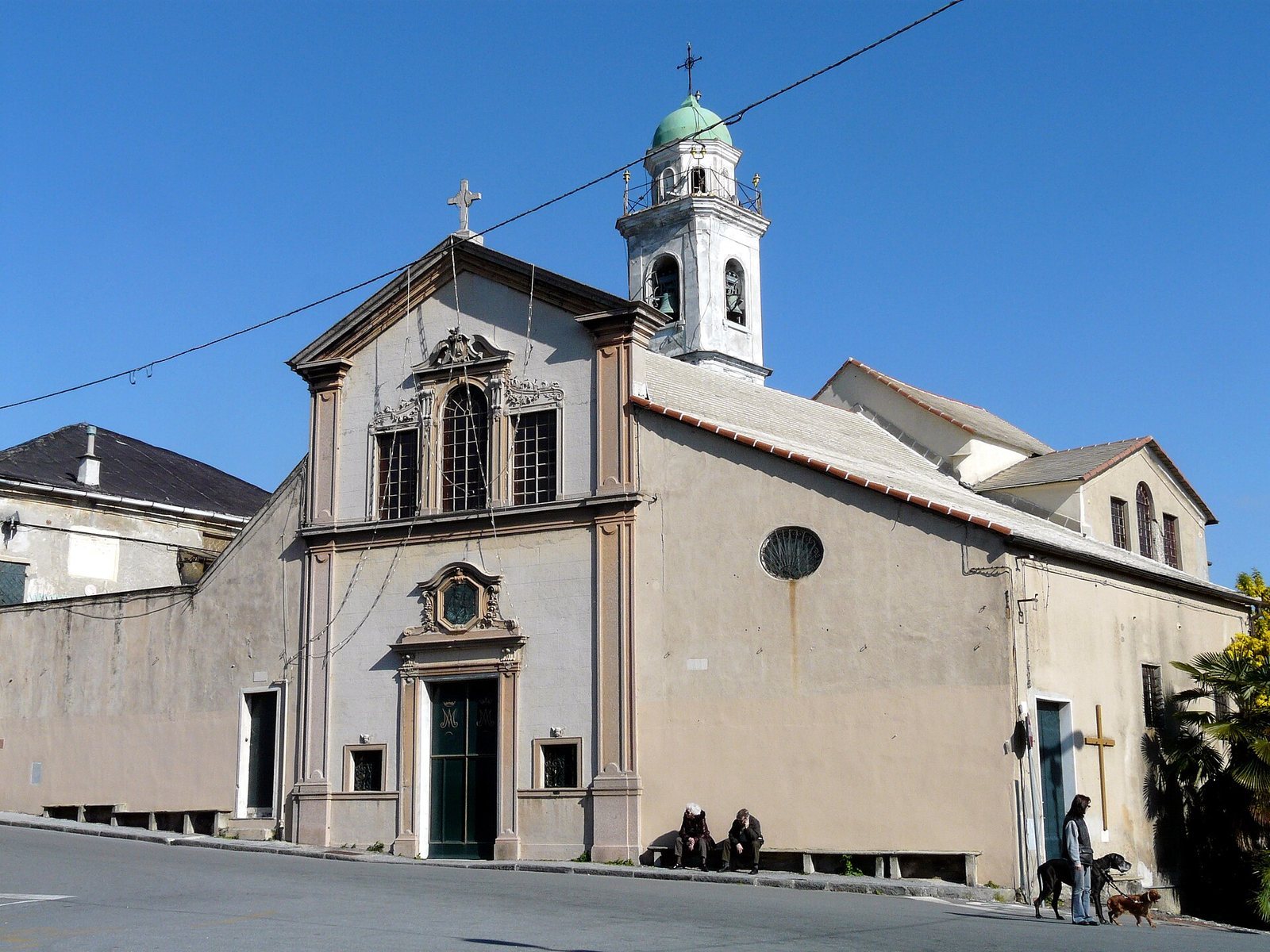
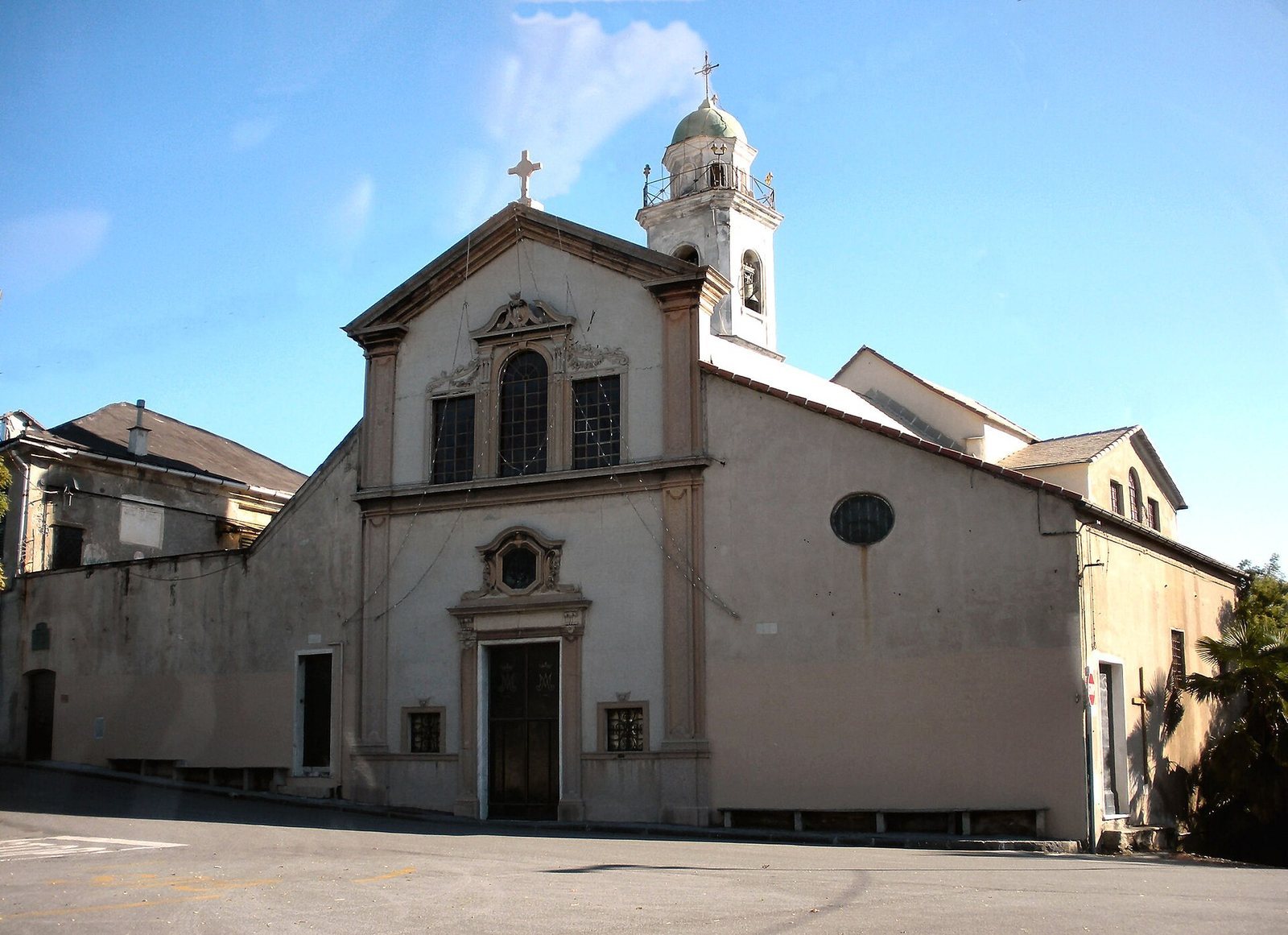
The Baroque church stands on Belvedere hill above Sampierdarena. It has a single nave, with a small square cloister along its left side. The façade faces the nave, while the interior’s altars, paintings, and sculpture preserve features from different periods.
Church architecture and interior
Façade
The seventeenth-century façade has a central section aligned with the nave. A plain portal is flanked by two small barred windows. Above, a stucco frame encloses a small relief reproducing the Madonna image kept inside the church. A Serlian window, with a central arched opening between two smaller openings, occupies the upper part of the façade.
Nave and high altar
The nave is covered by a barrel vault, a continuous arch-shaped ceiling, and has two side altars added during the rebuilding. Its frescoes, painted in 1896, include prophets and virtues by Antonio Ghigliotti and a medallion depicting the Assumption by Carlo Orgero. The Assumption refers to the Catholic belief that Mary was taken bodily into heaven. Coats of arms of several popes from the nineteenth and early twentieth centuries appear on the walls. Above the high altar, an elaborately decorated marble niche holds an octagonal panel of the Madonna and Child. The early fourteenth-century panel is associated with the Pisan school, an artistic tradition linked to a place or group rather than proof of an artist’s training. Some attribute it to Bartolomeo Pellerano da Camogli, who lived and worked in Genoa in the first half of the fourteenth century.
Presbytery and side chapels
The presbytery, the area around the high altar, has two paintings on its side walls. One depicts The Martyrdom of Saint Ursula and is by Antonio Maria Piola, though some attribute it to his father, Domenico. The other, Saint Augustine and Other Saints, is by Giovanni Raffaele Badaracco. The side chapels contain Simone Barabino’s Madonna of the Angels, a painting of Saint Joseph by an unidentified artist, and four small oval paintings of the Evangelists, attributed to the Flemish school.
Medieval cloister
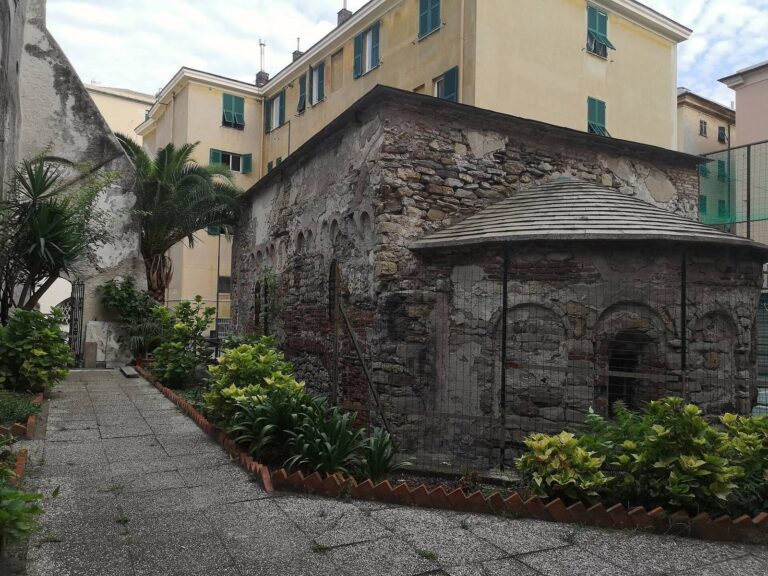
The small square cloister, a covered walk around a courtyard, is the only surviving part of the thirteenth-century construction. Described as Lombard in style, meaning that it uses forms associated with northern Italy’s Lombardy region, it has five round arches on each side resting on rough octagonal stone piers. A small fountain stands in the grassy center.